
A patchy lawn with compacted soil rarely improves on its own. Core aerators pull small plugs from the turf, opening channels for air, water, and nutrients to reach roots, and the seven manual options below cover most homeowner situations without renting heavy machinery.
The Picks In Brief
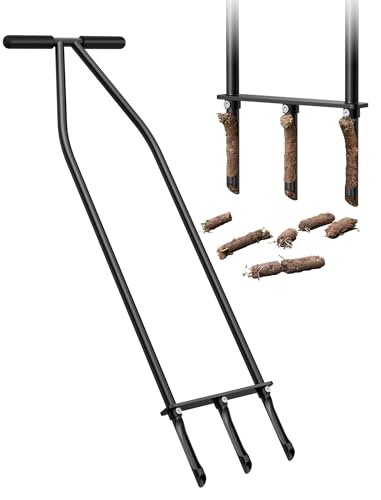
Xuperace Alloy Steel Core Aerator

RAEOHE 4-Tine Plug Aerator 3.94″

Landzie 42″ Hollow Tine Aerator

Landzie 42″ Hollow and Spike Set

Bluesea 16-Spike Aerator (Orange)

Bluesea 16-Spike Aerator (Black)

Bluesea 16-Spike Aerator (Green)
Taking A Closer Look At The Options
The Xuperace Alloy Steel Core Aerator is a compact handheld tool aimed at homeowners who want to aerate small patches without dragging out a rental machine. Three hollow tines, the steel cylinders that punch into soil and pull out a plug, do the actual work, and the alloy steel body keeps the frame from flexing underfoot.
Its biggest practical upgrade over basic spike tools is the side-eject channel, which pushes soil plugs out instead of letting them pack the tines. For someone with a modest front lawn and a few problem spots, that single feature can be the difference between finishing in an hour and giving up halfway through. Moisture matters: this style of tool sinks cleanly into damp ground and bounces off bone-dry soil, so timing around rainfall or watering is part of the routine.
Useful Strengths
- Three hollow tines remove actual plugs, the small cylinders of soil that prove aeration actually happened.
- Alloy steel frame resists bending when you put real weight on the footrest.
- Side-eject design clears plugs without stopping to dig them out by hand.
- Compact size stores easily in a garage or shed corner.
Things To Consider
- Three tines cover less ground per step than four-tine designs like the RAEOHE Manual Core Aerator.
- Handheld stance means slower coverage on anything larger than a small yard.
- Plug ejection works best on moist soil; dry conditions may require pre-watering.
Key Specs
Who It Suits Best
Homeowners with a small lawn and a few compacted patches who want a no-engine, no-cord way to actually remove plugs rather than just spike the surface.
Skip It When
Reach for the RAEOHE 4-Tine Plug Aerator if your soil is heavy clay or your yard stretches beyond a modest suburban lot.
The RAEOHE Manual Core Aerator Lawn Tool trades a bit of comfort for raw depth. Four hollow tines punch up to 3.94 inches into compacted ground, which matters more than it sounds: shallower tools barely scratch the thatch layer, while deeper penetration reaches the root zone where the benefit actually lives.
Compared to the Xuperace, you get one more tine and noticeably deeper cores, so each step pulls more material and finishes a yard faster. The trade-off shows up in effort: pushing four tines through hard clay takes real body weight, and the frame needs to take that load without twisting. Owners commonly find that watering the lawn a day ahead transforms the experience from frustrating to manageable.
The Value In It
- Four hollow tines remove more soil per step than three-tine alternatives.
- 3.94-inch core depth reaches the root zone, not just the surface.
- Solid construction handles the extra force that deeper tining requires.
- Useful for overseeding prep, since deeper cores catch seed and moisture.
Worth Noting
- Hard, dry soil will bend or stop most manual tools, including this one.
- Four tines mean a heavier push and more upper-body fatigue over a long session.
- Plug cleanup on the surface is part of the routine, not a one-time task.
Made For
Homeowners wrestling with compacted clay or planning fall overseeding who want a manual tool that reaches deep enough to matter.
A Better Fit Elsewhere
Pick the Landzie 42″ Hollow Tine Aerator if you prefer a stand-up tool that uses your body weight instead of your knees and back.
The Landzie Lawn Aerator Tool 42″ is the stand-up answer to knee-bound aerator work. A 42-inch handle lets you drive the tines in with your legs rather than your back, and three stainless steel tines resist the rust that finishes off cheaper tools after two seasons leaning against the fence.
Unlike the Xuperace and RAEOHE options above, this one is hollow-tine focused on clog resistance, with beveled edges that the brand designed to release cores cleanly. For a mid-size yard, the upright stance covers ground at a comfortable walking pace, and the steel construction suggests years of seasonal use rather than a single overhaul. It is, fairly, a heavier and pricier tool than handheld picks, so storage space and transport matter.
Where It Excels
- 42-inch handle lets body weight do the work, sparing knees and lower back.
- Stainless steel tines hold up to wet soil and repeated seasons.
- Hollow tines remove real plugs, not just surface impressions.
- Clog-resistant geometry reduces mid-yard stops to clear tines.
Points To Keep In Mind
- Bigger footprint than handheld picks, so storage in tight sheds takes planning.
- Best results still require pre-watering for dry or compacted ground.
- Three tines mean slightly fewer plugs per step than four-tine handheld designs.
Feature Snapshot
Whose Lawn It Belongs On
Mid-size yards where the owner wants upright handling, fewer stops to clear tines, and a tool that lasts several aeration seasons.
Look Elsewhere When
Pick the Landzie 42″ Hollow and Spike Set if you want one tool that also handles dry, hard-packed areas where hollow tines struggle.
The Landzie 42″ Hollow and Spike Set takes the upright platform from pick 3 and adds a second set of tines you can swap in. Hollow tines pull cores for the kind of deep lawn recovery you do once a year; spike tines punch narrow holes for lighter seasonal touch-ups and for breaking surface crust in dry stretches.
This two-mode setup handles situations that frustrate single-purpose tools. A patch of parched, compacted ground that fights a hollow tine usually accepts a spike. The catch is storage: two sets of tines plus the 42-inch handle take more space than a single-purpose tool, and you have to remember which mode you left installed. For homeowners who aerate spring and fall, the flexibility is worth the small hassle.
Benefits That Matter
- Interchangeable hollow and spike tines cover two jobs in one tool.
- Hollow mode handles deep recovery; spike mode handles routine touch-ups.
- Spike tines work in drier conditions where hollow tines stall.
- Stainless construction matches the durability of the single-mode sibling.
Honest Caveats
- Two tine sets add storage bulk and a small swapping step mid-yard.
- Spike mode creates holes without removing plugs, so it does less for thick thatch.
- Heavier upfront tool than the Bluesea spike-only options below.
Right Fit For
Homeowners who aerate more than once a season or who battle mixed conditions, dry patches alongside healthy turf, and want one tool to cover both.
Reach For A Different Pick When
Choose the Bluesea 16-Spike Aerator in any color if you only need light seasonal surface work and want a lighter, lower-effort tool.
The Bluesea Lawn Aerator Tool shifts the conversation from core removal to surface aeration. Sixteen iron spikes punch narrow holes in one step, and a T-handle keeps wrists in a neutral position so a longer session does not punish your hands. The “automatic dirt clean” feature clears loose soil as you lift, which removes the most annoying part of spike work.
For new homeowners, this is a friendly starting point. The learning curve is short, the push effort is lighter than four-tine core tools, and the bright orange finish is hard to lose in tall grass. The honest read is that spikes do less for severe compaction than hollow tines, so expect a useful but not transformative result on neglected lawns.
The Practical Payoff
- Sixteen spikes cover more surface per step than three or four hollow tines.
- T-handle keeps wrists neutral during longer sessions.
- Automatic dirt clear feature cuts down on mid-yard cleaning.
- Iron spike construction handles typical suburban soil without bending.
Minor Gripes
- Spikes compact soil sideways rather than removing plugs, so the benefit is shallower than core aeration.
- Dry, hardened ground still requires pre-watering to penetrate cleanly.
- Not the right tool for lawns with serious thatch buildup.
Quick Facts
Who Will Love This
First-time aerator owners with a small to mid-size lawn who want a low-effort, easy-to-learn tool for routine seasonal work.
Another Choice May Suit
The Xuperace Alloy Steel Core Aerator fits better if you want plugs removed rather than just punctured.
The Bluesea 16-Spike Aerator in black is the same working tool as the orange pick above, repainted for homeowners who prefer a low-visibility finish leaning against the house. Sixteen iron spikes, the same T-handle, and the same automatic dirt clean design carry over.
That makes the decision mostly cosmetic, and that is fine: if you keep tools visible in a side yard or on a patio, the black version blends in better than safety orange. The performance trade-off is none at the mechanical level, so you choose this for the look, not for a feature difference. For routine spike aeration on a healthy lawn, behavior in the yard is identical.
Useful Highlights
- Low-visibility black finish suits front-yard storage and tidy garages.
- Sixteen spikes pace out quickly across typical suburban lots.
- Automatic dirt clean reduces stop-and-go interruptions.
- T-handle keeps the working grip comfortable across a full pass.
Room For Improvement
- Functionally identical to the orange sibling, so it earns no performance edge.
- Spikes do not remove thatch the way hollow tines do.
- Hard, dry soil still requires pre-watering for clean penetration.
Best Suited To
Homeowners who like the Bluesea spike design but want a finish that disappears against landscaping and outdoor furniture.
Where Another Pick Suits Better
The Landzie 42″ Hollow Tine Aerator is a better call for anyone who actually wants plugs pulled, not just surface punctures.
The Bluesea 16-Spike Aerator in green carries the same 16-spike head and T-handle as its orange and black siblings, but the brand highlights a reinforced steel plate build with argon arc welding at the joints and an anti-corrosion coating for longer outdoor life.
For shoppers who keep tools outside, under a tarp, or in a damp shed, that coating and weld story matters more than the color does. The honest read is that performance in the lawn is the same as the other Bluesea picks, so the green version makes sense when you want it to outlast a few seasons leaning in the rain. If storage is dry and indoor, the choice is mostly aesthetic.
A Few Highlights
- Reinforced steel plate construction adds structural integrity at the joints.
- Anti-corrosion coating helps the tool survive damp or outdoor storage.
- Sixteen spikes and T-handle match the comfortable Bluesea platform.
- Green finish blends into garden settings without standing out.
Some Limits To Know
- Spike-only design still does not remove soil plugs.
- Color choice does not change aeration performance versus the orange or black versions.
- Hard soil still needs pre-watering for clean penetration.
Spec Overview
Who Should Grab It
Homeowners who keep yard tools outdoors and want a spike aerator built to take a few seasons of weather without flaking apart.
Consider Something Else When
The RAEOHE 4-Tine Plug Aerator fits better if your goal is plug removal rather than surface puncturing.
What To Weigh Before Choosing A Core Aerator
Tine Type Sets The Whole Job
Hollow tines pull small cores of soil out of the lawn, the textbook method for relieving compaction and opening room for roots. Spike tines push soil sideways without removing anything, which is faster but does less for serious compaction. For neglected or clay-heavy lawns, hollow tines such as those on the Xuperace, RAEOHE, and Landzie picks earn their extra effort. For routine maintenance on a healthy lawn, spike tools like the Bluesea lineup keep the job simple.
Depth And Tine Count Drive Speed
Deeper cores, around four inches, reach the root zone and matter for overseeding and recovery. A higher tine count removes more material per step, which trims time on larger yards. The RAEOHE tool pairs both: four tines and 3.94-inch cores. Handheld three-tine tools cover ground more slowly, which is fair for small spaces but punishing on anything larger.
Handle Style And Body Position
Handheld aerators put you on your knees with a footrest. Stand-up tools such as the Landzie 42-inch models let leg weight do the work, which makes a noticeable difference over a full afternoon. Storage also comes into play: longer tools need wall hooks or a corner of a garage, while handheld picks slip into a small shed.
Storage And Long-Term Care
Iron spikes and steel tines benefit from a dry storage spot and an occasional wipe-down. Coatings help, as seen on the green Bluesea build, but no tool enjoys being left in standing rain. Plan a quick clean after each session, knock off the soil plugs, and store the tool off the ground.
Key Considerations Across These Picks
Pitfalls Shoppers Hit
Choosing a spike tool for a heavily compacted lawn is the most common mismatch. Spikes relieve surface tension; they do not undo years of foot traffic on clay. A second trap is aerating bone-dry ground: tines skate across the surface and bend before they bite. Water the lawn a day ahead for the cleanest results.
What The Higher Tier Buys
Stepping up to a four-tine or stand-up tool brings more material removed per step and a less punishing posture. The extra spend also shows up in steel quality and welding, which translates to several seasons of use rather than one or two. For mid-size yards and serious compaction, that upgrade pays back in time saved and tools replaced.