
Your lawn is too big for a reel mower and too small for a riding deck, and you don’t want the noise, fumes, or maintenance of a gas engine. That’s exactly the gap cordless push mowers fill, and the lineup in 2026 is more capable than ever. Whether you tend a postage-stamp side yard or a quarter-acre of cool-season turf, the right battery mower turns a sweaty chore into a quick weekend walk.
The Shortlist At A Glance

Greenworks 80V 21in Push Lawn Mower 4.0Ah
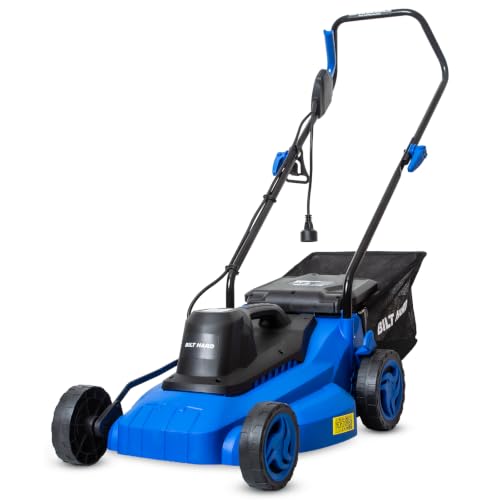
BILT HARD 15″ Corded Electric Push Mower
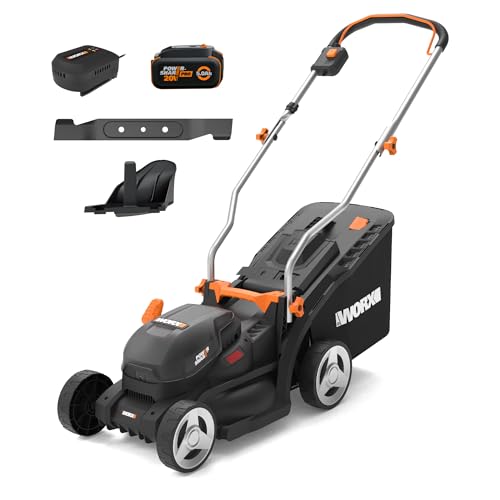
Worx 20V 14″ Cordless Lawn Mower WG733.1

Honda HRX-BE 21″ Battery Lawn Mower

Honda HRX-BV 21″ Battery Lawn Mower
What Each Pick Brings To The Table
Greenworks built this 80V push mower for homeowners who want gas-like cutting without the gas. A brushless motor (a motor with no internal brushes, so it spins cooler, runs quieter, and outlasts older brushed designs) drives a 21-inch steel deck, which is wide enough to make quick work of a typical quarter-acre lot yet narrow enough to weave along fence lines. The 4.0Ah battery slots into the top of the deck, and a rapid charger refills it in about an hour between sessions.
Compared with the compact Worx reviewed later, this Greenworks trades some weight for cutting width and runtime, so it suits a mid-size suburban yard where you don’t want to recharge halfway through. The single-lever height adjustment lets you move all four wheels at once, which most owners find a welcome shortcut when switching from a low summer cut to a taller spring cut.
Notable Gains
- 21-inch steel deck covers a standard lawn faster than 14 or 15-inch mowers
- Brushless motor runs quieter and tends to last longer than older brushed designs
- Up to 60 minutes of runtime on a fully charged 4.0Ah battery, depending on grass length and thickness
- Single-lever height adjustment saves time versus adjusting wheels one corner at a time
- Rapid charger refills the battery in roughly 60 minutes, handy between weekend mowings
- Shares the same 80V battery platform as many other Greenworks tools, simplifying storage
Things To Weigh
- Heavier than the 14-inch Worx, so storage in a tight shed stairwell takes some effort
- Run-time estimates drop sharply in tall or damp grass, a common trait of cordless mowers
- Steel deck can show scratches over time, though it tends to hold up well to general yard debris
Key Product Details
Made For
Homeowners with a medium-sized suburban yard who want gas-free power and a single battery to swap between tools.
Consider Something Else When
Yards with tight gates or steep slopes suit the lighter BILT HARD or Worx, depending on whether you prefer corded runtime or compact battery convenience.
This BILT HARD model breaks the mold on this list by running on a cord rather than a battery. An 11-amp motor turning at 3,300 RPM (revolutions per minute, the speed of the cutting blade) handles small yards without ever running out of charge, and the 15-inch deck slips through narrow gates and tight side yards where the Greenworks barely fits. A 35-liter grass bag collects clippings neatly, and the foldable handle drops the mower flat for upright garage storage.
Think of it as the right tool for a townhouse patio strip rather than a quarter-acre. With five height settings between 1 and 3 inches, the deck adjusts for everything from cool-season fescue to a low summer Bermuda trim, and the lightweight frame (somewhere south of the steel-deck Greenworks) means almost anyone can carry it to the curb.
Where It Excels
- 15-inch deck fits through side gates and narrow walkways that block wider mowers
- 35-liter grass bag means fewer stops to empty clippings
- Five height adjustments between 1 and 3 inches cover most turf types
- Foldable handle collapses flat for upright storage in tight garages
- Corded power means no battery anxiety during a long, slow Saturday
Trade Offs
- Requires an extension cord and an outdoor outlet, which limits reach on large lots
- 15-inch cutting width means more passes than the 21-inch Greenworks or Hondas
- Lighter plastic deck tends to scuff sooner than steel under heavy yard debris
Whose Yard It Belongs On
Renters, townhouse dwellers, and anyone with a small patch of lawn within 100 feet of an outdoor outlet.
Skip It When
Owners tending a quarter-acre or larger lot will finish faster and untether themselves with the Greenworks 80V or a Honda HRX model.
The Worx WG733.1 is the lightest, most compact mower in this lineup, and that’s its whole reason for existing. A 14-inch deck, a brushless motor, and a 20V 5.0Ah PowerShare Pro battery let it cover roughly 3,200 square feet on a single charge, which is more than enough for most city lots. The 2-in-1 design switches between bagging and rear discharge, so you can tidy up around patios or let clippings fall into the turf as mulch.
Where the Greenworks trades weight for width, this Worx trades runtime for a shed-friendly footprint. Most owners stow it upright against a garage wall or hang it on a heavy-duty hook without needing a dedicated mower bay, which is a real win in compact urban homes.
Positive Points
- Ultra-light build makes it easy to push and carry up porch steps
- Brushless motor delivers more torque (twisting force, the muscle of the cut) per watt than brushed designs
- Covers up to 3,200 sq. ft. per charge on the included 5.0Ah battery
- 2-in-1 deck switches between bagging and mulching without tools
- Stows vertically in a corner or hangs on a wall bracket to save floor space
Honest Caveats
- 14-inch deck doubles your passes compared with the Greenworks on the same yard
- 20V platform has less headroom for very tall or wet grass than 80V systems
- Battery and charger live separately from other yard tools on most platforms, so plan charging space
At A Glance
Built For
City and suburban homeowners with small, oddly shaped lawns who need a storable mower and don’t mind a couple of extra passes.
Look Elsewhere When
Anyone mowing a half-acre or more will finish sooner on the Greenworks 80V, which also brings a wider deck and longer runtime.
Honda’s HRX217YXBEXA6 brings the brand’s signature engineering to the cordless category, pairing a 21-inch deck with a battery drivetrain that aims to match the torque of its well-regarded gas GCV engines. The headline feature is Versamow with Clip Director, a four-mode system that lets you mulch, bag, discharge, or shred leaves without swapping attachments. Twin blades (two cutting blades stacked on one shaft) chop clippings finer than single-blade decks, so the lawn looks cleaner after a single pass.
For anyone upgrading from the Greenworks or stepping up from the Worx, this is the obvious leap. Where the Greenworks covers a mid-size yard, the Honda tackles a larger lawn with thicker grass, more leaves in fall, and longer runtime expectations. In most temperate regions, you can finish a half-acre on a single charge, depending on conditions.
Useful Strengths
- Versamow 4-in-1 deck switches modes with a single lever, no tools needed
- Twin blades produce finer clippings, useful for mulching and leaf shredding
- Honda battery motor delivers torque similar to the brand’s gas GCV line
- 21-inch deck trims mowing time on larger lawns
- Build quality aimed at homeowners who mow weekly through the season
Points To Note
- Premium build commands a price step up from the Greenworks 80V
- Heavier than the 14-inch Worx, so storage and lifting need a clear path
- Battery ecosystem is more limited than Greenworks’ 80V lineup of compatible tools
Best Suited To
Homeowners with a larger lawn who want Honda-grade engineering, mulching flexibility, and one machine that handles leaves as well as grass.
Swap It Out When
On flat, easy terrain without steep slopes, the simpler Greenworks 80V delivers similar cutting width at a friendlier entry point.
The HRX217YXBVKA4 is essentially the HRX-BE with one critical upgrade: variable-speed self-propulsion, meaning a rear-drive motor pulls the mower forward at a pace you select, so you can match your walking stride instead of pushing the full weight. Combine that with the same Versamow 4-in-1 deck, twin blades, and Honda-grade motor, and you have a battery mower built for slopes, thick cool-season grass, and homeowners who simply don’t want to fight their equipment on Saturday mornings.
Versus the HRX-BE, this BV model earns its keep on any yard with a noticeable grade or uneven terrain, where unassisted pushing becomes tiring after twenty minutes. On flat, small lawns, you may find the self-propulsion adds cost without much benefit, and the Greenworks or BILT HARD would handle the job more easily.
Advantages To Know
- Variable-speed self-propel reduces fatigue on slopes and larger lawns
- Versamow 4-in-1 deck covers mulch, bag, discharge, and leaf shred modes
- Twin blades leave a cleaner finish than single-blade decks
- Honda motor delivers torque comparable to the brand’s gas GCV series
- 21-inch deck trims time spent walking laps across the yard
Less-Strong Areas
- Highest entry cost among the five picks, which matters on a small flat lot
- Self-propulsion adds weight over the push-only HRX-BE, complicating storage
- Battery runtime varies noticeably in overgrown conditions, common with battery mowers
Who Should Grab It
Homeowners with a sloped or thick-turf lawn who want cordless power, Honda engineering, and the easiest possible walk behind the mower.
A Better Fit Elsewhere
On a small, flat patch, the Worx WG733.1 saves space, weight, and cost while still handling routine cuts.
Picking A Cordless Push Mower That Actually Fits Your Lawn
Choosing the right mower comes down to matching the tool to your turf, your terrain, and your tolerance for recharging. Most buyers focus first on cutting width, then on battery voltage, and only afterward on comfort features, and that’s a sensible order.
Deck Width And Yard Size
A 14-inch deck, like the one on the Worx, is ideal for lawns under roughly 2,000 square feet because it squeezes through gates and trims narrow strips without overrunning bed edges. A 21-inch deck, found on the Greenworks and both Hondas, is the better choice for half-acre lawns because each pass covers almost twice the ground. The 15-inch BILT HARD sits in between and pairs best with a small yard that happens to lack an outdoor outlet nearby.
Voltage, Runtime, And Real-World Grass
Higher voltage batteries, like the Greenworks 80V system, generally support longer runtime and stronger cuts through thick turf, but the spec sheet alone doesn’t tell the whole story. Runtime drops sharply in damp, tall, or early-spring grass, which is true across the category. Plan for roughly 30 percent less runtime than the manufacturer claims when conditions are tough, and you’ll rarely run out of power mid-lawn.
Drive Type And Terrain
Self-propelled mowers, such as the Honda HRX-BV, use a rear motor to pull the machine forward at a chosen speed, which makes a meaningful difference on slopes or thicker grass. Push mowers like the Greenworks 80V or Worx WG733.1 rely on your effort, and they’re easier to steer in tight landscape beds. Flat lawns rarely need self-propulsion, but any noticeable grade quickly justifies the upgrade.
Storage, Weight, And Noise
Cordless mowers are quieter than gas, but the heaviest battery models can still exceed 60 pounds, which matters for older owners or anyone carrying the mower up from a basement. Vertical storage, available on the Worx and partially on the Greenworks, helps if garage space is limited. Think about where the mower will live between sessions before you choose, not after.
Key Considerations Across These Picks
Mistakes Worth Dodging
The most common misstep is buying a 21-inch mower for a tiny yard with a 30-inch gate, then spending the next decade wrestling it through the opening. Match the deck width to your narrowest passage, not your lawn size. Another trap is underestimating battery runtime in early spring, when grass grows fast and wet. Owners who treat the listed runtime as a guarantee tend to finish half a lawn and reach for the charger.
Where The Extra Money Goes
Stepping up from a budget pick to a premium Honda buys three concrete things: a Versamow 4-in-1 deck for true mulching flexibility, twin blades for finer clippings, and (on the BV model) variable-speed self-propulsion. For a flat quarter-acre, those upgrades rarely justify the cost. On a sloped, leaf-heavy half-acre, they tend to pay for themselves in time and fatigue saved across a single mowing season.
Frequently Asked Questions
How long does a cordless push mower battery last?
Most batteries on this list deliver 30 to 60 minutes per charge under normal conditions, though tall or wet grass can shorten that noticeably. Carrying a second charged battery, where the platform supports it, removes the risk of running out mid-lawn.
Can a cordless mower handle thick or wet grass?
Higher-voltage models like the 80V Greenworks and both Hondas have the torque to push through thicker growth, though no cordless mower loves wet grass. Letting the lawn dry before cutting extends runtime and produces a cleaner finish.
Are cordless push mowers powerful enough for a half-acre lawn?
Yes, especially the 21-inch deck models with 80V or Honda drivetrains. Plan for a single charge to cover a half-acre under typical conditions, with some buffer if the grass is overgrown at the start of the cut.
Do cordless mowers need much maintenance?
Maintenance is light compared with gas: keep the deck clean, sharpen or replace blades once a season, and store the battery indoors during extreme cold. The brushless motors on most picks here don’t need brush replacements the way older brushed designs did.
Is self-propulsion worth it on a cordless mower?
Self-propulsion, like the Honda HRX-BV offers, is worth the cost on slopes or larger lawns where pushing becomes tiring. On a small, flat yard, it’s a convenience that most owners can live without.
Closing Remarks
The right cordless push mower depends on the size of your lawn, the slope under your feet, and the storage space behind your garage door. Match the deck to the smallest gate, the battery to the largest patch of grass, and the drive system to the hill in your yard, and you’ll spend less time fighting the mower and more time enjoying the cut.