
You want a tidy border where the lawn meets the driveway, the sidewalk, or the garden bed, and you don’t want to wrestle with a cord or a gas engine every weekend. Battery-powered edgers solve both problems, but the category now spans everything from lightweight trimmers with an edging mode to dedicated wheeled trenchers. The five picks below cover that range, with notes on battery type, blade geometry, and depth control so you can match the tool to your yard, not the other way around.
The Leading Options At A Glance

WORX 20V 22-Inch Cordless Hedge Trimmer (WG261)
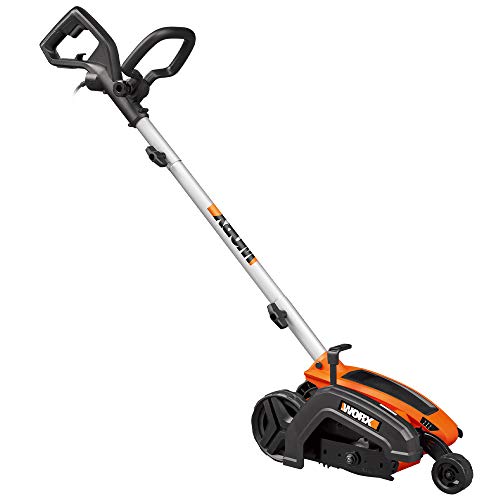
WORX 12 Amp 7.5-Inch Electric Lawn Edger (WG896)
WORX 20V 7-Inch Cordless Lawn Edger (WG898)

WORX 20V 7-Inch Cordless Lawn Edger (WG898.9)

Heywork 20V 12-Inch Cordless Trimmer/Edger
The Details Behind The Selections
The WG261 earns a place on a cordless-edger list for a specific reason: it handles the overhead and vertical trimming that lawns with hedges and bushes require, so you can keep one battery platform for both shaping shrubs and defining borders. Its 20V PowerShare design, a battery system that shares across WORX tools in the same voltage family, runs on the same packs that drive the WG898 edgers reviewed below, which matters if you already own one of those tools.
The D-grip front handle lets you rotate the trimmer into odd angles without losing control, and the 22-inch blade covers more ground per pass than shorter models. At roughly 5.5 pounds, it’s light enough to lift overhead for top-of-hedge work on a small property, and the dual-action hardened-steel blades reduce the vibration that tends to tire your hands on cheaper units.
Practical Advantages
- Shared 20V PowerShare battery across other WORX tools cuts down on charger clutter in the garage.
- D-grip handle improves control during angled cuts along fence lines and around sculpted shrubs.
- 22-inch blade length lets you clear wide hedge faces in fewer passes.
- Dual-action blades noticeably cut vibration versus single-action designs on cheaper trimmers.
Points To Note
- It’s a hedge trimmer first, so it won’t cut the lawn-edge trench a dedicated edger would.
- Run time depends entirely on the amp-hour rating of the battery you already own or add to the kit.
Made For
Homeowners who already own WORX 20V batteries and want one tool that handles hedges alongside light lawn-edge touch-ups.
A Better Fit Elsewhere
Skip this pick for serious edging along a long driveway: the WORX WG898.9 is purpose-built for that work.
The WG896 sits at the opposite end of the category from a battery model: it’s a corded, 12-amp wheeled edger that trades portability for constant torque. If your edging chore is a long, straight driveway or a defined sidewalk strip near an outdoor outlet, that trade often makes sense, since you never have to stop and recharge halfway through.
The 7.5-inch serrated steel blade is sized for residential trenches rather than commercial work, and at roughly 14 pounds with three wheels for guidance, it’s manageable for most adults to push along without fatigue. The same frame also works as a light trencher for burying low-voltage landscape wire, a useful secondary role if you’re installing path lights.
Good Reasons To Consider
- Corded power means no mid-job charging or battery degradation to worry about over time.
- Serrated steel blade produces clean, defined edges along hard surfaces like concrete and asphalt.
- Functions as a basic trencher for shallow landscape-wire or border installations.
- Three-wheel design provides stable guidance along long straight runs.
Trade-Offs
- The cord limits reach, so an extension cord and outdoor-rated outlet are practical necessities.
- Always unplug before clearing clogs or swapping the blade, a step cordless tools don’t require.
Feature Snapshot
Whose Yard It Belongs In
Homeowners with a long, straight edge and easy access to an outdoor power outlet who prioritize steady torque over cord-free mobility.
Reach For A Different Pick When
Pick the WORX WG898 instead if your edging route snakes around trees and flower beds away from any outlet, since cordless is more practical there.
The WG898 is the dedicated cordless edger most first-time buyers picture: a handheld tool with a brushless motor, a 7-inch blade, and the freedom to roam anywhere on the property. Brushless motors, which use electronic control instead of carbon brushes to drive the rotor, tend to run cooler and last longer than brushed designs, which matters for a tool you’ll pull out every few weeks.
The three-position depth adjustment (1.5, 1.75, or 2 inches) gives meaningful control over how aggressively the blade bites into the soil. Most suburban borders look best at the shallow end; the deeper settings suit folks installing a visible trench edge along a walkway.
A Few Highlights
- Brushless motor should outlast brushed equivalents under regular seasonal use.
- Three depth settings cover subtle touch-ups and visible trenches with the same blade.
- Shares the WORX 20V PowerShare battery family with trimmers and hedge tools.
- Handheld form factor works well around curved beds and tree rings.
Small Caveats
- Run time scales with the amp-hour battery you pair it with, so a small pack may finish only one border.
- Handheld edgers take more upper-body effort than wheeled models on very long straight runs.
Best Suited To
First-time battery-edger owners with small to medium lawns who want a versatile, shareable platform rather than a one-task specialty tool.
Look Elsewhere When
Step up to the WORX WG898.9 if you regularly edge more than the length of a standard driveway in one session.
The WG898.9 is the same core edger as the WG898, but tuned for longer runs. The headline difference is the included 4.0Ah PowerShare Pro battery, a higher-capacity pack that holds roughly twice the energy of the smaller batteries often sold in entry kits. The manufacturer rates it for up to 2,800 feet of edging per charge under favorable conditions, which is the kind of number that lets you finish a full property in one pass.
The streamlined blade geometry is shaped to ride along hard borders, so you set the guide wheel against a sidewalk or driveway and the tool tracks cleanly along the joint. That’s the single feature most casual users under-appreciate until they try it: a true rolling edge guide, not a freehand guess, makes a visible difference in line straightness.
Everyday Wins
- 4.0Ah Pro battery extends usable run time well past smaller-pack kits for full-property sessions.
- Edge guide wheel helps produce consistent lines even for users without a steady hand.
- Brushless motor pairs with the larger battery for steady power delivery under load.
- 7-inch blade is the practical sweet spot between trench depth and maneuverability.
Worth Noting
- The higher-capacity pack adds weight and cost, so it’s overkill for a single short border.
- Heavy clay or wet soil can clog any cordless edger blade, and this model is no exception.
Key Product Details
The Right Fit
Homeowners with long borders, multiple sidewalks, or a long driveway who want to finish the job on a single charge without swapping packs.
Skip It When
The Heywork 20V trimmer/edger below is the smarter grab if your edging work is light and you also need a string trimmer.
The Heywork rounds out the list as a hybrid: a 20V string trimmer that converts to an edger by rotating the shaft head. That makes it a practical pick for small yards where the line between “trimming around the mailbox” and “edging the sidewalk” is more about the task than the tool. The 12-inch cutting swath is wider than many compact trimmers, so it covers ground quickly.
The 8,000 RPM motor is the headline spec, and the automatic line feed (which advances fresh line as the old one wears down, without a manual bump) saves the small frustration that cheap trimmers inflict on their owners. For most small-lawn chores, the swap to edging mode is a quick rotation rather than a tool change.
Useful Highlights
- Two-in-one design cuts the need to store a separate dedicated edger for light work.
- 12-inch cutting swath trims a wider path per pass than many compact string trimmers.
- Automatic line feed removes the manual bump-advance step common on budget trimmers.
Honest Caveats
- String trimmers produce a softer, less defined edge than a dedicated blade edger.
- Run time depends on the battery configuration included, and replacement line is a recurring cost.
Who Should Grab It
Small-yard owners who want one tool that trims weeds and edges the sidewalk without buying two separate machines.
Where A Sibling Pick Shines
The WORX WG898 is the better match for crisp, blade-cut borders, since string trimmers leave a softer line.
What Matters Most When Choosing Cordless Edgers For Lawns
Battery Platform And Run Time
The single biggest practical difference between cordless edgers is the battery. Amp-hour (Ah) ratings indicate how much energy a pack stores: a 2.0Ah pack handles light, occasional edging, while a 4.0Ah pack is the realistic minimum for finishing a full medium-yard session. If you already own batteries from a brand’s 20V or 18V family, choosing a tool that uses the same packs saves real money over time.
Blade Type Vs. String Line
Dedicated edgers use a steel blade for a crisp, defined trench, while hybrid tools use a nylon string line for softer edges. Blade edgers win on visible definition and durability, but string-line edgers double as trimmers for weeds and grass around obstacles. Most suburban properties benefit from at least one blade-style edger for hard borders, even if a hybrid handles the in-between spots.
Depth And Guide Features
Adjustable cutting depth (typically 1 to 2 inches) lets you choose between a subtle edge that follows the soil and a more visible trench. A rolling edge guide wheel is the unsung hero of consistent results: it keeps the blade tracking along hard surfaces without wandering. Handheld edgers without a guide depend more on user skill to produce straight lines.
Weight, Ergonomics, And Storage
A handheld cordless edger in the 5 to 8-pound range is comfortable for most users on a typical home border session. Heavier models tire the arms faster but often deliver more stable cuts. Storage is worth thinking about ahead of time: a dedicated wall hook or a compact shed shelf extends tool life by keeping batteries dry and blades clean.
Quick Notes On These Picks
Traps First Timers Fall Into
A common mistake is buying a hybrid trimmer/edger and expecting blade-style crispness: string tools produce softer edges, so households wanting a sharp lawn-to-sidewalk line should plan on a dedicated edger or accept a softer look. Another slip is underestimating battery needs: a 1.5Ah pack often runs out before a small property is finished, so factor in a higher-capacity pack or a second battery from the start.
Where The Extra Money Goes
Higher-tier cordless edgers typically add a brushless motor (longer life, cooler operation), a larger-capacity battery, and a guide wheel for straighter lines. Those upgrades matter most for larger properties and frequent use; for occasional touch-ups on a small lawn, an entry model handles the job without the extra cost.
Frequently Asked Questions
How long does a cordless edger battery last?
Most 20V packs in the 2.0Ah range run 20 to 30 minutes of continuous edging, while 4.0Ah packs commonly extend that to 40 minutes or more under typical residential conditions.
Can a cordless edger cut through roots?
Light surface roots are sometimes manageable, but a cordless edger is designed for turf and soft soil. For larger roots, a dedicated trencher or a manual root saw is the safer tool.
Are cordless edgers powerful enough for thick grass?
Yes, for overgrown edges along sidewalks and driveways. For tall, weedy areas, a string trimmer clears the bulk first, and the edger finishes the line.
How deep should I cut when edging a lawn?
Most suburban borders look best with a 1 to 1.5-inch cut, which defines the edge without creating a trip hazard or trapping water against a hard surface.
Do cordless edgers need maintenance?
Blade models benefit from occasional cleaning and blade inspection; string hybrids need fresh line as it wears. Both should be stored dry with batteries removed for long-term storage.
Closing Remarks
Cordless edgers earn their place in a suburban tool shed because they handle the chore that’s awkward for a mower and overkill for a trimmer. Match the tool to your border length, your battery situation, and how crisp you want the line, and the rest of the decision tends to fall into place. The right pick is the one you’ll actually pull out of the garage every few weeks.