
A good night outdoors depends less on your tent and more on what’s underneath you. Ground chill, rocky terrain, and a too-thin pad can undo an otherwise solid campsite in minutes. Compact sleeping pads solve the classic backpacker math problem: stay warm, stay cushioned, and still fit inside a pack that has room for everything else. The seven picks below cover the main ways people camp right now, from ultralight thru-hikers to car campers who care more about comfort than weight.
A Side-By-Side Look

Big Agnes Divide Insulated Sleeping Pad

Big Agnes Rapide SL Insulated Sleeping Pad

TREKOLOGY UL R7 Sleeping Pad (Blue)
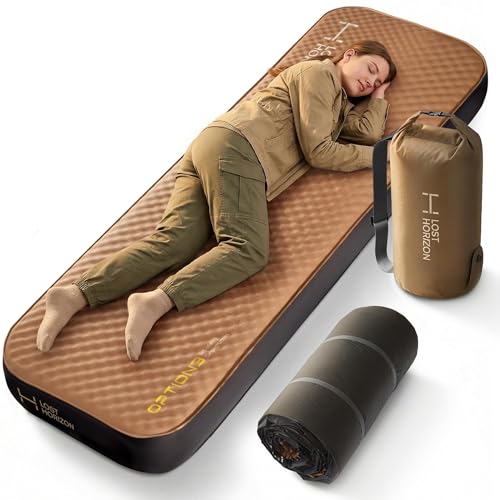
Lost Horizon Option3 Cot-Size Sleeping Pad

Acacia 4-Inch Self-Inflating Sleeping Pad

Lost Horizon Option3 Slim Single Sleeping Pad

Lost Horizon Option3 Queen Sleeping Pad
The Details Behind The Selections
The Big Agnes Divide Insulated Sleeping Pad is built around vertical air chambers that give the surface a stable, cradle-like feel without the wobble some inflated pads have. THERMOLITE insulation paired with a heat-reflective film keeps body warmth from bleeding into the ground, which is exactly the dynamic that ruins a cold-weather sleep. At an R-value of 4.0, you get genuine three-season usability for shoulder-season trips in the mountains. The regular size fits a wide range of sleepers, and the pad packs down small enough for a multi-day pack without dominating your volume.
For backpackers moving through spring, summer, and fall conditions, this is a versatile middle-ground pick. It sits between the ultralight Rapide that comes later in this list and the foam-heavy comfort pads, making it a smart default for mixed terrain.
Bright Spots
- R-value of 4.0 handles cool nights without needing a second layer underneath
- Vertical air chambers spread weight evenly for side sleepers who shift at night
- Heat-reflective film plus THERMOLITE insulation trap warmth without adding bulk
- Packs small enough to leave room for a dry bag and rain shell
- Smooth top surface reduces the crinkly feel that wakes restless sleepers
Worth Bearing In Mind
- Air-chamber design needs a moment of inflation management before bed
- Like most air pads, owners commonly report watching for sharp tent stakes and roots
Who It Suits Best
Three-season backpackers who want one pad for spring, summer, and fall without swapping gear each trip.
Consider Something Else When
The Big Agnes Rapide SL Insulated Sleeping Pad suits thru-hikers counting every ounce more than this Divide does.
The Rapide SL takes the Divide’s approach and trims the fat for serious distance. An R-value up to 4.8 means it handles colder ground than most three-season pads, while two layers of heat-reflective film keep the packed size minimal. The Wide Regular cut at 25 by 72 inches gives broader shoulders room without crossing into double-pad territory. Self-inflating foam speeds up camp setup, which matters when you’re rolling in tired and the sun is dropping.
This is the pad you reach for when the trail is the point. Compared to the Divide above, the Rapide is lighter and warmer at the cost of slightly more cash. For alpine starts and shoulder-season hiking, it earns its keep.
The Good Stuff
- High R-value up to 4.8 supports late-season and high-elevation trips
- Super-light construction leaves pack space for food and layers
- Dual heat-reflective layers cut radiant heat loss into cold ground
- Self-inflating foam reduces breath-count during evening setup
Trade-Offs To Consider
- Higher performance lands at a noticeably higher cost than entry pads
- Self-inflating foam needs a top-up breath or pump for firmness preferences
- Wide Regular can feel snug for sleepers above six feet who want true room
Key Product Details
Made For
Thru-hikers and alpine travelers who count ounces and still need warmth on cold nights.
A Better Fit Elsewhere
The TREKOLOGY UL R7 Sleeping Pad suits campers prioritizing maximum R-value per dollar over ultralight gram-counting.
Where most air pads max out in the four-to-five R-value range, the TREKOLOGY UL R7 pushes to 7.2, which puts genuine winter and snow camping within reach. The pad is inflatable rather than foam-based, so it packs down to roughly water-bottle size and weighs around two pounds. Four inches of loft creates enough separation from frozen ground to keep cold air from seeping into your bag.
Compared to the Big Agnes Rapide above, this TREKOLOGY pad trades some ultralight credentials for stronger cold-weather insulation. For shoulder-season hunters, winter campers, and anyone chasing shoulder-month trips, the higher R-value pays off fast.
Positive Points
- R-value of 7.2 supports winter and snow camping without extra layers
- Packed size close to a water bottle fits inside or alongside a pack
- Four-inch thickness lifts sleepers fully off uneven ground
- Lightweight 2-pound build keeps total pack weight manageable
Honest Caveats
- All-air construction requires care around sharp tools, roots, and pets
- Field repairs typically need a patch kit on longer trips
Feature Snapshot
Who Will Love This
Four-season campers and cold-climate backpackers who refuse to hang up the pack when temperatures drop.
Look Elsewhere When
The Acacia Self-Inflating Sleeping Pad suits campers who want foam comfort without the inflation process.
The Lost Horizon Option3 Cot version shifts the self-inflating foam idea into cot-friendly dimensions. At 4.5 inches thick with about 5.5 pounds of foam filling, it cushions sleepers up to around 220 pounds without bottoming out on hard cot fabric. The internal structure spreads air and foam evenly so pressure points ease up during long nights on a raised surface. For campers already invested in a cot frame, this pad slots in as a comfort upgrade rather than a replacement.
This pad leans car-camp rather than backcountry. Compared to the TREKOLOGY UL R7 above, it’s heavier and bulkier, but you trade packability for a softer, more bed-like surface. If you’re driving to camp and dragging gear from the trunk, that trade is usually worth it.
Where It Helps
- 4.5-inch foam filling lifts sleepers off hard cot surfaces
- Even air-and-foam distribution reduces hip and shoulder pressure
- Cot-friendly footprint replaces thin cot pads that compress flat
- Self-inflating foam cuts evening setup time at base camps
Points To Keep In Mind
- Heavier foam build is best suited for car camping, not long hikes
- Bulkier packed size demands more trunk or gear-shed room
Right Fit For
Cot sleepers and car campers who want real cushioning on a raised sleep platform.
Reach For A Different Pick When
The Lost Horizon Option3 Slim Single Sleeping Pad works better in tight vehicle interiors and small tents.
The Acacia takes a different angle on compact pads by leaning into plushness. The Y-shaped telescopic foam structure supports sleepers up to 440 pounds without compressing flat, which matters for side sleepers whose hips tend to bottom out on thinner pads. About 4.3 inches of foam provides a soft, mattress-like feel, and the polyester surface stays quiet when you roll over. A pump sack handles the final inflation so you don’t have to lean into it with your lungs after a long day.
This pick stands apart from the lighter Big Agnes Divide earlier in this roundup. You give up backpacking weight savings for genuine bed-like comfort, which makes sense for festival camping, car trips, and base-camp setups where relaxation matters more than mileage.
A Few Strong Suits
- 440-pound weight capacity supports heavier sleepers without bottoming out
- Y-shaped telescopic structure keeps foam evenly distributed
- Quiet polyester surface prevents the crinkle that wakes light sleepers
- Pump sack included for hands-free top-off inflation
Small Caveats
- Foam-heavy build adds pack weight over ultralight air pads
- Bulkier packed size fits car camping better than backpacking
Best Suited To
Side sleepers and base campers who want home-style comfort at camp and don’t mind a heavier pack.
Not Your Match When
The Big Agnes Divide Insulated Sleeping Pad fits backpackers who need a smaller, lighter pack volume.
The Slim Single trims the Option3 line down for tight spaces. At 62 by 26 inches and 3 inches thick, it slots into small tents, rooftop setups, and vehicle sleep platforms where wider pads simply won’t fit. Self-inflating foam means you unroll, crack the valve, and let the pad do most of the work. The reduced thickness keeps packed weight low, which is a relief on bikepacking trips or motorcycle tours where every kilogram matters.
This is the same Lost Horizon family as the cot-size pad above, just narrower and lighter. Where the cot version targets raised platforms, the Slim Single targets floor space you don’t have.
Everyday Advantages
- Slim 26-inch width fits narrow tent floors and vehicle interiors
- Self-inflating foam speeds setup in tight quarters
- Lighter packed weight suits bikepacking and motorcycle camping
- Lower profile stays out of the way in cramped shelters
A Few Limitations
- 3-inch thickness offers less isolation from cold or rocky ground
- Narrow cut feels tight for sleepers who shift or sprawl
Who Should Grab It
Vehicle campers and bikepackers dealing with narrow tents, rooftop tents, or sleeper vans.
Swap It Out When
The Lost Horizon Option3 Queen Sleeping Pad suits two-person setups where space allows for shared width.
The Queen rounds out the Option3 trio with a shared-sleeping approach. At 4.5 inches thick with about 13 pounds of foam, it supports sleepers up to around 440 pounds without compression, which means partners and kids can sprawl without fighting for the center. The internal foam-and-air structure spreads weight evenly so neither person rolls into the middle valley that plagues thinner two-person pads. For car camping where you’re not counting ounces, that shared surface changes the feel of a trip.
Compared to the Slim Single above, this is a completely different use case: more weight, more cushion, more room. Where the Slim Single handles solo adventures in tight spaces, the Queen handles family basecamps with room to spare.
Useful Strengths
- Queen-size footprint lets two sleepers share one pad comfortably
- 440-pound capacity handles adults plus a child or pet without sag
- 4.5-inch foam fill keeps hips and shoulders lifted all night
- Internal structure reduces the rolling-toward-center problem
Where It May Fall Short
- 13-pound foam weight is built for car camping, not trail use
- Queen size demands larger tent or family-shelter floor space
Built With In Mind
Two-person car campers and families who want one shared pad for vehicle-based trips.
Another Choice May Suit
The Lost Horizon Option3 Cot-Size Sleeping Pad works better for solo sleepers using raised cot platforms.
What To Weigh Before Choosing Your Pad
R-value, which measures how well a pad blocks heat flow into cold ground, matters more than any other spec for warm sleep. A pad rated around 3 works for summer, 4 to 5 covers three-season backpacking, and anything above 6 unlocks winter and snow camping. For shoulder-season trips above tree line, lean toward higher numbers rather than saving weight on insulation you might regret at 2 a.m.
Thickness, often called loft, is what separates you from rocks and roots. Two to three inches handles summer fairly well, but four inches plus makes side sleepers happier because hips and shoulders don’t compress to the ground. Air pads pack smaller for the same loft, while foam pads give more consistent support but take up more pack volume.
Weight and packed size depend entirely on your trip. Ultralight backpackers chasing long distances want sub-two-pound pads that disappear into a pack. Car campers can ignore weight entirely and prioritize thickness, width, and comfort features instead. Match the pad to the trip, not the other way around.
Sleep style is the detail people forget. Side sleepers need more loft to keep pressure points off the ground. Back sleepers can usually get by with thinner pads. Restless movers benefit from wider pads or baffled designs that keep them centered. Match the pad shape and width to how you actually sleep.
Smart Considerations Across These Picks
Pitfalls Shoppers Hit
A common slip is buying by packed size alone and ignoring warmth. The smallest pad in the store might be a summer-only option that leaves you cold in May or October. Another mistake is over-trusting thickness numbers without checking R-value. A thick pad with low R-value feels soft but still drains body heat into frozen ground. Match R-value to the coldest conditions you actually camp in, not the mildest.
What The Higher Tier Buys
Premium pads earn their higher cost through better insulation systems, lighter materials, and tighter baffle construction. The jump from a basic foam pad to a high-R-value inflatable buys you warmer nights, smaller packed size, and often faster setup with self-inflating or pump-sack systems. For serious backpackers chasing shoulder-season miles, that upgrade pays back in better sleep and longer trips. For casual summer campers, the basics do the job just fine.
Frequently Asked Questions
What R-value do I need for three-season camping?
A pad rated between 3 and 5 handles spring, summer, and fall for most people. Snow camping or winter ground pushes you toward R-values of 6 and above. Match the number to your coldest realistic trip, not your average.
How thick should a sleeping pad be for side sleeping?
Four inches of loft or more keeps hips and shoulders off the ground for most side sleepers. Thinner pads can work with softer ground or paired with a softer bag, but more loft generally means more comfort through the night.
Are self-inflating pads better than air pads?
Self-inflating foam pads combine foam and air for faster setup and more consistent support, but they pack larger. Pure air pads pack smaller and adjust firmness with breath, but they need more careful handling around sharp objects. Your trip style decides which trade makes sense.
Can I use a compact sleeping pad for winter?
Yes, with a high enough R-value. Look for pads rated 6 and above for snow camping and frozen ground. Lower-rated pads will let body heat drain into the cold, no matter how thick they feel.
How do I store a sleeping pad long-term?
Keep it fully dry, loosely rolled or folded, and stored in a cool dry place. Long-term compression in a tight stuff sack can degrade foam over time. Letting pads breathe between trips extends their lifespan.
Final Verdict
Your pad choice comes down to where and how you camp most. Backpackers chasing distance will lean toward the Big Agnes Rapide SL or TREKOLOGY UL R7 for warmth-to-weight. Car campers and families will find more comfort in the Lost Horizon Option3 line. Match the pad to your trip, your sleep style, and your climate, and the rest falls into place.