
Backpackers packing for shoulder-season trips know the squeeze: every ounce and every inch matters when the tent, pad, and sleeping bag all share the same pack. A compact hiking sleeping bag earns its spot by compressing small, warming reliably, and surviving a few clumsy tosses onto granite at the trailhead. This lineup balances kid-friendly liners for family car camping with a down mummy option that fits grown-up thru-hikers. Below, the picks cover the sweet spot between packability and warmth, with honest notes on where each one stretches and where it falls short.
A Closer Look At The Lineup

Wake In Cloud Kids Sleeping Bag, Unicorn Rainbow Hearts
Wake In Cloud Kids Sleeping Bag, Mermaid Purple Blue

LRYBUKNT Lightweight Camping Sleeping Bag for Adults & Kids

Wake In Cloud Kids Sleeping Bag, Butterfly Garden Flowers
QEZER Down Mummy Sleeping Bag, 600 Fill Power
Taking A Closer Look At The Options
For families introducing little ones to camping, this Wake In Cloud bag turns the sleeping pad into something to look forward to. The pastel unicorn-and-rainbow print sells itself before the kid even unrolls it, which helps when you’re coaxing a tired five-year-old into the tent at dusk. The 61 by 26 inch cut fits most children ages 3 through 8 without a fight.
At roughly 2.9 pounds and shipped in a backpack-style stuff sack, it’s light enough that small hikers can carry their own kit. For most weekend trips in spring or fall, the synthetic fill handles typical overnight temperatures without the parent hovering over a separate blanket.
Where It Helps
- Themed print motivates hesitant campers to actually get in the tent
- Kids aged 3 to 8 can shoulder the 2.9 lb bag themselves on short walks
- Backpack-style stuff sack doubles as a play-daypack between trips
- Polyester build wipes clean after muddy playground sessions
Points To Keep In Mind
- Synthetic fill dries slowly if it gets soaked, so a wet tent day can leave it clammy
- 61 inch length runs short for taller kids on the upper end of the age range
Who It Suits Best
Parents car camping or cabin-tripping with a 3 to 8 year old who cares more about the pattern than the temperature rating.
Look Elsewhere When
Anyone seeking real backcountry warmth should reach for the QEZER Down Mummy Sleeping Bag instead, since that pick trades the kid-friendly print for genuine weight savings on the trail.
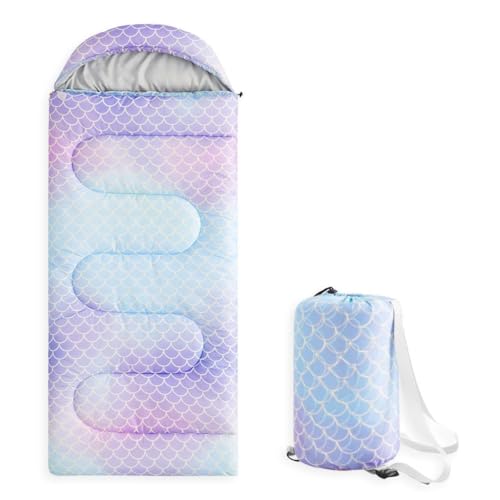
Same chassis as the unicorn version, this mermaid print wins over kids who already have one of every stuffed sea creature on the bed. Where the first pick leans rainbow and clouds, this one swaps the palette for purple and blue scales, giving siblings a way to tell their bags apart at a shared sleepover.
For most parents hosting a living-room camp-out, the synthetic fill keeps the room comfortable without running the heat all night. The matching stuff sack rolls the bag into a kid-sized backpack, which doubles as a costume prop long after lights out.
Well-Handled Touches
- Distinct color scheme helps two kids tell their gear apart at a glance
- Cozy polyester lining feels soft against pajamas on cooler nights
- Stuff sack straps sit flat when carried, not poking a small back
Honest Caveats
- Synthetic insulation loses loft over years of compression, so the bag feels less puffy after a couple of seasons
- The 2.9 lb carry weight adds up fast on a hike that’s longer than a parking-lot-to-picnic-table walk
Feature Snapshot
Made For
Households running frequent indoor slumber parties where the bag lives on the floor more than on a trail.
A Better Fit Elsewhere
Backpackers heading into shoulder-season weather will find the LRYBUKNT Lightweight Camping Sleeping Bag a smarter grab thanks to its stated 41 to 77 degree comfort range.
The first adult-suitable option in this lineup, the LRYBUKNT bag handles the temperatures most casual campers actually face. With a stated comfort range of 50 to 68 degrees Fahrenheit and a wider 41 to 77 degree limit, it covers the spring-to-fall window without forcing a second blanket on cool autumn nights. The waterproof nylon shell shrugs off morning dew on grass and damp tent floors.
Inside, a 190T polyester pongee lining sits soft against skin, which matters when you’re wearing a thin base layer and nothing else. Compared to the kid-focused Wake In Cloud picks above, this one trades playful prints for a body cut built for real overnight trips.
Notable Gains
- Stated comfort range covers most shoulder-season conditions without extra insulation
- Waterproof nylon shell fends off tent condensation and damp ground
- Breathable pongee lining prevents the clammy wake-up that plagues cheap synthetic bags
- Adult-friendly length fits taller sleepers who roll up the kids’ options
Trade Offs
- No mummy hood, so a cold night at the lower temperature limit means adding a beanie
- Synthetic fill packs larger than the QEZER down bag below, taking up more pack space
Key Product Details
Best Suited To
Weekend backpackers and car campers who need one bag that handles spring drizzle and crisp autumn mornings without swapping gear.
Swap It Out When
Thru-hikers counting every gram should consider the QEZER Down Mummy Sleeping Bag instead, since 600 fill down beats synthetic on the warmth-to-weight scale.
The gentler print in the Wake In Cloud trio, this butterfly-and-flowers version leans toward kids who prefer pastels to mythical creatures. It shares the same 61 by 26 inch cut and 2.9 pound carry weight as its siblings, so the deciding factor here really is the artwork.
For most parents running a backyard tent or a one-night state-park trip, the bag handles mild weather without dragging along extra blankets. Compared to the unicorn and mermaid versions above, it feels a touch calmer on the eyes, which some parents prefer for kids who overstimulate easily.
Strengths Worth Knowing
- Soft butterfly print appeals to kids who find brighter patterns overstimulating
- Same trusted 3-season construction as the rest of the Wake In Cloud kids line
- Stuff sack doubles as a play-daypack for short walks between camp and the parking lot
Some Limits To Know
- Synthetic fill compresses flat after a few seasons in storage, so loft fades faster than on a quality down bag
- Polyester shell can feel clammy in humid summer nights without a sleeping pad beneath
Whose Shelf It Belongs On
Families who already love the Wake In Cloud brand and want a third themed option for siblings, cousins, or visiting friends.
Reach For A Different Pick When
Anyone hitting an actual trail should step up to the LRYBUKNT Lightweight Camping Sleeping Bag, which offers adult sizing and a stated waterproof shell.
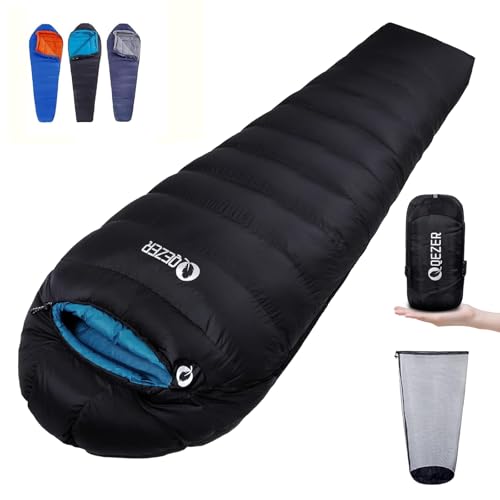
Built for backpackers who count ounces, the QEZER mummy wraps 600 fill power down into a tapered cut that traps heat around the core. The mummy shape, with its snug hood and shoulder collar, wastes less warm air than a rectangular bag, which matters on a cold night at altitude.
Down insulation (loose-cluster goose or duck plumage, prized for trapping warm air at low weight) compresses much smaller than the synthetic fill in the LRYBUKNT above. Setup follows a familiar ritual: unroll, climb in, zip up, cinch the hood cord, secure the velcro flap, and you stay warm through the small hours. For most multi-day routes, the trade-off between down care and weight savings tips clearly in favor of this pick.
Bright Spots
- Mummy cut and cinchable hood keep core warmth from escaping overnight
- Down fill compresses small, freeing pack space for extra food or layers
- Built-in shoulder velcro and zip guards prevent drafts at the collar
- Stuffs into a tight storage sack for tight bear-canary and pack compartments
Practical Considerations
- Down loses loft when wet and dries slowly, so a wet day can wreck a cold night
- Hood and tapered cut feel restrictive for restless sleepers who toss and turn
- Down fill demands careful long-term storage (loose in a large sack) to avoid clumping
Feature Snapshot
Who Should Grab It
Solo backpackers planning multi-day trips where every gram in the pack matters more than the upfront cost of a down bag.
Not Your Match When
Families camping with kids should look at the Wake In Cloud Kids Sleeping Bag instead, since the mummy cut and down care routine don’t suit first-time young campers.
What To Weigh Before Picking A Compact Hiking Sleeping Bag
Temperature Rating Versus Actual Comfort
Manufacturers list comfort ranges in degrees Fahrenheit, but those numbers describe a standard sleeper in calm conditions. Cold sleepers, windy ridges, and high-altitude camps all push the effective floor lower than the printed rating. For shoulder-season hiking, choose a bag rated at least 10 degrees below the coldest expected night so a sudden drop doesn’t end the trip early.
Fill Type, Weight, And Pack Size
Down insulation wins on the warmth-to-weight scale and packs down smaller than synthetic alternatives, but it costs more, demands careful storage, and suffers when wet. Synthetic fill costs less, dries faster after a rainstorm, and stays warm even when damp. The QEZER mummy above demonstrates why backpackers accept the trade-off, while the LRYBUKNT shows why casual campers often prefer synthetic.
Shape And Fit
Mummy bags trap heat efficiently but feel restrictive, especially for side sleepers and restless kids. Rectangular bags give more room to sprawl but carry more dead air that has to be warmed. Hoods, draft collars, and zipper flaps all add warmth in colder conditions but add weight for summer trips.
Care And Storage Habits
Down bags need to live loose in a large cotton sack between trips, not crammed in compression sacks, or the fill clumps and loses loft. Synthetic bags tolerate rougher storage but should still air out before long-term packing. Zippers benefit from an occasional wax rub to keep them sliding smoothly after dusty desert trips.
Key Considerations Across These Picks
Pitfalls Shoppers Hit
A common misstep is buying a bag rated for summer camping and expecting it to handle a frosty autumn night at elevation. Another trap is grabbing a down bag without a plan for keeping it dry, since a soaked-down bag loses most of its insulating value overnight. Oversized stuff sacks also undo the point of a compact bag, so packing into a smaller compression sack usually gives better results.
Where The Extra Money Goes
Higher-tier bags spend the budget on fill quality, hood and draft-collar design, and lighter shell fabrics that cut pack weight without sacrificing durability. The jump from a basic synthetic rectangle to a down mummy means warmer nights for less carried weight, which adds up over a long trail. For weekend trips where weight matters less, the lower tiers still serve casual campers well.
Frequently Asked Questions
What temperature rating do I need for three-season hiking?
Most three-season bags list a comfort rating between 30 and 50 degrees Fahrenheit to cover spring, summer, and fall nights at typical mid-elevation camps. High-altitude trips push that range lower, so cold-sensitive sleepers should size down another 10 degrees.
Is a down bag worth the extra cost?
Down wins on weight and pack size, which matters on long trails where every ounce counts. Synthetic bags cost less, dry faster, and stay warm when damp, which can matter more for casual weekend trips.
Can kids use a regular adult sleeping bag?
Kids can use adult bags but often end up with cold spots and unused space where body heat does not reach. Purpose-built kids’ bags like the Wake In Cloud line above fit better, weigh less for small shoulders, and carry themed prints that motivate reluctant campers.
How do I store a sleeping bag between trips?
Store bags loose in a large breathable sack, not compressed in their stuff sacks, to keep insulation loft intact. Hanging over a wide hanger or folding loosely in a cotton storage sack both work for long-term care.
What is the difference between comfort and limit ratings?
The comfort rating describes the temperature at which a standard sleeper stays warm. The limit rating describes the lowest temperature at which a cold sleeper survives without shivering, so the comfort number is the safer guide for most campers.
Closing Remarks
The right compact hiking sleeping bag depends less on the spec sheet and more on how you actually camp. Weekend families with young kids do well with a themed synthetic pick that handles spills and short walks. Backpackers counting every gram find the warmth-to-weight math of a down mummy hard to beat. Match the bag to your trip length, climate, and care habits, and the rest of the kit falls into place around it.