
Splitting firewood by hand wears you down fast. A solid commercial wood splitter takes the swing-and-sweat out of the chore and turns a back-breaking afternoon into a tidy, mechanical rhythm. This lineup covers manual wedges for cabin owners, electric hydraulic splitters for homeowners, and drill-bit kits for those who already own a cordless drill.
A Quick View Of The Lineup
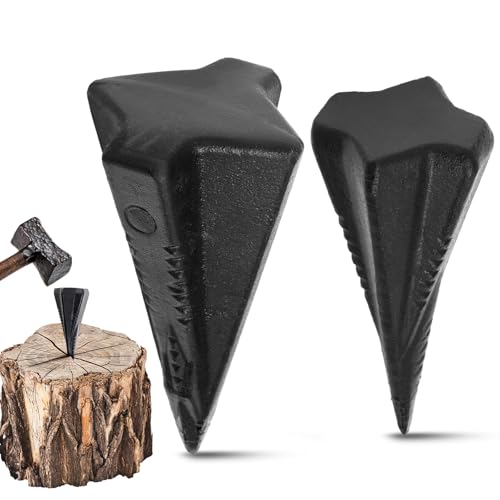
Otoolling 4 & 5 Lbs Wood Splitting Wedges Manual Log Splitter, Black
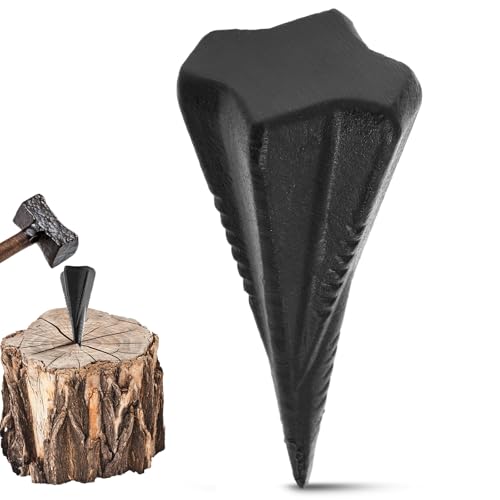
Otoolling 1 Pcs 4 Lbs Wood Splitting Wedges Manual Log Splitter, Black

BILT HARD 6.5 Ton Electric Log Splitter, 15Amp, Hydraulic Ram

BILT HARD 14 Ton Electric Log Splitter with 2-Stage Pump

YARDMAX YS0650 6.5 Ton Electric Log Splitter
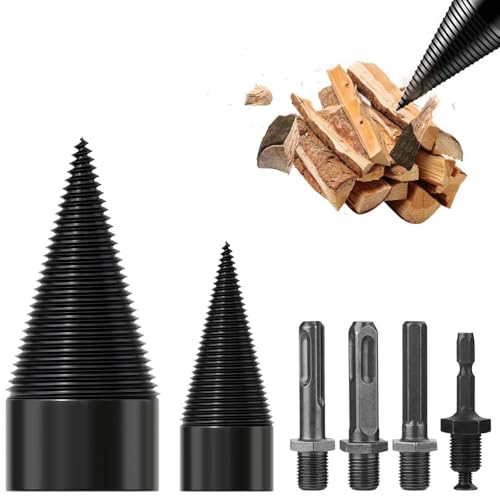
DSHTP Wood Splitter Drill Bit Set, 32mm and 50mm Cones, 6-Piece
This two-piece kit gives you both a 4-pound and a 5-pound diamond-point wedge in one package, so you can match the wedge weight to the size of the log without hunting for extras. The diamond cross-section concentrates force on a narrow line, which is the key to splitting dense rounds without burying the wedge halfway in. For property owners who already own a sledgehammer and prefer to keep the work hands-on, this pair handles small to mid-sized logs without much fuss.
Compared to the single-wedge kit that follows, the dual-weight option lets you tackle a wider range of rounds in one session without swapping tools. You also have a backup on hand when one wedge is dulling out or gets stuck. It is the manual answer for folks who split just enough wood to keep a woodstove or outdoor pit going through the cooler months.
What Makes Sense
- Two wedges in one package cover a wider log range without separate purchases.
- Diamond profile drives force along a clean split line on rounds and split-grain pieces.
- Heavy enough to keep momentum when paired with a 6- to 8-pound sledgehammer.
- No engine, hydraulic fluid, or extension cord, so storage stays simple in a shed or garage corner.
- Works on seasoned or green rounds, giving you flexibility across seasons.
Things To Consider
- You supply the sledgehammer and the elbow grease, so this is genuinely a workout.
- Wedges can occasionally fly out on a glancing blow, so eye protection is a must.
- Larger rounds over 16 inches in diameter usually need something heavier or powered.
Who It Suits Best
Homeowners who split a small woodpile each week and want a manual setup without motor noise or fuel.
Consider Something Else When
Property owners facing multiple cords of dense oak should reach for the BILT HARD 14 Ton Electric Log Splitter instead.
This single-piece 4-pound wedge keeps things as simple as they get for splitting firewood by hand. The lighter profile makes it friendlier to drive with a standard 6-pound sledge, which is what most weekend splitters already have leaning against the shed wall. It is a sensible entry point for a cabin, a fire pit, or the occasional Saturday morning cleanup pile.
The trade-off versus the prior Otoolling kit is straightforward: you give up the second weight option and the matching spare. In return, you spend less and store less, which is exactly the right shape for someone who splits a few face cords a year rather than full truckloads. It works best on rounds up to about 12 inches across, where the wedge has enough leverage to actually bite.
Useful Touches
- Single-wedge price keeps the cost low for first-time buyers.
- 4-pound weight is manageable for most adults driving a standard sledge.
- Diamond profile splits cleanly along the grain of soft and mid-hard woods.
Worth Noting
- Hard rounds over 12 inches tend to bounce the wedge without deep penetration.
- Only one wedge means no spare if the head deforms after a season of use.
- You still need a sledge and proper PPE to use it safely.
Made For
Camp and cabin owners who split a small stack of softwood each fall for weekend fires.
Not Your Match When
Folks processing knotty oak or maple should turn to the BILT HARD Log Splitter 6.5 Ton for a powered alternative.
The BILT HARD 6.5-ton moves from manual labor into mechanical rhythm. A 15-amp motor drives a hydraulic ram that pushes rounds against a fixed wedge, splitting logs up to 9.8 inches in diameter and 20.5 inches long. The horizontal layout sits low to the ground, so you can roll rounds straight from a sawbuck onto the beam without much lifting.
Where the Otoolling wedges demand your arm, this machine trades that effort for a 120-volt outlet and a few seconds of patience per cycle. It is a practical middle step for a homeowner who splits two to four cords per season and wants the work done before lunch. Steel construction keeps the frame rigid under repeated ram cycles.
The Case For It
- 6.5 tons of splitting force handles oak, maple, and seasoned hardwood with confidence.
- Plugs into a standard 15-amp household outlet, no special wiring required.
- Horizontal layout means less lifting than a vertical or wedge setup.
- Steel frame supports long-term garage duty without flexing under load.
Room For Improvement
- Cycle time is slower than gas-powered 14-ton units on truly dense rounds.
- You stay tethered to a cord, which limits how far from the garage you can work.
- Hydraulic fluid and seals need occasional inspection to keep the ram responsive.
At A Glance
Best Suited To
Homeowners splitting a few cords of mixed hardwood each season on a standard 120-volt circuit.
Look Elsewhere When
Anyone processing larger rounds over 10 inches should consider the BILT HARD 14 Ton Electric Log Splitter instead.
The 14-ton BILT HARD takes the same electric philosophy and pushes it into serious territory. A 15-amp motor drives a 2-stage hydraulic pump (a pump that delivers fast flow at low pressure and slower flow at high pressure, optimizing both cycle speed and splitting force), which moves the ram faster on the approach stroke and ramps up force as it meets the wedge. You can chew through hardwood rounds up to 20 inches long and 16 inches in diameter, which covers most tree-trimming leftovers and full stove rounds without pre-cutting.
Compared to the 6.5-ton sibling reviewed above, the extra tonnage shows up when you hit knotty oak or crotch grain that would stall a smaller ram. The 2-stage pump also shaves seconds off each cycle, which adds up across a full cord. For small farms, homesteads, or anyone heating with wood through a real winter, that throughput matters.
Noteworthy Benefits
- 14 tons of force handles dense hardwood, knotty rounds, and oversized pieces.
- 2-stage pump speeds up the approach stroke without sacrificing push power.
- 16-inch diameter capacity cuts down on pre-splitting before the ram cycle.
- Still runs on a 15-amp circuit, so no special outlet is required in most homes.
- Suitable for farm, woodlot, and fireplace use without stepping up to gas power.
Points To Note
- Heavier than smaller electric models, so you may want help moving it from the garage.
- Cord limits range from the outlet, so an outdoor extension rated for the amperage is wise.
- Hydraulic seals and fluid should be checked before and after each firewood season.
Feature Snapshot
Whose Shelf It Belongs On
Farm, homestead, and woodlot owners who need real tonnage on a household outlet without gas-engine maintenance.
Another Choice May Suit
Homeowners splitting only a few cords of softwood would be better served by the lighter Otoolling wedge kits.
YARDMAX has built a reputation around compact outdoor machines, and the YS0650 brings that sensibility to firewood work. It pairs a 6.5-ton hydraulic ram with a relatively tight footprint, which makes it easier to wheel out of a garage and back in again at the end of the day. For a homeowner who stores their splitter between seasons, that maneuverability matters as much as the splitting force.
Where this machine lands in the lineup is between the wedge kits and the heavier BILT HARD 14-ton unit. You get electric quiet and household-outlet convenience, with enough push to handle typical stove rounds rather than monster sections. Depending on your log profile, you may find the cycle time snappier than expected for a 6.5-ton class machine.
The Value In It
- Compact frame fits through standard garage doors and stores upright in tight spaces.
- 6.5 tons covers most homeowner-grade hardwood without overwhelming the operator.
- Wheels and handle make solo positioning realistic on a flat driveway or patio.
- Electric operation keeps noise low enough for early-morning sessions in residential areas.
A Few Limitations
- Larger rounds over 10 inches in diameter may demand extra passes or pre-trimming.
- Tethered to a cord, so placement near the outlet limits where you can set up.
- Hydraulic components benefit from a seasonal check before the first heavy-use week.
Perfect Match For
Homeowners who want a storable, electric splitter for typical hardwood rounds without dedicating garage space to a full-size rig.
Swap It Out When
Anyone regularly tackling rounds over 14 inches in diameter should step up to the BILT HARD 14 Ton Electric Log Splitter.
This six-piece kit takes a different angle entirely. Instead of a wedge or a hydraulic ram, it gives you two tapered cones (32 mm and 50 mm) that you drive into dry wood with a standard drill. The cones screw themselves in along the grain, then pop the wood apart from inside. A set of four shank adapters (round, square, 3/8-inch hex, and 1/4-inch hex) means you can match the cones to whichever drill chuck you already own.
Compared to the manual wedges that opened this list, the cones trade swing-and-sweat for drill torque, which makes them a nice fit for shed storage where a hydraulic machine would be overkill. For most homeowners, the 32 mm cone handles kindling and small pre-cuts nicely, while the 50 mm cone tackles wider firewood rounds once you have a drill with enough muscle behind it.
Why It Works Well
- Six-piece set covers both kindling and full-round splitting in one package.
- Four shank adapters fit most corded and cordless drill chucks you already own.
- Coarse thread and tapered point give controlled entry into dry, seasoned wood.
- Stores easily in a small drawer or tool case, with no fuel or hydraulic fluid to manage.
Where It May Fall Short
- Needs a drill with real torque, so underpowered 12-volt units may stall on dense wood.
- Best on dry or seasoned rounds; green wood resists the threading action.
- Not a substitute for a full hydraulic splitter when you have multiple cords to process.
Feature Rundown
Who Should Grab It
Homeowners who already own a capable corded or brushless drill and want a quiet, storable splitter for small jobs.
Reach For A Different Pick When
Anyone facing full cords of dense, unseasoned oak should turn to the BILT HARD 14 Ton Electric Log Splitter for powered muscle.
What Matters Most Before Choosing A Commercial Wood Splitter
Match the splitter to the wood, not the other way around. Most splits come down to three questions: how much wood, how dense, and how much storage space do you actually have.
Splitting Force And Log Size
Tonnage (the pushing force of the hydraulic ram) and log capacity are where most buyers misjudge. A 6.5-ton machine handles the typical 6- to 10-inch rounds most homeowners face, while a 14-ton unit is what you reach for when rounds regularly cross 12 inches or come from dense hardwood like oak and hickory. Buying more force than you need adds weight, cost, and storage headaches; buying less means stalling on every knotty piece.
Power Source And Outlet Reality
Electric splitters are quieter, cleaner, and friendlier to a residential driveway. They run on a standard 15-amp household outlet, so the only catch is the cord. Gas-powered units offer cordless freedom and higher tonnage, but they bring noise, exhaust, and engine maintenance into the picture. For most homeowners, electric hits the sweet spot between capability and convenience.
Manual Wedges Versus Powered Machines
Manual wedges and drill-cone kits make sense for small stacks, kindling, and folks who already split by choice for the workout. A powered splitter makes sense once your pile crosses a couple of cords per year or your logs get big enough that you start dreading Saturday morning. There is no shame in either path; the wrong choice is forcing a manual setup through production-scale work.
Storage And Maneuverability
A splitter that does not fit back into the garage after the season is a splitter that gets left outside and rusts. Footprint, wheel placement, and overall weight matter as much as raw force for most homeowners. Measure your storage spot before you order, and leave room to wheel the machine in and out without a wrestling match.
Key Considerations Across These Picks
Mistakes Worth Dodging
The most common slip-up is matching a 6.5-ton electric splitter to 16-inch rounds and expecting it to keep up. The cycle gets sluggish, the motor works harder, and the machine wears out faster. Another trap is ignoring cord length and outlet placement, which forces awkward generator setups or dangerous daisy-chained extensions. Finally, do not skip eye and hand protection on the manual wedge kits; a glancing blow sends metal flying in a hurry.
What Separates Premium From Basic
The upgrade from a 6.5-ton to a 14-ton electric splitter buys you a 2-stage hydraulic pump, higher tonnage, and larger log capacity. You also get faster cycle times on dense wood, which is where the real time savings live. Whether that upgrade pays off depends on how much hardwood you actually process, but for anyone heating with wood through a real winter, the extra muscle is the difference between a Saturday project and a Sunday encore.
Frequently Asked Questions
What is the difference between tonnage ratings on electric log splitters?
Tonnage measures the pushing force the hydraulic ram applies at the wedge. A 6.5-ton unit handles most homeowner rounds, while a 14-ton unit pushes through denser hardwood, knotty sections, and larger diameters without stalling.
Can an electric log splitter handle oak and other dense hardwoods?
Yes, especially at the 14-ton class. Dense rounds may slow the cycle, but a properly sized electric splitter with a 2-stage pump keeps pushing through seasoned oak and hickory without bogging down.
How long does an electric log splitter take to split a cord of wood?
Cycle times vary by machine and log size, but most electric splitters reset in 10 to 20 seconds per round. A full cord of pre-cut rounds typically takes a few focused hours rather than a full day.
Do I need a special outlet for an electric log splitter?
Most electric splitters run on a standard 15-amp household outlet, so no special wiring is required. A heavy-duty outdoor extension cord rated for the amperage is recommended to keep voltage drop low.
Are manual splitting wedges still worth using?
Manual wedges absolutely make sense for small piles, softwoods, and homeowners who prefer a hands-on approach. They cost less, store easily, and need no fuel or hydraulic maintenance to stay ready.
Bottom Line
Pick the splitter that matches your woodpile rather than your wish list. Wedges and drill-cone kits handle the small stacks with grace, while the electric hydraulic units take the sweat out of anything measured in cords. Match the tonnage to your average round size, keep an eye on storage space, and the right choice tends to make itself obvious once the numbers line up.