
Cooking outdoors shifts when you can grill over flame in one chamber and slow-smoke with pellets in the next, all from a single rig. Combo pellet gas grills promise that two-fuel flexibility for folks who want weekday burgers and weekend brisket from the same footprint. This roundup sorts the strongest options worth a look, breaking down capacity, build, fuel flexibility, and the kind of cook each one actually suits.
A Fast Comparison Of The Options

Oklahoma Joe’s Rambler Portable Charcoal Grill (Black)
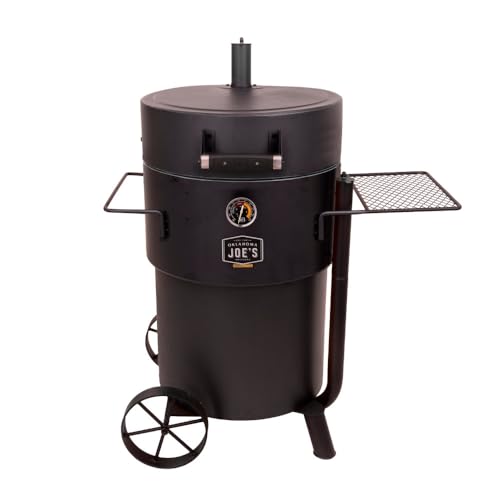
Oklahoma Joe’s Bronco Pro Drum Smoker and Grill (Black)

FlameDuty 600D Cover for Pit Boss Charleston 1020 Combo

Oklahoma Joe’s Firecraft Modular Open Fire Barrel Grill (Black)

Oklahoma Joe’s Highland Reverse Flow Offset Smoker and Grill (Black)
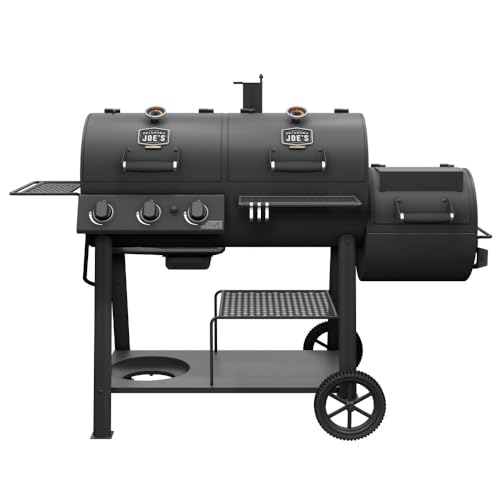
Oklahoma Joe’s Canyon Combo Dual Fuel 3-Burner Smoker and Grill (Black)

Oklahoma Joe’s Longhorn Offset Charcoal Smoker and Grill (Black)
Inside Each Recommended Option
The Rambler sits in a different lane than the rest of this list, and that is exactly the point. It is a compact charcoal grill built for people who cook at the campsite, the parking lot, or a small patio, not a full backyard setup. Compared with the larger Oklahoma Joe’s rigs below, this one drops the dual-fuel complexity in favor of pure charcoal simplicity and a small footprint.
You get 218 square inches of cooking area, which is enough for a few burgers, a couple of steaks, or a small batch of skewers. The lid clamps down for transport, and the whole unit feels like it was designed to live in a truck bed or RV storage compartment. For apartment dwellers with a balcony, or anyone whose “kitchen” on weekends is a tailgate, that travel-ready shape matters more than raw capacity.
A Few Highlights
- True tabletop portability for camping, tailgating, or small patios where a full-size grill would never fit
- Straightforward charcoal design with no gas lines, electronics, or complicated assembly
- 218 square inches handles meals for two to four without crowding the grates
- Lightweight build makes it easy to load, unload, and reposition around a space
Things To Consider
- Charcoal-only means longer preheat and ash cleanup than the gas-assisted Canyon Combo
- Smaller cooking area is limiting for entertaining a crowd
Built With In Mind
Campers, tailgaters, apartment dwellers, and anyone cooking for two to four in a tight space.
Look Elsewhere When
You host larger cookouts and want low-and-slow smoke plus fast gas grilling, in which case the Oklahoma Joe’s Canyon Combo Dual Fuel fits your routine much better.
The Bronco Pro changes the conversation by sealing the cook chamber into a vertical drum. That sealed-lid design, paired with adjustable intake and exhaust vents, lets the pit behave more like an oven than an open barrel. Compared with the offset-style picks later in this list, the Bronco Pro is more about steady temperature holding than fire management.
At 366 square inches, capacity lands in the middle of the pack. You can hang several racks of ribs, stack sausages, or run a few brisket flats with room to spare. For pitmasters who care most about repeatable, set-it-and-forget-it low-and-slow sessions, that drum geometry is the real story.
The Helpful Details
- Sealed-drum body holds temperature with less babysitting than open-barrel designs
- 366 square inches supports full racks of ribs or a couple of pork butts
- Built-in tuning vents give finer control over airflow during long cooks
- Heavy-gauge steel body tends to shrug off years of heat cycling and weather
Trade Offs
- Charcoal and wood fuel only, so no fast weeknight gas option like the Canyon Combo offers
- Vertical drum layout takes practice for newcomers used to offset fireboxes
Right Fit For
Backyard pitmasters running multi-hour smokes who want steady temperatures without constantly tending the fire.
A Better Fit Elsewhere
You want to flip between quick propane grilling and overnight smoking on the same rig, in which case the Oklahoma Joe’s Canyon Combo Dual Fuel is the more versatile choice.
This is the only accessory in the roundup, and it earns its spot by solving a real problem. The Pit Boss Charleston 1020 pellet and gas griddle combo is a serious investment, and a tailored cover is what keeps that investment from rusting through a couple of winters. FlameDuty built this one specifically for the Charleston 1020, so fit is the headline feature.
The 600D polyester shell is a step up from the thin covers most generic brands ship. That density rating translates to thicker weave, better abrasion resistance, and stronger water repellency. For anyone who leaves their combo grill outside year-round, a cover like this is closer to mandatory than optional.
Real-World Strengths
- Tailored fit for the Pit Boss Charleston 1020 means no flapping fabric or exposed edges
- 600D polyester stands up to UV, rain, and snow far better than entry-level covers
- Keeps pellet hopper components, griddle plate, and gas valves cleaner between cooks
- Extends the usable life of an expensive combo grill by preventing rust and finish fade
Minor Gripes
- Only fits the Pit Boss Charleston 1020 series, so it has zero value if you own a different model
- Heavier fabric can be awkward to fold and store when not in use
Who Should Grab It
Anyone who already owns a Pit Boss Charleston 1020 combo and parks it outside through changing seasons.
Skip It When
You do not own that specific Pit Boss model, in which case this cover offers no value, and a more universal fit would suit you better.
The Firecraft barrel plays a different game from the smokers on this list. Where the Bronco Pro and Highland seal the fire away, the Firecraft puts it front and center. The open firebox design means 360-degree access to the coals, and the modular format lets the same barrel serve as a fire pit one night and a grilling station the next.
With 480 square inches split across two heavy-gauge wire grates, capacity is generous for the open-fire category. Twist-lock handles release the grates for height adjustment, and the steel body is built to weather the kind of high, direct heat that would warp lesser rigs. For cooks who treat fire as the star of the show, this is the most expressive option in the lineup.
A Strong Showing
- Open firebox design gives unmatched access for stoking, adjusting, and managing coals by hand
- Modular format doubles as a fire pit, expanding its usefulness beyond just cooking
- Two round heavy-gauge grates total 480 square inches, enough for large gatherings
- Twist-lock handle system makes grate height changes quick and safe
Points To Note
- No sealed lid, so true low-and-slow smoking is harder than with the Bronco Pro or Highland
- Open fire demands more attention and a safe outdoor setup away from structures
Best Suited To
Outdoor cooks who love live-fire cooking, hosting fire-pit nights, and want a grill that pulls double duty as a gathering feature.
Another Choice May Suit
Your priority is overnight brisket or pulled pork, in which case the Oklahoma Joe’s Highland Reverse Flow Offset Smoker and Grill is a smarter match.
The Highland is the largest rig in this roundup and the most serious smoking platform of the group. The reverse-flow setup routes smoke and heat under a baffle plate before it travels across the cook chamber, which evens out the temperature curve and reduces the hot spots you get on cheaper offsets. For low-and-slow cooks that need to hit the same temp from one end of the grate to the other, that geometry is the headline feature.
With 1,093 square inches of total cooking area, the Highland is built for big cooks. A full packer brisket, two pork shoulders, and a row of ribs can all run at the same time without crowding. Removable baffles and an adjustable smokestack let you switch between reverse-flow and traditional offset modes, so the rig is more adaptable than it looks at first glance.
Practical Advantages
- Reverse-flow baffle plate evens out chamber temps for more consistent smoke rings
- 1,093 square inches handles full-pack briskets and large party cooks without splitting batches
- Removable baffles let you switch to traditional offset mode for grilling and direct cooking
- Large charcoal basket supports extended burns with fewer mid-cook refuels
Room For Improvement
- Substantial footprint, so it needs real backyard space rather than a tight patio
- Charcoal and wood only, with no propane convenience like the Canyon Combo provides
Made For
Serious backyard pitmasters running large-format low-and-slow cooks and competitions who want even chamber temps.
Reach For A Different Pick When
You mostly cook weeknight meals and want fast propane startup, in which case the Oklahoma Joe’s Canyon Combo Dual Fuel 3-Burner Smoker and Grill is a better everyday fit.
The Canyon Combo is the closest thing in this list to a true hybrid, and it is the only pick that pairs a real gas burner with a real charcoal firebox. The 3-burner propane side lights fast for weeknight burgers, while the offset charcoal chamber handles the slow ribs and brisket on the weekend. That two-fuel design is the reason the Canyon lands in the combo category, and it does the job without forcing a compromise on either side.
With 1,031 square inches of total cooking area, capacity is comparable to the Highland. The primary chamber alone gives you 750 square inches, which can handle a couple of pork shoulders at once, while the gas side can flip a dozen burgers in the time it takes to light a chimney. For a household that wants one rig to cover every cookout style, the Canyon is the most complete package on this list.
Points In Its Favor
- True dual-fuel design with both a 3-burner propane grill and a charcoal offset firebox in one body
- 1,031 square inches of total space handles both large smokes and fast grills
- Propane side reaches cooking temp in minutes, great for weeknight use
- Single rig replaces the need to own both a gas grill and a separate smoker
Honest Caveats
- Propane tank is not included, so plan to pick one up separately
- Larger footprint than single-fuel options, which matters on smaller patios
Who It Suits Best
Backyard cooks who want one rig that handles both quick weeknight grilling and slow weekend smoking without compromise.
Where Another Pick Suits Better
You only smoke and do not need a propane burner, in which case the Oklahoma Joe’s Highland Reverse Flow Offset Smoker and Grill puts all its focus on chamber performance.
The Longhorn is the classic in this lineup and the one that has spent the longest time on driveways across the country. It is a traditional offset smoker with a separate firebox, and it does not try to be anything fancier than that. Compared with the Highland just above it, the Longhorn trades reverse-flow tuning for a simpler, more direct cooking experience.
With 1,060 square inches of total cooking area split between a 751-square-inch primary chamber and a 309-square-inch warming rack, the Longhorn is a proven workhorse. You can smoke several racks of ribs or a couple of whole chickens at once, and the side firebox is a familiar setup for anyone who has used an offset before. For traditionalists who want a no-frills, reliable rig, the Longhorn still earns its place.
Real Benefits
- Proven traditional offset design that has been a backyard staple for years
- 1,060 square inches total supports family-sized cooks and small gatherings
- Separate firebox gives direct control over heat and smoke without baffle complexity
- Heavier steel construction holds up well to repeated high-heat sessions
Worth Noting
- Charcoal and wood only, with no propane option like the Canyon Combo offers
- Offset learning curve means more fire management than sealed-drum smokers
Perfect Match For
Traditionalists and family cooks who want a proven, straightforward offset smoker without reverse-flow complexity.
Not Your Match When
You want a propane burner for fast grilling on the same rig, in which case the Oklahoma Joe’s Canyon Combo Dual Fuel 3-Burner Smoker and Grill is the better all-in-one answer.
What To Weigh Before Picking A Combo Grill
A two-fuel grill only pays off if the dual chambers actually match your cooking rhythm. The biggest decision is whether you need a true gas-and-pellet setup or whether a charcoal-and-grill combo does the job. Pellet hoppers add temperature precision and set-and-forget convenience, while charcoal smoke gives more hands-on flavor control. Gas burners trade smoke character for weeknight speed.
Footprint matters as much as features. A 1,000-square-inch rig sounds great on paper, but it eats patio space and needs clearance from walls and railings. Measure your cooking area before falling in love with capacity numbers, and leave room for a cover, side shelves, and the ability to walk around the unit safely.
Build quality shows up in gauge steel, weld cleanliness, and how the lid seats on the chamber. Thinner steel warps faster and radiates heat unevenly, which shows up as hot spots during long smokes. Heavier steel costs more up front, but tends to hold temperature and outlast lighter competitors over many seasons.
Fuel logistics are easy to overlook. Pellet hoppers need dry storage for the bags. Propane tanks require refill access or a swap schedule. Charcoal and wood need a dry bin and a starter routine. The best rig is the one whose fuel chain fits the way you actually shop, store, and cook.
Key Considerations Across These Picks
Mistakes Worth Dodging
One of the most common errors is buying a combo grill for fuel flexibility and then only using one side. If you rarely fire up a charcoal chamber, the Canyon Combo or a smaller pure-gas setup is honestly a better value. Another frequent slip is ignoring clearance requirements, especially for offset smokers with hot fireboxes that need space from siding and fencing.
Where The Extra Money Goes
Higher-tier combo grills earn their cost through thicker steel, better-fitting lids, more precise dampers, and longer-lasting hardware. A reverse-flow baffle like the one on the Highland, or a true sealed drum like the Bronco Pro, both add meaningful temperature control. You pay for engineering that holds steady heat across long cooks without constant fire tending.
Frequently Asked Questions
What Is A Combo Pellet Gas Grill?
A combo pellet gas grill is a single outdoor cook station that combines a pellet-fueled chamber with a separate gas burner, letting you smoke low-and-slow on one side and grill hot-and-fast on the other.
How Much Cooking Space Do I Need For A Family Of Four?
For most families of four, 600 to 900 square inches of total area covers a typical weeknight meal plus a weekend smoke. Larger households or frequent entertainers usually want 1,000 square inches or more, like the Canyon Combo or Highland.
Can I Leave A Combo Grill Outside Year-Round?
Most steel combo grills can stay outside, but a heavy-duty fitted cover like the FlameDuty 600D dramatically reduces rust, fade, and finish damage over the long term, especially in wet or coastal climates.
Are Combo Grills Harder To Clean Than Single-Fuel Models?
They take a bit more routine since you are managing ash, grease, and sometimes pellet residue, but breaking the cleanup into a quick post-cook ash dump and a deeper monthly clean keeps things manageable.
What Is The Main Advantage Of A Reverse-Flow Smoker?
Reverse-flow designs route heat and smoke under a baffle plate so they travel evenly across the chamber, reducing hot spots and producing more consistent results on large cuts like brisket and pork shoulder.
Final Verdict
The right combo pellet gas grill depends on how you actually cook, not how often you entertain. The Oklahoma Joe’s Canyon Combo Dual Fuel is the most versatile pick for households that want true gas-and-charcoal flexibility in one rig, while the Highland and Longhorn deliver serious smoking performance for pitmasters who care less about weeknight gas. Match the rig to your real routine, and the combo will earn its space in your backyard for years.