
Some weekends call for a quick sear on propane. Others demand a long, smoky charcoal cook. Combo Gas And Charcoal Grills solve that tug of war by housing both fireboxes in a single footprint, so you can flip between fuels without owning two separate rigs. The picks below range from a portable charcoal tabletop to a true dual-fuel workhorse with a 1031-square-inch cook surface. Each one suits a different kind of cook, from weeknight burger duty to weekend brisket marathons.
An Overview Of The Picks

Oklahoma Joe’s Rambler Portable Charcoal Grill
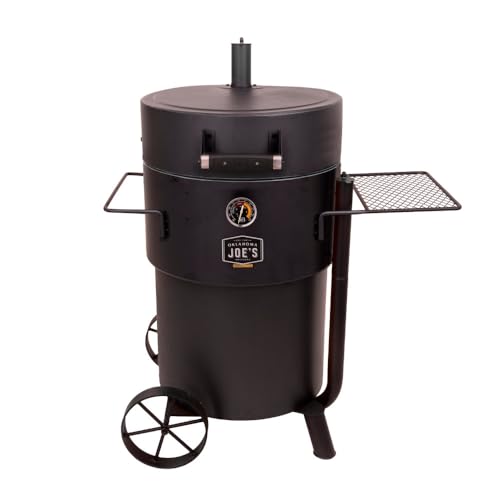
Oklahoma Joe’s Bronco Pro 21.5 in. Drum Smoker

Oklahoma Joe’s Firecraft Series Modular Barrel Grill

Charbroil Pro Series 4-Burner Propane Grill with Side Burner

Oklahoma Joe’s Highland Reverse Flow Offset Smoker
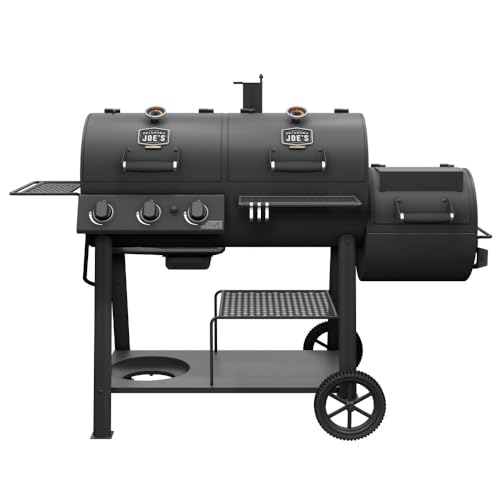
Oklahoma Joe’s Canyon Combo Dual Fuel Smoker and Grill

Oklahoma Joe’s Longhorn Offset Charcoal Smoker and Grill
Why These Options Stand Out
The Rambler lives at the smaller end of this list, but that is its whole reason for existing. It is a tabletop charcoal grill with a 218-square-inch cooking area, sized for a tailgate, a picnic table, or a small patio where a full-size barrel would be overkill.
A height-adjustable charcoal tray is the standout mechanical feature: you can raise or lower the coals to dial in heat the same way you would on a larger kettle. For most weeknight cooks flipping burgers or searing chicken thighs, that control is plenty.
Practical Advantages
- Light enough to throw in a truck bed or carry to a campsite.
- Adjustable charcoal tray gives real heat control, not just one fixed height.
- 218-square-inch grate handles a meal for three to four without crowding.
- Simple steel-and-black design wipes clean with basic tools.
Worth Noting
- Tabletop footprint means you need a stable, heat-safe surface to set it on.
- No lid handle or shelf space for resting tools and platters.
- Not built for long, low-and-slow cooks, the firebox is just too small to sustain them.
Who It Suits Best
Tailgaters, campers, and small-space dwellers who want genuine charcoal flavor without hauling a full-size grill around.
Look Elsewhere When
You regularly host ten or more guests, in which case the Oklahoma Joe’s Bronco Pro 21.5 in. Drum Smoker offers far more cooking real estate and better smoke control.
Where the Rambler is portable, the Bronco Pro is purpose-built for staying put and doing real work. It is a vertical 21.5-inch drum smoker with a sealed lid and a deliberately engineered airflow path, giving you the kind of temperature stability you need for brisket, ribs, and shoulder.
The 366-square-inch cooking area is a meaningful step up from the Rambler’s tabletop grate, and the heavy-gauge construction helps it hold heat through long cooks. If you have ever tried to babysit a thin-walled smoker for six hours, you will appreciate the difference in mass.
Real Benefits
- Sealed lid and engineered airflow support consistent low-and-slow temperatures.
- 366-square-inch grate fits multiple racks of ribs or a couple of pork shoulders.
- Vertical drum format keeps the cook’s face away from the heat.
- Heavy-gauge steel body retains heat, so you add less charcoal mid-cook.
Trade Offs
- Vertical design means you cannot grill directly over flames the way you would on a flat-top barrel.
- Larger footprint, you will want a dedicated patio corner for storage.
- Learning curve for tuning intake dampers is steeper than on a basic kettle.
Made For
Low-and-slow purists who want competition-style smoke control without committing to a full-size offset rig.
Reach For A Different Pick When
You split your time evenly between searing steaks and smoking ribs, because the Oklahoma Joe’s Canyon Combo Dual Fuel Smoker and Grill handles both on a single frame.
The Firecraft barrel is the most unusual item here, and that is part of its appeal. It is an open-fire modular charcoal grill, meaning you interact with the fire directly rather than through a closed lid, and the design invites you to cook the way outdoor chefs have for centuries.
Two round heavy-gauge wire grates split the 480-square-inch cooking area into 240-square-inch zones, so you can run one side hot for searing and the other side cooler for slow roasting. Twist-lock handles release the grates so you can adjust their height over the live coals.
The Good Stuff
- 360-degree access to stoke the fire without disturbing food on the grate.
- 480-square-inch total area split across two adjustable grates.
- Heavy-gauge wire grates resist corrosion and last through seasons of use.
- Modular firebox doubles as a fire pit when dinner is done.
Minor Gripes
- Open-fire design means more ambient heat and smoke in the cook’s face.
- Requires hardwood or lump charcoal to really sing; briquettes feel underwhelming.
- No lid means wind and weather affect your cook more than on a closed smoker.
Best Suited To
Live-fire enthusiasts who enjoy tending the cook and want their grill to double as a backyard gathering spot.
Not Your Match When
You want set-and-forget smoking, because the Oklahoma Joe’s Bronco Pro 21.5 in. Drum Smoker locks in heat and smoke behind a sealed lid.
The Charbroil Pro Series is the first propane-only entry on this list, and it earns its place by approaching charcoal-grade searing through a different route. Amplifire infrared technology, where radiant heat cooks through a ceramic element rather than direct flame contact, is the headline feature.
The four-burner cabinet format, a side burner for sauces or sides, and a 3-in-1 design that supports grilling, griddling, and charcoal cooking with the included accessories make it a versatile weeknight workhorse.
Benefits That Matter
- Infrared burner delivers restaurant-style sear marks without flare-ups.
- Side burner gives you a second cooking zone for vegetables or boiling.
- Cabinet design stores a propane tank out of sight.
- Charcoal trays let you add real charcoal flavor when you want it.
Points To Keep In Mind
- Propane-only design means you need a tank on hand, charcoal alone is not an option.
- Infrared burners require occasional cleaning to prevent grease fires under the element.
- Cabinet footprint is larger than an open cart grill.
Who Will Love This
Weeknight grill masters who want fast ignition, even heat, and the flexibility to add charcoal flavor when the mood strikes.
Consider Something Else When
You smoke more than you sear, because the Oklahoma Joe’s Highland Reverse Flow Offset Smoker dedicates its entire 1093-square-inch cooking area to long cooks.
The Highland is the most traditional offset smoker on this list, and it brings genuine reverse-flow capability to the table. Reverse flow, where smoke travels across the cook chamber before exiting, evens out hot spots and gives every rack a more consistent bark.
The 1093-square-inch total cooking area is the largest on the list, and removable baffles let you switch between reverse-flow and traditional offset modes. If you have ever lost a brisket to one side running hot, you will understand why that flexibility matters.
Useful Strengths
- Reverse-flow baffles create even heat across both ends of the cook chamber.
- 1093-square-inch grate handles full competition loads without cramming.
- Adjustable smokestack lets you fine-tune draft without opening the lid.
- Heavy steel firebox supports longer burns with fewer reloads.
Some Limits To Know
- Full-size offset demands a sizable patio and a tow vehicle for transport.
- Learning curve is steep: chimney, baffles, and stack all want attention.
- Pure charcoal and wood fuel means longer startup versus propane units.
The Right Fit
Competition-style cooks and serious offset hobbyists who want consistent smoke across a large chamber.
A Better Fit Elsewhere
You want one rig that does both propane searing and charcoal smoking, in which case the Oklahoma Joe’s Canyon Combo Dual Fuel Smoker and Grill pairs a 3-burner gas side with a charcoal offset.
The Canyon Combo is the closest this list gets to a true combo gas and charcoal grill. It pairs a 3-burner propane side, running 36,000 BTU, with a charcoal offset firebox on the same frame. You can sear burgers on gas at the same time you smoke a pork shoulder low and slow.
The 1031-square-inch total cooking area splits between a 750-square-inch primary chamber for smoking and a smaller gas grill side. You will need a propane tank for the gas side, but the charcoal side runs on splits and chunks.
Advantages To Know
- Two fuel types in one rig means you stop choosing between sear and smoke.
- 36,000-BTU gas side heats fast and recovers quickly between burgers.
- 750-square-inch primary chamber smokes two pork shoulders at once.
- One frame, one footprint, and one storage spot.
Honest Caveats
- Larger than a single-fuel grill, so measure your patio space first.
- Propane tank is sold separately, plan for that extra purchase.
- Two fireboxes mean two things to maintain and clean after every cook.
Built With In Mind
Backyard entertainers who cook for mixed crowds, searing hot dogs and brats on gas while ribs smoke on charcoal.
Where A Sibling Pick Shines
If you do not need a gas burner and want a simpler offset at a friendlier entry point, the Oklahoma Joe’s Longhorn Offset Charcoal Smoker and Grill covers the basics with a 1060-square-inch grate.
The Longhorn is the long-standing entry-level offset in the Oklahoma Joe’s lineup, and it remains a sensible first offset rig for cooks who want authentic wood-fired flavor without the reverse-flow complexity of the Highland. The classic offset layout, with a side firebox and a horizontal cook chamber, is the design most people picture when they hear “stick burner.”
The 1060-square-inch total area splits into a 751-square-inch primary chamber and a 309-square-inch secondary grate, which gives you room for a couple of briskets plus a few chicken halves at once.
Everyday Advantages
- Classic offset layout is easier to learn than reverse-flow baffle systems.
- 751-square-inch primary fits family-sized cookouts without overflow.
- 309-square-inch secondary grate acts as a warming rack for buns or sides.
- Proven design that has been around long enough for parts to be widely available.
Things To Consider
- No reverse-flow baffles means hot-spot management requires more attention.
- Side firebox door gaskets commonly need replacement after a couple of seasons.
- Larger footprint than drum-style smokers like the Bronco Pro.
Whose Shelf It Belongs On
First-time offset owners who want to learn classic stick-burner cooking at an approachable entry point.
Skip It When
You want true dual-fuel flexibility with propane on one side, because the Oklahoma Joe’s Canyon Combo Dual Fuel Smoker and Grill adds a 3-burner gas section to the same frame concept.
Matching A Combo Grill To Your Cook Style
The right combo grill depends less on spec sheets and more on the way you actually cook. Think about the meals you cook most often, then match the fuel layout to that pattern. A charcoal-only offset rewards patience and weekend cooks with hours to spare, while a dual-fuel rig shines when your weeknight schedule demands a 20-minute sear and your weekend schedule demands a 12-hour smoke.
Cooking surface area is the easiest spec to misjudge. A 1000-square-inch grate sounds huge on paper, but once you load it with two briskets, a few slabs of ribs, and a tray of vegetables, the space tightens up fast. For families hosting ten or more guests regularly, the Highland, Canyon Combo, and Longhorn all clear that bar with room to spare.
Build quality matters most for the firebox and lid. Thin steel cools quickly and forces you to chase temperature, while heavy-gauge steel holds heat and gives you steady recovery after each lid opening. If you live in a colder climate or tend to cook in wind, heavier construction earns its keep faster than it does on calm summer days.
Finally, think about storage and transport before you fall in love with a 70-inch cabinet. The Bronco Pro and Longhorn both demand a dedicated corner, and the Charbroil Pro Series cabinet will not fold down. Measure your patio or garage before checkout.
Pitfalls Shoppers Hit
Buying more grill than you need is the most common mistake. A 1000-square-inch offset sounds appealing until you realize you only host four people twice a year, and meanwhile you spend your weekends wrestling a giant smoker through winter cleanup. Match the size to your real crowd.
Overlooking propane tank logistics is the second trap. Dual-fuel rigs like the Canyon Combo need a tank you buy separately, and that tank needs a protected spot inside the cabinet or beside the grill. If you do not already have a propane line or extra tank, that is an added cost and storage decision.
Ignoring the learning curve of a new fuel type is the third slip. Moving from gas to charcoal, or from a kettle to an offset, changes your whole routine: lighting, temperature control, fuel management, and cleanup. Give yourself a few practice cooks before you commit to a long smoke for guests.
Where The Extra Money Goes
Higher-tier models, like the Highland and the Canyon Combo, cost more because of heavier steel, more refined baffle systems, and dual-fuel plumbing. That extra material translates into steadier temperatures and fewer mid-cook adjustments, which matters on long smokes where every lid open costs heat.
The upgrade is worth it when you cook for large groups, smoke several times a month, or want a single rig that handles both quick weeknight sears and weekend-long cooks. For occasional backyard use, a basic offset like the Longhorn or a portable like the Rambler delivers most of the experience at a friendlier entry point.
Key Takeaways Across These Picks
Mistakes Worth Dodging
Choosing a grill purely on BTU ratings leads to flare-ups and burnt food. Heat control comes from airflow, grate thickness, and firebox mass, not raw numbers. Prioritize build quality and damper access over maximum heat output.
What The Higher Tier Buys
Premium offsets and dual-fuel rigs spend the extra money on heavier steel, sealed lids, and refined baffle systems. For cooks who fire up the smoker weekly, that translates into steadier temperatures and more consistent bark across multiple racks.
Frequently Asked Questions
How much cooking area do I need for a family of four?
A 400-to-600-square-inch grate handles most family meals with room for vegetables on the side. Larger families or frequent entertainers should aim for 750-square-inch primary chambers or bigger.
Can I use both fuel types at the same time on a combo grill?
Yes, dual-fuel models like the Oklahoma Joe’s Canyon Combo run propane on one side and charcoal on the other simultaneously. Just give each firebox a few minutes to come up to temperature before loading food.
How long does it take to season a new charcoal grill?
Most manufacturers recommend two to three rounds of burning off and oiling the grates before cooking. A light coat of high-heat oil after each warm-up helps build a non-stick patina over the first month of use.
Is an offset smoker harder to learn than a kettle?
Offset smokers demand more attention to airflow and fuel management, but they reward you with deeper smoke flavor. First-timers should plan a few short practice cooks before attempting an overnight brisket.
Do combo grills need more maintenance than single-fuel models?
Yes, dual-fuel rigs have two fireboxes, two sets of grates, and a propane line to inspect. Expect a slightly longer cleanup after each cook, and budget time for gasket replacement every couple of seasons on offset units.
Closing Remarks
The right combo grill comes down to your real cooking rhythm. If weeknight speed rules your kitchen, a propane-led rig with a charcoal option, like the Canyon Combo or Charbroil Pro Series, fits the bill. If weekends belong to long smokes and tinkering with airflow, a dedicated offset like the Highland or Longhorn rewards the patience. Match the fuel layout to your calendar, and you will use your grill far more often than it sits in the corner.