
A two-fuel setup changes how you cook outside. A charcoal side nails seared steaks and smoky shoulders, while a gas burner handles quick weeknight burgers without the long lighting routine. Picking the right combination grill depends on your space, your patience for tending fires, and how many mouths you usually feed.
Below is a focused roundup of seven grills that span the full range: from a 22-inch backyard classic to heavy-duty offset smokers with over a thousand square inches of cooking real estate. Each pick lists what it genuinely does well, where it compromises, and who will get the most out of it.
Your Options, Compared
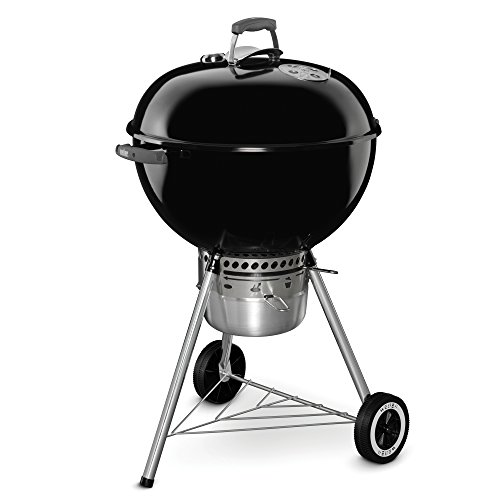
Weber Original Kettle Premium Charcoal Grill 22-Inch

Oklahoma Joe’s Rambler Portable Charcoal Grill
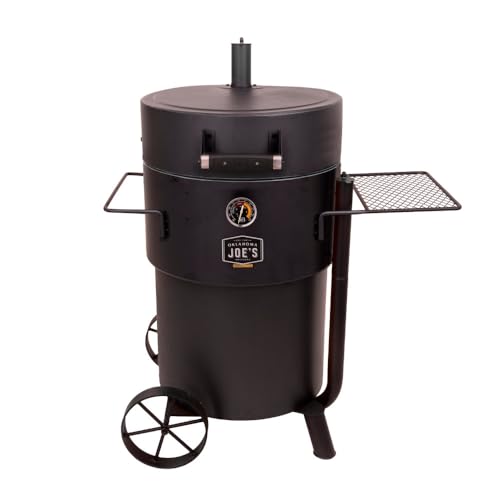
Oklahoma Joe’s Bronco Pro Drum Smoker and Grill

Oklahoma Joe’s Firecraft Modular Open Fire Barrel Grill

Oklahoma Joe’s Highland Reverse Flow Offset Smoker
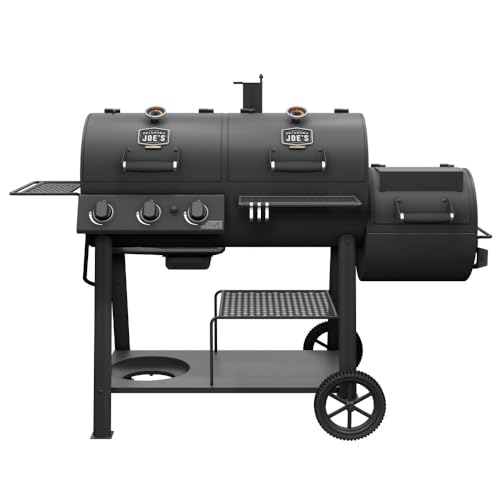
Oklahoma Joe’s Canyon Combo Dual Fuel Smoker and Grill

Oklahoma Joe’s Longhorn Offset Smoker and Grill
The Details Behind The Selections
The 22-inch Original Kettle is the kind of grill that disappears into a routine. You set it up, light the charcoal, and the rounded bowl radiates heat evenly across the grate. Compared to the offset smokers later on this list, it skips the learning curve entirely, making it approachable if you’ve only cooked on basic portable grills before.
The hinged cooking grate swings open so you can add fresh coals mid-cook without lifting the whole grate or losing your sear. For most backyards, that one feature alone is what separates a kettle you tolerate from one you actually look forward to firing up.
What Works In Its Favor
- One-Touch cleaning system funnels ash into a high-capacity catcher, so end-of-cook cleanup takes minutes.
- Hinged grate lets you add fuel without disturbing the food, useful for long indirect cooks.
- Porcelain-enameled bowl and lid hold heat well and resist the rust that plagues thinner steel.
- 22-inch diameter suits four to six people for a typical weekend spread.
Honest Caveats
- Charcoal-only, so weeknight dinners take longer than lighting a propane burner.
- Single grate level limits how many racks of ribs or whole chickens you can fit at once.
Quick Facts
Who It Suits Best
Home cooks who want classic charcoal flavor without the maintenance demands of an offset or drum smoker.
Look Elsewhere When
Oklahoma Joe’s Canyon Combo is a better match when you need both propane speed and charcoal smoke on the same cook.
The Rambler is built for the times the Weber Kettle would be overkill. At 218 square inches, it covers a dozen burgers or a few steaks without dominating the back of the car. Where the previous Kettle is a backyard fixture, this one is a companion that travels to tailgates, campsites, and apartment patios.
The height-adjustable charcoal tray is the most useful detail. Raising or lowering the fire changes the heat reaching the food, so you can sear a hot cook or pull back for a slower indirect setup on the same small surface. That kind of control is rare in tabletop grills.
Where It Excels
- Adjustable tray delivers real heat control rather than a single fixed position.
- Compact frame fits on apartment balconies and tailgate tables.
- Solid construction for a portable unit, holding up better than thin sheet-metal competitors.
- Real charcoal flavor in a package that stores in a closet or car trunk.
Points To Keep In Mind
- Smaller grate means longer cook times for a full group meal.
- No lid for true low-and-slow, so smoking is off the table.
Right Fit For
Anyone grilling for two to four people away from a full outdoor kitchen, from tailgates to small rental patios.
Swap It Out When
Step up to the Oklahoma Joe’s Bronco Pro when you want portable convenience with the option to run genuine low-and-slow cooks.
The Bronco Pro is a vertical drum built for cooks who care about the smoke profile as much as the sear. The sealed lid and tuned airflow keep temperatures steady, which is the part of smoking that defeats most beginners. Set it and forget it for a few hours, and the heat stays where you put it.
The oversized charcoal basket is the quiet hero. It holds enough fuel to support over fifteen hours of cooking without a refill, so an overnight brisket becomes a one-step setup rather than a midnight alarm. The 366-square-inch grate covers a couple of pork shoulders or a full pack of ribs without crowding.
Notable Gains
- Sealed-drum construction locks in heat and smoke for stable long cooks.
- Heavy-duty build handles high-heat grilling as well as low-and-slow smoking.
- 15-plus hour burn time per load reduces babysitting for overnight cooks.
- Direct grilling capability adds versatility beyond a pure smoker.
Trade Offs
- Drum format takes practice to master vent tuning.
- Heavier than portable units, so plan a permanent spot.
Feature Snapshot
Made For
Cooks moving from basic kettle grilling into serious low-and-slow territory who want sealed-drum consistency.
Reach For A Different Pick When
Oklahoma Joe’s Highland is a stronger fit when you need over a thousand square inches of capacity for larger gatherings.
The Firecraft barrel breaks from the closed-lid logic of the other picks here. The open firebox gives you 360-degree access to the fire, so you can stoke coals, add wood, or rearrange fuel without lifting a heavy hood. That openness is the whole point: it turns the grill into a cooking station, a fire pit, and a centerpiece in one.
Two round, heavy-gauge wire grates split the 480 square inches of cooking area into manageable halves, and the Twist-Lock handle releases a grate so you can slide food on or off the heat quickly. Compared to the sealed Bronco Pro, this is a more social, hands-on style of cooking.
Noteworthy Benefits
- Open firebox design supports live-fire cooking, fire-pit mode, and grilling in one footprint.
- 480 square inches of total cooking area fits a large group.
- Heavy-gauge wire grates resist corrosion and handle the heat of open flames.
- Modular layout adapts to different cook styles without swapping parts.
Less Ideal Details
- No lid means true low-and-slow smoking is harder to control.
- Open flames require more active fire management than enclosed smokers.
Key Product Details
Best Suited To
Backyard hosts who want an open-fire experience that doubles as a fire pit and conversation starter.
A Better Fit Elsewhere
The Weber Original Kettle Premium is the smarter pick for a tight patio where closed-lid charcoal grilling fits the space better than an open barrel.
The Highland is a serious piece of equipment. With 1093 square inches of cooking area and a reverse-flow design, it pulls smoke through the entire cook chamber before venting, which evens out the heat and adds color to every cut. That’s a step up from the Bronco Pro’s drum format, and a clear jump in capacity over the Firecraft barrel.
Removable baffles and an adjustable smokestack let you switch between reverse-flow and traditional offset smoking. The large charcoal basket supports long, uninterrupted cooks, so a full competition-style spread becomes a single setup rather than a juggling act.
Benefits That Matter
- 1093 square inches handles briskets, multiple shoulders, and full racks at once.
- Reverse-flow baffle system evens out heat and smoke distribution.
- Convertible design supports both reverse-flow and traditional offset cooking.
- Heavy-gauge steel construction holds temperature in cold or windy weather.
Worth Bearing In Mind
- Large footprint demands a dedicated backyard spot.
- Offset learning curve is real; expect a few test cooks before results click.
Feature Card
Who Will Love This
Backyard pitmasters hosting large gatherings who want offset performance with reverse-flow precision.
Where Another Pick Suits Better
Oklahoma Joe’s Canyon Combo suits a household that wants propane speed alongside charcoal smoke, rather than committing fully to an offset.
The Canyon Combo is the only true dual-fuel entry on this list, and that changes how a backyard cooks. The 36,000-BTU three-burner propane side lights in minutes for weeknight burgers and hot dogs, while the 750-square-inch charcoal chamber handles the long, low-and-slow work. Where the Highland commits you to offset smoking only, this one lets you run both styles in a single cook.
The 1031 square inches of total cooking area supports a dozen burgers on the gas side while shoulders or ribs run on the charcoal side. That makes it the most versatile pick here, especially for households that entertain often.
Good Reasons To Consider
- True two-in-one design with propane convenience and charcoal smoke flavor.
- 750 sq. in. primary chamber fits two pork shoulders comfortably.
- 1031 sq. in. total covers a full party spread in one cook.
- Propane tank sold separately, so you choose the size that fits your setup.
Trade-Offs To Consider
- Heavier and bulkier than single-fuel options.
- More parts to clean, since both fuel systems need regular maintenance.
Spec Overview
Perfect Match For
Hosts juggling quick weeknight grilling and weekend long cooks without wanting two separate units in the yard.
Not Your Match When
Pick the Oklahoma Joe’s Longhorn instead for a traditional offset feel without the propane component.
The Longhorn is the traditional offset layout, and that simplicity is exactly why it has held its place in the lineup. The firebox sits to the side, smoke travels across the main chamber, and 1060 square inches of cooking area gives you room for serious cooks. Compared to the Highland’s reverse-flow tuning, the Longhorn is the more hands-on, classic-feeling choice.
For most cooks, the 751-square-inch primary chamber covers everything from a Thanksgiving turkey to two briskets, while the 309-square-inch secondary rack handles smaller cuts. It is a workhorse, and it shows in the build.
Standout Benefits
- 1060 sq. in. total handles full-family gatherings and competitions.
- Classic offset smoke profile is what most pitmasters grew up with.
- Heavy steel construction holds heat through long overnight cooks.
- Secondary rack adds flexibility for warming or smaller cuts.
Possible Compromises
- Firebox needs tending every hour or so on long cooks.
- Smaller primary chamber than the Highland’s reverse-flow setup.
Who Should Grab It
Cooks who want the traditional offset experience without extra features, and who don’t mind tending the fire.
Where A Sibling Pick Shines
The Oklahoma Joe’s Highland is the better fit for cooks who want reverse-flow heat distribution and adjustable baffles for less babysitting.
Choosing Combination Bbq Grills That Actually Fit
Match The Cook To The Fuel
Think about your real weeknight. If most meals happen fast and you want a quick sear without lighting coals at 6 p.m., a propane-assisted setup like the Canyon Combo removes friction. If your idea of weekend cooking is a six-hour shoulder, a charcoal-only offset or drum smoker like the Highland or Bronco Pro rewards patience with deeper flavor.
Size And Footprint Matter More Than Spec Sheets
A 1093-square-inch smoker feels enormous until you measure your patio. Smaller yards and rental patios suit the Rambler or the Weber Kettle. Larger backyards with a dedicated corner can absorb the Highland, Longhorn, or Canyon Combo without crowding the space.
Capacity Versus Convenience
Cooking for two people on a Friday night rarely needs a thousand square inches of grate. Cooking for twelve on a holiday weekend, on the other hand, fills 1060 square inches quickly. Match the cooking area to your typical group size, not your biggest theoretical party.
Build Quality And Long-Term Care
Thicker steel and porcelain-enameled surfaces hold heat better and resist rust, which matters if your grill lives outside year-round. Drum smokers and offset units benefit from covered storage to extend their life, and owners commonly report that regular ash cleanup keeps airflow predictable across many seasons.
Key Considerations Across These Picks
Pitfalls Shoppers Hit
Many people buy a smoker based on maximum capacity and end up overwhelmed by fire-tending on a unit three sizes larger than they need. Others prioritize BTU numbers on a propane side and overlook the charcoal chamber that does the real low-and-slow work. Measure your space, count your typical guest list, and choose the smallest unit that handles both with room to spare.
The Upgrade Payoff
Stepping up from a basic kettle to a dedicated offset or drum smoker unlocks better bark, deeper smoke rings, and overnight cooks without constant attention. Higher-tier models cost more because of thicker steel, larger charcoal baskets, and tuned airflow, and the upgrade is worth it once you cook long enough to notice what those features actually do. For a household that grills every weekend, that gap shows up fast.
Frequently Asked Questions
What Is A Combination Bbq Grill?
A combination grill combines two cooking styles in one unit, usually charcoal and gas or charcoal and a side firebox for smoking. It lets you sear quickly on one side and smoke low-and-slow on the other.
How Much Cooking Area Do I Need?
For a family of four, 400 to 500 square inches covers most meals. For gatherings of ten or more, look for units over 1000 square inches, like the Highland or Longhorn.
Are Combination Grills Hard To Maintain?
They require regular ash removal and occasional deep cleaning, but no more than a standard charcoal grill. Owners commonly report that covering the unit extends its life in outdoor conditions.
Can I Smoke And Grill At The Same Time?
Yes, on dual-fuel models like the Canyon Combo. Offset smokers also handle both, though you’ll need to manage the firebox temperature carefully during a long cook.
What Is Reverse-Flow Smoking?
Reverse-flow uses internal baffles to push smoke and heat along the bottom of the cook chamber before venting, which evens out hot spots. The Highland uses this design to reduce the constant fire-tending a traditional offset requires.
Final Verdict
The right combination grill depends less on feature lists and more on how you actually cook. The Weber Kettle and Oklahoma Joe’s Rambler cover simple charcoal grilling at very different sizes. The Bronco Pro and Highland step into serious smoking territory. The Canyon Combo brings propane into the mix for true versatility. The Longhorn stays loyal to the traditional offset feel. Pick the unit that matches the cook you do most often, and the rest tends to fall into place.