
Cooking in the backcountry shouldn’t mean hauling a heavy kitchen. Whether you’re boiling water for freeze-dried meals at a mountain hut or flipping pancakes at a packed campground, the right collapsible camp stove turns trail time into mealtime without weighing you down. This roundup covers six models that handle different scenarios, from ounce-counting thru-hikers to car campers who want a proper burner setup. Each pick is matched to a specific kind of trip, so you can zero in on what fits your style and skip the rest.
The Leading Options At A Glance

MSR PocketRocket 2 Ultralight Camping and Backpacking Stove

MSR PocketRocket Deluxe Ultralight Camping and Backpacking Stove

Jetboil TrailCook 1.2L Camping and Backpacking Stove Cooking System

Coleman Cascade 18 1-Burner Camping Stove, Portable Cooktop
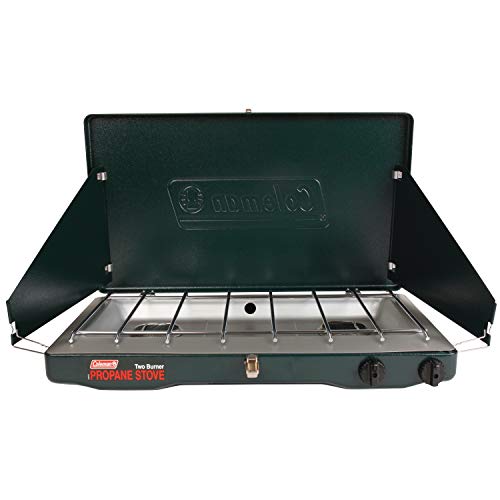
Coleman Gas Camping Stove, Classic Propane Stove, 2 Burner

Coleman Tabletop 2-in-1 Grill & Stove with 2 Adjustable Burners
A Breakdown Of The Leading Choices
The MSR PocketRocket 2 is the kind of stove that disappears into your pack until you need it. At roughly 2.6 oz and folding down to about 2x2x3 inches, it’s a featherweight partner for thru-hikers and fastpackers who count every ounce. It screws onto a standard isobutane fuel canister (sold separately), the fuel source most backpackers already carry, and starts up without priming or preheating.
For real-world use, this stove earns its reputation on morning coffee and one-pot freeze-dried dinners. It brings a liter of water to a rolling boil in around 3.5 minutes under decent conditions, and the flame adjusts smoothly enough to hold a low simmer. If you’re heading out on a long trail and want something simple that just works, this is the archetype other ultralight stoves are measured against.
Noteworthy Benefits
- Lightweight enough for long-distance backpackers who track pack weight.
- Folding pot supports and compact stow size slip into a mug or side pocket.
- Broad canister compatibility means easier resupply at outfitters worldwide.
- Simple setup with no pump, no priming, and minimal learning curve.
- Reliable boil times for hydration and dehydrated meals.
Things To Consider
- No built-in igniter, so you’ll want to pack a lighter or matches.
- Wind performance drops off without a windscreen, which isn’t included.
- Plastic parts around the flame control may show wear with heavy use.
Key Product Details
Right Fit For
Thru-hikers, fastpackers, and anyone whose pack weight is the top priority.
Look Elsewhere When
You’ll be cooking real meals for a group, where the Jetboil TrailCook 1.2L or Coleman Classic 2-Burner makes more sense.
Think of the PocketRocket Deluxe as the original PocketRocket 2 grown up and put on a tailored jacket. It keeps the same small footprint but adds a pressure regulator that holds a steady flame output as the fuel canister empties. The control valve also gets finer gradations, so you can actually hold a gentle simmer without the flame dancing away to a roar.
Backpackers who cook real food instead of just rehydrating pouches will appreciate the difference. Eggs, sauces, and risotto-style dishes need low, steady heat, and this stove delivers that in a sub-3 oz package. It still threads onto standard isobutane canisters, so swapping between the standard PocketRocket and the Deluxe is seamless. For most trips with a single overnight freeze-dried meal, the original PocketRocket 2 does the job. For trips where you’re cooking every meal, the Deluxe earns its place.
The Value In It
- Pressure regulator keeps the flame stable as fuel drops.
- Finer flame adjustment for genuine simmering tasks.
- Folding design stays pack-friendly for backpackers.
- Boil and simmer performance in one compact body.
Honest Caveats
- Slightly heavier and larger than the original PocketRocket 2.
- Premium position means a bigger spend for casual users.
Whose Shelf It Belongs On
Backcountry cooks who want simmer control without carrying a heavier integrated stove system.
Skip It When
You’re only boiling water for pouches, where the standard PocketRocket 2 already covers the job.
The TrailCook shifts the Jetboil lineup from boil-only systems into actual cooking territory. It still bundles the burner and a 1.2 L pot into one neat package, but adds an adjustable heat control knob so you can throttle back for sautéing or sauce work. A built-in one-step auto-igniter handles startup, which is genuinely useful when your hands are cold or your lighter has rolled under the tent footprint.
The trade-off is system lock-in. You get fast boils and a stable platform that handles winds better than an open flame on a canister, but the pot nests with the burner for storage. The self-centering pot support also accepts third-party pans up to about 9 inches across, which softens that lock-in for anyone who already owns camp cookware.
Practical Advantages
- Integrated design speeds boil times in real conditions.
- Adjustable heat broadens recipes beyond plain boiling.
- Built-in igniter removes a small but nagging piece of kit.
- Self-centering support accepts common pans up to 9 in.
Worth Bearing In Mind
- Heavier than a bare canister stove like the PocketRocket 2.
- Best performance comes from Jetboil-branded fuel canisters.
Feature Snapshot
Made For
Solo backpackers or pairs who want fast boils and the option to cook, not just rehydrate.
Reach For A Different Pick When
You’re cooking for a larger group or want two independent burners, where the Coleman Classic 2-Burner propane stove fits the bill.
The Cascade 18 is built for car-camping convenience, not trail-counting ounces. It runs on a standard propane cylinder, pumps out around 8,000 BTUs, and fits a 12-inch pan on its cooking grate. The rotary ignition lights the burner without a match, and the grate flips 180° so the stove stores flat in a trunk or RV bay.
For tailgates, picnic tables, or base camps with a car parked nearby, the aluminized steel cooktop wipes down quickly after a greasy breakfast. The improved knob rotation gives better simmer control than older single-burner Coleman models, which used to have a reputation for binary high-or-off flame settings.
A Strong Showing
- Matchless rotary ignition for fast startups.
- 12-inch pan capacity fits standard skillet sets.
- Folding grate profile stores compactly in a vehicle.
- Better simmer range than earlier single-burner models.
Points To Keep In Mind
- Single burner limits meal prep to one dish at a time.
- Requires a propane canister sold separately.
Best Suited To
Car campers, tailgaters, and overlanders who need a single-burner propane option that packs flat.
A Better Fit Elsewhere
You’ll be cooking multiple dishes at once for a group, where the Coleman Tabletop 2-in-1 handles grill plus stove duty.
The Coleman Classic is the two-burner workhorse you’ll find at family campgrounds across North America. It runs on a single propane cylinder, pushes up to around 20,000 BTUs across two adjustable burners, and fits a 10-inch and a 12-inch pan side by side. Wind-blocking panels on the sides keep gusts from putting out the flame, which is the most common reason stoves fail at exposed campsites.
Pressure-control technology helps keep the flame consistent as the tank cools or the regulator warms up, so you don’t get the heat fade that plagues cheaper stoves. For base camps where you’re cooking breakfast for four or running a dutch oven alongside, the Classic has enough output and surface area to handle it.
The Good Stuff
- Two independent burners handle multiple dishes at once.
- Wind-blocking panels protect flame in open campsites.
- Pressure regulator keeps heat steady in varied conditions.
- Compatible with standard propane cylinders.
Trade Offs
- Heavy and bulky for anything but car-based camping.
- Lacks built-in ignition on some configurations.
Quick Facts
Perfect Match For
Family campers, base-camp setups, and anyone running a full camp kitchen on wheels.
Swap It Out When
You also want a grilling surface alongside the burners, in which case the Coleman Tabletop 2-in-1 is a stronger fit.
Coleman’s Tabletop 2-in-1 earns its name by running a grill grate and a stove burner at the same time. Each side has its own adjustable burner, and you can use them together or independently depending on the menu. The push-button ignition lights both without a match, and wind guards keep the flame steady when the breeze picks up.
Beyond the dual-surface design, the chrome-plated grate lifts out for cleanup, and the grease tray catches drippings before they hit the tabletop. Non-skid feet hold the unit in place while you stir a pot or flip a burger. At around 20,000 BTUs of total output, it’s a serious backyard or tailgate tool, though the size and propane dependency make it unsuitable for backpacking trips.
What Earns Its Place
- Grill and stove operate independently in parallel.
- Push-button ignition removes the lighter dance.
- Removable chrome-plated grate speeds cleanup.
- Built-in wind guards handle breezy tailgate setups.
Some Limits To Know
- Too bulky and heavy for trail use.
- Requires a propane cylinder sold separately.
Who Should Grab It
Tailgaters, RV travelers, and home-backyard cooks who want grilling and stovetop in one portable unit.
Where A Sibling Pick Shines
You’re feeding a crowd and prefer two separate burners with full-size pan capacity, in which case the Coleman Classic 2-Burner is the more traditional fit.
Matching A Stove To The Way You Actually Camp
Pick your stove the same way you pick a route: by matching the gear to the trip, not by chasing the lightest or the most powerful option on paper. Backpackers who carry everything on their backs live and die by weight, so a sub-3 oz canister stove like the PocketRocket 2 or PocketRocket Deluxe fits that reality. Car campers, on the other hand, can afford a heavier propane system because the rig carries the load.
Fuel type is the next decision point. Isobutane canisters are the standard for backpack stoves and resupply easily at outfitters, but they run out faster in cold weather and waste fuel in high winds. Propane cylinders cost less per BTU and work better in wind, which is why every car-camping model on this list runs on propane. Choose fuel based on where you’ll be cooking and how reliably you’ll be able to refill.
Boil time and flame control matter more than most people expect. A stove that pushes a liter of water in under four minutes saves fuel and lets you hit the trail faster on short mornings. Flame control matters when you cook rather than just rehydrate, so the PocketRocket Deluxe and Jetboil TrailCook earn their keep for simmer sauces, eggs, and sautéed vegetables. Simpler stoves like the Cascade 18 get the job done for frying and boiling but won’t hold a true low simmer.
Smart Choices Before You Click
Pitfalls Shoppers Hit
Don’t buy the lightest stove on the list because it tops a weight ranking. An ultralight canister stove is useless on a car-camping trip where you’re already hauling a cooler and chairs. Likewise, don’t grab a 2-burner propane stove for backpacking unless you want a very sore back and a fuel logistics problem. Match the stove to the trip, not the spec sheet.
Why Top Tier Costs More
Integrated systems like the Jetboil TrailCook cost more because the engineering budget goes into heat exchangers, pot-to-burner fit, and wind performance. You pay for faster boils and better fuel efficiency, which adds up over multi-day trips where you’re boiling water several times a day. For one-night outings or casual summer camping, a basic PocketRocket-style stove delivers everything most people actually need at a lower spend.
Frequently Asked Questions
What is the difference between a backpacking stove and a camping stove? Backpacking stoves are small, lightweight, and run on isobutane canisters that screw directly onto the burner. Camping stoves are larger, run on propane cylinders, and offer more burners and higher output for car-based trips.
Can I use a backpacking stove in cold weather? Isobutane canisters lose pressure in freezing conditions, which reduces flame output. For winter camping, look for stoves with pressure regulators or remote canister designs that keep the fuel off the cold ground.
How long does a fuel canister last? A 100 g isobutane canister typically boils around 10 to 15 liters of water depending on conditions. A standard propane cylinder can run a two-burner stove for roughly an hour on high or several meals on medium.
Do I need a windscreen? For canister stoves, yes. Wind steals heat faster than any other factor, and a simple folding screen recovers much of that lost efficiency. Integrated systems like the Jetboil TrailCook include built-in wind protection by design.
Is it safe to use a camp stove inside a tent? No. Camp stoves produce carbon monoxide and pose a fire risk inside enclosed spaces. Always cook outside or under a properly ventilated shelter designed for stove use, such as a hot tent with a stove jack.
Closing Remarks
The best collapsible camp stove is the one that matches how you actually spend time outside. Thru-hikers and fastpackers will lean toward the PocketRocket 2 or Deluxe for their ultralight build and simple operation. Backcountry cooks who want hot meals should look at the Jetboil TrailCook for its integrated pot and adjustable flame. For car camping, tailgates, and base-camp cooking, the Coleman lineup gives you everything from a single burner to a full grill-and-stove setup. Pick by trip type, fuel preference, and how much cooking you really do, and the rest falls into place.