
Intermediate climbers sit in an awkward middle ground. Your rental beginner shoes feel like clown slippers now, but dropping serious cash on a downturn, aggressively down-cambered specialist shoe feels premature. The right intermediate pick tightens feedback, refines edging, and helps you read small foot chips, without punishing every smearing session.
This roundup focuses on climbing shoes that actually serve climbers progressing past the basics. Each pick below balances comfort, sensitivity, and enough downturn for harder routes or steeper gym problems, without overshooting into “only send in these” territory. If you’re tired of slipping off footholds and ready to learn how a shoe should really fit, the seven options below deserve a careful look.
The Picks In Brief

La Sportiva Kids Tarantula Junior Climbing Shoes

La Sportiva Mythos Climbing Shoe

SCARPA Instinct VSR Climbing Shoes

SCARPA Drago Climbing Shoes

La Sportiva Finale Climbing Shoes

La Sportiva Kubo Climbing Shoes
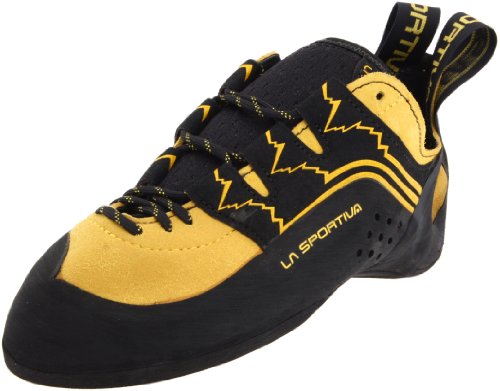
La Sportiva Katana Lace Climbing Shoe
Inside Each Recommended Option
The Tarantula Junior is built for kids whose feet are growing faster than their climbing grade. La Sportiva’s classic Tarantula shape lands in a scaled-down version that still wraps the toe box properly, so younger climbers get real rubber on small footholds instead of sliding off in oversized rentals.
You see this most clearly at the gym, where a child moving past top-rope basics needs a shoe that bends with the foot rather than fighting it. The adjustable hook-and-loop closure lets parents fine-tune tension as feet grow between sessions.
A Few Strong Suits
- Recognized Tarantula fit profile, just sized for smaller climbers
- Hook-and-loop straps make on-and-off easy for kids at the wall
- La Sportiva rubber handles gym plastic and real rock without drama
- Lower price than adult versions, which matters when growth spurts are coming
Worth Noting
- Durability on aggressive toe-dragging is mixed in reported owner experience
- Sizing runs closer to street shoe size than adult La Sportivas, so check reviews carefully
Made For
Junior climbers moving into their first real pair after renting gear at the gym.
Consider Something Else When
Adult intermediates should skip to the La Sportiva Mythos, which offers a grown-up fit and resole-friendly construction.
The Mythos has earned its reputation as a transitional workhorse, and for intermediates stepping up from beginner rentals, it earns its place here. The flat, lace-up last gives your toes room to spread, which matters on long multi-pitch days where aggressive downturns go numb after an hour.
Compared with the Tarantula Junior reviewed above, the Mythos offers a more grown-up feel without committing you to a steep downturn. The leather upper stretches over time, so the shoe you break in today is often softer and more comfortable six months later, which works well for climbers refining their footwork rather than chasing extreme overhangs.
Everyday Perks
- Flat profile forgives imperfect footwork while you learn
- Lace closure lets you tune tension across the midfoot
- Leather upper breaks in to your foot shape over weeks
- Resoleable construction extends lifespan beyond the rand
Trade Offs
- Less downturn means less power on steep overhangs
- Leather stretches enough that you may want to size down once breaking in
Quick Facts
Who It Suits Best
Intermediate climbers tackling long sessions, multi-pitch routes, and crack climbing where comfort matters more than edging precision.
Look Elsewhere When
Gym climbers focused on steep boulder problems should reach for the SCARPA Instinct VSR for a downturn profile.
The Instinct VSR is where intermediate climbers start testing whether they’re ready for a downturn (a curved sole that points the toes downward for gripping steep terrain). SCARPA’s Vibram XS Grip rubber sticks to volumes and slopers like it was engineered for gym plastic, and the downturned last pulls your weight over your toes on steep terrain.
This shoe jumps noticeably from the Mythos we just covered. If you’ve spent months on flat-lasts and feel your feet sliding off anything overhanging, the VSR is the next logical step. Sizing intentionally tight is the move here, so plan to suffer through a session or two before the leather softens.
Features That Help
- Vibram XS Grip rubber delivers reliable stick on volumes and edges
- Downturned last pulls power onto the toe for steep climbs
- Vibram XS Grip 2 heel rand grips heel hooks confidently
- Single strap closure keeps the fit dialed during long sends
Things To Consider
- Aggressive downturn cramps toes on slabby terrain
- Sizing runs small, so trying on or measuring carefully matters
- Not the right tool for multi-day alpine use
Feature Snapshot
Right Fit For
Gym and sport climbers pushing past V5 in the bouldering cave or working 5.12 sport routes on overhanging stone.
Skip It When
Crack and trad climbers will find the La Sportiva Katana Lace far more comfortable on long, varied terrain.
The Drago is for intermediates who’ve moved beyond needing a forgiving shoe and want to feel every chip under their big toe. SCARPA built this one with a softer midsole (the cushioning layer between your foot and the rubber) and minimal structure, which translates to direct feedback on small foot chips and razor-thin edges.
The profile is even more aggressive than the Instinct VSR reviewed just above, so you trade comfort for sensitivity. If you’re working problems where you keep sliding off holds you can barely see, the Drago helps you place your foot exactly where you intend.
Points In Its Favor
- Soft construction offers high sensitivity on tiny holds
- Vibram XS Grip 2 rubber performs on slick gym plastic
- Sock-like fit molds around the foot once broken in
- Designed specifically for steep bouldering and competition-style climbing
Some Limits To Know
- Soft midsole offers less edging support on long routes
- Toe-box sensitivity means less protection on repeated jams
- Higher price tag than flat-lasted beginner-friendly options
Technical Sheet
Best Suited To
Competition-minded intermediates and boulderers dialing in hard, technical footwork on small holds.
Another Choice May Suit
Multi-pitch climbers wanting a balance should look at the La Sportiva Katana Lace for its edging support.
La Sportiva markets the Finale toward climbers actively improving their technique, which fits the intermediate slot well. It keeps a flat, neutral last while adding a slight downturn at the toe, a smart middle ground between comfort and performance.
Coming from the Drago’s aggressive profile above, the Finale feels like coming home for a rest day. Velcro straps make it easy to slip off between burns, and the unlined leather upper gives just enough stretch to accommodate intermediate foot shapes without losing edge support.
Advantages To Know
- Flat last with mild downturn suits technique-focused climbers
- Velcro closure speeds transitions during gym sessions
- Unlined leather upper molds to the foot over time
- More affordable than the brand’s performance line
Honest Caveats
- Less precise on the smallest micro-edges compared to specialist shoes
- Velcro straps wear out faster than laces for some owners
Who Should Grab It
Climbers refining technique on varied terrain who want a comfortable all-rounder they can wear for hours.
Reach For A Different Pick When
Steep-sport specialists focused on overhanging routes will prefer the SCARPA Instinct VSR.
The Kubo fills a niche that doesn’t get enough attention: a vegan-friendly climbing shoe (built without animal-derived materials) that still performs. La Sportiva constructs the upper from synthetic materials rather than leather, so the break-in feels different from anything else on this list.
The shoe holds its shape longer than leather versions like the Mythos or Finale, which matters for intermediates who want predictable fit across many sessions. Compared with the Finale above, the Kubo feels slightly stiffer out of the box but more consistent over months of use.
Strengths Worth Knowing
- Vegan synthetic upper, no animal materials used
- Less stretch than leather means consistent fit over time
- Designed with the same intermediate-friendly last geometry
- Hook-and-loop closure allows quick tension adjustments
Points To Note
- Synthetic upper feels stiffer until well broken in
- Limited color options in the source listing
Whose Shelf It Belongs On
Ethics-minded intermediates who want a vegan construction without sacrificing performance geometry.
Where A Sibling Pick Shines
Climbers prioritizing break-in comfort should consider the La Sportiva Finale for its unlined leather.
The Katana Lace has been a gym and trad favorite for years, and it slots into the intermediate lineup as the edging tool. The medium-asymmetry last lets you stand on tiny edges with confidence, while the lace closure keeps your foot locked in for hours.
Compared with the Drago above, the Katana is far more comfortable on long routes and crack climbs. If you’re building toward multi-pitch objectives or projecting trad lines, this is the shoe that grows with you rather than fighting you on every belay.
The Upside
- Lace closure provides adjustable fit across the foot
- Medium downturn supports both edging and moderate steeps
- La Sportiva Vibram XS Edge rubber holds on small edges
- Versatile across sport, trad, and gym climbing
What To Weigh
- Laces slow transitions compared to velcro options
- Less aggressive than downturn-only specialist shoes
Quick Technical Notes
Perfect Match For
Multi-pitch and trad climbers who want one shoe that handles edging, crack, and varied routes.
Swap It Out When
Steep boulderers chasing micro-crimps will find the SCARPA Drago more responsive.
Picking The Right Mid-Level Climbing Shoe For Your Style
Fit comes first, more than brand. A shoe that’s snug without crushing your toes helps you feel holds, while a sloppy fit rolls on edges. Try shoes at the end of the day when your feet are slightly swollen, the way they’ll feel after an hour on the wall.
Downturn affects how the shoe performs on different terrain. Flat lasts work for long sessions and slab climbing, where your foot needs to smear and stand on edges for extended periods. Moderate downturns balance edging and steep terrain. Aggressive downturns pull your weight onto the toe for overhangs and steep bouldering, but they punish long days.
Closure changes how the shoe fits your foot over time. Lace-up shoes like the Mythos and Katana let you tune tension precisely, which suits wide or narrow feet. Velcro straps speed transitions at the gym, useful for short burns on multiple problems. Hook-and-loop also lets you adjust during a session if swelling kicks in.
Rubber compound decides what the shoe sticks to. Vibram XS Grip and XS Grip 2 are softer compounds (stickier rubber that molds to holds) for steep plastic and smearing. XS Edge is stiffer for tiny edges and long climbs where support matters more than friction. Each rubber has tradeoffs in feel versus durability.
Resoling extends lifespan. Shoes with resolable construction (a replaceable rand around the toe and a stitched-on sole) can be refurbished when the rubber wears thin, which matters for intermediate climbers who’ll log dozens of sessions per year.
Reading Between The Lines On Climbing Shoe Choices
Common Buying Traps To Avoid
Sizing down too aggressively turns your first session into a torture test and often ends with the shoe sitting in your closet. Most intermediates do better going a half-size smaller than street shoes, not two sizes. Sneaker-style casual climbing shoes often promise “performance” but deliver flat-lasted comfort, which is fine for beginners but limiting past V3 gym grades.
Where The Extra Cost Actually Lands
Premium models charge more for thinner midsoles (the layer between foot and rubber), softer rubber compounds, and aggressive downturn geometry. You’re paying for sensitivity and precision, not just the brand name. The upgrade makes sense once you’re projecting at a grade where foot placement is the bottleneck, not grip strength or technique.
Frequently Asked Questions
How Should Intermediate Climbing Shoes Fit?
They should feel snug with your toes pressed gently against the front, no dead space, and no pinching. Slight discomfort on standing is normal, but pain means the shoe is too small.
How Long Does It Take To Break In Climbing Shoes?
Leather shoes typically take five to ten sessions to soften, while synthetic uppers like the Kubo take longer but stretch less. Plan a couple of weeks of gym use before judging the fit.
Can Beginners Wear Aggressive Climbing Shoes Safely?
Yes, but aggressive shoes limit what you can climb and quickly become uncomfortable on long routes. Most beginners and intermediates do better with a flat or mild downturn for the first year.
How Often Should Intermediate Climbers Replace Their Shoes?
It depends on use, but most intermediates resole or replace shoes every six to twelve months, depending on rubber wear and toe-edge damage. Resoling extends life when only the rubber is worn.
Do I Need Different Shoes For Bouldering And Rope Climbing?
Not necessarily. Many climbers use one versatile pair, but a downturn specialist helps on steep boulder problems while a flat-lasted shoe handles long routes better.
Final Verdict
The right intermediate shoe matches your current grade and your next goal. Most climbers do best starting with a flat-lasted, comfortable pair like the Mythos or Finale, then layering in a downturn specialist like the Instinct VSR as the grades climb. Match the shoe to the climbing you actually do, and your feet will thank you at the top of the route.