
Picking the right harness changes how climbing feels, whether you’re working a V4 in the gym, chasing sport routes at the local crag, or rigging up for a rooftop job. The wrong one digs into your hips on a long session or shifts awkwardly under load. The picks below cover recreational rock climbing, kids’ harnesses that grow with young climbers, and full-body fall-protection kits for construction work, so you can match the harness to the actual task at hand.
A Quick View Of The Lineup

PETZL CORAX Rock Climbing Harness

PETZL MACCHU Kids’ Rock Climbing Harness

BLACK DIAMOND Kids’ Momentum Climbing Harness
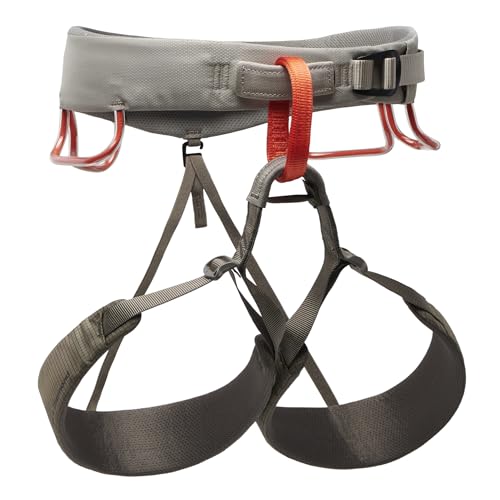
BLACK DIAMOND Men’s Momentum Climbing Harness

TRSMIMA Safety Harness for Men Construction

TRSMIMA Full Body Roofing Harness Kit

TRSMIMA Construction Safety Harness Kit
Inside Each Recommended Option
The CORAX is one of those rare harnesses that gets handed between gym friends and weekend crag buddies without anyone complaining. It sits in Petzl’s recreational line as a fully adjustable sit harness (a waist-and-leg-loop design with no chest piece), and that adjustability is the headline feature. Climbers sharing a harness between partners, growing teens, or anyone who layers clothing for cold-weather crag days all benefit from the wide range of fit.
For most climbers logging two or three sessions a week, the CORAX covers gym top-ropes, sport leading, and easy multi-pitch days without missing a beat. Compared with the kids’ harnesses below, this is the first pick that handles a full adult frame with proper gear loop (the reinforced loops on the waistbelt where you clip quickdraws and gear) capacity.
The Upside
- Adjustable waistbelt and leg loops accommodate a broad size range, useful for sharing or layering in cold weather.
- Padded waistbelt stays comfortable through long gym sessions, in our view.
- Multiple gear loops handle a full sport rack (a set of quickdraws hung on your harness) without crowding.
- Reputable recreational build quality from a brand known for climbing gear.
Things To Consider
- Sizing runs small for some body types, so trying it on at a gear shop before committing is wise.
- Heavier than ultralight sport harnesses designed purely for redpoint burns (a focused attempt to climb a route clean).
- Owners commonly report the waistbelt webbing holding moisture during rainy crag days.
Key Specs
Right Fit For
Recreational climbers who want one harness for gym sessions, sport routes, and the occasional trad day without overthinking the choice.
Skip It When
Children climbing with adults should look at the PETZL MACCHU Kids’ Rock Climbing Harness instead, since it scales down properly for smaller frames.
Buying a new harness every time your kid grows is a fast way to drain a family climbing budget. The MACCHU solves that with a wide adjustment range built specifically for children under 40 kg, meaning the same harness can travel from first gym sessions through a couple of growth spurts. It’s an adjustable sit harness in Petzl’s junior line, with a padded waistbelt designed around smaller waists.
Where the MACCHU stands out from the Black Diamond Kids’ Momentum below is its compatibility with Petzl BODY shoulder straps (sold separately), which convert the sit harness into a full-body harness for very small children who haven’t developed the lower-body strength to stay upright in a sit harness during a fall.
Strengths Worth Knowing
- Wide adjustment range grows with the child across multiple seasons.
- Padded waistbelt keeps pressure off developing hips during long bouldering sessions.
- Compatible with optional BODY shoulder straps for converting to a full-body harness.
- Color-coded adjustment points help parents dial the fit quickly.
Honest Caveats
- Limited gear loop capacity, so multi-pitch days with lots of rack may feel cramped.
- Shoulder strap add-on is sold separately, raising the true cost for very young climbers.
- Stitched webbing may absorb chalk dust and sweat over time, requiring occasional cleaning.
Feature Snapshot
Best Suited To
Parents introducing a young climber to the wall who want one adjustable harness that lasts several seasons rather than replacing gear yearly.
Where Another Pick Suits Better
Households wanting a simpler one-size solution for casual gym visits should consider the BLACK DIAMOND Kids’ Momentum Climbing Harness, which trades the grow-with-you range for a quicker on-and-off fit.
The Kids’ Momentum takes a different design route than the MACCHU: instead of chasing a wide adjustment range, Black Diamond builds a single size that covers children between roughly 35 and 80 pounds. For families whose kids mostly climb indoors at birthday parties, school programs, or weekend gym sessions, that one-size-fits-most approach removes the constant readjusting parents sometimes deal with.
It lives in Black Diamond’s recreational gear lineup, positioned as an entry-level kids’ harness rather than a long-term grow-with-me solution. The padding is scaled to smaller hips and the buckle (the closure mechanism that tightens the waistbelt) is sized for smaller hands, which matters when a child is gearing up without help.
Noteworthy Benefits
- Single-size design gets kids on the wall quickly, no constant resizing between sessions.
- Lightweight construction doesn’t weigh down smaller climbers during long gym days.
- Adjustable leg loops offer some flexibility within the stated weight range.
- Suitable for both indoor and outdoor climbing, in most setups.
Points To Note
- Outgrows the harness faster than adjustable competitors, depending on growth rate.
- Fewer gear loops than adult harnesses, limiting how much kids can carry.
- Padding is modest compared to higher-end adult recreational harnesses.
Who Should Grab It
Families whose kids climb casually at indoor gyms and want a fuss-free, easy-fit harness without fine-tuning every visit.
Consider Something Else When
Multi-season climbers whose kids keep growing fast are better served by the PETZL MACCHU Kids’ Rock Climbing Harness, which stretches across a broader size range.
Black Diamond built the men’s Momentum as an all-around harness for climbers moving between gym training days and weekend crag trips. The adjustable leg loops are the key spec here: they let climbers dial the fit across layering changes, which matters when fall crag sessions give way to winter gym seasons on the same harness.
Compared with the PETZL CORAX above, the Momentum leans toward a slightly trimmer, sportier profile that handles indoor sessions comfortably while still taking on outdoor single-pitch days. The harness has been a recurring part of Black Diamond’s recreational catalog, marketed as a complete starter setup for new climbers or a reliable second harness for experienced ones.
Features That Help
- Adjustable leg loops improve fit range over fixed-leg recreational harnesses.
- Sport-friendly gear loop layout organizes quickdraws cleanly on lead days.
- Lightweight webbing keeps the harness comfortable during extended gym sessions.
- Positioned as a complete package for new climbers getting started.
Less Ideal Details
- Availability varies, and stock at the listing time may shift, so checking current availability matters.
- Less padding than heavier all-day trad harnesses (those designed for multi-pitch traditional climbing with gear placements).
- Waistbelt runs slim for climbers who prefer maximum cushioning on hanging belays.
Quick Facts
Who It Suits Best
New and intermediate male climbers who want one versatile harness covering gym bouldering, top-rope sessions, and weekend sport routes.
Not Your Match When
Climbers working construction or roofing jobs where fall-arrest certification (independent testing that confirms a harness meets OSHA/ANSI standards for arresting a fall) is required should step up to one of the TRSMIMA fall protection kits below.
This is where the list shifts from sport climbing into fall protection territory. The TRSMIMA Safety Harness is positioned as a complete kit for men working construction, residential roofing, or maintenance jobs at height. The package includes the harness plus the supporting hardware to get a worker tied off, which removes the guesswork of matching components.
It’s sold under the Tools & Home Improvement category, not Sports & Outdoors, which is a useful signal: this kit is meant for jobsite compliance, not sport climbing. Compared with the recreational harnesses above, the build prioritizes load distribution and connection points over the lightweight feel recreational climbers want.
Notable Gains
- Full kit approach means the harness, lanyard, and connectors ship together, simplifying setup.
- Positioned for male users in standard construction size ranges.
- Connection points are arranged for typical fall-arrest anchor setups.
- Useful for DIYers doing roof work, gutter repair, or chimney maintenance.
Practical Considerations
- Not interchangeable with recreational climbing harnesses; the two serve different safety standards.
- DIYers should verify local jobsite requirements before relying on the kit for contractor work.
- Storage and inspection routines matter more than with casual climbing gear.
Spec Overview
Made For
Tradespeople and serious DIYers working at height who need a ready-to-go fall protection setup without sourcing separate components.
A Better Fit Elsewhere
For roofers wanting the load spread of a full-body design, the TRSMIMA Full Body Roofing Harness Kit offers a different distribution profile worth considering.
Where the previous TRSMIMA kit focuses on a sit-style harness, this one is a full-body design, meaning straps wrap around the shoulders and chest in addition to the waist and legs. The full-body configuration spreads arrest forces across the torso rather than concentrating them at the hips, which is the main reason roofers and tower workers gravitate toward it.
Like its sibling above, it ships as a kit rather than a harness-only item, simplifying setup for crews that need to get tied off quickly. The same Tools & Home Improvement listing context applies: it’s built around fall-arrest duties, not recreational climbing.
Benefits That Matter
- Full-body design distributes arrest forces across shoulders, chest, and legs.
- Suited to roof work where arrest orientation matters during a fall.
- Kit format streamlines setup for one-person or small-crew jobs.
- Useful for tower work, steep-slope roofing, and other elevated maintenance.
Some Limits To Know
- Bulkier than sit-style fall protection, which can interfere with movement during fine-detail tasks.
- Full-body fit takes longer to dial in than a simple waistbelt-and-legs setup.
- Owners commonly report needing extra inspection time given the more complex strap layout.
Core Details
Perfect Match For
Roofers and tower workers who need arrest forces spread across the torso during a fall rather than concentrated at the hips.
Look Elsewhere When
Crews handling lighter residential tasks where a simpler sit-style kit is enough should consider the TRSMIMA Safety Harness for Men Construction for easier movement.
This TRSMIMA kit rounds out the list as a generalist fall protection package for construction crews. It uses the same harness-plus-components approach as the other TRSMIMA kits, with the brand positioning it as a straightforward jobsite solution rather than a specialized roof or tower product.
Compared with the full-body roofing kit above, this one targets the broader construction population doing everyday elevated tasks like framing, decking, and exterior work. The construction-focused positioning keeps the price conversation simpler for contractors outfitting multiple workers.
A Favorable Mix
- General-purpose construction focus covers the most common at-height tasks.
- Kit format means components ship together, useful for outfitting new workers.
- Compatible with typical construction anchor points and lanyards.
- Useful across framing, decking, and exterior finishing work.
Trade-Offs To Consider
- Less specialized than the full-body roofing kit for steep-slope arrest orientation.
- Documentation and inspection routines fall on the supervisor rather than the brand.
- Not a substitute for climbing harnesses if sport or recreational climbing is also on the agenda.
Built With In Mind
General contractors and crew leads outfitting workers for everyday construction tasks at moderate heights who want a baseline fall protection kit.
Reach For A Different Pick When
Roofers working steep pitches should step up to the TRSMIMA Full Body Roofing Harness Kit, since its design handles that arrest orientation better.
What To Weigh Before Choosing Your Harness
Matching a harness to its actual job makes the biggest difference in how it performs. Recreational rock climbing and jobsite fall protection are two separate worlds, and the gear that excels in one rarely works in the other.
Fit and Adjustability
A harness that doesn’t fit properly becomes uncomfortable fast, and an uncomfortable harness sits in the closet. For climbing harnesses, pay attention to whether the waistbelt and leg loops are fully adjustable or fixed at one size, since adjustability matters when sharing a harness or layering for cold crag days. For fall protection kits, proper sizing matters even more, because an ill-fitting construction harness can shift during a fall and concentrate force in the wrong places.
Intended Use Environment
Gym-only climbers can prioritize lightweight sport harnesses since they’re rarely hanging in the harness for long. Outdoor climbers want more padding, more gear loops, and abrasion-resistant webbing that holds up to crag scrapes. Workers at height need fall-arrest-rated gear designed around the specific anchor and lanyard setup their job requires.
Comfort Over Long Sessions
Padding density, webbing width, and how the waistbelt distributes load across the hips all determine whether a harness disappears during a session or becomes the only thing you can think about. Climbers on multi-pitch days and workers wearing harnesses for hours benefit most from designs that move pressure across a wider area rather than digging into a single point.
Construction vs Climbing Crossover
It’s tempting to grab one harness for everything, but climbing harnesses and construction fall protection kits aren’t interchangeable. They meet different safety standards, distribute forces differently, and connect to different anchor systems. Using a climbing harness on a jobsite, or a construction harness for sport climbing, creates real safety gaps.
Key Considerations Across These Picks
Mistakes Worth Dodging
A common slip is choosing a climbing harness based on color or brand recognition rather than fit and adjustability. Another is grabbing a jobsite fall protection kit and assuming it covers sport climbing, which it doesn’t, since the two gear types serve entirely different safety standards. Skipping inspection routines on fall protection gear is the third major misstep, and it’s the one with the highest real-world cost.
Where The Extra Money Goes
Higher-tier climbing harnesses tend to spend their premium on lighter materials, better padding distribution, and more refined buckles. For fall protection kits, the extra cost usually buys heavier-duty webbing, more thoughtful load distribution, and components rated for harsher arrest scenarios. The upgrade is worth it when sessions run long, conditions get rough, or the jobsite demands specific certifications.
Frequently Asked Questions
How do I know what size climbing harness I need?
Most harness brands use waist circumference in inches or centimeters as the primary sizing metric, with leg loop sizes tied to waist size on adjustable models. Measure your waist over the clothing you plan to climb in, then check the brand’s size chart before ordering.
Can a kids’ climbing harness work for adults?
Kids’ harnesses are built around smaller frames and lower weight ranges, so they won’t fit or perform correctly for adult climbers. An undersized harness can shift during a fall or fail to distribute load properly.
What’s the difference between a sit harness and a full-body harness?
A sit harness wraps around the waist and legs only, while a full-body harness adds shoulder and chest straps. Recreational climbing uses sit harnesses, while full-body designs are common in fall protection and very young climbers.
How often should I inspect a fall protection harness?
Inspect the webbing, buckles, and stitching before every use, looking for fraying, cuts, and chemical damage. Most manufacturers also recommend a more detailed periodic inspection by a competent person at least once a year.
Can I use a construction fall protection kit for recreational climbing?
Construction kits aren’t designed for sport climbing and don’t meet the same performance expectations. Climbing-specific harnesses handle dynamic falls better and connect to belay systems in ways jobsite harnesses don’t.
Closing Thoughts
The right harness depends entirely on what you’re doing with it. Climbers heading to the gym or local crag will get the most use from the recreational picks, while workers at height need purpose-built fall protection. Match the harness to the activity, fit it properly, and inspect it regularly, and it will do its job quietly in the background for years.