
Hanging off a route mid-crux or stepping into a treestand at dawn, you rely on the same thing: hardware that behaves predictably when your weight goes the wrong way. The five picks below cover the core categories climbers and hunters actually use, from assisted belay devices to chalk buckets, carabiners, and tree-stand fall arrest. If you build your kit piece by piece, this is a sensible place to start.
Your Options, Compared
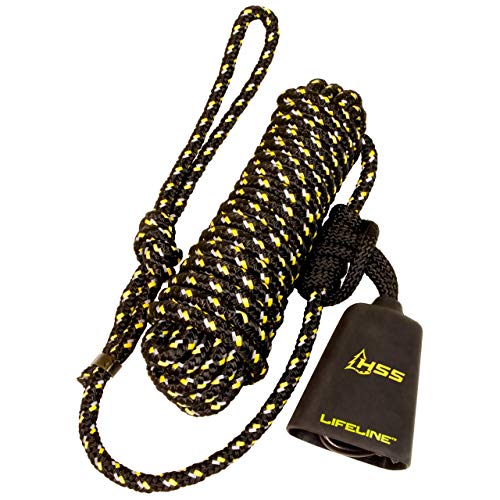
Hunter Safety System Lifeline Treestand Safety Rope

PETZL GRIGRI Rock Climbing Belay Device

BLACK DIAMOND Mondo Wide-Base Bouldering Chalk Pot

FresKaro UIAA Certified 25KN Auto Lock Carabiner

FresKaro 7075 Aluminium Screw-Lock Carabiner 4″
A treestand is only as safe as the rope you trusted to get up there, which is exactly the gap this kit targets. The Lifeline is built around a self-braking line that runs from the ground to your platform, designed to catch a slip on the way up or down rather than letting you freefall to the dirt.
It fits hunters running fixed stands in hardwood ridges where noise and reliability matter equally. If you sit a few seasons in and the climb feels routine, a system like this removes one big variable from the equation. Compared with the PETZL GRIGRI covered below, it serves a completely different audience: the GRIGRI is for partners on a rope, while this one is for solo climbing on a static line.
Where It Excels
- Continuous fall protection from the first step to the platform
- Silent operation matters in pressured hunting areas
- Self-braking design catches you even if your hands slip
- Fits standard fixed-position stands without permanent mods
Things To Consider
- Less relevant for climbers; the GRIGRI serves that crowd better
- Tree bark and weather wear on the rope over time, so plan to inspect it each season
Built With In Mind
Whitetail and mule deer hunters who hunt from fixed ladder or hang-on stands and want a hands-free safety line every climb.
A Better Fit Elsewhere
Rock climbers looking for a belay tool will want the PETZL GRIGRI instead, since it is designed for dynamic rope pairs rather than a static treestand ascent.
If your partner yells “take” and your hands freeze, this is the device that catches the climber anyway. The GRIGRI uses a cam-assisted braking system (a small internal cam that pivots and pinches the rope when weight suddenly loads) to lock the line during a fall, so belaying feels less like juggling and more like a controlled ride.
The trade-off is a learning curve: a GRIGRI handles the rope differently than a tube-style device, and new belayers often over-grip the brake hand at first. Once you settle in, lowering feels smooth and the extra margin on lead falls is worth the practice hours. Compared with the FresKaro twist-lock carabiner later on, the GRIGRI is the active partner in the system, while the carabiner is the gate that closes behind it.
The Helpful Details
- Aluminum body keeps weight modest on long sport routes
- Broad rope window from about 8.5 to 11 mm, sweet spot around 8.9 to 10.5 mm
- Works for gym sessions and outdoor sport pitches alike
- Lowering control feels smooth once you learn the brake-hand pressure
Honest Caveats
- Not optimized for half-rope or twin rope systems used in trad climbing
- Brake-hand discipline matters: always keep a hand on the brake side of the rope
- Cams can collect dust and chalk; a quick brush each season keeps action crisp
Key Specs
Made For
Sport climbers and gym regulars who belay a partner on single-pitch routes and want a forgiving device with modern braking built in.
Look Elsewhere When
Multi-pitch trad climbers running half or twin ropes should swap this for a tube-style belay device, since the GRIGRI is designed for single dynamic lines.
Chalk is the simplest piece of climbing gear and the easiest one to make a mess with. The Mondo tackles that problem with a wide, tip-resistant base and a magnetic closure that snaps shut after every dip, so a kicked pad or a windy day does not coat your crash pad in a white film.
The roll-top seal and zip pocket turn it into a small hauling bag for the approach, which matters more than it sounds on hike-in boulders. You can shove phone, keys, and a snack inside while the chalk stays contained. Relative to the two FresKaro carabiners below, the Mondo lives at the base of the problem rather than on your harness, which is the whole point.
Strong Points
- Wide footprint stays planted on uneven landings
- Magnetic closure keeps chalk contained during transport
- Brush holders fit a range of bristle sizes
- Roll-top seal and zippered pocket stash small essentials
- “Repo” colorways come from repurposed fabric, so each one looks different
Points To Note
- Bulkier than a chalk sock for alpine or trad days
- Magnetic flap can collect small metal debris over time, worth a quick wipe between sessions
Perfect Match For
Boulderers working problems at the base of cliffs who want a stable chalk container that doubles as a stuff sack.
Consider Something Else When
Multi-pitch climbers counting every gram on a long route will find the Mondo too bulky and should carry a simple chalk bag instead.
Auto-lock carabiners earn their place at the belay loop because you can open them one-handed and trust them to close behind you. This FresKaro uses a twist-lock barrel (a knurled sleeve that you rotate and push against a spring to open) that re-engages automatically the moment you release it, which is the part that matters when your brain is busy.
The D shape keeps loads centered along the strongest axis, and the 25 kN major-axis rating puts it in the same conversation as hardware costing several times more. For most home walls and weekend crags, it is a sensible belay-station carabiner. Against the Hunter Safety System Lifeline earlier in this list, the comparison is mostly philosophical: one is a climbing gate, the other is a safety line for hunting.
What Earns Its Place
- One-handed operation is fast at the belay
- Auto re-lock means less fumbling at transitions
- UIAA certification supports the rated strength claims
- Hot-forged body holds up to repeated loading cycles
Trade Offs
- Twist-lock requires two motions, slower than a magnetic gate in some setups
- Gate springs can stiffen after grit exposure, so a rinse and dry after sandy days helps
Right Fit For
Climbers who belay frequently and want a lockable carabiner that re-seats itself without a second thought.
Swap It Out When
Rackers building a full trad set on a tight weight budget should pick the FresKaro screw-lock carabiner next on this list, which trims grams at the cost of slower gate action.
A screw-lock carabiner is the slow, deliberate cousin of the auto-lock above, and there are good reasons to choose it on purpose. The gate threads closed with the thumb and forefinger, so you can feel when it is fully seated, which matters on rappel extensions and gear loops where you really do not want a surprise opening.
The 7075 aluminum body (an aerospace-grade alloy known for high strength-to-weight) keeps the carabiner light enough to rack a full set without bulking up your harness. Multi-color options help you color-code cams or anchor roles by sight. Sitting next to the BLACK DIAMOND Mondo chalk pot, this is the hardware you wear, while the Mondo is the gear you set on the ground.
Bright Spots
- 7075 aluminum balances strength and low weight
- About 3.5 turns of travel for a confident lock
- UIAA and CE certifications back the load rating
- Multi-color runs help organize anchor setups
A Few Limitations
- Screw action is slower than auto-lock at busy belay stances
- Threads can pick up grit in sandy environments, so a brush-out between sessions keeps threading smooth
Whose Shelf It Belongs On
Trad and alpine climbers building a rack who want a light lockable carabiner that feels deliberate in the hand.
Reach For A Different Pick When
Gym and sport climbers running quick belay transitions will find the FresKaro twist-lock auto-lock carabiner faster at the brake hand, even if it costs a few grams.
What Matters Most Before Choosing Climbing Gear
The first decision is the activity: treestand hunting, sport climbing, bouldering, and trad climbing each pull from a different corner of the catalog, and gear that crosses categories usually compromises somewhere. Match the product to the rope system, the typical environment, and your partner setup before anything else.
Second, look at the rating and certification language. Major-axis strength tells you how the carabiner handles a straight pull along its spine, while UIAA and CE marks confirm it has been independently tested to climbing standards. Numbers that look impressive without those marks are mostly marketing copy.
Third, weigh ergonomics honestly. A locking carabiner that fights your fingers will get used wrong at the worst possible moment. A chalk pot that tips on every sloped landing becomes a nuisance. Try to think about how each piece feels after ten cycles, not just the first clean one.
Fourth, plan redundancy. Climbers who lead routes should pair a belay device like the GRIGRI with a locking carabiner from this list. Hunters climbing into a stand should treat the Lifeline as one layer in a larger safety plan, not the only layer.
Key Considerations Across These Picks
Where Shoppers Go Wrong
Buying a belay device without checking rope diameter compatibility is the classic first-timer trap. A device rated for 9 to 11 mm will feel sketchy on a 8.4 mm gym line, and the GRIGRI’s cam may not engage as cleanly. Match the rope range printed on the device to the rope you actually climb on.
Another common miss is treating auto-lock and screw-lock carabiners as interchangeable. Auto-lock wins at busy belays where speed matters, while screw-lock shines on rappel extensions and racked gear where deliberate closure is the point. Picking the wrong style creates friction at exactly the wrong moment.
What Separates Premium From Basic
Higher-tier climbing hardware tends to use better alloys (7075 or 7075-T6 aluminum, hot-forged bodies) and tighter machining on the gate and hinge. That translates to smoother action, less play in the gate, and longer service life under repeated loading. For occasional weekend use, mid-range gear is plenty. For daily projecting or guiding, the smoother action and longer wear life tend to justify the step up.
Frequently Asked Questions
What rope diameter works with the PETZL GRIGRI?
The GRIGRI handles single dynamic ropes from about 8.5 to 11 mm, with the smoothest performance between 8.9 and 10.5 mm. Stick to single ropes within that range for the most consistent cam action.
Do I still need a locking carabiner if I already have a belay device?
Yes. The belay device and the locking carabiner do different jobs, and most belay setups call for the device to be clipped to the harness loop with a separate locking carabiner on the screwgate side for redundancy.
Is the BLACK DIAMOND Mondo chalk pot too big for the gym?
It is sized for bouldering pads and outdoor sessions, so a typical gym locker may feel tight. Climbers heading indoors more than outdoors might prefer a smaller chalk bag instead.
Can the FresKaro auto-lock carabiner replace a screwgate on rappels?
You can use either style for rappels, but a screwgate lets you confirm closure by feel, which some climbers prefer on long multi-pitch descents where a slow-open gate is actually a feature.
Does the Hunter Safety System Lifeline work on hang-on stands?
It is built around fixed-position setups, so ladder and hang-on stands are the intended use. Movable climbing sticks or lone-stick setups may need additional tie-offs to integrate the rope cleanly.
Bottom Line
Climbing gear earns its keep through repetition, and the right piece depends entirely on what you are climbing and how often. If you lead sport routes, start with the PETZL GRIGRI and pair it with a FresKaro twist-lock carabiner. Boulderers will get the most daily use out of the Mondo chalk pot. Hunters in fixed stands get a quieter, safer climb out of the Hunter Safety System Lifeline. Build the kit around the activity you actually do, and the gear stops feeling like gear.