
A good chicken run starts from the ground up, and the wrong flooring turns a tidy yard into a muddy headache fast. Run flooring matters more than most first-time keepers expect: it shapes drainage, keeps predators digging less easily, and decides how often you’re on your knees with a rake. The picks below mix enclosed walk-in runs with loose bedding and a modular extension, so you can pair a sturdy frame with the right surface material underneath.
A Side-By-Side Look

dgedby Large Chicken Run 10 x 4.9 x 6.4 FT

Premium Chicken Sand 50 lbs Dust-Free Bedding

Sannwsg Large Metal Chicken Run 20x10x6.6FT

PawHut Large Metal Chicken Coop 9.8′ x 19.7′

CAMMOO Walk in Chicken Coop 13.1×9.8×6.6ft

HITTITE Large Metal Chicken Coop 19.19 x 9.84 ft
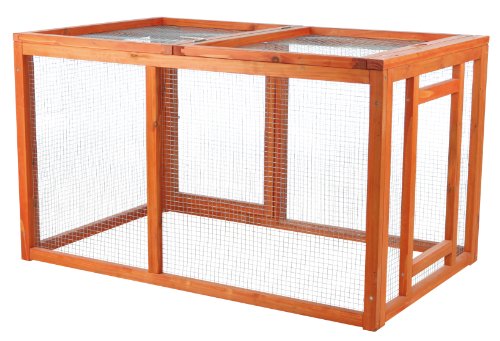
Trixie Natura Chicken Outdoor Run with Mesh Top
The Details Behind The Selections
The dgedby run arrives in one of five footprint options, which is rare in this category and useful when your yard shape doesn’t cooperate with a standard rectangle. The steel frame is galvanized to resist rust, a meaningful detail if your run lives through wet winters or coastal air. Compared to the smaller CAMMOO option later in this list, this one trades portability for sheer floor area and predator-resistant framing.
The included cover blocks sun and rain from above, helping any bedding you place underneath last longer between cleanouts. Heavy-duty zip ties are part of the package, so mesh-to-frame attachment doesn’t require a separate hardware run.
Good Reasons To Consider
- Five footprint options let you match the run to your yard rather than the other way around
- Galvanized steel frame resists corrosion in damp climates
- Full cover slows bedding breakdown from UV and rain
- Walk-in height of roughly 6.4 feet means adults can stand inside for daily chores
Things To Consider
- Larger configurations need a fairly flat, level patch of ground before assembly
- Mesh and zip ties may need seasonal checks after heavy wind
- Floor isn’t included, so you’ll still need bedding like sand or straw beneath
Who It Suits Best
Backyard keepers with irregular yard shapes who want a frame that flexes to fit their space and can stand inside comfortably for daily chores.
Where Another Pick Suits Better
The Trixie Natura Chicken Outdoor Run is a smarter grab if you already own a Trixie coop and just need a small, wood-framed extension.
This isn’t a frame, it’s the surface material that goes underneath every run on this list. Premium Chicken Sand is washed, screened, and dried to a uniform granular size, which matters more than it sounds: consistent particles sift cleanly through a cat-litter scoop, so droppings lift out fast. The “dust-free” claim refers to the manufacturing process, meaning fewer fine airborne particles than builder’s sand or construction-grade fill.
For keepers who already own a coop and want to upgrade the run floor only, this is the simplest swap you can make. Pour it two to four inches deep, rake it smooth, and sifting becomes part of your daily rhythm.
Practical Pluses
- Uniform granules sift cleanly with a standard cat-litter scoop, cutting cleaning time
- Washed and dried formula reduces respiratory dust compared to construction sand
- Draws moisture downward, keeping the surface dry enough for chickens to walk comfortably
- Outlasts straw or wood shavings, so replacement bags come less often
Points To Note
- A 50-pound bag covers roughly 8 to 12 square feet at three inches deep, so larger runs need multiple bags
- Sand can compact over a season and may need refreshing or turning
Quick Facts
Who It Suits Best
Keepers who already have a run frame and want a low-maintenance, scoopable floor material that holds up across multiple seasons.
Skip It When
The PawHut Large Metal Chicken Coop is a better fit if your flock needs an entirely new enclosed run, not just a floor refresh.
The Sannwsg run ships in three generous sizes, with the largest stretching past 26 feet long. A 55-inch by 40-inch perch is included, built from galvanized pipes and eucalyptus wood, so newcomers don’t have to source a roost separately. The half-door feeding port is a thoughtful touch, letting you drop feed in from outside without opening the full gate.
Where the dgedby focuses on frame flexibility, this one leans into roosting behavior and daily-use ergonomics. Chickens that like to perch off the ground tend to settle in faster here.
What Makes Sense
- Three length options accommodate a growing flock without buying a new run
- Included perch encourages natural roosting, reducing floor crowding at night
- Half-door feeding port cuts down on full-gate openings during daily chores
- Anti-UV cover shields both birds and any bedding underneath
Honest Caveats
- Longest configurations need significant flat yard space and a helper during assembly
- Anti-UV cover may need re-tensioning after heavy weather
Whose Shelf It Belongs On
Keepers with larger flocks or mixed poultry who want roosting bars and a feed port built in from day one.
Look Elsewhere When
The CAMMOO Walk in Chicken Coop fits better for small flocks in mild climates where plastic mesh flex matters more than raw size.
PawHut’s run is sized for serious flocks: 18 to 24 birds is the stated range, which puts it well beyond casual backyard keepers. The 420D silver-coated Oxford cloth top is heavier than a tarp and resists both UV and standing water. A sloped roof shape helps rain run off instead of pooling, which extends cover life and keeps the run drier.
You also get a hanging feeder and perch bundled in, so a single delivery covers most of the day-one hardware list. Compared to the Sannwsg, this run swaps eucalyptus perch material for a simpler bar and trades a feeding port for a hanging feeder.
Reasons It Performs
- Capacity for 18 to 24 birds suits expanding flocks or shared coops
- Silver-coated Oxford top outlasts thin tarp covers in sun and rain
- Sloped roof sheds water instead of letting it pool on top
- Hanging feeder and perch included, reducing extra purchases
Room For Improvement
- At nearly 20 feet long, it demands a level, roomy patch and likely two people to assemble
- Coop base can flex under heavy bedding weight without extra ground anchoring
Feature Snapshot
Right Fit For
Mid-to-large flock keepers who want one bundled package with cover, feeder, and perch ready to assemble on a flat yard.
Not Your Match When
The dgedby Large Chicken Run is a better fit if you’d rather choose from several footprint sizes and aren’t committed to a high-capacity layout.
The CAMMOO uses thicker 0.8mm tubing and a plastic mesh instead of metal wire, which behaves very differently in cold weather. The mesh survives more than a thousand bends at both freezing and high-heat test points, so it flexes instead of snapping when temperatures swing. That matters in northern climates where metal mesh can crack or kink.
At roughly 13 by 10 feet, this sits between a starter run and a full walk-in operation. The mesh arrives as a roll you cut to fit, which adds a step but lets you customize openings.
Positive Points
- Plastic mesh tolerates extreme cold and heat without cracking
- 0.8mm reinforced tubes give the frame more backbone than budget options
- Mid-size footprint fits suburban lots where larger runs won’t fit
- Walk-in height lets adults tend birds without crouching
Practical Considerations
- Plastic mesh is not fully predator-proof; reinforcement is recommended for raccoon or fox country
- Mesh roll must be cut to fit, adding assembly time
Best Suited To
Suburban keepers in mild or variable climates who want a manageable run that bends rather than breaks in temperature swings.
Another Choice May Suit
The HITTITE Large Metal Chicken Coop is the smarter pick where predator pressure is high and a heavier metal frame is non-negotiable.
The hexagonal roof is the standout visual feature here, and it’s not just for looks. Steep facets shed rain and snow faster than a flat or simple sloped top, which extends the life of the waterproof cover. Galvanized pipe at 0.8mm thickness matches the CAMMOO spec, so the frame itself is comparable in rigidity.
This run trades the Sannwsg’s included perch for a stronger weather-handling profile. In wet regions or places with heavy snow load, that roof geometry pays off.
Where It Delivers
- Hexagonal roof sheds rain, snow, and debris more efficiently than flat tops
- Galvanized 0.8mm frame resists rust through wet seasons
- Anti-UV cover blocks sun damage to both birds and bedding
- Long footprint fits flocks that need horizontal roaming space
Some Limits To Know
- Roof geometry takes longer to assemble than a simple rectangular cover
- Frame anchoring is recommended in windy exposed yards
At A Glance
Who Will Love This
Keepers in rainy, snowy, or windy regions who need a run roof that handles weather rather than collecting it.
Reach For A Different Pick When
The Sannwsg Large Metal Chicken Run is a better fit if your priority is an included perch and a feeding port rather than roof geometry.
The Trixie Natura isn’t a standalone coop, it’s an add-on run designed to extend an existing Trixie coop (models 55960, 55962, 55963, 55964). Made from fir wood with a galvanized metal grid, the construction feels closer to a garden trellis than a steel walk-in, which gives it a softer backyard look. Capacity tops out at two standard chickens or four bantams, so this is squarely a small-flock accessory.
The 17-by-17-inch walk-through opening lets you step inside for cleaning or for catching birds, though taller adults will stoop. If you’re already running a Trixie coop, this slot in nicely and gives your flock outdoor time without a full second structure.
What Pays Off
- Fir wood construction blends into garden settings better than galvanized steel
- Mesh-covered top protects from aerial predators while letting birds enjoy the open sky
- Slots directly into existing Trixie Natura coops for a tidy modular setup
- Walk-through opening simplifies daily cleaning and flock checks
Trade-Offs To Consider
- Wood frame needs occasional sealing or staining to hold up to weather
- Two-chicken capacity limits use to very small flocks or starter coops
Made For
Existing Trixie Natura coop owners with two standard chickens or four bantams who want a matching outdoor extension.
Where Another Pick Suits Better
The PawHut Large Metal Chicken Coop is a better fit if you need a full-size, high-capacity run rather than a small extension for a matching coop.
Choosing The Right Surface For Your Run
Floor Surface And Drainage
The surface inside a chicken run decides how often you clean and how healthy your flock stays. Sand, the kind in this list’s bedding pick, drains quickly and lifts clean with a scoop, while straw or wood shavings absorb moisture and need full replacement more often. For muddy yards, a raised or framed base layer under the sand helps water escape rather than pool. Pick a surface based on your climate: arid lots handle most substrates, but wet regions do better with fast-draining materials.
Frame Size And Flock Count
A standard rule is roughly 10 square feet per bird inside the run, less if the run connects to a larger free-range area. The PawHut’s 18-to-24 chicken capacity assumes birds also access a coop overnight, so always cross-check flock count against run-only square footage. Walk-in height of 6 feet or more saves your back during cleaning days. For small starter flocks, the Trixie Natura extension handles two standard birds comfortably; larger flocks need the Sannwsg or HITTITE footprint.
Predator Pressure And Mesh Type
Metal mesh deters chewing predators but can crack in deep cold; plastic mesh flexes through temperature swings but may need reinforcement in high-predator zones. Galvanized steel framing resists rust where humidity is high, while untreated wood needs seasonal sealing. Match mesh and frame to your local threat level rather than buying the heaviest option available.
Cover And Weather Protection
A run cover does double duty: blocking UV that breaks down bedding, and shedding rain that would otherwise puddle inside. Oxford cloth and anti-UV treatments outlast thin tarps by several seasons. Sloped or hexagonal roofs move water faster than flat tops, which matters in snowy climates where snow load can damage covers.
Quick Notes Before You Decide
Common Shopping Slip Ups
Many first-time keepers size their run to the flock they have today and forget to leave room for next year’s additions. Others pick a beautiful wooden frame and skip predator-proofing because the backyard feels safe, only to learn that raccoons and foxes test every weak spot. Floor material also gets underestimated: sand or proper bedding underfoot keeps feet healthy, while bare ground turns to mud within a season. Measure twice, plan for growth, and reinforce the spots predators target first.
What The Higher Tier Buys
Larger galvanized frames, thicker mesh, and Oxford cloth covers cost more because they survive multiple seasons instead of one. Premium run kits often bundle perches and feeders, so the upfront cost replaces several smaller purchases. For keepers planning to keep chickens for years rather than one season, the heavier build pays back in fewer replacements and lower maintenance time.
Frequently Asked Questions
What Is The Best Flooring For A Chicken Run?
Sand is widely considered one of the best run surfaces because it drains moisture, sifts clean, and stays dry underfoot. For wet climates, layering sand over a slightly raised base improves drainage further.
How Often Should You Replace Chicken Run Bedding?
Sand bedding can last several seasons with regular sifting, while straw or wood shavings typically need full replacement every one to three months. Spot-clean daily and refresh the top layer as needed.
Can Chicken Runs Sit On Grass?
Yes, but expect the grass to wear away within weeks under heavy use. Many keepers place the run over sand, pea gravel, or a wood-mulch base to protect the underlying soil and ease cleaning.
Do Chicken Runs Need A Roof?
A roof or cover helps the run stay dry, blocks aerial predators, and extends bedding life. Open-top runs work for fully enclosed yards with low predator pressure, but most keepers prefer covered runs for predictability.
How Big Should A Chicken Run Be Per Bird?
Plan on roughly 10 square feet per bird inside the run as a comfortable baseline, more if the run is the only outdoor space the flock uses daily. Smaller bantams need less, while heavier breeds appreciate extra room.
Bottom Line
Match the run frame to your flock size and climate, then layer in a surface material that handles your local moisture. The picks above cover everything from a small wooden extension to a heavy-duty walk-in, so the right starting point depends on what your yard actually needs today and where your flock is headed next season.