
Anyone who has rolled out a thin mat on cold ground knows the difference between camping and enduring a night. A solid pad separates you from rocks, roots, and the slow leak of body heat into frozen soil. You don’t need a luxury setup to sleep well outside, but the wrong pad will quietly wreck a trip. The lineup below leans toward affordable, dependable options for campers, paddlers, and road-trippers who want rest without overthinking it.
A Closer Look At The Lineup
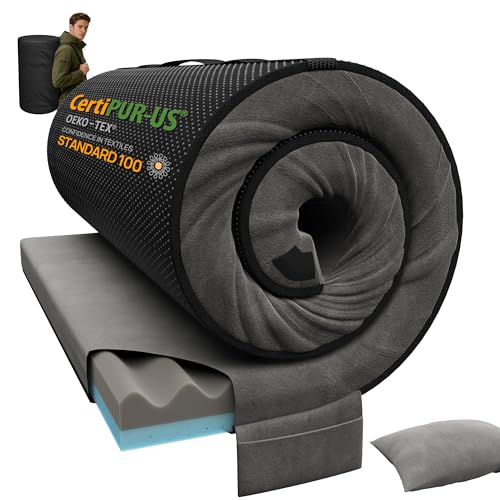
Releep 3-Inch Dual-Sided Memory Foam Camping Mattress

Therm-a-Rest Z Lite Original Sleeping Pad

Therm-a-Rest Z Seat Cushion Sitting Pad
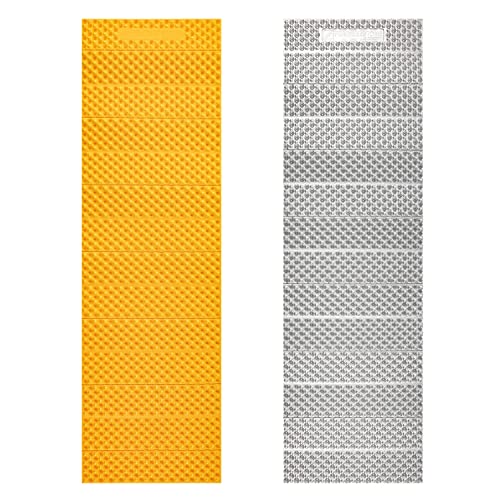
Featherstone El Cordion R-Value 2.1 Closed-Cell Pad

Exped Ultra Ultralight Inflatable Sleeping Pad

Outcast Sporting Gear Landing Pad (Red, 30″)
What Each Pick Brings To The Table
If you camp by car or set up a guest bed in a tent, this Releep pad blurs the line between indoor mattress and camp gear. Three inches of foam is a meaningful upgrade over the thin backpacking mats earlier in this list, and the waterproof surface shrugs off damp ground and the occasional spilled coffee. It rolls up into a carry bag, which makes weekend trip prep a little easier on tired arms.
For car campers and people who host occasional sleepover guests, this pad delivers noticeably more cushion without the bulk of a cot. Compared to the Z Lite that follows, it trades packability for comfort, so leave it at the trailhead and bring it to base camp instead.
Well-Handled Touches
- Three inches of foam give hips and shoulders real relief on hard tent floors
- Waterproof cover handles morning dew and surprise rain without soaking through
- Roll-up design stows into the included carry bag for transport between car and tent
- Portable pillow tucked into the kit saves you packing one separately
- Works as a spare guest bed at home, extending usefulness beyond camp weekends
Things To Weigh
- Bulk and weight make it a poor fit for backcountry miles where ounces matter
- Foam absorbs moisture over time if stored damp, so air it out before rolling up
- Less cold-weather insulation than the closed-cell pads reviewed below
At A Glance
Made For
Car campers, weekend festival sleepers, and anyone hosting overnight guests who needs a soft surface without hauling an air mattress.
Consider Something Else When
Backpackers counting every ounce should reach for the Therm-a-Rest Z Lite Original instead, since it folds flatter and weighs far less on the trail.
The Z Lite is the kind of pad that has shown up in backpacker photos for decades, and there’s a reason it keeps showing up. Closed-cell foam (foam with sealed air pockets that resists water absorption) means you can toss it on rocky ground without worrying about punctures, and the accordion fold makes it fast to lay down and even faster to pack away. You don’t blow it up, you don’t fiddle with valves, you just unfold it.
For long-distance hikers and people who treat gear like tools, that simplicity matters. It’s noticeably firmer than the Releep mattress reviewed earlier, but the trade pays off in weight savings and durability over a multi-month trail.
Positive Takeaways
- Folding accordion design sets up and breaks down in seconds
- Closed-cell foam shrugs off moisture and rough surfaces
- Light enough for multi-day backpacking without dominating your pack
- Textured surface helps keep a sleeping bag from sliding at night
Worth Noting
- Limited cushion thickness leaves side sleepers feeling pressure points
- Bulkier than an inflatable for the same insulation value
- Foam can develop creases over years of heavy use
Whose Pack It Belongs In
Thru-hikers and three-season backpackers who value proven reliability over plush comfort on the trail.
Look Elsewhere When
Side sleepers craving thicker cushion will find the Exped Ultra more forgiving, since it uses air chambers instead of dense foam.
Not every pad in your kit is meant for sleeping. The Z Seat earns its place as the lightweight companion you pull out at a windy lunch break, a cold bus stop, or a damp stadium bleacher. At around two ounces, it disappears into a jacket pocket, yet still gives your body a real break from cold ground. Think of it less as a sleeping pad and more as a portable slice of insulation.
For day hikers, climbers, and travelers who want one tiny piece of gear that does real work, the Z Seat fills a niche the other picks on this list can’t.
Bright Spots
- Featherweight closed-cell foam barely registers in your pack
- Folds to pocket size and pops open instantly when needed
- Insulated design blocks cold transfer from frozen benches or wet rocks
- Made in the USA with consistent foam quality across batches
Honest Caveats
- Too small and thin for actual sleeping, so it complements rather than replaces a pad
- Firm foam compresses under heavy users without much give
Best Suited To
Day hikers, climbers, and travelers who want warmth and cushion during long rest stops without carrying extra weight.
A Better Fit Elsewhere
Anyone planning to sleep on it overnight should pick up the Featherstone El Cordion, which is sized and shaped for under-body use.
The Featherstone El Cordion takes the basic closed-cell foam recipe and pushes it further into cold-weather territory. The hexagonal surface pattern lifts you off the ground more than a plain egg-crate pad, and the rated R-value of 2.1 tells you this thing is built to slow heat loss in chilly conditions. R-value is a standardized measure of how well a pad insulates you from the ground; higher numbers mean warmer sleep. That puts this pad in a useful middle ground between summer-only mats and full four-season setups.
For backpackers heading into shoulder seasons or sleeping at elevation, the extra warmth is worth the slightly heavier feel compared to the Z Lite reviewed above.
The Upside
- Rated R-value of 2.1 supports three-season use without an extra pad underneath
- Hexagonal nodes lift you farther off rocky, uneven terrain
- Closed-cell construction resists water absorption on wet ground
- Reflective layer helps bounce body heat back toward you overnight
Points To Consider
- Slightly heavier than a bare-bones foam pad, so ultralight purists may look elsewhere
- Stiffer feel than inflatable options like the Exped Ultra for side sleeping
Feature Snapshot
Who Will Love This
Backpackers and thru-hikers tackling shoulder-season routes who need tested warmth without switching to an inflatable pad.
Swap It Out When
Summer-only fastpackers chasing the lightest setup will find the Exped Ultra easier on the trail and more comfortable to sleep on.
Inflatable pads used to mean compromise: lighter weight in exchange for fussy setup and puncture anxiety. The Exped Ultra changes that conversation with air-insulated chambers running head to toe, which gives you real cushion at a sub-one-pound carry weight. You inflate it before bed, deflate it in the morning, and the stuff sack barely takes up space in your pack.
For fast-and-light summer trips where comfort still matters, this is the closest thing to bringing a real bed without the weight penalty.
The Practical Payoff
- Three inches of air cushion support side sleepers and restless sleepers
- Packs down small enough for bikepacking and minimalist setups
- Air-insulated chambers distribute weight evenly across the body
- Quicker inflation than older inflatables thanks to modern valve design
Less Ideal Details
- Requires careful ground checks to avoid sharp objects before laying it out
- Repair kit worth carrying since punctures end the night’s sleep quickly
- Less warmth than closed-cell foam options for cold shoulder-season trips
Perfect Match For
Fastpackers, bikepackers, and summer backpackers who want genuine sleep comfort at minimal carry weight.
Reach For A Different Pick When
Cold-weather campers should consider the Featherstone El Cordion, which insulates better without relying on air chambers.
River trips have their own sleeping puzzle: damp ground, sandy beaches, and gear that ends up wet no matter how careful you are. The Outcast Landing Pad leans into that reality with soft foam that cushions a tired body after a long day on the water. The 30-inch profile gives you a wide sleeping or sitting surface, and the foam keeps its shape even when the ground beneath it isn’t cooperating.
For rafters, kayak campers, and anyone running a base camp near moving water, this pad handles conditions that would punish thinner mats. Compared to the backpacking-focused picks earlier, it’s a different animal built for a different kind of trip.
Notable Gains
- Soft foam cushions sore shoulders after hours of paddling
- Wide 30-inch profile suits both sleep and casual sitting
- Performs well on damp, sandy, or uneven riverbank terrain
- Doubles as a landing pad for gear or passengers off the raft
Practical Considerations
- Too bulky to strap into a backpack for trail-based travel
- Open-cell foam may hold moisture longer than closed-cell alternatives
- Color and profile stand out, so it isn’t the most discreet camp option
Quick Facts
Right Fit For
Rafters, kayak campers, and base-camp sleepers who want soft, wide cushioning on riverbank nights.
Where A Sibling Pick Shines
Backpackers heading into the hills will find the Therm-a-Rest Z Lite Original lighter and easier to fold into a pack.
What Actually Matters When Picking A Budget Sleep Surface
Choosing a camping pad comes down to matching the pad to the trip, not chasing the cheapest option on the shelf. The first thing to sort out is your primary activity, since a pad that works for car camping may be miserable on a backpacking route.
Thickness and warmth are the next pair to weigh. Thickness affects how well the pad absorbs pressure points, especially for side sleepers. Warmth is measured by R-value, the standardized scale that tells you how much the pad resists heat loss to the ground. Lower R-values work for summer nights, but cold shoulder-season trips need higher numbers. The Featherstone El Cordion reviewed above carries a tested 2.1 rating, which gives you a sense of what mid-range insulation feels like in the field.
Portability rounds out the triangle. Closed-cell foam pads are nearly indestructible and pack small once folded, while inflatable pads like the Exped Ultra collapse to nothing but require more careful handling. If you mostly drive to camp, weight barely matters. If you hike for miles, every ounce earns its place or gets cut.
Finally, think about setup. Foam pads roll or fold out in seconds, which suits late arrivals and tired campers. Inflatable pads take a few breaths of inflation but reward you with better cushion for the weight. There’s no wrong answer, just the answer that fits your style of camping.
Key Things To Sort Out Before You Decide
Pitfalls Shoppers Hit
The most common mistake is grabbing a pad that looks comfortable on the listing without checking its R-value against your climate. A summer-only mat leaves you cold in May or September, and you’ll quickly start shopping again. Another trap is choosing thickness alone and ignoring weight, which ruins the experience for backpackers carrying it up a trail.
Where The Extra Money Goes
Stepping up to a higher-tier pad typically buys you better insulation, lighter materials, and tougher face fabrics that resist abrasion. The Exped Ultra in this list carries sub-one-pound weight thanks to advanced air-chamber construction, which is hard to replicate cheaply. Premium pads also tend to use laminates and welded seams that hold up over years rather than seasons. If you camp more than a handful of weekends a year, that long-term durability often justifies the step up. For occasional summer trips, the budget-friendly closed-cell options reviewed earlier hold their own just fine.