
Offset smokers ask more of your fuel than a quick weekend kettle does. Long, steady burns, clean ash, and enough structural integrity to hold temp across a ten-hour brisket separate forgettable charcoal from the kind that actually lets you cook the way you want. The five picks below cover the fuel side, the lighting tools, and a versatile offset-friendly cook chamber, so your pit stays dialed in whether you’re running a small firebox or a barrel rig.
The Choices Worth Comparing
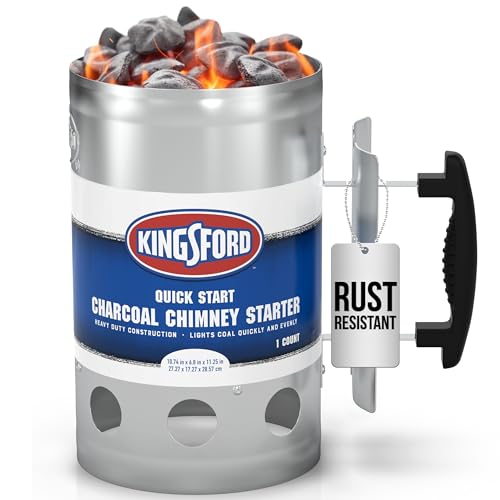
Kingsford Heavy Duty Charcoal Chimney Starter, Large Capacity

Rockwood Natural Lump Charcoal, Hardwood, 20 lbs, 2 Packs

Kingsford Original Charcoal Briquettes, BBQ, 16 Pounds

Char-Griller Side Fire Box Attachment, Model E82424

onlyfire Heavy Duty Deluxe Stainless Steel Chimney Starter
A Closer Look At Each Pick
Lighting an offset smoker cleanly often comes down to the chimney, and Kingsford’s heavy-duty model leans into the basics without overcomplicating things. The large capacity holds enough briquettes or lump to seed a firebox for a low-and-slow session, and the zinc-coated steel body shrugs off the rust that plagues cheaper starters after a season or two outside.
For a backyard pit setup, this chimney pulls steady airflow through the stack so coals light from the bottom up rather than torching the top. That matters when you’re trying to drop a consistent coal bed into a firebox without flare-ups, and it pairs well with both the Kingsford briquettes and the Rockwood lump listed below.
Useful Touches
- Large capacity reduces the number of refills needed before seeding the firebox
- Zinc-coated steel finish resists surface rust through wet seasons and humid coastal air
- Tall chimney walls direct heat upward, keeping the handle area cooler during use
- Wide mouth makes pouring into narrow offset firebox openings more forgiving
Things To Consider
- Single-handle design means you give up some pour control compared with the onlyfire option
- Owners commonly report the handle screw loosening after repeated high-heat cycles, so a quick check before each cook helps
Key Specs
Who It Suits Best
Weekend offset cooks who want a starter they can leave by the pit without babying it.
Look Elsewhere When
You prioritize two-handed pour control and heat shielding, in which case the onlyfire Heavy Duty Deluxe Stainless Steel Charcoal Chimney Starter brings a more safety-driven layout.
Lump charcoal behaves differently than briquettes in an offset, and the Rockwood blend leans into that distinction. The mix of oak, hickory, and cherry hardwoods burns hot and clean, which helps an offset firebox recover quickly after you open the door to add wood chunks or spritz the meat.
Coming in a two-pack at 40 pounds total, this option suits pitmasters running multi-hour sessions where running out of fuel mid-brisket isn’t an option. Compared to the Kingsford briquettes below, lump lights faster, leaves less ash to choke your firebox, and adds a mild woody note without needing to soak wood separately.
Reasons It Performs
- Cleaner burn means less ash accumulation in the firebox over a long cook
- Hardwood blend contributes flavor depth that pairs well with beef and pork shoulders
- 40-pound total supply reduces the chance of mid-cook fuel runs
- Available in 2, 3, and 4-pack sizes for matching cook frequency
Worth Noting
- Lump pieces vary in size, so a quick sort into your firebox avoids cold pockets from oversized chunks
- Burns hotter and faster than briquettes, meaning you may fine-tune your intake vents more actively
- Partial-burned pieces can be reused by sealing the grill and vents for roughly 48 hours to fully extinguish
Made For
Offset owners running brisket, ribs, or pork shoulder who want minimal ash and a touch of hardwood flavor layered into the fuel itself.
Consider Something Else When
You’d rather skip the size-sorting and prefer uniform fuel for a predictable firebox, in which case Kingsford Original Charcoal Briquettes fit that workflow more comfortably.
The familiar blue bag is the workhorse for a reason. Uniform shape, steady burn rate, and predictable ash output make Kingsford Original a forgiving fuel for newer offset owners still learning how their pit breathes, since every cook looks roughly the same from the firebox side.
Lighting time stays manageable when paired with the Kingsford chimney above, and the 16-pound bag fits the routine of someone running a smaller offset or a weekend-only cooking schedule. Versus the Rockwood lump, briquettes sacrifice some flavor layering for consistency, which is the right trade for many cooks.
The Helpful Details
- Uniform pillow shape makes firebox stacking more predictable than lump
- Long, even burn supports the low-and-slow temperature range an offset needs
- Widely available, so running out mid-cook is a smaller logistical problem
- Budget-friendly for high-volume cooks practicing their fire management
Points To Note
- Leaves more ash in the firebox than the Rockwood lump, requiring more frequent ash cleanouts
- Added binders give a milder smoke profile, so wood chunks do most of the flavor work
Best Suited To
Beginners dialing in their first offset and weeknight cooks who want consistent results without managing fuel quirks.
Reach For A Different Pick When
You want less ash and more flavor from the fuel itself, in which case the Rockwood Natural Lump Charcoal brings both.
This entry shifts gears from fuel to hardware, but it sits at the heart of how an offset actually cooks. The Char-Griller E82424 attaches to most Char-Griller barrel and dual-fuel grills as a side fire box, bringing true Texas-style offset behavior to a rig that would otherwise run direct-heat only.
The 250-square-inch cooking area with cast iron grates handles roughly 12 burgers at a time when you detach the legs and use it as a portable grill. Built from heavy-gauge powder-coated steel, it holds heat well for long smoking sessions and pairs naturally with the Rockwood lump or Kingsford briquettes above depending on what you’re cooking.
The Practical Payoff
- Converts a compatible barrel grill into a true offset smoker without buying a separate pit
- Detachable legs turn the same unit into a portable charcoal grill for cookouts
- Cast iron grates hold and release heat evenly across the grate surface
- Plenty of firebox room for both charcoal and wood chunks during long cooks
Honest Caveats
- Designed to fit Char-Griller models, so compatibility with other brands is limited
- Powder-coated finish benefits from a cover or sheltered storage to extend its life outdoors
Feature Snapshot
Perfect Match For
Char-Griller barrel grill owners who want to step into offset smoking without investing in a separate pit.
Swap It Out When
You run a non-Char-Griller offset already, since the Kingsford chimney and Rockwood lump combination addresses the fuel and lighting side directly.
The onlyfire chimney takes the standard starter concept and rebuilds it around safer handling. A dual-handle layout keeps the main grip well away from radiant heat, while a side handle gives you a pivot point for pouring coals into a narrow firebox opening without shaking the whole stack.
Stainless steel construction is the upgrade over the Kingsford model above, trading a bit of weight for stronger corrosion resistance in a humid garage or uncovered patio. For cooks who light their offset several times a week, the heat-shielding and pour control reduce the small annoyances that add up over a long season.
What It Does Well
- Dual-handle design keeps the primary grip cooler during pours
- Side handle acts as a pivot for steadier coal transfer into a tight firebox
- Stainless steel body resists rust and discoloration better than coated alternatives
- Reinforced heat deflector reduces warping over time
Smaller Limits To Weigh
- Slightly heavier than single-handle starters, a minor consideration on long walks to a far-off pit
- Stainless finish benefits from a quick wipe-down after each cook to keep it looking clean
Spec Overview
Whose Shelf It Belongs On
Pitmasters who light often and care about a safer, more controlled pour into the firebox.
A Better Fit Elsewhere
You want a lighter, simpler tool for occasional use, in which case the Kingsford Heavy Duty Charcoal Chimney Starter covers the basics with less weight.
Choosing Fuel And Tools That Match Your Pit
Picking the right charcoal for an offset smoker is less about finding a single winner and more about matching fuel behavior to the way your pit breathes. Lump charcoal, made from charred hardwood pieces with no binders, burns hotter and cleaner than briquettes, which are compressed uniform pillows often held together with starch or mineral binders. An offset firebox rewards steady, predictable airflow, so knowing how each fuel behaves at your target temp helps you avoid chasing the vents all afternoon.
Lump suits longer burns and faster firebox recovery after door swings, but the variable piece sizes mean you may need to sort chunks before stacking. Briquettes trade some flavor layering for uniform shape and a steady burn rate, which makes them more forgiving for newer pit owners. Your chimney starter matters too, because seed coals that light unevenly create the cold pockets that ripple through an offset’s cook chamber for hours.
Matching Capacity To How You Cook
The right bag size depends on cook length, frequency, and storage space. A 16-pound bag of briquettes covers a single brisket or a long rib session for most offsets, while the 40-pound Rockwood twin pack suits weekend warriors running multiple cooks back to back. Larger formats only pay off when you actually move that much fuel; otherwise it just sits in a humid garage losing ignition quality.
If you’re running a smaller firebox, oversized lump chunks can smother airflow before they catch, so sizing down to broken pieces helps. Larger offsets with deeper fireboxes handle the bigger pieces without complaint, and the extra thermal mass keeps recovery fast during long cooks.
Key Considerations Across These Picks
Common Shopping Slip Ups
Treating every offset the same is the fastest way to waste fuel. A tight firebox demands smaller lump pieces or briquettes, while a wide barrel box runs cleanly on mixed chunk sizes. Skipping a chimney starter and reaching for lighter fluid also taints the smoke profile, so even a basic starter pays for itself after a few cooks.
Where The Extra Money Goes
Premium lump costs more because the wood is selected and the binders stay out of the bag, which translates to cleaner ash and stronger flavor contribution. Stainless steel chimneys cost more because the metal and dual-handle hardware raise both durability and safety. For cooks who fire up weekly, those upgrades reduce friction; for occasional cooks, the basic Kingsford setup covers the same job with less commitment.
Frequently Asked Questions
Is lump charcoal or briquette better for an offset smoker?
Lump burns hotter and leaves less ash, which suits long offset cooks that need quick firebox recovery. Briquettes burn more predictably and hold steady at lower temps, making them easier for newer pit owners.
How much charcoal does an offset smoker use per cook?
A typical eight-hour offset session uses roughly 30 to 50 pounds of fuel depending on weather, firebox size, and target temperature. Lump tends to burn faster, so you may lean toward the heavier end of that range.
Do I really need a charcoal chimney starter?
A chimney starter lights coals evenly without lighter fluid, which keeps the smoke profile clean. It also shortens the wait time before you can seed the firebox.
Can I use Kingsford briquettes in an offset smoker?
Kingsford briquettes work well in offset fireboxes thanks to their uniform shape and predictable burn rate. Pair them with wood chunks if you want additional smoke flavor.
What is a side fire box on an offset smoker?
A side fire box is an attached chamber where fuel burns separately from the main cooking chamber, letting heat and smoke travel across the food the way a traditional offset pit works. The Char-Griller E82424 brings that layout to compatible barrel grills.
Bottom Line
The right charcoal for your offset depends on how often you cook, how hands-on you want to be, and how your firebox breathes. Lump gives you clean ash and fast recovery for long sessions, briquettes give you predictable temp control for everyday cooks, and the chimney you light them with shapes how smoothly the whole process runs. Pick the fuel and tools that match your routine, and the pit takes care of the rest.