
A reliable charcoal grill with smoker capability lets you sear burgers over direct heat at lunch and pull pork low-and-slow by dinner. The trick is matching the build to your space, your usual crowd, and how much hands-on cooking you actually want. This list rounds up six solid options across portable kettles, full-size backyard rigs, pellet grills that handle both jobs, and a flat-top griddle that travels well.
The Essentials At A Glance
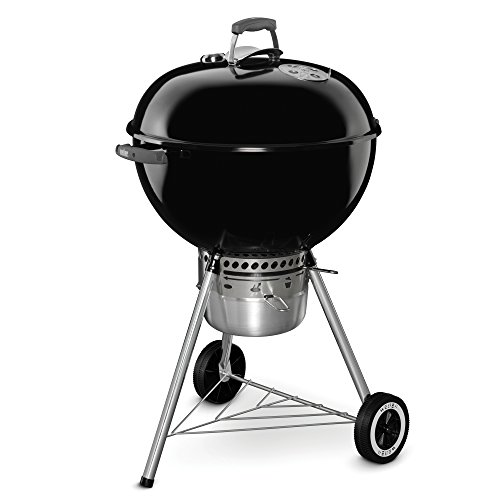
Weber® Original Kettle Premium Charcoal Grill 22-Inch
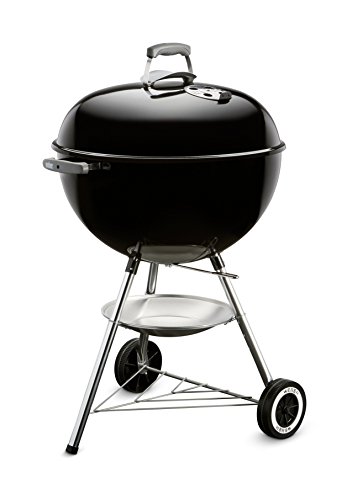
Weber® Original Kettle Charcoal Grill 22-Inch

Weber® Jumbo Joe Charcoal Grill 18-Inch

Pit Boss 500 FB2 Series Wood Pellet Grill & Smoker

Pit Boss 150 Wood Pellet Grill & Smoker

Pit Boss 4-Burner Propane Deluxe Fold & Go Griddle
More Details On Our Top Picks
The Weber Original Kettle Premium is the kind of grill a household settles into for a decade of weekends. Its 22-inch bowl sits comfortably on a small patio yet still feeds a family cookout, and the porcelain-enameled finish holds up through years of weather. Compared to the original Kettle below, this Premium adds a hinged cooking grate, which is a meaningful upgrade once you start smoking longer cuts.
For most backyards, this is the sweet spot between portability and capacity. The One-Touch cleaning system sweeps ash into a high-capacity catcher, so end-of-cook cleanup stays quick.
The Upside
- Hinged grate lets you add charcoal mid-cook without lifting the whole grate off.
- 22-inch porcelain-enameled bowl retains heat well for indirect smoking setups.
- One-Touch ash system with a high-capacity catcher simplifies teardown.
- Stable three-leg footprint fits a standard patio or deck corner.
- Familiar kettle shape works as both a hot sear station and a low-and-slow smoker with a water pan.
Things To Consider
- No dedicated smoker chamber means longer cooks rely on careful vent and fuel management.
- Assembly takes patience; budget an afternoon for the first setup.
- Side tables and cover are sold separately, which adds to the total spend.
Who It Suits Best
Home cooks who want one dependable charcoal rig that handles both weeknight burgers and longer indirect cooks without learning a second system.
Look Elsewhere When
You’d rather dial in exact smoker temperatures electronically, in which case the Pit Boss 500 FB2 Series gives you set-it-and-forget-it pellet control.
The standard Original Kettle is the simpler sibling to the Premium above, and that simplicity is the point. You get the same 22-inch porcelain-enameled bowl and lid, plus the same rust-resistant dampers for temperature control. Owners who don’t need a hinged grate often prefer this version because there are fewer parts to worry about.
For first-time charcoal cooks, this kettle is a forgiving teacher. Two vents and the lid’s heat retention handle most of the temperature work, so you spend less time fussing and more time cooking.
Practical Advantages
- Porcelain-enameled bowl and lid hold heat for steady indirect cooking.
- Two dampers give you straightforward top and bottom airflow control.
- One-Touch cleaning handles ash removal in a few sweeps.
- Sturdy wheel-and-leg design rolls into storage against a garage wall.
Worth Noting
- Cooking grate is a single fixed section, so refueling means lifting the whole grate hot.
- No built-in thermometer on most versions, so a separate probe helps for longer cooks.
- Lacks the Premium’s hinged convenience, which matters more once you cook regularly.
Key Specs
Made For
Shoppers stepping into charcoal for the first time who want a no-nonsense kettle that will outlast their learning curve.
A Better Fit Elsewhere
You cook for a crowd on the road, in which case the Weber Jumbo Joe folds down for easier transport.
The Jumbo Joe is a travel-sized kettle that doesn’t feel like a compromise. Its 18-inch plated steel cooking grate offers 240 square inches of space, which is enough for a couple of steaks, a pack of brats, or a small pork shoulder when you set it up for indirect heat. Compared to the full-size 22-inch kettles, this one fits in a trunk without folding.
For tailgate lots, campsite picnic tables, and beach parking pads, the carry handle and tuck-away legs make the move from car to grill quick. You get Weber’s porcelain-enameled lid and bowl finish, which is rare at this size.
What Pays Off
- 240 square inch grate handles real meals, not just appetizers.
- Compact 18-inch bowl travels in most hatchbacks and SUVs.
- Porcelain-enameled lid and bowl hold up to weather on the go.
- Aluminum dampers and ash catcher resist corrosion between trips.
Minor Gripes
- Cooking grate is plated steel, not porcelain, so it needs more care to avoid rust.
- Smaller bowl means tighter vent control for long smoking sessions.
- Handle and latch are basic; treat them gently when the grill is hot.
Feature Snapshot
Best Suited To
Tailgaters, car campers, and apartment dwellers with limited patio space who still want real charcoal flavor.
Reach For A Different Pick When
You’d rather push a button and walk away, since the Pit Boss 150 pellet model automates the temperature side for you.
The Pit Boss 500 FB2 is the full backyard rig on this list. Its 518 square inches of porcelain-coated steel cooking space, paired with an LCD digital controller and a 180°F to 500°F range, lets you smoke a brisket overnight and then sear burgers the next afternoon. The Flame Broiler slide gives you direct-flame access when you want it, which most dedicated smokers don’t offer.
Compared to the Weber kettles above, this is a different category of tool. You’re trading the manual feel of charcoal for pellet-fed automation, with two meat probe ports for tracking internal temps. The 5 lb. pellet hopper means planning around refill windows on long cooks.
A Few Strong Suits
- Eight-in-one cooking versatility covers smoke, bake, braise, roast, grill, barbecue, char-grill, and sear.
- Two-tier porcelain-coated cooking space handles full meals plus sides.
- Digital LCD controller holds target temps within a tight range.
- Meat probe ports let you monitor without lifting the lid.
- Flame Broiler gives true direct-heat grilling inside a smoker body.
Honest Caveats
- Needs a power outlet nearby for the controller and auger.
- Pellet flavor differs from lump charcoal; purists may notice.
- Larger footprint demands more patio or garage space than a kettle.
At A Glance
Who Will Love This
Cooks who run long weekend projects and want digital control, meat probes, and versatile cooking modes in one box.
Skip It When
You mostly cook quick weeknight meals on a small patio, where the Weber Original Kettle Premium stays simpler and more fuel-flexible.
The Pit Boss 150 brings pellet-smoker convenience to a portable footprint. Its 256 square inches of cooking surface and 7 lb. pellet hopper cover tailgate spreads and small camping crews without weighing down your vehicle. Latch-lock handles and dual side grips keep the carry stable, which matters when the cooker is still cooling.
Automatic start-up and cool-down cycles handle the messy parts of pellet cooking, and the Flame Broiler lets you swap from smoke to direct sear without swapping grills. For your first foray into pellet smoking away from home, this is a friendly entry point.
The Helpful Details
- Latch-lock lid and side handles make transport safer once the grill is cool.
- Automatic start-up and cool-down simplify prep and shutdown.
- 256 square inch surface fits a full pregame meal for a small group.
- 7 lb. pellet hopper extends cook time between refills.
Practical Considerations
- Requires a power source for the pellet feed system at the cook site.
- Smaller cooking area than the Pit Boss 500 limits big-batch cooks.
The Right Fit
Tailgaters, campers, and weekend travelers who want smoke flavor without hauling a full-size rig.
Swap It Out When
You’d rather have direct flame cooking on a flat top, where the Pit Boss 4-Burner Propane Griddle offers a 753-square-inch surface for breakfast cooks and smash burgers.
The Pit Boss 4-Burner Deluxe Fold & Go is the outlier here, and that’s why it earns its spot. It’s a propane griddle, not a charcoal grill, but for big-batch breakfasts and tailgate burgers the 753-square-inch flat cooktop is hard to match. Four separately controlled burners add up to 62,000 BTU, which means you can run a hot sear zone and a gentle warming zone at the same time.
Unlike the other picks, this one folds down for transport and includes a hard cover that protects the cooktop in transit. For anyone running a parking-lot cookout, this is closer to a flat-top diner on wheels.
Real-World Strengths
- Four independent burner zones give you temperature control across the surface.
- 753 square inches handles pancakes, smash burgers, and fajitas in one round.
- Folding legs and hard cover support travel between home, camp, and stadium.
- Propane start-up skips the charcoal chimney wait.
Points To Keep In Mind
- Propane griddles lack the smoke flavor of charcoal or pellet cooking.
- Bulkier than a portable kettle and heavier to load into a truck bed.
- Needs a propane tank and, for big cooks, a backup tank on hand.
Feature Snapshot
Perfect Match For
Tailgaters, cabin hosts, and large-family cooks who run a flat-top menu more often than low-and-slow smokes.
Where A Sibling Pick Shines
You want true smoke flavor and charcoal sear marks, in which case the Weber Original Kettle Premium gives you that with a much smaller footprint.
Choosing Charcoal Grill Smoker Combos That Match Your Cooking Style
Match The Fuel Type To Your Patience Level
Charcoal asks for fire-building, vent watching, and timing instinct. Pellets trade some of that hands-on feel for set-it-and-forget-it digital control. Propane griddles skip both and trade flavor for speed. Pick the fuel that matches how much time you actually want to spend at the grill on a Tuesday, not just a Sunday.
Size Your Cooking Surface To Your Real Crowd
A 240 square inch grate handles two to three people without crowding. A 500+ square inch setup covers brisket plus sides for six to eight. For mixed menus, consider two-tier layouts like the Pit Boss 500, which let you smoke below and warm above. Buy for the meal you cook most often, not the party you host once a year.
Plan For Airflow And Vent Control
A grill is really an airflow device. Top and bottom dampers, like those on the Weber kettles, give you direct control over oxygen and burn rate. Pellet rigs move that control to a digital controller, which is convenient but adds a power and electronics dependency.
Decide On Portability Before You Commit
Tailgaters and campers should weigh folded dimensions, latch security, and total carry weight. Home cooks with a fixed patio can ignore all of that and focus on capacity and finish quality. A portable kettle and a stationary pellet rig serve very different lives.
Key Considerations Across These Picks
Pitfalls Shoppers Hit
Overbuying capacity for a small patio is one of the most common mistakes, because a 750-square-inch griddle swallows deck space fast. Another trap is choosing a pellet smoker without checking for an outdoor power outlet nearby. Skipping cover and maintenance plans also shortens the life of even well-built grills, especially in wet climates.
The Upgrade Payoff
Moving from a basic kettle to a Premium or full-size pellet model usually buys you better heat retention, more precise airflow, and the ability to run true indirect cooks. The premium tier earns its keep when you smoke regularly, cook for crowds, or want digital temperature control. For occasional charcoal cooking, the upgrade is harder to justify.
Frequently Asked Questions
What is the main difference between a charcoal kettle and a pellet smoker combo?
A charcoal kettle relies on manual airflow through vents and burning lump or briquettes for heat. A pellet smoker combo uses an electric auger that feeds wood pellets into a fire pot, with a digital controller setting the temperature. The kettle gives you hands-on control and classic charcoal flavor, while the pellet rig gives you automated, set-it-and-forget-it cooking.
Can you actually smoke meat on a standard kettle grill?
Yes, by banking charcoal to one side, placing a water pan in the middle, and cooking on the opposite grate section. Vents are adjusted to keep temperatures in the 225°F to 275°F range. This is indirect cooking, and kettles like the Weber Original Kettle Premium handle it well for shorter smokes.
How big should the cooking surface be for a family of four?
Around 400 to 500 square inches is a comfortable fit for a family of four, leaving room for a main protein and sides. Smaller families of two do well in the 240 to 300 square inch range, which is where the Weber Jumbo Joe sits.
Do portable charcoal grills hold heat well enough for long cooks?
Portable kettles hold heat fine for one to two hour cooks, but smaller bowls lose temperature faster on overnight smokes. For longer projects, a full-size kettle or pellet smoker with steady fuel supply performs more reliably.
Is a propane griddle a good substitute for a charcoal grill?
A propane griddle covers breakfast and smash burger menus beautifully, but it cannot replicate the open-flame sear or smoke flavor of charcoal. Many outdoor cooks keep both: a charcoal or pellet rig for meat, and a griddle for eggs, pancakes, and stir-fries.
Closing Remarks
Your best pick comes down to how you actually cook. A weekend griller feeding a household will be happy with the Weber Original Kettle Premium, while a long-cook hobbyist gets more from the Pit Boss 500’s digital control. Match the grill to your space, your fuel patience, and your most common menu, and the rest tends to fall into place.