
A backyard cookout can look a dozen different ways. Some evenings call for a quick sear on a kettle while the kids chase fireflies, and others demand a twelve-hour pork shoulder while friends drift in and out of the yard. The grills below cover that full range, from a portable charcoal option you can toss in a truck bed to offset smokers built for whole-hog weekends and a dual-fuel combo that splits the difference between gas convenience and charcoal flavor.
The Essentials At A Glance
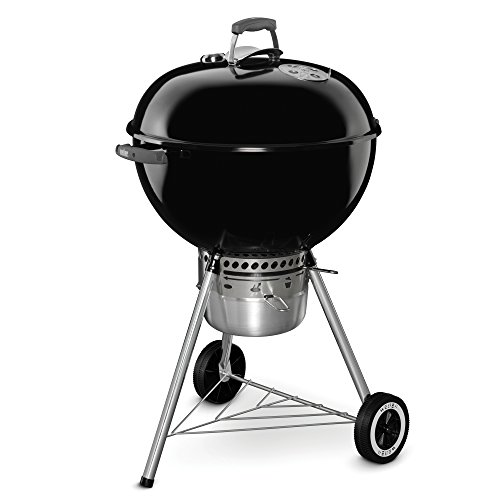
Weber Original Kettle Premium Charcoal Grill 22-Inch

Oklahoma Joe’s Rambler Portable Charcoal Grill
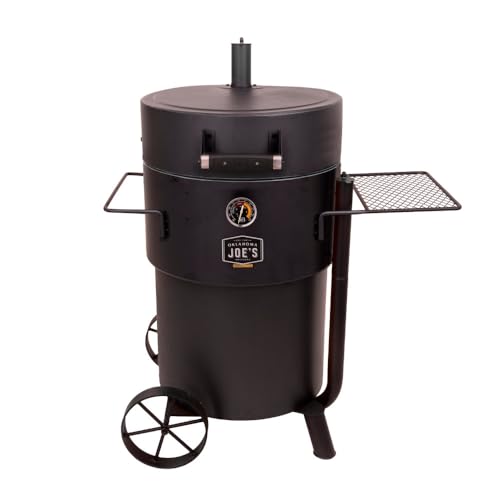
Oklahoma Joe’s Bronco Pro Drum Smoker and Grill

Oklahoma Joe’s Firecraft Series Open Fire Barrel Grill

Oklahoma Joe’s Highland Reverse Flow Offset Smoker
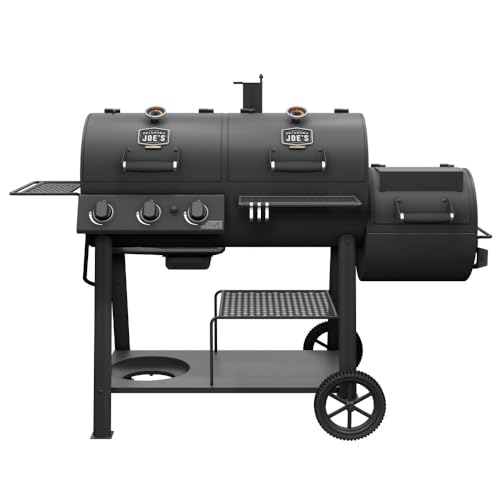
Oklahoma Joe’s Canyon Combo Dual Fuel Smoker and Grill

Oklahoma Joe’s Longhorn Offset Charcoal Smoker and Grill
Inside Each Recommended Option
The 22-inch kettle is the charcoal grill most people picture when they hear the word “backyard barbecue,” and the Premium trim adds a few details that smooth out the everyday experience. A hinged grate lets you add fresh charcoal mid-cook without lifting the whole cooking surface, and the One-Touch cleaning system funnels ash into a high-capacity catcher underneath. The porcelain-enameled bowl holds heat steadily, which matters when you’re rotating chicken thighs and sausages for a Saturday cookout.
Compared to the portable Rambler below, this kettle is a true stationary workhorse with a wider footprint and a deeper firebox. For most homeowners who want real charcoal flavor without fuss, it’s the kind of grill you set up once and rely on for a decade.
What Helps Most
- Hinged cooking grate simplifies mid-cook charcoal refills.
- One-Touch ash system cuts cleanup time after long cooks.
- 22-inch grate fits roughly 12 burgers per round.
- Porcelain-enameled lid and bowl resist rust in changing weather.
Things To Consider
- No built-in thermometer, so a separate probe helps with accuracy.
- Two-wheel base makes it stable but less nimble than the Rambler.
Who It Suits Best
Homeowners running weekly family cookouts on a patio who want charcoal flavor without the learning curve of an offset smoker.
Consider Something Else When
If you’re chasing low-and-slow bark on brisket, the Oklahoma Joe’s Bronco Pro drum smoker gives you sealed-drum control this kettle can’t match.
The Rambler answers a simple question: can you get real charcoal flavor at a tailgate or campsite without hauling a full-size kettle? With 218 square inches of cooking area and a height-adjustable charcoal tray, this tabletop grill lets you slide the fire closer for high-heat sears or drop it lower for steadier indirect cooks. The compact frame is light enough for one person to carry but still feels substantial on a picnic table.
Where the Weber kettle is built to stay put, the Rambler is built to move. Apartment dwellers with balcony space and weekend campers will get more mileage out of this than a full backyard setup.
A Few Highlights
- Adjustable charcoal tray offers two-zone style cooking in a small package.
- 218 sq. in. grate handles a family meal or a tailgate spread.
- Tabletop footprint suits balconies, RVs, and picnic tables.
- Sturdy steel construction for a portable in this size class.
Points To Note
- Smaller firebox means more frequent charcoal refills on long cooks.
- Lacks lid-mounted vents of larger kettles, so airflow tuning is limited.
Made For
Campers, tailgaters, and small-space dwellers who want charcoal flavor without dedicating patio square footage to a permanent grill.
Look Elsewhere When
Smoke sessions longer than a couple of hours call for the Oklahoma Joe’s Bronco Pro drum smoker, which holds fuel for far longer cooks.
Drum smokers are a category of their own, and the Bronco Pro leans into the format with a sealed lid and a purpose-built airflow system designed for tight heat control. The 366-square-inch grate gives you enough room for two pork shoulders or a full packer brisket, while the oversized charcoal basket is built to hold enough fuel for over 15 hours of uninterrupted smoking. At 21.5 inches across, it’s compact enough for a driveway but heavy enough that you’ll wheel it into place rather than lift.
For someone stepping up from a kettle or a portable, the Bronco Pro teaches the fundamentals of draft control without the babysitting an offset demands.
Good Reasons To Consider
- Sealed drum design holds steady temperatures for hours.
- Oversized fuel basket supports long overnight cooks.
- 366 sq. in. cooking area fits multiple large cuts at once.
- Heavy-gauge steel construction for serious backyard use.
Honest Caveats
- Vertical drum format restricts access compared to an offset firebox.
- Weight and footprint make permanent placement practical.
Feature Snapshot
Best Suited To
Backyard pitmasters stepping into low-and-slow BBQ who want set-and-forget drum control before tackling a full offset rig.
Not Your Match When
Cooks who want open-fire access and 360-degree grate access should consider the Oklahoma Joe’s Firecraft Series barrel grill instead.
The Firecraft Series goes in a different direction from the drum and offset picks on this list. It’s an open-fire barrel with 480 square inches of total cooking area split across two round heavy-gauge wire grates, giving you 360-degree access to the fire. Twist-Lock handles release the grates so you can stoke or rearrange coals without disturbing the food above. Live-fire grilling and fire-pit use sit at the heart of the design, so it doubles as a backyard gathering piece after dinner.
Compared to the Bronco Pro’s enclosed drum, this is a more social, more hands-on style of cooking. You trade precision for theater.
The Helpful Details
- Two heavy-gauge wire grates offer corrosion resistance.
- Modular barrel design suits fire pit use beyond grilling.
- Open firebox makes stoking fast and intuitive.
Points To Keep In Mind
- Open format exposes food to wind and ambient temperature swings.
- No lid means longer indirect cooks require creative setup.
Who Should Grab It
Home cooks hosting evening gatherings who want a showpiece grill that pulls double duty as a fire pit when the food is done.
Skip It When
Smokers needing sealed airflow for brisket and ribs should reach for the Oklahoma Joe’s Highland reverse flow offset smoker instead.
The Highland takes the classic offset smoker format and adds switchable baffles so you can run reverse-flow or traditional offset smoking on the same cook. Reverse flow routes heat and grease along the bottom of the chamber before reaching the smokestack, which evens out the temperature across the grate and protects the meat from direct firebox heat. With 1,093 square inches of total cooking area, you’ve got room for a full competition spread.
This is the pick for cooks ready to commit to charcoal and wood splits as their primary fuel. It rewards attention, so it suits people who enjoy the process as much as the plate.
Everyday Wins
- Switchable reverse-flow baffles add cooking flexibility.
- Large 1,093 sq. in. surface handles full sheet-pan spreads.
- Adjustable smokestack position fine-tunes draft.
- Heavy-gauge build stands up to year-round outdoor exposure.
A Few Limitations
- Offset learning curve is real: expect to tune vents regularly.
- Footprint is significant, so plan dedicated yard space.
Quick Facts
Whose Shelf It Belongs On
Backyard pitmasters ready to invest in classic offset smoking with a touch of competition-level control.
A Better Fit Elsewhere
If you want charcoal flavor plus propane convenience, the Oklahoma Joe’s Canyon Combo dual-fuel setup is a stronger match.
The Canyon Combo answers the eternal backyard question: charcoal smoke or propane sear? Both. The charcoal side handles low-and-slow smoking with hardwood splits, while a separate 3-burner propane gas section puts out 36,000 BTU for fast grilling and high-heat sears. Across both chambers you’re working with 1,031 square inches of cooking area, with a 750-square-inch primary on the smoker side.
Versatility is the headline. You can run ribs on the charcoal side and burgers on the gas side without flipping a single switch over.
What It Does Well
- True dual-fuel setup in a single footprint.
- 36,000 BTU gas side reaches cooking temperature quickly.
- 1,031 sq. in. total capacity across both chambers.
- Offset-style charcoal side supports indirect cooking.
Trade-Offs To Consider
- Propane tank is sold separately, an extra purchase to plan for.
- Larger footprint than a single-fuel grill.
Spec Overview
Perfect Match For
Entertainers who want to smoke brisket and grill burgers simultaneously without managing two separate setups.
Where A Sibling Pick Shines
If propane isn’t part of the picture, the Oklahoma Joe’s Longhorn offset keeps things pure charcoal with a slightly larger secondary chamber.
The Longhorn is the long-running classic of the Oklahoma Joe’s offset lineup, and it shows up in a lot of backyard cookouts for good reason. You get 751 square inches of primary cooking space and a 309-square-inch secondary firebox chamber, totaling 1,060 square inches across the rig. Hardwood splits and chunks feed the firebox for indirect, wood-fired cooks that build bark slowly over hours.
Compared to the Highland’s reverse-flow upgrade, the Longhorn is a more traditional offset that rewards hands-on vent tuning. It’s the right step up from a kettle for someone ready to learn fire management.
A Strong Showing
- Large primary chamber handles multiple racks of ribs.
- Secondary firebox doubles as a small direct-heat grill.
- Classic offset format teaches fundamentals of fire control.
- Heavy steel construction handles year-round outdoor use.
- Proven format with wide parts and accessory availability.
Worth Bearing In Mind
- Temperature swings are common until you learn vent tuning.
- Smoke leaks at the lid are common in stock gaskets.
- Heavy assembly required at delivery.
Feature Card
Built With In Mind
Home cooks ready to move beyond kettle grilling into traditional offset smoking without jumping to a competition-tier price.
Reach For A Different Pick When
If dual-fuel flexibility matters more than pure charcoal tradition, the Oklahoma Joe’s Canyon Combo delivers gas and smoke in one rig.
Picking The Right Setup For Your Yard
Cooking Area That Matches Your Crowd
Grate size determines how many burgers, ribs, or steaks you can cook at once, but it also drives the footprint you’ll need to live with. A 22-inch kettle like the Weber Premium handles a family of four comfortably, while smokers in the 750 to 1,100 square inch range are designed for entertaining. Match capacity to your typical headcount, then add 20% headroom for holidays.
Fuel Format And The Flavor You Want
Charcoal brings high heat and smoke flavor, propane brings push-button convenience, and dual-fuel rigs split the difference. If you want weeknight speed and weekend smoke, a setup like the Canyon Combo covers both. If you only want charcoal, focus on offset or drum models with good airflow control.
Build Quality And Long-Term Use
Heavy-gauge steel, porcelain-enameled lids, and well-sealed lids hold up to years of outdoor storage. Lighter portable grills are easier to move but typically wear faster. Consider where you’ll store the grill in winter: covered patio, open deck, or full exposure, and pick materials that match the conditions.
Vent And Airflow Control
A grill’s vents, dampers, and smokestack adjustments determine how precisely you can hold temperature. Beginners do well with kettles and drums that self-regulate, while experienced pitmasters enjoy the manual tuning of an offset smoker. The more precise the control, the more your results depend on attention.
What Smart Buyers Keep In Mind
Where Shoppers Go Wrong
A common trap is buying a smoker or grill based on raw cooking area alone, then discovering it doesn’t fit the patio or the propane tank setup. Measure your outdoor space, leave room for lid swing and airflow, and confirm clearance from siding or railings before you commit. Another frequent slip is underestimating assembly: most offset smokers arrive partially boxed and demand a few hours with a helper.
When Paying More Pays Off
Higher-tier grills buy heavier steel, tighter-sealing lids, and more precise airflow control. For casual weekend grilling, mid-tier often hits the sweet spot. For cooks who run multi-hour smokes every weekend, the upgrade to thicker plate steel and better gaskets pays off in steadier temperatures and longer service life. The honest read is this: spend where the cook style demands precision, and save where convenience matters more than control.
Frequently Asked Questions
How Long Does A Charcoal Grill Last?
With basic care, a well-built charcoal grill or smoker commonly lasts 7 to 15 years. Cover it between uses, empty the ash regularly, and repaint any rust spots to extend its service life.
Is A Charcoal Or Gas Grill Easier To Use?
Gas grills offer push-button ignition and quick temperature recovery, while charcoal grills require lighting and airflow tuning in exchange for deeper smoke flavor. The easier path depends on whether convenience or flavor matters more to you.
Can You Smoke Food On A Charcoal Grill?
Yes, by banking coals to one side and cooking on the opposite grate, you create indirect heat suitable for ribs, chicken, and smaller cuts. Dedicated smokers and offsets make this easier for longer, larger cooks.
How Much Cooking Area Do I Need?
Plan for roughly 100 square inches per person for typical cookouts, or 150 square inches per person if you regularly grill large roasts. Apartment dwellers and small households can manage with 200 to 250 square inches comfortably.
Do I Need A Cover For My Grill?
A cover protects steel components from rain, UV exposure, and debris, which extends the life of any grill. For outdoor storage, a fitted cover is one of the most cost-effective upgrades you can add.
Wrap Up
Your best grill matches your usual cook, not someone else’s trophy plate. A weeknight family cookout points toward the Weber kettle, a tailgate setup calls for the Rambler, and a serious smoking habit grows naturally into the Bronco Pro, Highland, or Longhorn. Live-fire entertaining belongs to the Firecraft barrel, while mixed-format cookouts get the most mileage from the Canyon Combo. Pick the format that matches how you actually cook, and the rest tends to fall into place.