
Mixing charcoal flavor with propane convenience isn’t just a wish-list idea anymore. The right dual-fuel setup lets you slow-smoke ribs on one side while firing off burgers fast on the other, all in one footprint. The lineup below covers portable charcoal grills, offset smokers, and full dual-fuel combos, so the right match depends on how you actually cook outdoors.
A Side-By-Side Look

Oklahoma Joe’s Rambler Portable Charcoal Grill (Black)
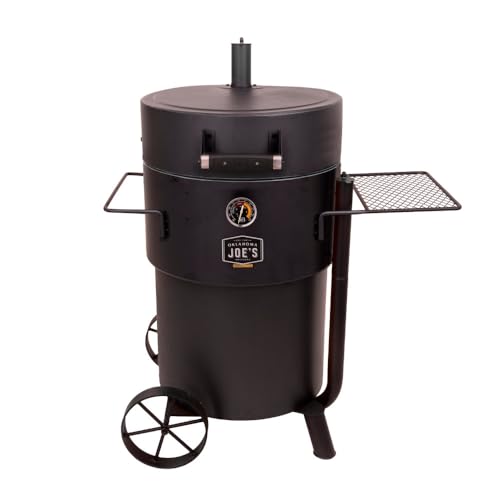
Oklahoma Joe’s Bronco Pro Drum Smoker and Grill (Black)

Oklahoma Joe’s Firecraft Series Open Fire Barrel Charcoal Grill (Black)

Charbroil Pro Series 4-Burner Propane Grill with Side Burner

Oklahoma Joe’s Highland Reverse Flow Offset Smoker and Grill (Black)
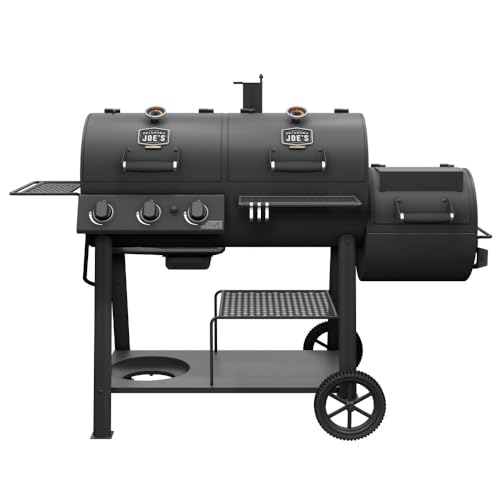
Oklahoma Joe’s Canyon Combo Dual Fuel Smoker and Grill (Black)

Oklahoma Joe’s Longhorn Offset Smoker and Grill (Black)
Meet The Standout Selections
The Rambler fits a specific niche: cooks who want real charcoal flavor away from home. Its 218 square inches of cooking area is enough for a dozen burgers or four small chicken halves, which covers most tailgate spreads without dragging a full kettle grill along.
Where this grill earns its keep is the adjustable charcoal tray. Raising or lowering the fire lets you shift from a hot sear to a gentler indirect cook, which is more control than most tabletop grills offer. Build quality feels sturdy for the size, though it lives in a different category than the larger offset smokers below.
Useful Touches
- Adjustable fire height for temperature control across cooking styles
- Lightweight build that travels well in a trunk or SUV
- True charcoal flavor in a footprint that fits small patios
- Simple setup with no propane tank to manage
Things To Consider
- No lid lock or tight seal means wind affects heat retention more than on enclosed cookers
- Compact grate limits larger cuts like full briskets
- Ash cleanup is manual and frequent compared to drum designs
Key Specs
Who It Suits Best
Tailgaters, campers, and apartment dwellers who want authentic charcoal flavor without the bulk of a full backyard rig.
Skip It When
The Oklahoma Joe’s Longhorn Offset Smoker and Grill makes more sense for traditionalists who want a sealed cooking chamber and room for whole briskets.
The Bronco Pro takes the classic drum shape and tightens it up. A sealed lid and tuned airflow system give the cook real command over temperature and smoke, which is what separates a drum smoker from a basic fire barrel. The 366 square inches of cooking area holds two pork shoulders or a small brisket without crowding.
An oversized charcoal basket supports extended cooking sessions, reportedly pushing past 15 hours on a single load. Compared to the Rambler’s portable footprint, the Bronco is a stationary workhorse designed for cooks who plan to babysit a fire for the long haul.
Where It Helps
- Sealed drum design locks in heat and smoke for steady cooks
- Large fuel capacity means fewer mid-cook refills
- Vertical layout saves patio space compared to horizontal offsets
- Heavy-gauge construction holds up to repeated high-heat burns
Points To Note
- Drum-style access can feel tight when loading large cuts
- Heavier and harder to reposition than the Rambler
- Learning curve for airflow tuning is steeper than a basic kettle
Made For
Pitmasters running long brisket or shoulder cooks who want sealed-chamber control without moving to a full offset trailer.
Look Elsewhere When
The Oklahoma Joe’s Firecraft Series Open Fire Barrel Charcoal Grill suits cooks who prefer open-fire cooking over a tightly sealed drum environment.
The Firecraft Series barrel flips the usual playbook. Instead of sealing heat in, the open-fire design lets you reach the fire from any angle for stoking or rearranging coals. The 480 square inches of total cooking area splits across two round grates, which is generous for a barrel format.
Where the Firecraft earns its keep is flexibility. The same rig pulls double duty as a fire pit, a live-fire grill, or a cook station, depending on the night. Heavy-gauge wire grates hold up to direct heat, and the twist-lock handle makes height adjustment simple.
What Stands Out
- 360-degree access around the firebox for stoking without moving food
- Doubles as a backyard fire pit when not actively grilling
- Two removable grates make cleaning and swapping accessories easier
- Open-fire cooking delivers a different flavor profile than enclosed smokers
Trade Offs
- No sealed lid means temperature control depends on wind and fuel choice
- Open fire isn’t suited for overnight low-and-slow sessions
- Grate corrosion resistance depends on regular cleaning
Feature Card
Best Suited To
Cooks who want a backyard focal point that shifts easily between grilling and fire-pit hosting.
Not Your Match When
The Oklahoma Joe’s Bronco Pro Drum Smoker and Grill is a smarter pick for pitmasters running overnight smokes.
The Charbroil Pro Series stands out as a true three-in-one cook station. It runs on propane as the primary fuel, includes a griddle insert for pancakes or smash burgers, and adds charcoal trays for occasional low-and-slow sessions. Amplifire infrared technology focuses heat to reduce flare-ups, which is a real benefit during weeknight cooks.
Compared to the all-charcoal Oklahoma Joe’s picks above, this is a gas-first design with charcoal as a backup option. The cabinet-style body adds storage and a side burner, which broadens what you can do at the grill without running back inside.
Practical Advantages
- Three cooking modes in one frame: grill, griddle, charcoal
- Infrared burner tech reduces flare-ups on fatty cuts
- Built-in cabinet provides enclosed storage for tools and tanks
- Side burner expands cook capacity for sides and sauces
- Propane startup is faster than waiting on charcoal to catch
Worth Noting
- Larger footprint than a simple kettle or portable unit
- Propane tank sold separately adds to setup cost
- More parts and surfaces mean more routine cleaning
Quick Facts
Whose Shelf It Belongs On
Backyard cooks who mostly run propane weeknights but still want charcoal flavor available on weekends.
Reach For A Different Pick When
The Oklahoma Joe’s Canyon Combo Dual Fuel Smoker and Grill is the better dual-fuel option for cooks who want equal time on both sides.
The Highland is built for cooks who want offset smoker control with the flexibility of a direct grilling surface. Reverse flow baffles force smoke to travel evenly across the cook chamber before exiting through the smokestack, which means more consistent bark on ribs and shoulders. Total cooking area reaches 1093 square inches, which is plenty for a full smoke-out.
Where this differs from the drum-style Bronco Pro is chamber layout. Horizontal offset designs give you longer grate runs, useful for whole briskets laid flat. Removable baffles let you switch between reverse flow and traditional offset smoking without buying a second rig.
Where It Delivers
- Reverse flow baffles deliver even heat distribution across the chamber
- 1093 square inches handles large cuts and multiple proteins at once
- Adjustable smokestack positions let you tune the draw
- Large charcoal basket supports long, low-temp sessions
- Switchable baffle design offers two smoking styles in one unit
Honest Caveats
- Reverse flow setup takes longer to learn than a basic offset
- Larger footprint needs a dedicated patio spot
- Heavier steel means harder solo assembly for some setups
Built With In Mind
Weekend cooks running multi-meat smokes who want competition-style results without moving to a trailer-mounted pit.
A Better Fit Elsewhere
The Oklahoma Joe’s Longhorn Offset Smoker and Grill is a simpler offset option if reverse flow feels like more than you need.
The Canyon Combo is the most complete dual-fuel setup in the lineup. A 750 square inch charcoal chamber handles low-and-slow smoking on one side, while a three-burner propane section delivers 36,000 BTU of direct grilling on the other. That’s enough firepower to handle two pork shoulders and a dozen burgers in the same cook.
The propane tank is sold separately, which is worth knowing during planning. Where the Canyon beats a single-fuel design is flexibility: smoke overnight, then flip to fast grilling for a brunch without swapping rigs. Compared to the Highland above, this one splits its attention between smoke and sear more evenly.
Bright Spots
- Two separate cook chambers cover smoking and grilling in one footprint
- 36,000 BTU propane output gets the grill side hot fast
- 750 sq. in. charcoal chamber handles full competition-style cuts
- Combined 1031 sq. in. supports hosting-sized cookouts
- Separate fuel systems mean you can use one side without lighting the other
Softer Spots
- Propane tank sold separately adds to the total cost
- Bigger learning curve managing two fuel systems at once
- Requires more patio space than a single-chamber cooker
Spec Overview
The Right Fit
Hosts and large-family cooks who want to smoke and sear at the same gathering without managing two separate rigs.
Swap It Out When
The Charbroil Pro Series 4-Burner Propane Grill is the better pick for cooks who mostly want gas convenience with charcoal as an occasional add-on.
The Longhorn is a classic horizontal offset smoker with a direct-grilling firebox attached. It’s a proven layout that many traditional pitmasters cut their teeth on. The 751 square inch primary chamber plus 309 square inch secondary rack gives you 1060 square inches of total space, which is generous for family-scale smoking.
Where the Longhorn differs from the Highland is simpler baffle design. You won’t get reverse flow evenness, but you also skip the steeper learning curve. For first-time offset owners, that trade often pays off in more consistent cooks during the learning months.
A Strong Showing
- Two-chamber layout gives you both smoke chamber and direct-fire grill
- Total 1060 sq. in. handles multiple racks of ribs at once
- Hardwood splits and chunks supported for traditional BBQ flavor
- Simpler design than reverse flow offsets lowers the entry barrier
- Heavy steel construction built for years of weekend cooks
Less Ideal Details
- Heat distribution is less even than reverse flow baffle systems
- Firebox side loading takes practice to avoid flare-ups
- Wide footprint needs planning for smaller patios
Details At A Glance
Who Will Love This
Traditional BBQ beginners who want an offset layout without the complexity of reverse flow baffles.
Consider Something Else When
The Oklahoma Joe’s Highland Reverse Flow Offset Smoker and Grill is the better fit for cooks ready to dial in even-heat smoking from day one.
What Matters Most Before Choosing Charcoal And Gas Grill Comboes
Fuel Layout And Cooking Style
A “combo” grill means different things across this category. Some units are dual-fuel designs with separate charcoal and propane chambers, like the Canyon Combo. Others are offset smokers that double as direct grills through a firebox, like the Longhorn and Highland. Portable options like the Rambler stick to charcoal only but still earn a spot for cooks who want flavor over versatility. Match the layout to how you actually cook: weekend smokes, weeknight burgers, or both.
Capacity And Footprint
Cooking area numbers only matter when matched to your household. The Rambler’s 218 square inches works for couples and small gatherings, while the Highland’s 1093 square inches handles full competition cuts. Larger grates demand more patio space and harder assembly, so measure your outdoor area before committing to a heavy offset.
Construction And Long-Term Care
Steel thickness, grate material, and finish quality all influence how a grill holds up over years. Heavy-gauge steel resists warping under repeated high heat, and corrosion-resistant grates survive harsh weather with less maintenance. Owners commonly report that sealed chambers clean more easily than open-fire barrels, though fire-pit designs trade that convenience for cooking flexibility.
Heat Control Features
Adjustable charcoal trays, smokestack dampers, and removable baffles change how a grill responds to your inputs. Beginners often benefit from simpler systems like the Longhorn’s classic offset, while experienced pitmasters may want the Highland’s reverse flow tuning or the Canyon Combo’s separate fuel zones. Consider how much fiddling you actually enjoy during a cook.
Smart Choices Across This Category
Where Shoppers Go Wrong
A common slip is picking by total cooking area alone, then discovering the chamber layout doesn’t fit the cuts you actually cook. Another trap is assuming all “combo” grills work the same way: a propane-with-charcoal-trays design behaves differently than a true dual-chamber offset. Measure your patio, think through your menu, and check whether the firebox or charcoal side handles your largest cut.
The Upgrade Payoff
Stepping up to higher-tier models like the Canyon Combo or Highland usually means better heat control, thicker steel, and more total space. The trade is weight, footprint, and a steeper learning curve during the first few cooks. For hosts running large gatherings, those upgrades pay back in less babysitting and more consistent results across multi-meat menus.
Frequently Asked Questions
What Is A Charcoal And Gas Grill Combo?
A combo grill combines charcoal and gas cooking in one unit, either as separate chambers or a charcoal-only rig with a propane add-on. True dual-fuel designs like the Canyon Combo run both at once, while models like the Charbroil Pro Series use propane as the primary fuel with charcoal trays for occasional use.
Do Combo Grills Take Up More Space Than Single-Fuel Models?
Most combo designs do require more patio space than a basic kettle, though vertical drum smokers like the Bronco Pro save room compared to horizontal offsets. Portable options like the Rambler stay compact by sticking to charcoal only.
Can You Smoke And Grill At The Same Time On A Combo?
Yes, on dual-chamber designs like the Canyon Combo and the Highland, you can run a low-and-slow smoke on one side while searing over direct heat on the other. Single-firebox offsets like the Longhorn handle both styles but require fuel changes between modes.
What Is Reverse Flow Smoking?
Reverse flow uses internal baffles to force smoke and heat to travel the length of the chamber before reaching the smokestack. The Highland uses this layout to even out temperature across the grate. The trade is a longer learning curve compared to traditional offset setups like the Longhorn.
How Often Should Combo Grills Be Cleaned?
Ash removal after every cook keeps airflow predictable, and a deep clean every few months prevents grease buildup. Sealed-chamber designs like the Bronco Pro typically need less scraping than open-fire barrels like the Firecraft Series, though both benefit from regular grate maintenance.
Closing Remarks
A charcoal and gas grill combo earns its place when it matches how you actually cook outdoors. Pick the layout that fits your menu, measure the footprint against your patio, and choose a chamber design you can actually learn. The right rig turns weekend cooks into something you look forward to all week.