
Whether you’re clearing storm damage, pruning back overgrown limbs, or just keeping the backyard in check, the right saw turns a weekend chore into a quick job. The picks below span pole saws for high branches, mini chainsaws for tight spaces, replacement chains, and protective chaps that should never be optional. Each one earns its spot for a specific reason, so you can match your trees, your height reach, and your comfort level.
Your Options, Compared

Husqvarna Functional Apron Chainsaw Chaps, 38-Inch, Black

Milwaukee Saw Pruning Cordless 12V 6IN 2527-20

EGO POWER+ 16″ Chain Saw Chain AC1600
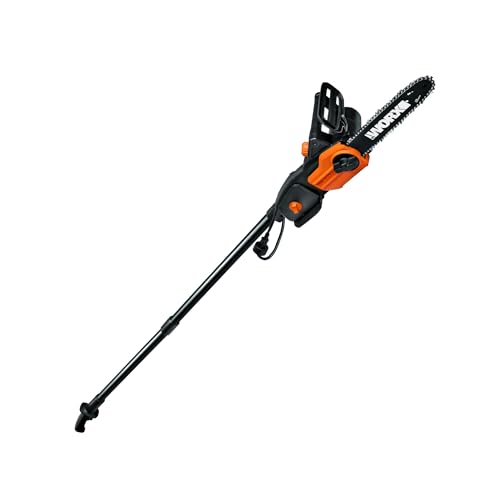
WORX Electric Chainsaw 8 Amp 10″ Pole Saw WG311

WORX Cordless Pole Saw 20V 8″ WG349

Supstable Mini Chainsaw 8″ and 6″ Cordless 1000W
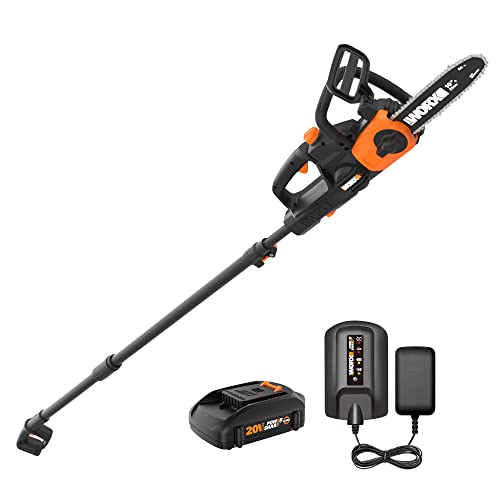
WORX Cordless Chainsaw 20V 10″ WG323
Why These Options Stand Out
Before any of the saws on this list earn their keep, you need something between your legs and a spinning chain. The Husqvarna Functional Apron Chainsaw Chaps are designed exactly for that moment, using a pull-apart construction that catches in the sprocket and slows or stops the chain on contact.
The adjustable waist fits up to 38 inches and the 32-inch inseam covers most users without dragging on the ground. For anyone new to running a saw on a Saturday morning, this is the single most underrated purchase in the whole lineup.
What Earns Its Place
- Pull-apart fibers clog the sprocket to slow or stop the chain on contact
- Adjustable waist fits up to 38 inches for a wide range of body types
- 32-inch inseam provides good leg coverage without dragging
- Light enough to wear for an entire yard session without overheating
- Pairs naturally with every other chainsaw on this list
Things To Consider
- Apron style leaves the back of the legs less protected than full-wrap chaps
- Loose-fitting layers over bulky work pants can reduce snag effectiveness
Who Will Love This
Any homeowner firing up a chainsaw for the first time, plus seasoned operators who want a baseline layer under heavier gear.
Look Elsewhere When
If you fell large timber professionally, swap to full-wrap Husqvarna Pro chaps instead of the apron style for back-of-leg coverage.
The Milwaukee 2527-20 trades raw power for one-handed control, running off the M12 12V battery platform that many shops already own. A 6-inch bar handles small limbs and saplings without the bulk of a full-size chainsaw.
It’s the kind of tool that lives in a kitchen drawer between uses and rides out to the orchard in a coat pocket. Compared to the Husqvarna chaps above, this is the actual cutting half of the equation, small enough for tight orchard work where bigger saws get tangled.
Everyday Perks
- Runs on M12 batteries already common in many tool collections
- Light enough for overhead pruning without arm fatigue
- Compact 6-inch bar reaches between branches most saws can’t access
- Low noise output keeps neighbors happy during morning yard work
Trade-Offs To Consider
- Battery and charger sold separately on the bare-tool listing
- 6-inch bar is too small for trunks thicker than a few inches
- Lower voltage means slower cuts in dense hardwood
Feature Snapshot
Right Fit For
Homeowners pruning fruit trees and clearing brush who already own M12 batteries and want a compact, low-noise tool.
Swap It Out When
If you mainly cut branches overhead, the WORX WG349 Pole Saw gives you reach without climbing, while the Milwaukee stays in the truck for ground-level detail work.
The EGO AC1600 replacement chain is built for one job: keeping an EGO POWER+ 16-inch chainsaw cutting like new. It’s an OEM-spec chain, meaning the geometry matches the bar and sprocket exactly, which matters more than casual users realize.
A dull chain chews wood, kicks back harder, and burns through motors. Unlike the Milwaukee pruning saw above, this isn’t a new tool but a refresh for an existing one. The low-kickback design gives a margin of safety worth having on a battery saw that already feels lighter than gas.
Features That Help
- Low-kickback geometry reduces sudden bar movement
- OEM-matched fit for CS1600 and CS1604 saw models
- Sharpens easily with a standard 3/8-inch round file
- Restores cutting speed without buying a whole new saw
Possible Compromises
- Only fits EGO 16-inch saws, useless on other brands
- No file or sharpening gauge included in the box
Perfect Match For
EGO POWER+ CS1600 owners whose chain has gone dull or stretched and who want a factory-spec replacement instead of an off-brand chain.
Skip It When
You run a different brand entirely, in which case the Husqvarna chaps up top and a brand-matched chain from your saw’s manufacturer make more sense than cross-fitting a generic loop.
The WORX WG311 brings corded consistency to pole-saw work: an 8-amp motor, a 10-inch bar, and a shaft that extends for roughly 10 feet of reach. The trade-off is a cord, but the upside is no battery anxiety during a long trimming session.
Automatic chain lubrication keeps the bar and chain fed without manual pumping, and the toolless chain-tension knob saves a trip back to the garage for wrenches. Compared to the EGO replacement chain above, this is a complete cutting system with reach built in.
Well-Handled Touches
- Toolless chain tensioning cuts downtime mid-job
- Automatic oiler feeds the bar without stopping to pump
- Corded 8-amp motor delivers steady power for hours
- 10-foot reach keeps most users off step ladders
A Few Limitations
- Cord limits roaming range and requires an outdoor outlet or extension
- 10-inch bar is too short for trunks thicker than small firewood rounds
- Heavier than compact cordless pole saws after a long overhead session
Spec Overview
Best Suited To
Homeowners with mature shade trees near an outdoor outlet who want extended reach without hauling a battery back and forth.
Consider Something Else When
If your trees sit far from any outlet, the battery-powered WORX WG323 Pole Saw trades a little power for total cordless freedom.
The WORX WG349 trims weight wherever it can, including the chainsaw head attachment, the 20V battery platform, and an 8-inch bar that keeps the whole tool under 9 pounds loaded. Light saws mean longer overhead sessions before your shoulders tap out.
It’s also a 2-in-1 setup that detaches into a handheld chainsaw for ground-level cuts. Compared to the corded WG311 above, this model trades a little raw power for total freedom from outlets and extension cords.
Benefits That Matter
- 8.8 pounds loaded, light enough for extended overhead work
- Detachable head converts to a handheld chainsaw in seconds
- Auto-tension and auto-lube cut maintenance steps
- Shares batteries with the wider WORX 20V tool family
Honest Caveats
- Smaller 8-inch bar limits limb diameter
- Battery runtime drops noticeably in dense hardwood
The Right Fit
Homeowners with one or two medium trees and a stash of WORX 20V batteries who need reach without hauling a generator.
Not Your Match When
You cut thicker limbs regularly; the corded WORX WG311 or the 10-inch WG323 handles larger branches without bogging down.
The Supstable Mini Chainsaw comes with two interchangeable bars, 6-inch and 8-inch, plus two batteries in the box, which is unusual at this scale. The 1000W brushless motor delivers more torque than the brushed motors common in budget mini saws, and brushless designs tend to run cooler and last longer.
One-handed cutting in tight spaces, think rose bushes, low fruit-tree branches, and small firewood, is where this tool shines. Compared to the WORX WG349 above, it’s shorter on reach but far easier to maneuver in cramped garden corners.
The Practical Payoff
- Two bar sizes in one package cover more cutting jobs
- Brushless motor runs cooler and extends tool life
- Two batteries included let you swap and keep working
- Lightweight enough for one-handed operation in tight spots
Points To Keep In Mind
- Limited bar length rules out anything beyond small branches
- Less reach than a pole saw for overhead work
Feature Card
Made For
First-time chainsaw owners, seniors, and gardeners pruning shrubs and small fruit trees who value control over raw power.
Where Another Pick Suits Better
You need to reach above head height: the WORX WG323 Pole Saw adds 12 feet of vertical reach that this mini saw simply cannot match.
The WORX WG323 caps this list with the most reach on the platform: roughly 12 feet of vertical working height with the extension attached, paired with a 10-inch bar that handles most backyard limbs. Auto-tension means no tools, no guessing, and no mid-job downtime.
It detaches into a handheld chainsaw for ground-level cleanup, so the same battery and motor pull double duty. Set against the corded WG311 earlier in this list, the WG323 sacrifices continuous runtime for total freedom to roam the yard.
What Makes Sense
- Auto-tension system tightens the chain without wrenches
- Detachable head converts from pole saw to handheld chainsaw
- Up to 12 feet of reach keeps most ladders in the garage
- 20V battery platform shares cells with other WORX tools
Where It May Fall Short
- Extended reach at full height drains batteries faster than ground work
- Battery and charger may be sold separately depending on the listing
Who Should Grab It
Homeowners with tall shade trees who want one tool to handle both overhead pruning and ground-level limb cleanup without climbing.
A Better Fit Elsewhere
You mostly cut at ground level; the Supstable Mini Chainsaw is easier to control for one-handed detail work and saves the pole extension’s weight.
What Matters Most Before Choosing A Chainsaw
Bar Length And Reach
A bar that’s too small forces you to feed a tree limb in stages, which is slow and risks crooked cuts. A bar that’s too big is heavy and intimidating for casual users. For backyard tree work, 8 to 10 inches covers most limbs under a few inches thick. Add a pole extension if your trees run taller than a single-story roofline, and you can leave the ladder in the garage.
Power Source: Corded, Battery, Or Gas
Corded saws deliver steady power and lighter price tags, but you’re tethered to an extension cord. Battery saws roam freely and start instantly, with the trade-off of limited runtime per charge. Gas saws cut hardest and longest, though they’re louder and need fuel mixing. For typical suburban yards, a 20V battery platform hits the sweet spot between convenience and capability.
Safety Gear You Should Never Skip
A chainsaw cuts faster than any wood tool most homeowners own. Chaps like the Husqvarna pair at the top of this list turn a thigh-deep mistake into a shallow scratch. Eye protection, gloves, and hearing protection round out the minimum kit, and a helmet with a face screen is worth it for any overhead pole-saw work.
Weight And Ergonomics
A saw you can barely lift at the start of a job feels twice as heavy by the end. Anything held overhead multiplies the strain on shoulders and lower back. Sub-10-pound saws let casual users finish a trimming session without needing a recovery day. Test the balance point, where the hand grips sit relative to the bar, before committing.
Key Considerations Across These Picks
Wrong Turns To Avoid
The most common slip is buying a bar too long for your trees, thinking bigger means better. A 16-inch bar in a yard of 4-inch limbs is unwieldy and adds weight without adding value. The opposite mistake is grabbing the smallest mini chainsaw for everything, which stalls on anything thicker than your wrist. Match the saw to the typical limb size, not the biggest branch you’ve ever faced.
Another trap is skipping chaps to save on the receipt. Chainsaw injuries on lower limbs are common, and the Husqvarna pair at the top of this list costs less than an urgent care visit. Treat protective gear as part of the tool, not an optional accessory.
When Paying More Pays Off
Higher-tier saws earn their premium through brushless motors, longer warranties, and toolless chain systems that save real time. Auto-tension alone, like on the WORX WG323, removes the most common adjustment chore and keeps you cutting instead of fiddling. Brushless motors run cooler and last longer in hard use, which matters once you’re past a few weekends a year.
The upgrade also shows up in ergonomics: better-balanced tools, rubber overmold grips, and vibration-dampening mounts reduce fatigue on longer jobs. Casual users may not notice, but anyone trimming more than a handful of trees will feel the difference by the second hour.
Frequently Asked Questions
What size chainsaw do I need for cutting trees?
For most backyard trees, an 8 to 10-inch bar handles limbs up to a few inches thick without strain. Larger trees with thick trunks call for bars in the 14 to 18-inch range, and full professional timber work goes beyond that.
Are battery-powered chainsaws strong enough for trees?
Modern 40V and 56V battery platforms cut small trees and limbs effectively, with the convenience of push-button starts and no fuel mixing. They slow down in dense hardwood compared to gas, but for typical residential work the gap is smaller than you’d expect.
How often should I sharpen my chainsaw chain?
A chain that produces fine sawdust instead of wood chips needs sharpening. For casual users, that means touching up the chain every few hours of cutting. A simple round file and a depth-gauge tool restore a chain without removing it from the bar.
Do I really need chainsaw chaps?
Chaps dramatically reduce leg injuries by clogging the sprocket on contact. Any chainsaw work where the bar is near your legs, which is most cutting positions, benefits from protective chaps as a baseline layer.
Can a pole saw replace a regular chainsaw?
A pole saw handles overhead branches without a ladder, but it’s slower and less stable for ground-level cuts. Many kits, like the WORX WG323, split into a handheld chainsaw for ground work, giving you both in one package.
The Takeaway
Your trees, your height, and your comfort level with a spinning chain should drive the choice more than any spec sheet. Pair the Husqvarna chaps with whichever saw fits your yard, and you’ll have a setup that handles storm cleanup, seasonal pruning, and the occasional ambitious weekend project without overbuying or under-protecting yourself.