
Cooking over real fire reshapes weekend dinners, and a ceramic shell holds heat differently than a thin steel kettle, banking warmth through long cooks and letting you sear or smoke with the same lid. The seven charcoal grills below each lean into that thermal-mass advantage in their own way. This guide lines them up against real-life needs, from tailgate lots to brisket-heavy Sunday spreads.
An Overview Of The Picks

Oklahoma Joe’s Rambler Portable Charcoal Grill (Black)
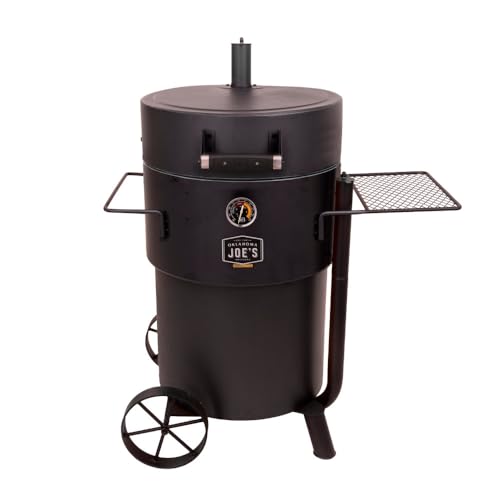
Oklahoma Joe’s Bronco Pro Drum Smoker and Grill (Black)

Oklahoma Joe’s Firecraft Series Open Fire Barrel Charcoal Grill (Black)

Oklahoma Joe’s Highland Reverse Flow Offset Smoker and Grill (Black)
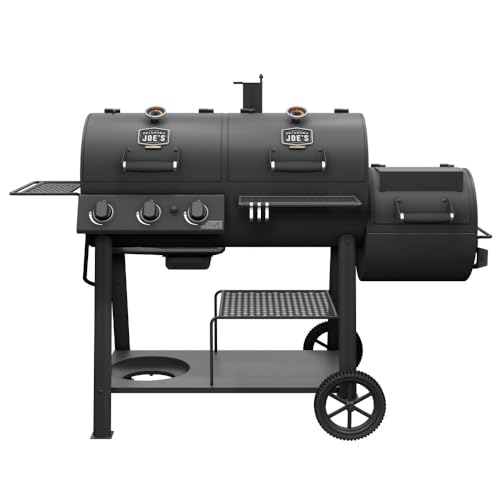
Oklahoma Joe’s Canyon Combo Dual Fuel Smoker and Grill (Black)

Oklahoma Joe’s Longhorn Offset Charcoal Smoker and Grill (Black)

Eikyutora 13-Inch Portable Round Ceramic Charcoal Grill (Black)
More Details On Our Top Picks
The Rambler is a stripped-down tabletop cooker meant for short trips away from a full outdoor kitchen. Its 218-square-inch grate fits roughly eight to ten burgers at a time, which suits a small group rather than a dinner party. Owners typically load it into a hatchback for camping weekends or park it on a balcony for weeknight steaks.
A height-adjustable charcoal tray acts as the main heat lever, letting you slide coals closer for a fast sear or drop them lower for gentler cooking. Compared with the drum-style Bronco Pro later in this list, the Rambler offers almost no smoke management, so think of it as a grill first. For anyone wanting real charcoal flavor without committing to a permanent backyard footprint, the form factor works.
Why It Works Well
- Adjustable tray doubles as a direct heat and indirect heat tool, covering most weeknight cooking styles
- Tabletop size stores easily in a garage corner or car trunk between weekends
- Steel body keeps total weight manageable for one person to carry to a tailgate
Things To Consider
- Small grate means cooking in batches for groups larger than four
- Thin metal body loses heat faster than the heavier steel or ceramic options below, so plan for longer recovery between batches
Made For
Apartment dwellers, tailgaters, and campers who want charcoal flavor in a package that disappears into a closet.
Look Elsewhere When
The Oklahoma Joe’s Bronco Pro fits better if you want genuine smoke control for ribs and shoulders.
The Bronco Pro takes the upright drum concept and tightens every fitting that usually leaks smoke on cheaper units. The 366-square-inch grate area is enough for two full racks of ribs or a couple of pork butts, which covers most weekend cooks without rotation.
Where the Rambler is a quick grill, this is a patient cooker. A sealed lid and a tuned airflow system let you hold steady low temperatures for hours, and a generous charcoal basket reduces the need to refuel mid-cook. In most home driveways, that combination turns it into a hands-off workhorse for traditional American barbecue cuts.
Notable Gains
- Air-control dampers hold target temperatures through long smokes with minimal babysitting
- Heavy-gauge steel shell shrugs off years of weather on a covered patio
- Wide charcoal basket supports overnight burns for brisket or turkey
- Drum shape lets you hang a water pan above the fuel, which steadies chamber humidity
Worth Noting
- Tall vertical profile takes up more garage space than the offset Longhorn covered later in this guide
- Loading charcoal mid-cook requires opening the full drum, so expect a brief temp dip each time
Best Suited To
Hobbyist pitmasters focused on ribs, shoulders, and other low-and-slow cuts rather than weeknight grilling.
A Better Fit Elsewhere
Reach for the Oklahoma Joe’s Canyon Combo if you also want a propane burner for quick sears.
The Firecraft barrel doubles as a live-fire cooking station and a backyard fire pit after the meal. Two round wire grates stack over an open firebox, totaling 480 square inches of cooking surface when both are in use, which handles a dozen burgers or a few skewers with room to spare.
The defining feature is 360-degree access to the fire without lifting a lid, which makes stoking and adjusting coals feel more like tending a campfire than managing a sealed smoker. Twist-lock handles on the grates let you reposition them as the cook progresses. Compared with the Highland offset covered below, this unit invites more interaction and a less technical cooking style.
Advantages To Know
- Open firebox design removes the lid-restriction barrier, letting you flip food or add wood mid-cook without disturbing heat zones
- Heavy-gauge wire grates resist corrosion and hold up to direct flame contact
- Multi-use layout works as a fire pit, a grill, or a hybrid station for skewers and flatbreads
Points To Note
- Open design means smoke drifts freely, so avoid positioning it directly under a low patio cover
- Ash cleanup takes more effort than an enclosed drum or offset cabinet
Whose Shelf It Belongs On
Hosts who want a centerpiece that pulls double duty as evening firepit conversation.
Swap It Out When
Pick the Oklahoma Joe’s Longhorn if you need a sealed chamber for overnight brisket cooks.
The Highland is a serious offset smoker built around a reverse-flow smoke path, where heat travels under a baffle plate before rising through the cooking chamber. That extra baffle evens out hot spots and protects food from direct flame flare-ups, which matters when you load a full brisket plus ribs at once.
At 1,093 square inches across primary and secondary chambers, capacity easily handles a competition-sized spread for eight to ten hungry friends. Removable baffles and a movable smokestack let you switch between reverse-flow and traditional offset setups without permanent modification. For most home cooks, this means one rig that grows with your skill level rather than replacing it.
A Strong Showing
- Reverse-flow baffle plate evens out heat across the grate, reducing constant rotation
- Heavy steel build supports years of regular weekend use without warping
- Adjustable smokestack and removable baffles give a real choice between cooking styles
- Large-capacity firebox holds enough fuel for long overnight burns
Honest Caveats
- Full-size offset requires a dedicated patio footprint and two people to position safely
- Reverse-flow setup adds a slight learning curve compared to a basic offset like the Longhorn
Who It Suits Best
Serious backyard pitmasters aiming for competition-level bark and smoke ring on large cuts.
Where Another Pick Suits Better
The Eikyutora 13-inch ceramic fits apartment patios where an offset of this scale simply won’t fit.
The Canyon Combo splits its personality in two useful directions. The charcoal side runs as a low-and-slow smoker with 750 square inches of primary cooking space, while a three-burner propane side delivers quick high-heat grilling without charcoal prep. A 36,000 BTU propane output means the gas side reaches searing temperatures in minutes.
This dual-fuel setup saves you from owning two separate rigs when you entertain a mixed crowd. Slow smoked shoulders run on one end while burgers and vegetables sear on the other, all in the same cook. Compared with the single-fuel Bronco Pro, the Canyon adds convenience at the cost of more floor space and a propane tank you have to manage.
Real-World Strengths
- Two fuel types in one cabinet remove the need for a separate gas grill alongside a charcoal smoker
- Large primary chamber fits multiple pork shoulders or a full brisket
- Gas side lights fast for weeknight dinners without a charcoal chimney ritual
Trade-Offs
- Propane tank adds ongoing refills and hose management around the cook area
- Combined footprint is the largest in this roundup, so smaller patios will feel crowded
Perfect Match For
Hosts who regularly entertain mixed crowds and want both quick grilling and patient smoking in one rig.
Consider Something Else When
Choose the Oklahoma Joe’s Bronco Pro if you want to keep things strictly charcoal and save patio room.
The Longhorn is a traditional side-firebox offset, the layout most people picture when they think “Texas smoker.” It carries 751 square inches of primary cooking space plus a 309-square-inch warming chamber on top, totaling 1,060 square inches across the unit.
Heat and smoke travel from the firebox through the main chamber and out the smokestack, which produces the layered bark and color that defines classic offset barbecue. You trade some temperature consistency for that flavor payoff, so expect to learn how your particular rig drafts. For anyone who wants a time-tested layout without paying for the Highland’s reverse-flow engineering, the Longhorn remains the entry point.
Useful Touches
- Side firebox lets you add wood splits without opening the main cooking chamber
- Heavy steel construction handles year-round outdoor storage on a covered patio
- Secondary chamber doubles as a food warmer or vegetable roasting space during long cooks
Practical Considerations
- Traditional offset design runs hotter near the firebox end, so plan to rotate food during longer cooks
- Initial seasoning burns are required before the first real cook to burn off factory coatings
Built With In Mind
Traditionalists who want proven offset performance and don’t mind learning fire management.
Not Your Match When
The Oklahoma Joe’s Highland is a smarter pick if you want more even heat without active rotation.
This little Eikyutora unit is the only true ceramic-shelled grill in the roundup. The thick ceramic body absorbs heat and radiates it back into the chamber, which means it sips fuel compared with thin steel competitors. A built-in lid thermometer gives you a real reading of chamber temperature, removing guesswork on smaller cooks.
The 13-inch diameter suits two to four people comfortably, so think dinner for two or a small family cook rather than party duty. Because the shell holds heat so well, the grill reaches smoking temperatures with very little charcoal, depending on conditions. Compared with the Rambler earlier in this list, the ceramic walls trade portability for better fuel efficiency and steadier chamber temperatures during shorter cooks.
Useful Highlights
- Ceramic shell retains heat efficiently, using noticeably less charcoal per cook
- Built-in thermometer helps you hit target chamber temperatures without lifting the lid
- Vertical egg shape fits on a small balcony or apartment patio where offsets won’t go
Possible Compromises
- Ceramic body requires careful handling to avoid cracks from drops or hard impacts
- Small grate limits cook size, so larger gatherings require multiple rounds
Who Will Love This
Small-space dwellers who want true ceramic heat retention and don’t need to feed a crowd.
Skip It When
The Oklahoma Joe’s Rambler is the better call for travel-heavy cooks who value impact resistance over ceramic efficiency.
What To Weigh Before Choosing A Charcoal Grill
Match The Grill To Your Cooking Style
Think about what you actually cook most weekends. Quick seared steaks and weeknight burgers push you toward high-heat charcoal kettles like the Rambler or the Eikyutora ceramic. Long pulled pork and brisket sessions favor sealed chambers such as the Bronco Pro or the Highland offset. Mixed menus, where you smoke Saturday and sear Sunday, point to the Canyon Combo’s dual-fuel layout.
Size And Patio Footprint Matter
Cooking area numbers can mislead, because usable space depends on grate shape and chamber height. A 1,093-square-inch offset like the Highland gives you room for full brisket plus ribs, but it also demands a permanent patio spot. A 218-square-inch tabletop grill disappears into a closet. Match the cooking surface to your largest typical gathering rather than your biggest fantasy cook.
Construction And Long-Term Durability
Heavy-gauge steel and ceramic shells outlast thin metal by years, especially when stored outdoors. Thicker walls also hold steadier temperatures through wind and weather shifts. Owners commonly report that heavier grills require less adjustment mid-cook because the thermal mass resists sudden drops when you open the lid.
Airflow And Heat Control
Dampers, adjustable intake vents, and chimney placement decide how precisely you can hold a target temperature. Drum smokers like the Bronco Pro use top and bottom vents to fine-tune heat, while offset designs rely on firebox door position and smokestack draft. Beginners typically find sealed chamber dampers easier to learn than offset fire management.
Key Considerations Across These Picks
Wrong Turns To Avoid
A common slip is buying by raw cooking area alone and ending up with a massive offset you cannot store, or a tiny kettle that cannot feed your family. Another mistake is ignoring fuel logistics, since charcoal-only grills need dry storage and propane combos require a tank you must refill. Measure your patio, count your typical guest list, and confirm fuel storage before committing.
Where The Extra Money Goes
Higher-tier grills spend their premium on heavier steel, sealed lids, and tuned airflow systems that hold temperature through long cooks. The Highland reverse-flow baffle and the Bronco Pro’s sealed drum are examples of engineering that delivers steadier chambers and less babysitting. For weekend warriors who cook twice a month, a mid-tier offset covers most needs. For weekly low-and-slow sessions, the premium upgrade pays back in fuel savings, fewer ruined cooks, and longer service life.
Frequently Asked Questions
Are ceramic barbecue grills better than steel ones?
Ceramic shells retain heat more efficiently, which uses less fuel and steadies chamber temperatures. Steel grills are tougher against impacts and usually cost less. Pick ceramic for steady heat and small patios, steel for travel and rougher handling.
How long does a ceramic grill last outdoors?
A well-cared-for ceramic shell can run for many seasons, but it needs a weatherproof cover and protection from hard knocks. Avoid dropping the grill or exposing it to freezing water inside the chamber, since ceramic can crack under sudden temperature swings.
Can I use regular charcoal in any of these grills?
Yes, standard briquettes work in every unit on the list. Lump charcoal lights faster and burns hotter, which suits the sear-friendly picks like the Rambler or the Canyon Combo’s gas side. Hardwood chunks add smoke flavor on the Bronco Pro, Highland, and Longhorn.
Do offset smokers need electricity?
No, every grill in this roundup runs on charcoal or propane without any power hookup. Offset designs rely entirely on airflow through dampers and the smokestack, so they remain usable anywhere with ventilation.
How often should I clean my charcoal grill?
Empty ash after every two or three cooks to keep airflow consistent. A deeper clean, scraping grates and wiping the interior, suits every five to ten sessions. Ceramic shells need only a soft brush and minimal water to avoid stressing the walls.
Closing Verdict
Real charcoal cooking rewards patience, and the right grill depends entirely on the cook in front of you. Pick the Eikyutora ceramic for small-space efficiency, the Bronco Pro for serious low-and-slow sessions, and the Canyon Combo when you want both gas and charcoal at once. Match the grill to your typical gathering, your patio footprint, and the cooking style you will repeat week after week.