
Neighborhood cats digging up flower beds, lounging on garden soil, or marking territory on patio furniture is one of those small annoyances that adds up fast. The right outdoor cat repellent fits your yard’s size, your tolerance for chemicals, and whether you want a passive device or a spray-on routine. These seven picks cover the main approaches, from solar-powered motion units to plant-based sprays and even a stone for pet owners thinking about remembrance rather than removal.
The Main Contenders
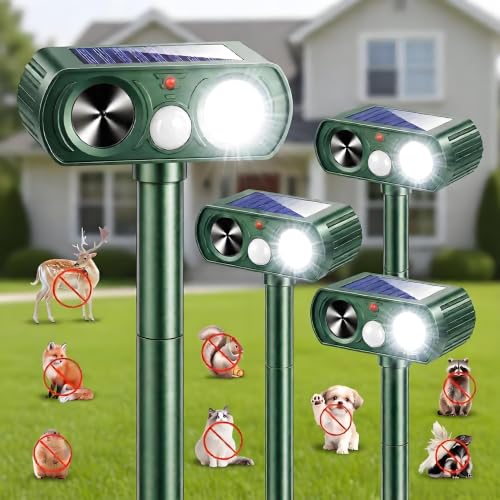
Thcritter Ultrasonic Outdoor Animal Repellent with LED Strobe
KTSAY Cat Deterrent Spray Indoor & Outdoor Training Aid
Thoveneth 4-Pack Solar Ultrasonic Outdoor Animal Repellent

Thcritter 4-Pack Solar Ultrasonic Animal Repellent Outdoor

Personalized-Pets-by-StockingFactory Black Granite Pet Memorial Stone

reatoy Cat Deterrent Spray for Indoor & Outdoor Use 5.07 Fl Oz

Thcritter 2026 Solar Ultrasonic Animal Repellent Outdoor
The Picks, Examined More Closely
A single stake-mounted unit like this one works best when you want a set-and-forget deterrent in a defined zone, like a flower bed or a stretch of fence line cats use as a shortcut. The unit pairs an ultrasonic emitter with a bright LED strobe, both triggered by a PIR motion sensor (a passive infrared sensor that detects body heat and movement). When something warm moves into range, the device cycles through a 15-second burst of sound and flashing white light, then returns to standby until the next visitor.
Power comes from a top-mounted solar panel, and the ABS housing carries an IP66 waterproof rating (meaning it resists powerful water jets and dust ingress). That’s a meaningful upgrade over entry-level plastic stakes that crack after one hard winter. If you live in a region with mixed sun and rain, the sealed body and self-charging setup tend to make ownership low-touch.
The Value In It
- Solar panel cuts out battery swaps across most seasons
- IP66 housing stands up to heavy rain and snow
- Combined audio and strobe trigger gives you two deterrents in one pass
- ABS construction resists UV damage better than thin plastic
Things To Consider
- Detection angle and range are modest, so a single unit may leave gaps in wider yards
- Initial solar charge needs direct sun for the first day or two before reliable operation kicks in
Right Fit For
Homeowners with a small to medium yard who want a single weatherproof unit near a known entry point, like a side gate or garden corner.
Swap It Out When
The Thoveneth 4-Pack is the smarter choice if your property sprawls past a single zone and you need overlapping coverage.
Not every cat problem needs electronics. A targeted botanical spray works for indoor scratching posts, planters on the porch, or a specific patio chair your neighbor’s cat has claimed. The KTSAY spray uses natural extracts, peppermint and witch hazel among them, to lay down a scent cats avoid without leaving residue on fabric or hard surfaces.
Because it’s a training aid rather than a permanent barrier, the real ownership habit is consistency. You’ll want to refresh problem spots daily for the first week or two, then taper as the cat loses interest. Compared with the Thcritter ultrasonic stake earlier, this is the right call when you want something quiet and targeted instead of a motion-triggered audio burst.
The Case For It
- Plant-based formula fits homes where harsh chemicals are a concern
- Works on both soft furnishings and outdoor surfaces like planters and doorways
- Compact bottle makes spot treatments easy without overspray
Honest Caveats
- Effectiveness depends on reapplying, so skipping days can undo early progress
- Scent-based repellents may not stop a determined cat who likes the spot more than the smell
Who Will Love This
Apartment dwellers and homeowners who prefer a non-mechanical, scent-based approach for a few trouble spots rather than a full-yard system.
Consider Something Else When
The reatoy spray is a better match if you want a larger bottle and a longer daily routine that covers more rooms or zones.
Bigger properties need more than one stake to cover the perimeter, which is where a four-pack earns its place. Each unit runs on its own solar panel and shares the same basic PIR-triggered ultrasonic setup found on single units, but spreading four across a yard means cats approaching from different directions hit a deterrent before reaching the garden beds.
The PIR sensor here triggers within roughly a 110° arc and 25 to 33 feet of detection range, which is enough overlap if you stagger units around corners and gates. The IPX4 rating (resistant to splashing water from any direction) is a step below the IP66 found on the Thcritter stakes, so placement under partial cover helps during heavy storms. Installation is genuinely simple: stake into soft soil or hang from a hook and switch on.
What It Does Well
- Four-unit coverage closes the gaps a single stake leaves in larger yards
- Solar charging means no wiring or battery swaps across the property
- Stake or hang mounting adapts to garden beds, porches, or even campsites
- 110° detection arc catches side approaches better than narrow-beam units
Points To Note
- IPX4 splash-resistance is fine for rain but less rugged than IP66-rated rivals
- Owners commonly report keeping the pole at least four inches above the soil to keep the sensor clear of grass and debris
Key Product Details
Built With In Mind
Homeowners with a medium to large yard, farm edges, or a garden with multiple entry points who want overlapping ultrasonic coverage.
A Better Fit Elsewhere
The Thcritter single-unit stake is enough if your yard is small and you only need one zone covered.
Where the Thoveneth 4-pack prioritizes raw range and PIR sensitivity, this Thcritter 4-pack layers in a synchronous alarm sound alongside the ultrasonic waves. That gives you both high-frequency audio most animals find uncomfortable and a more audible cue that reinforces the deterrent. For households where neighbors have voiced concerns about quiet ultrasonic-only devices, the audible component can be a deciding factor.
Setup follows the same pattern as the Thcritter single-unit stake earlier: stake into ground, leave the head above any grass line, and let the solar panel charge before first use. Across a yard, staggering units along a fence or garden edge is the most common approach, and the four-unit count lets you cover roughly a quarter-acre without obvious dead zones.
What Pays Off
- Ultrasonic plus audible alarm adds redundancy for stubborn animals
- Four-pack lets you cover a property perimeter without buying singles
- Solar charging keeps each unit self-sufficient
- Detection distance reaches up to 33 feet in open ground
Trade Offs To Consider
- Audible alarm component means a faint chirp during triggering, which may bother very close neighbors
- Like most stake units, performance depends on full sun exposure during the day
Whose Shelf It Belongs On
Gardeners protecting a defined perimeter, especially those who have tried single stakes and need broader, layered coverage.
Look Elsewhere When
The Thcritter single stake is the smarter pick if you want a quieter, single-zone setup without audible alarms.
This pick sits in a different lane from the rest. It is a granite memorial stone, not a deterrent, and earns its place on this list for gardeners who want a quiet, lasting tribute to a pet in an outdoor space. The 12-by-6-inch Absolute Black Granite slab weighs about 3.4 pounds and is engraved with your pet’s name, years, and a chosen phrase.
Because the engraving is permanent on natural stone, the piece suits year-round outdoor placement. Whether you set it under a garden tree or along a walkway, the dark granite has a weight and finish that holds up against weather better than resin or ceramic alternatives. For shoppers browsing outdoor cat products but also remembering a companion, this is the relevant item in the catalog.
Reasons It Performs
- Permanent engraving on natural granite holds up outdoors year after year
- 12-inch length leaves room for a name, two dates, and a short phrase
- 3.4-pound weight keeps the stone stable in garden soil without tipping
Small Limitations
- Personalization means a longer fulfillment window than off-the-shelf decor
Perfect Match For
Pet owners who want a personalized, weatherproof tribute to a dog or cat and are choosing it as a garden keepsake.
Not Your Match When
Any of the ultrasonic stakes or sprays earlier on this list are the right answer if your goal is keeping cats out, not remembering one.
The reatoy spray takes the same scent-based approach as the KTSAY bottle and scales it up. At 5.07 fluid ounces, the bottle covers more ground for households treating several rooms or a mix of indoor and outdoor spots, from sofa corners and curtains to doormats and porch furniture. The plant-based formula is built around the same idea: lay an invisible scent barrier that cats learn to avoid.
Real-world use is straightforward but does demand a routine. The first one to two weeks typically call for one or two daily applications on each problem spot, then a taper as the cat loses interest. Reapplying after cleaning is part of the deal since detergents strip the scent. For shoppers who like the spray method but burn through smaller bottles quickly, the larger size tends to outlast the smaller KTSAY bottle across a multi-room home.
What Helps Most
- Larger 5.07-ounce bottle lasts longer across multi-room or indoor-outdoor routines
- Plant-based formula suits homes with kids or other pets around
- Spray pattern works on fabric, hard surfaces, and outdoor furniture alike
Less Ideal Details
- Daily reapplication for the first couple of weeks is a real time commitment
- Scent fades faster outdoors in rain, so covered placement helps
Feature Snapshot
Best Suited To
Multi-room households or anyone applying scent deterrents daily to both furniture and outdoor surfaces who wants a bottle that won’t run out in a week.
Reach For A Different Pick When
The KTSAY spray is a leaner choice if you only need a small bottle for one or two indoor zones.
This Thcritter single stake is the wider-arc cousin to the earlier Thcritter unit. Where the first Thcritter stake covers a tighter zone, this one advertises a 150° detection angle and 25 to 30 feet of range, paired with the same IP66 weatherproof ABS body and solar top. For open lawns, farm edges, or wide garden borders, that broader arc reduces the number of units you need to catch side approaches.
Setup is the same simple pattern as the other Thcritter units: charge the solar panel in direct sun for two full days, then stake the unit about nine to ten inches above the ground for a clean sensor line. Across a typical suburban yard, one of these placed near the most-visited corner tends to do most of the work, with optional add-ons along longer fence lines.
Real Benefits
- 150° detection arc catches animals approaching from the sides, not just head-on
- IP66 waterproof ABS housing handles heavy rain and seasonal extremes
- Solar panel eliminates battery swaps across the year
- Combined ultrasonic and strobe trigger gives layered deterrence
Worth Bearing In Mind
- Initial two-day solar charge before first use delays immediate deployment
- Performance still depends on direct sun exposure and clear sensor line
Who Should Grab It
Homeowners with wide, open outdoor spaces who want one well-placed stake to do the work of two narrower units.
Where Another Pick Suits Better
The Thoveneth 4-pack fits better if your property has multiple distinct trouble zones rather than one open area.
What To Weigh Before Choosing Outdoor Cat Deterrents
The first fork in the road is mechanical versus scent-based. Ultrasonic stakes like the Thcritter and Thoveneth units run on motion sensors and solar power, which means hands-off operation once they’re staked and charged, but their deterrent effect depends on consistent sun and clear sensor lines. Sprays like the KTSAY and reatoy bottles depend on your routine. They need daily reapplication in the early weeks and lose potency after rain or cleaning, which is the trade-off for treating specific indoor or furniture spots without electronics.
Coverage is the second call. A single stake covers a defined zone, roughly 25 to 33 feet within its detection arc. A 4-pack spreads that across a full yard but only pays off if you actually stagger the units around corners and gates rather than clustering them. For most suburban lots, two well-placed stakes outperform four clumped together.
Weatherproofing and build quality matter more than they look at first glance. IP66-rated ABS bodies handle heavy rain and dust, while IPX4 ratings manage splashes but less so during prolonged downpours. ABS plastic resists UV cracking better than the thin polystyrene used in budget units, which tend to fail after one winter outdoors.
Finally, think about who else shares the space. Audible alarms on units like the Thcritter 4-pack can bother close neighbors. Botanical sprays suit households with kids and other pets but require a steady application habit. And for pet owners with a different emotional need, a personalized memorial stone like the StockingFactory granite piece offers something the deterrent category never will.
Common Slip Ups and Smart Spending
Mistakes Worth Dodging
A common trap is buying a single stake for a yard that genuinely needs two or three. Ultrasonic deterrents work on a zone basis, and one unit leaves large gaps where cats simply walk around the trigger zone. The other is assuming solar units work out of the box. Most need one to two full days of direct sun before the internal battery holds a charge reliably, so early disappointment usually traces back to a too-short initial charge rather than a faulty device.
Where The Extra Money Goes
Multi-packs cost more than singles, but the real upgrade is coverage, not unit quality. The Thcritter 4-pack and the Thoveneth 4-pack both share most of their electronics with their single-unit siblings, so the premium buys overlapping detection zones rather than a stronger deterrent. For shoppers covering a quarter-acre or more, that overlapping coverage is genuinely worth the step up. For small yards, a single wide-arc unit like the Thcritter 150° stake tends to deliver more value per dollar than a 4-pack ever could.
Frequently Asked Questions
Do ultrasonic cat repellents really work outdoors?
They work best in open, line-of-sight areas where the motion sensor can detect approaching animals before they reach the protected zone. Dense shrubs, sheds, and tall fences can block both the sensor and the ultrasonic waves, so placement matters more than raw range.
Are botanical cat deterrent sprays safe around other pets and kids?
Plant-based sprays built around ingredients like peppermint and witch hazel are generally safe around households with dogs, kids, and other pets. The smell is the deterrent rather than a toxic chemical, so the risk is more about strong scent sensitivity than poisoning.
How long does a solar repellent stake last on a single charge?
Most solar stakes cycle through brief bursts only when triggered, so a full day of sun usually carries them through overnight and into the next cloudy day. After two or three overcast days in a row, performance tends to dip until the sun returns.
Can I use a deterrent spray on outdoor furniture?
Yes, but expect to reapply after rain or after wiping the surface clean. The scent barrier is invisible and does not survive weather or cleaning for long, which is the main trade-off compared with stake units that work rain or shine.
Is a memorial stone weatherproof enough to leave outdoors year-round?
Granite stones with permanent engraving are designed for year-round outdoor placement. Resin and ceramic alternatives can fade or crack over time, so the material matters more than the personalization itself for long-term outdoor use.
Closing Remarks
The right pick depends on your yard’s size, your tolerance for reapplying sprays, and whether you’d rather have a silent stake or a scented boundary. Match the method to the space, give it a fair trial window, and adjust the placement before assuming the unit is the problem.