
Carpenter ants move quietly through wall voids, window frames, and deck supports, often the first sign a homeowner notices is a thin trail of sawdust, not the insects themselves. The right spray cuts off that trail before it reaches structural wood, which is why matching the product to the infestation matters more than grabbing the loudest can on the shelf. This guide focuses on sprays that actually target carpenter ants, with options for everyday touch-ups, heavy infestations, and households that prefer plant-based formulas.
A Snapshot Of The Selections

Raid Ant & Roach Killer Fragrance Free 17.5 oz
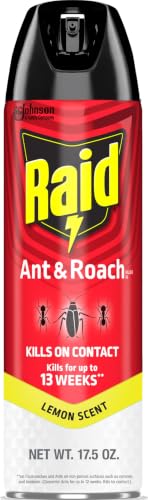
Raid Ant & Roach Killer Lemon Scent 17.5 oz

Syngenta 25001 Demon Max Insecticide

Natural Ant Spray Peppermint & Cedarwood 16 oz
The Strengths Of Each Pick
The fragrance-free twin pack earns its spot because most homeowners reach for a spray when ants first appear in the kitchen, the laundry room, or along a baseboard. This formula kills on contact and leaves a residual layer that keeps working on the listed crawling insects for up to 13 weeks, which means a single pass along a window frame or door threshold can outlast a full season of scouting ants.
For households where any strong chemical smell triggers headaches or stirs up complaints from guests, the absence of a fragrance is a quiet relief. The 17.5 oz cans also feel substantial in the hand, and getting two in a pack means you can keep one in the garage and one indoors without running out mid-treatment. Compared with the lemon-scented Raid below, this version trades a masking aroma for a more neutral spray experience.
A Few Strong Suits
- Residual protection that keeps working on listed bugs for up to 13 weeks after application
- Fragrance-free spray avoids the lingering chemical odor common to many aerosols
- Twin-can pack gives enough volume to treat multiple rooms, the garage, and outdoor entry points
- Targets a broad list of crawling pests beyond carpenter ants, which simplifies the shelf
- Aerosol format reaches into cracks, baseboard gaps, and along window tracks with minimal effort
Worth Noting
- Aerosol cans need ventilation during and after use, so closing off a treated room for an hour matters
- Contact-kill action treats surfaces ants cross, but deep colony infestations inside wall voids may call for a more concentrated approach
Who It Suits Best
Homeowners dealing with visible trails along baseboards, door frames, and kitchen counters who want a low-odor, broad-spectrum spray that fits everyday touch-ups.
Look Elsewhere When
Shoppers facing a deep, established carpenter ant colony burrowed into structural wood will get more mileage from Syngenta 25001 Demon Max Insecticide and its concentrated formula.
The lemon-scented Raid uses the same active formula as the fragrance-free twin pack above, but adds a citrus note that many people find more pleasant in a kitchen or pantry. It kills on contact and lays down a residual barrier on listed surfaces for up to 13 weeks, which keeps working between full treatments. The scent does not mask the active ingredient so much as redirect it, which is why so many shoppers leave a can near the back door.
For homes with strong cooking odors, pet smells, or just a lingering “closed-up” feel in winter, that citrus note makes a real difference. The 17.5 oz can also doubles as a perimeter spray for garage and mudroom entry points, places where the scent actually helps. Compared with the fragrance-free version, this one trades neutrality for a friendlier room feel.
What Helps Most
- Lemon scent softens the chemical note during and shortly after application
- Same 13-week residual window on listed crawling insects as the fragrance-free sibling
- Single 17.5 oz can fits standard shelf storage and is easy to grip during overhead spraying
- Works well in kitchens and mudrooms where masking an odor matters more than avoiding one
Trade Offs
- Single-can format means finishing a whole-house treatment requires planning ahead
- Lemon scent may bother households sensitive to fragrance, where the fragrance-free Raid works better
- Like all aerosols, the spray is contact-focused, so colonies tucked deep inside framing may need a follow-up approach
Right Fit For
Kitchen and garage spaces where a light citrus scent feels more natural than a chemical note and where homeowners want one can to handle both indoor trails and outdoor entry points.
Where Another Pick Suits Better
Pet owners and parents who want a plant-oil alternative with no synthetic actives should consider Natural Ant Spray Peppermint & Cedarwood Oil instead.
Demon Max is a concentrate, not a ready-to-spray aerosol, which puts it in a different category from the two Raid cans reviewed above. You dilute it with water and apply it with a pump sprayer along foundations, into mulch beds, and around the structural elements where carpenter ants actually travel. The active ingredient carries low water solubility, meaning it does not leach into groundwater or move easily with rain, which makes it well suited for outdoor perimeter work.
The label lists carpenter ants alongside a long roster of pests that includes subterranean and formosan termites, scorpions, ticks, and wasps. That breadth is the point: one mixed batch can treat a backyard perimeter, a crawlspace entry, and a woodpile in the same afternoon. For shoppers who already own a pump sprayer, the per-use cost runs well below aerosol cans. Compared with the Raid products, this is a tool for persistent infestations rather than a quick kitchen touch-up.
A Favorable Mix
- Concentrated formula stretches further per dollar than any aerosol for whole-perimeter treatments
- Low water solubility reduces leaching into soil and water supplies during outdoor use
- Targets carpenter ants along with termites, scorpions, ticks, and a wide list of other pests
- Long residual profile keeps working on treated surfaces well beyond a single contact kill
Practical Considerations
- Requires a separate pump sprayer and accurate dilution, which adds a setup step
- Concentrate format demands careful storage away from children and pets between uses
- Not a casual grab-and-go option for indoor trails, where the Raid cans work faster
Key Product Details
Built With In Mind
Homeowners managing persistent carpenter ant colonies, outdoor perimeter issues, or properties where multiple listed pests need treatment in one mixed batch.
A Better Fit Elsewhere
Someone needing an immediate indoor touch-up with no sprayer setup will find Raid Ant & Roach Killer Fragrance Free easier to deploy straight out of the can.
This peppermint and cedarwood oil spray takes a different angle from the synthetic options above. It targets ants using plant oils rather than synthetic insecticides, which is the main draw for households that want to avoid stronger chemical actives near food prep areas, kids’ rooms, or pet feeding stations. The 16 oz trigger bottle sprays a fine mist along baseboards, entry thresholds, and patio edges.
The honest read is that plant-oil sprays work best as part of a prevention-and-treatment routine rather than as a one-shot knockdown. You treat the trails you see, then reapply as new ants appear. Compared with the Raid products, the residual window is generally shorter, so daily application may matter more in active infestations. Compared with Demon Max, it has no concentrate setup, just point and spray.
What Pays Off
- Plant-oil formula keeps synthetic insecticides away from food prep, pet areas, and kids’ rooms
- Peppermint and cedarwood scent doubles as a fresh-room note during regular use
- Trigger spray format needs no dilution, no pump sprayer, and no special storage
- Versatile on baseboards, kitchen edges, dining areas, patios, and entryways
Honest Caveats
- Plant-oil sprays generally need more frequent reapplication than synthetic residuals
- Heavy or deeply established carpenter ant colonies often require a synthetic backup for full knockdown
- The 16 oz bottle may run out faster than an aerosol can during whole-house treatment
Whose Shelf It Belongs On
Families with small children or pets who want a gentler formula for routine ant prevention around baseboards, entryways, and the kitchen.
Swap It Out When
Homeowners staring down a serious carpenter ant colony with structural damage should reach for Syngenta 25001 Demon Max Insecticide and its concentrated residual profile.
Picking The Right Spray For Your Situation
Match The Formula To The Infestation
Carpenter ants fall into two broad camps. Surface scouts leave visible trails along baseboards, window sills, and kitchen counters, and a contact-and-residual aerosol like the Raid products handles them well. Nest-based colonies burrow into damp or damaged wood, often in window frames, deck supports, or wall voids, and those usually call for a concentrated residual like Syngenta 25001 Demon Max Insecticide that reaches the structural surfaces ants actually travel.
Think About Who Shares The Space
Households with curious pets, toddlers, or anyone sensitive to fragrance should weigh the synthetic aerosol scents against the plant-oil peppermint and cedarwood option. The trade-off is reapplication frequency: plant-oil formulas generally need more frequent treatment than synthetic residuals, which is a real consideration for busy households.
Indoor Versus Outdoor Use
Aerosol cans shine indoors for baseboards, cracks, and tight spots because they reach without overspray. Concentrates work best outdoors for perimeter treatments along foundations, mulch beds, and woodpiles, where coverage and cost per square foot matter more than pinpoint aim. Many homeowners end up keeping both on hand, one for indoor trails and one for the outdoor barrier.
Key Considerations Across These Picks
Where Shoppers Go Wrong
The most common mistake is grabbing any ant spray and expecting it to reach a colony living inside wall framing. Aerosol contact sprays kill the ants you see, but the queen and brood stay protected deep in the nest, and trails return within days. Treating the outdoor perimeter and the structural wood entry points matters just as much as the visible trail inside.
The Case For Spending Up
Concentrates like Syngenta 25001 Demon Max cost more per bottle than an aerosol can, but the per-application cost drops sharply once you dilute. For homes with recurring carpenter ant pressure, a single mixed batch can replace several cans over a season, and the residual profile extends the interval between retreatments.
Frequently Asked Questions
How Long Does A Carpenter Ant Spray Take To Work?
Aerosol sprays kill on contact within seconds on visible ants, while residuals keep working on treated surfaces for weeks. Concentrate applications take longer to reach ants that cross the treated zone after drying.
Can I Use These Sprays Indoors Around Food?
Use any spray away from uncovered food and dishes, and let treated surfaces dry before food contact resumes. The plant-oil peppermint and cedarwood option is the gentler pick for kitchens and pantries.
Do Carpenter Ant Sprays Kill The Whole Colony?
Contact sprays reduce visible activity but rarely reach the queen, while concentrated residuals on structural wood do more colony-level work over time. For severe infestations, professional treatment may still be needed.
How Often Should I Reapply?
Most aerosol residuals call for a fresh treatment roughly every 13 weeks on persistent surfaces. Plant-oil formulas generally need more frequent reapplication, often weekly during active scouting seasons.
Are These Sprays Safe Around Pets?
Pet owners should keep animals away from treated surfaces until dry, regardless of formula. The plant-oil spray is the friendlier everyday choice for households where pets walk on baseboards and floors repeatedly.
Bottom Line
The right carpenter ant spray depends on where the ants show up and how deep the problem runs. For indoor trails, the fragrance-free and lemon-scented Raid cans handle quick knockdown with a residual layer that keeps paying off. For deeper colonies and outdoor perimeter work, Syngenta 25001 Demon Max Insecticide gives concentrated, longer-lasting coverage. For families who prefer plant oils and routine prevention, the peppermint and cedarwood spray fits the gentler side of the shelf.