
Carpenter ants don’t just march through kitchens. They tunnel quietly into window frames, deck posts, and attic beams, and the first sign most homeowners notice is a fine sawdust pile beneath a baseboard. Choosing the right product matters because baits, granules, and sprays work in very different ways, and the wrong pick can scatter a colony without ever reaching the queen. This roundup breaks down seven solid options for tackling an infestation at the source, whether you’re defending a small condo or treating a wooded lot.
A Snapshot Of The Selections
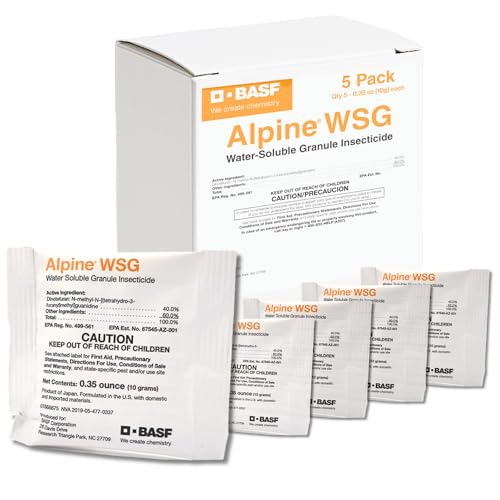
BASF Alpine WSG Insecticide, Indoor Outdoor Pest Control

Syngenta 25001 Demon Max Insecticide

Ortho Orthene Fire Ant Killer1, 14 oz

Amdro Fire Ant Killer for Mounds, 1 Lb

Amdro Granules Fire Ant Bait, 6oz

Amdro Fire Ant Killer for Lawns, 5 LB

Kate’s Home & Garden Peppermint Oil Spray (16oz)
The Details Behind The Selections
Alpine WSG earns its spot at the top because it works through a non-repellent, non-pyrethroid formula that ants carry back to the colony, meaning workers don’t detect it and avoid the trail. That quiet transfer matters when you’re chasing a colony that’s already nested behind a bathroom wall or deep in a deck beam. Mix the water-soluble granules into a pump sprayer, and you can treat foundation perimeters, attic voids, and interior baseboards with the same jug.
The granule form keeps storage simple in a garage shelf, and a single packet treats a meaningful area once diluted. Where most surface sprays only kill what they touch, this one moves through the colony for a longer knockdown. Compared to the Syngenta concentrate reviewed next, Alpine WSG is friendlier for first-time users who don’t want to measure complex dilution ratios.
What Pays Off
- Non-repellent active transfers on contact, so ants carry it deep into the nest instead of avoiding the trail
- Water-soluble granules mix cleanly into a standard pump sprayer for interior and exterior use
- Versatile application across foundation cracks, attic voids, landscape beds, and off-structure zones
- Effective against a broad pest list, useful when you’re not sure what’s crawling indoors
Things To Consider
- Requires a separate pump sprayer, which adds an upfront tool cost for casual users
- Needs measured dilution; overuse can leave unnecessary residue on treated surfaces
- Stored mixed solution has a limited working window, so plan your batches
Who It Suits Best
Homeowners managing an active colony spread across multiple rooms or outbuildings, who want a single product that handles both interior and exterior treatment zones.
Where Another Pick Suits Better
If you’re only chasing a few visible mounds in the lawn and don’t want to mix concentrates, Amdro Fire Ant Killer for Mounds is a simpler hand-shake option.
Demon Max is the heavy-hitter in this lineup, and it’s the one experienced applicators reach for when baits and surface sprays haven’t done the job. The concentrate carries cypermethrin in a low-water-solubility blend, which keeps the active ingredient bound to soil and structural surfaces instead of leaching into groundwater. For homes on well water or properties near streams, that matters.
The label reaches well beyond carpenter ants, covering termites, scorpions, spiders, ticks, and a long list of occasional invaders. Where Alpine WSG leans on a transfer mechanism, Demon Max leans on long residual control along treated bands. You measure small amounts into a sprayer, so one bottle stretches across an entire property’s perimeter when used correctly.
What Earns Its Place
- Long residual activity keeps treated zones protected for weeks after application
- Wide pest list covers subterranean and formosan termites, carpenter ants, spiders, and scorpions in one jug
- Low water solubility reduces leaching risk around sensitive landscapes and water sources
- Highly concentrated formula means a single bottle covers large perimeter jobs
Honest Caveats
- Concentrate demands careful measurement and PPE, less forgiving than ready-to-use sprays
- Pyrethroid chemistry is more toxic to fish and pollinators, so buffer well around ponds and blooming beds
- Not sold everywhere, and some users report restricted shipping depending on the region
Feature Snapshot
Made For
Detail-oriented homeowners and pest pros managing multi-pest pressure along foundations, crawl spaces, and outbuildings, especially on larger lots.
Consider Another Pick When
For quick knockdown of a single visible mound without measuring concentrate, the Ortho Orthene powder reviewed below is a faster hand-off.
Ortho Orthene is the grab-and-dust option in the lineup, and the 14 oz bottle covers a generous number of mounds in a single season. The dry powder formula spreads easily across a mound and works its way down through the tunnels, hitting the colony where the queen lives. For homeowners staring down a sudden rash of fresh mounds in the backyard, speed is the point.
Unlike the bait granules from Amdro, this is a contact-and-ingest powder, so the kill clock starts as soon as you sprinkle it on. The trade-off shows up in longevity: Orthene tends to break down faster in wet weather than a residual concentrate does. Still, for a one- or two-mound problem on a dry stretch, the fast action is hard to beat.
Well-Handled Touches
- Powder spreads easily across mound tops without measuring or mixing
- Fast working knockdown visible within hours on treated colonies
- Single bottle treats a meaningful number of mounds for typical yard use
- Compact packaging stores neatly in a shed or garage shelf
Points To Note
- Less effective after rain, since moisture can wash powder off mound surfaces
- Powder form drifts on windy days, so calm mornings matter for accuracy
- Reapplication is common for stubborn mounds in heavy clay or shaded zones
Feature Snapshot
Right Fit For
Homeowners dealing with a handful of fresh outdoor mounds who want visible results the same day without hauling out a sprayer.
Look Elsewhere When
If you need to address ants traveling inside the house or behind walls, BASF Alpine WSG handles structural voids more reliably than a surface powder.
Amdro’s mound treatment is the classic broadcast-and-wait product, and it stays one of the most approachable options for new users. The bait granules are designed to attract foraging workers, who carry them back into the colony as food. From there, the slow-action chemistry does the heavy lifting underground, where it counts.
The 1 lb shaker jug makes spot treating a small yard straightforward, even for someone who’s never applied a pest product before. Where Ortho Orthene attacks a mound by contact, Amdro depends on ants eating it, so a calm dry day after application helps. Compared to the 5 lb seasonal jug reviewed later, this one fits a smaller lot or a first-time test run.
A Few Strong Suits
- Worker ants carry bait deep into the colony, reaching the queen without disturbing the mound
- Shaker jug design means no measuring, no mixing, no sprayer to clean
- Beginner-friendly for first-time users managing a small yard
Smaller Caveats
- Rain within 24 hours can dissolve bait before ants collect it, hurting results
- Slower visible kill compared to contact powders like Orthene
Best Suited To
First-time applicators with a small lot and a few visible mounds, who prefer a low-fuss routine over speed.
Reach For A Different Pick When
For larger yards that need a full broadcast treatment, the Amdro 5 lb lawn jug covers more ground with less refill.
The 6 oz shaker is the smallest of the Amdro family, and it fills a specific gap: single-mound spot work where dragging out a big jug feels like overkill. You sprinkle a circle of bait around the mound, the workers pick it up, and the colony takes care of itself within a few days. That low-commitment approach makes this a sensible grab for apartment patios or small rental yards.
The trade-off is coverage. Once you’ve used up the 6 oz jug on two or three mounds, you’re done. Where the 5 lb lawn jug handles seasonal broadcast duty, this one stays in the tool drawer for quick touch-ups. For most homeowners, it pairs well with a larger refill rather than standing alone.
Standout Benefits
- Compact 6 oz size fits a junk drawer, gardening tote, or small shed shelf
- Low commitment for first-timers testing whether bait works on their lot
- Circle-application method keeps granules away from pets and foot traffic
Things To Consider
- Limited volume means frequent repurchase for yards with more than a couple of mounds
- Same weather dependence as the larger Amdro jugs, so timing matters
Feature Snapshot
Who Should Grab It
Apartment dwellers and small-yard homeowners who want a low-volume product for occasional touch-ups rather than full-property treatment.
Skip It When
You need a single product to cover half an acre or more; the Amdro 5 lb jug serves that workload better.
The 5 lb lawn jug is the broadcast option for homeowners serious about preventing new mounds from forming across an entire property. The two-way formula combines a fast-acting bait with an insect growth regulator, which interrupts the colony’s reproduction cycle. That dual-action approach is what gives it the multi-month protection window the smaller Amdro jugs can’t promise.
Used in spring or early summer, it tends to reduce the wave of new mounds that typically appears through the dog days of August. Where the 6 oz jug handles one mound at a time, this one covers broad swaths with a hand spreader. It’s the right call for warm-climate lawns where fire and carpenter ant pressure builds year over year.
Everyday Advantages
- Two-way formula pairs fast knockdown with reproduction control for longer-lasting results
- Broadcast spreader compatibility treats large lawns quickly
- Season-long coverage reduces repeat applications through summer
Where It Is Less Suited
- 5 lb jug is overkill for a single-mound problem on a small lot
- Still depends on dry weather windows after broadcasting
Feature Snapshot
Whose Shelf It Belongs On
Homeowners in fire ant country with lawns large enough to warrant a spreader and a seasonal prevention routine.
Swap It Out When
You’re only chasing one or two mounds; the Amdro 1 lb jug is the more proportionate pick for that scope.
Kate’s peppermint spray sits in a different category from everything else on this list. It’s a repellent, not a killer, built around peppermint and cedarwood oils that discourage ants, spiders, and other crawlers from entering treated spaces. For households with curious pets or small children, that distinction can be the deciding factor.
Spray entry points like door thresholds, window sills, and basement corners, and the scent pushes pests away rather than knocking down colonies. The honest read is that this works best as a supporting line of defense, not a replacement for bait or residual treatment when an active infestation is already underway. Compared to the Demon Max concentrate, it’s a much gentler tool with narrower reach.
Advantages To Know
- Plant-oil formula is gentler around kids and pets in occupied living areas
- Ready-to-use spray bottle needs no mixing or measuring
- Versatile for thresholds, baseboards, attic entries, and patio edges
Some Limits To Know
- Repels rather than kills, so it won’t stop an active colony on its own
- Reapplication is needed as the scent fades, typically every few days
Perfect Match For
Households with pets and small children who want a low-intensity deterrent for entry points rather than a knockdown treatment.
Not Your Match When
An active colony is already nesting inside a wall or under decking; BASF Alpine WSG handles that structural scenario more directly.
Picking The Right Approach For Your Situation
The fastest way to sort these products is by where the ants actually are. Mounds you can see in the yard call for bait granules or mound powders, while ants traveling along interior baseboards or structural beams need a residual or transfer-style treatment that reaches the colony behind the surface. Repellent sprays have their own lane as a barrier or preventive layer, but they don’t solve an established infestation on their own.
Matching the form to the environment matters as much as the active ingredient. A granule that thrives in a sunny lawn can wash away on a shaded slope. A concentrate that handles a foundation perimeter may be overkill for a single mound in a flower bed. Think about the application tool you actually own or are willing to buy, since mixing concentrates or hauling a pump sprayer changes the workload significantly.
Consider weather timing too. Bait products need dry windows after spreading, and powders cling best on calm mornings without rain in the forecast. Residual concentrates tend to be more forgiving once dry, but still benefit from mild temperatures and no forecasted storms. Planning around your local forecast, rather than the calendar alone, tends to deliver better outcomes.
Finally, weigh the surrounding environment. Homes near ponds, pollinator gardens, or play areas often lean toward bait-based or oil-based options, while properties with broader pest pressure and clear perimeter access can take advantage of stronger residual concentrates.
Key Considerations Across These Picks
Mistakes Worth Dodging
One of the most common slip-ups is reaching for a surface spray first and assuming the problem is solved. Sprays kill only the ants you can see, and the rest of the colony rebuilds within weeks. Bait and transfer-style products take longer to show results, but they reach the queen and break the cycle.
Another trap is applying bait after disturbing the mound. Once the structure is broken open, workers go into defense mode and stop foraging for the bait. Treating a calm, undisturbed mound in cool morning hours tends to deliver cleaner results than kicking it open first.
When Paying More Pays Off
Higher-tier products in this category tend to offer longer residual control, broader pest coverage, or more flexible application methods. For a one-time isolated mound, a basic bait jug handles the job. For ongoing pressure across a larger property or a home with multiple pest concerns, the upgraded options tend to save time and repeat purchases across a single season.
Frequently Asked Questions
How long does it take for carpenter ant bait to work?
Most bait products take several days to a couple of weeks to reach full effect, because the chemistry depends on workers carrying it back to the colony and sharing it with the queen. Visible surface activity may continue briefly before numbers drop.
Can I use fire ant products for carpenter ants?
Many fire ant baits and mound treatments include carpenter ants on their label, since the two species share enough biology for the same active ingredients to work. Always confirm the target pest list before applying.
Should I treat indoors and outdoors at the same time?
Treating both zones together tends to deliver better results, because outdoor colonies often pressure indoor spaces once disturbed. Pairing an interior residual with an outdoor bait routine addresses both fronts.
What time of year is best for treatment?
Spring and early summer are typical high points for colony establishment, so bait applications in those windows tend to prevent new mounds. Perimeter residual treatments can extend protection later into the season as needed.
Are natural oil sprays enough on their own?
Plant-oil sprays work best as deterrents along entry points rather than as standalone solutions for active infestations. Pairing them with a bait or residual product tends to produce more reliable results.
Final Verdict
For whole-home colony pressure, BASF Alpine WSG stands out as the most flexible starting point. For visible yard mounds, the Amdro lineup offers a graduated approach from spot treatments to seasonal broadcast. Reserve essential-oil sprays for entry-point deterrence in sensitive households, and match the tool to the scope of the problem rather than the size of the shelf it sits on.