
Car camping changes how you think about cooking outdoors. With a vehicle a few steps away, you can trade ultralight backpacking stoves for setups that handle real meals, cast-iron pans, and longer evenings around the tailgate. The seven options below span compact canister systems, two-burner propane classics, and modular cooking platforms. Each one earns its place for a specific kind of trip, so the right pick depends on how you actually camp.
A Snapshot Of The Selections

Jetboil Flash Portable Fast Boil Stove

Jetboil MightyMo Ultralight Camping Stove
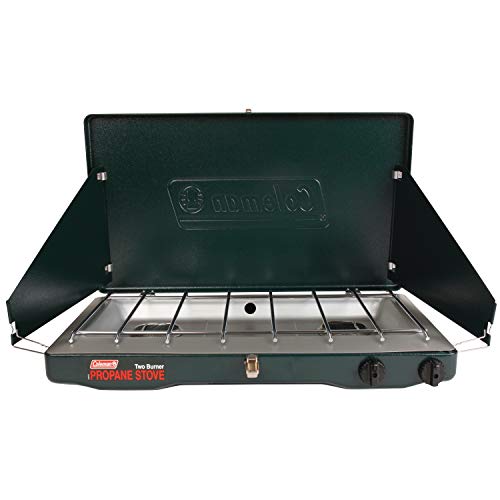
Coleman Classic Propane 2-Burner Stove

Jetboil Jetpower Fuel Canister 450g

Jetboil Summit Skillet Non-Stick Cookware

Coleman Cascade 18 1-Burner Stove

Jetboil HalfGen Basecamp Cooking System
The Strengths Of Each Pick
The Jetboil Flash is the textbook fast-boil canister stove. Its 1-liter FluxRing pot (a coiled metal base that captures heat more efficiently than a flat bottom) pairs with a built-in igniter, so you skip the lighter and watch water climb to a rolling boil in just a couple of minutes. A color-changing band on the insulating cozy tells you when the water is hot enough for coffee or dehydrated meals, which removes the guessing game on chilly mornings.
For car campers who want hot drinks and quick rehydrated dinners without hauling a propane bottle, this all-in-one setup is genuinely simple. The unit nests together for storage and runs on standard isobutane canisters, so resupply at any outdoor shop is painless. It is overkill if you plan to simmer sauces or sear proteins, but for the boil-and-pour crowd it earns its reputation as a near-perfect entry point.
Practical Pluses
- Built-in igniter removes one more thing to forget at home
- Thermochromatic heat indicator shows water temperature at a glance
- Insulated cozy holds heat longer, so you can pour leisurely
- Compact nesting design fits in most car-camp kitchen bins
- Runs on widely available isobutane canisters
Small Caveats
- Designed almost exclusively for boiling water, not real cooking
- Fuel canisters are sold separately and add to total cost
Key Specs
Made For
Solo travelers and couples who mostly rehydrate meals or make pour-over coffee and want the simplest possible setup.
Skip It When
You cook real meals at camp, because the Jetboil MightyMo gives you an actual burner with simmer control.
The MightyMo shifts Jetboil away from pure boiling toward actual cooking. The four-turn regulator lets you dial down to a genuine simmer instead of toggling between off and full blast, which opens up scrambled eggs, pan-fried trout, and reduced sauces. The open platform design accepts most small pots and pans, so you can bring your favorite 8-inch skillet from home.
Fuel efficiency is a real highlight here, with the manufacturer claiming roughly half the consumption of older systems to reach a boil. For car campers who occasionally hike a short distance from the parking area, the compact footprint and light weight make it easy to grab and go. This is a step up in versatility without leaving the Jetboil ecosystem behind.
What It Does Well
- Fine-grained simmer control through a four-turn regulator
- Accepts your own cookware instead of locking you into proprietary pots
- Strong fuel economy compared with basic burner systems
- Light enough to double as a backpack stove for short trips
Trade Offs
- Open flame means more sensitivity to wind without a dedicated windscreen
- No integrated pot, so you supply your own cookware
Best Suited To
Campers who want to sauté, simmer, and sear rather than only boil water, and who appreciate Jetboil’s regulated fuel delivery.
Consider Something Else When
You need a two-burner setup for pancakes and bacon, because the Coleman Classic two-burner handles that workload much better.
This Coleman is the classic green box you see at every state park. With up to 20,000 BTUs split across two adjustable burners (BTU stands for British Thermal Unit, a measure of heat output), you can run a 12-inch and a 10-inch pan side by side, which makes full breakfasts and chili nights genuinely possible. Wind-blocking panels on each side fold out to keep the flame steady, and the pressure regulator keeps performance consistent even when a propane cylinder runs low.
It runs on a standard 16.4-ounce propane cylinder and gives roughly an hour of high-heat cooking per tank. At 4.1 by 21.9 by 13.7 inches, it asks for a real slice of trunk space, but car campers rarely mind. For families and groups, this stove removes the single-burner bottleneck and turns camping dinner into actual cooking.
Good Reasons To Consider
- Two burners let you multitask pans simultaneously
- Wind-blocking panels stabilize flames in breezy conditions
- Pressure regulator maintains output as the tank drains
- Wide enough to host a 12-inch skillet plus a 10-inch pan
Some Limits To Know
- Bulky at over 21 inches wide, so trunk space matters
- Propane cylinder sold separately and adds weight
- No auto-ignition on this model, so carry a lighter or match
Feature Snapshot
Right Fit For
Families and small groups feeding three to five people who want real meals rather than just hot drinks.
Look Elsewhere When
You camp solo or hike any distance from the car, because the Jetboil Flash is dramatically smaller and lighter.
Fuel is the consumable that quietly decides whether a camping trip works. This 450-gram Jetpower canister screws onto any Jetboil stove and ships with a propane and isobutane blend that holds higher vapor pressure (the internal push that keeps gas flowing in cold weather) than pure butane. That matters at elevation and on frosty mornings, when cheaper fuels stall out before water boils.
Because it is purpose-made for Jetboil systems, you avoid the fitting guesswork that comes with off-brand canisters. If you already own the Flash or MightyMo, this is the matching fuel, plain and simple. Owners commonly pack a spare canister for multi-day trips rather than gamble on resupply at a remote campground.
What Works In Its Favor
- Higher vapor pressure improves cold-weather performance
- Direct compatibility with all Jetboil canister stoves
- Compact cylinder shape stores easily in a camp kitchen bin
- Standard threading accepted by many other canister stoves too
Practical Considerations
- Never refill a hot or still-burning canister, since the residual heat creates a serious flame risk
- Disposable metal construction means recycling options are limited
Perfect Match For
Anyone already running a Jetboil system who wants a reliable, brand-matched fuel source for shoulder-season trips.
A Better Fit Elsewhere
Propane-only setups like the Coleman Classic two-burner, which require a separate 16.4-ounce propane bottle instead of this isobutane blend.
The Summit skillet is the pan that turns a Jetboil burner into a real cooking station. Its aluminum core (light metal that heats up fast) is coated with a ceramic nonstick surface, so eggs slide, pancakes flip, and cleanup is a quick rinse-and-wipe affair. The folding handle nests flush against the pan for packing and locks out for stable stovetop use.
It pairs naturally with the MightyMo’s open platform but also works on the Coleman Cascade 18 or any other single-burner setup. Owners commonly report that the ceramic coating holds up well to plastic and wood utensils, though metal spatulas shorten its life. At car-camp scale, it adds real versatility without much weight.
Practical Advantages
- Ceramic nonstick surface releases delicate foods cleanly
- Aluminum body heats quickly and evenly across the base
- Folding handle saves space in packed gear bins
- Broad compatibility with most single-burner camp stoves
Worth Noting
- Ceramic coatings typically demand gentler utensils than traditional nonstick
- Not the lightest option if you count every ounce
Who Should Grab It
Campers who want to cook eggs, pancakes, and sautéed vegetables without dragging a full kitchen setup to the picnic table.
Another Choice May Suit
If you want a stove-and-pan bundle in one package, the Jetboil Flash includes its own cooking cup and skips the need for a separate skillet.
The Cascade 18 narrows the gap between canister stoves and the bigger Coleman classic. With 8,000 BTUs on one burner and enough clearance to fit a 12-inch pan, you can run a real skillet without scaling down to backcountry cookware. The rotary ignition lights the burner without matches, and the knob rotation gives noticeably better simmer control than older single-burner models.
The aluminized steel cooktop wipes clean with a damp cloth, which matters when eggs hit the hot surface. It is light enough to perch on a tailgate and compact enough to live in a trunk permanently. For solo or duo campers who want one burner with real pan room, this is the middle ground.
Useful Touches
- Matchless rotary ignition simplifies startup
- Improved knob rotation supports genuine simmering
- Aluminized cooktop wipes down quickly after messy meals
- Compact body fits easily behind a truck seat
- Regulator stores on top for tidy transport
A Few Limitations
- One burner limits you to sequential cooking rather than simultaneous
- Wind protection is minimal compared to the Coleman two-burner
Quick Facts
Whose Shelf It Belongs On
Tailgaters, truck-bed chefs, and duo campers who want a 12-inch skillet on a single burner without hauling the bigger two-burner box.
Reach For A Different Pick When
You regularly cook for three or more, because the Coleman Classic two-burner lets you run pans at the same time.
The HalfGen is Jetboil’s basecamp play, a standalone burner rated at 10,000 BTUs that you can also link to other Jet Link-compatible stoves to build out a modular outdoor kitchen. Boil times land just above three minutes for a full pot, and the regulator gives the same incremental control found on the smaller MightyMo.
You supply your own pot, which is the trade-off for that modularity. For car campers who cook real meals for a group and want to add burners over time, the HalfGen is a flexible foundation. It bridges the gap between backpacking canisters and a fixed propane box.
What Makes Sense
- 10,000 BTU output handles larger pots and group meals
- Jet Link compatibility supports future expansion into multi-burner setups
- Incremental heat adjustment for simmering as well as boiling
- Sturdier platform than backpacking-focused Jetboil stoves
Possible Compromises
- Requires your own cookware, adding to the gear list
- Heavier and bulkier than the Flash or MightyMo
Built With In Mind
Group cooks and car campers running a basecamp kitchen who want a single high-output burner that can grow into a multi-burner setup later.
Swap It Out When
Simplicity matters most, because the Coleman Classic two-burner is a self-contained cooking station with no extra parts to manage.
What To Weigh Before Picking Your Basecamp Burner
Car camping changes the math compared to backpacking, because you are not counting ounces. Think instead about menu ambition, group size, and how much trunk space you can spare. A solo traveler rehydrating meals has very different needs than a family cooking bacon and pancakes at sunrise.
Fuel type matters more than people expect. Isobutane canisters like the Jetboil Jetpower fuel cold-weather performance and pack small, but they cost more per boil than propane. Standard propane bottles, the kind that feed the Coleman two-burner, deliver more heat per dollar but demand bulky cylinders. Match the fuel to your climate and trip length rather than defaulting to whatever is on the shelf.
Burner count and pan size drive real usability. One strong burner with a 12-inch clearance, like the Coleman Cascade 18, handles most single-pan dinners. Two burners, like the Classic, unlock simultaneous cooking that actually saves time on group mornings. Smaller canister stoves limit you to small pots, which is fine for boil-only menus and a hassle for anything more.
Build and ignition features affect daily friction more than specs suggest. Matchless rotary ignition, wind-blocking panels, and pressure regulation all smooth out the small annoyances that show up trip after trip. Aluminum cookware cleans fast but dings easily, while steel stands up to rougher handling. For car camping, prioritize the conveniences that you will use every single night over grams you will never notice.
Key Considerations Across These Picks
Pitfalls Shoppers Hit
A common mistake is choosing a backpacking stove for car camping and then wishing for a real burner on day two. Isobutane canisters are brilliant on the trail and limiting at a picnic table, where two pans and a group are waiting. Another trap is forgetting that fuel is sold separately on most stoves, which surprises first-time shoppers who budget only for the stove itself. Finally, ignoring pot size leaves people stranded with a tiny cup when they really wanted to simmer a full pot of soup.
Where The Extra Money Goes
Higher-tier options like the HalfGen and the Jetboil regulated stoves cost more because the regulator hardware, pressure control, and modularity add real engineering. On a two-burner like the Coleman Classic, the premium pays for wind panels, dual-burner output, and durable construction that lasts for many seasons. For casual weekend use, a basic single burner covers the job. For group cooking, shoulder-season trips, or anyone who wants their camp kitchen to feel like a real kitchen, the upgrade typically pays back in saved frustration rather than raw heat.
Frequently Asked Questions
What size stove do I need for car camping? Most duos do well with a single high-output burner that fits a 10- to 12-inch pan. Groups of three or more usually benefit from a two-burner setup so you can cook a main and a side at the same time.
Can I use backpacking stoves for car camping? Yes, though small canister stoves limit you to boiling water and tiny pots. For real meals with a skillet, a single-burner propane stove or a regulated canister system with simmer control is a better fit.
How long does a fuel canister or propane tank last? A 450-gram isobutane canister typically covers several days of light boiling, while a 16.4-ounce propane cylinder delivers roughly an hour at high heat on a two-burner stove. Exact runtime depends on flame setting and outdoor temperature.
Do I need a windscreen for car camping stoves? Built-in wind panels on stoves like the Coleman Classic handle most breezes. For canister stoves, a folding windscreen helps in exposed sites and improves fuel efficiency in cold or gusty conditions.
Is it safe to refill fuel canisters? Refilling disposable isobutane canisters yourself is discouraged and often illegal in some areas, because residual heat and overfilling create real fire risks. Stick with new factory-sealed canisters for safety.
Closing Remarks
The right car camping stove is the one that matches how you actually eat at camp. Solo travelers who mostly boil water will be happiest with a Jetboil Flash and a spare fuel canister. Families and group cooks will lean toward the Coleman Classic two-burner or the modular HalfGen for real meal prep. Pick the system that fits your menu, your trunk, and your climate, and the rest of camp cooking tends to take care of itself.