
Sleeping in your vehicle shouldn’t mean waking up stiff and groggy. The right car camping mat turns a cramped backseat or SUV cargo area into a real bed, with proper support for your hips and shoulders, decent insulation from cold metal or wet floors, and pack-down size that doesn’t fight your gear load. Foam rolls and self-inflating pads suit different vehicles and sleepers, while air mattresses built for indoor use often double as a guest bed at home. This roundup covers six options spanning foam pads built for trunk and tent use, plus a pair of cordless air mattresses for campers who want full-size sleep surfaces on the road.
The Picks In Brief
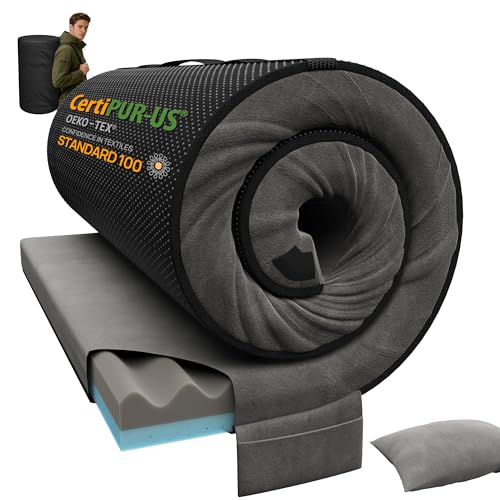
Releep 3 Inch Dual-Sided Memory Foam Camping Mattress with Pillow

KASIMO Memory Sleeping Pad 3 Inch Foam Mat with Pillow

Self Inflating Sleeping Pad 4 Inch Foam Mat with Electric Pump

Memory Sleeping Pad 3.1 Inch Foam Mat with Pillow
KASIMO Air Mattress Twin with Cordless Battery Pump
KASIMO Air Mattress Queen with Wireless Battery Pump
Why These Options Stand Out
The Releep 3 Inch Dual-Sided Memory Foam Camping Mattress earns its spot as the editor’s choice because it brings genuine bed-like comfort to a roll-up format. The dual-layer foam pairs gel-infused memory foam on top with high-density support foam underneath, so your shoulders and hips sink in while your spine stays roughly aligned, exactly the issue most cheap foam rolls create.
At three inches thick, it bridges the gap between ultralight backpacking pads and full inflatable mattresses. The waterproof surface handles a damp tent floor or a chilly car trunk without soaking through, and the included portable pillow plus carry bag keep your packing list shorter. For weekend road trips where you split nights between the SUV, a friend’s guest room, and a tent, this pad earns its keep.
Positive Takeaways
- Two-layer foam stack cushions pressure points far better than single-density rolls
- Waterproof shell shrugs off tent-floor moisture and morning dew
- Three-inch profile gives side sleepers real shoulder support, unlike thin pads
- Built-in pillow and carry bag reduce the loose-parts count in your trunk
- Rolls compact enough to stash behind the rear seat of most sedans
Things To Consider
- Heavier than ultralight backpacking pads; backcountry hikers may want lighter
- Foam memory means slower rebound when you shift positions at night
Quick Facts
Right Fit For
Weekend car campers who bounce between SUV sleep setups, guest rooms, and tents and want one pad that handles all three.
Reach For A Different Pick When
Cold-weather campers logging serious winter nights should look at the KASIMO Memory Sleeping Pad, since its higher foam density handles insulation demands more confidently.
The KASIMO Memory Sleeping Pad steps in where the Releep leaves off, with a denser foam build aimed at campers chasing real thermal performance. The 9.5 R-value rating signals strong insulation, useful shorthand for how well a pad blocks cold ground from stealing your body heat on chilly nights.
The foam uses a 50D density spec, which outpaces the 19D foam common in budget pads, so the pad rebounds reliably and distributes weight evenly without bottoming out under your hips. The wave-pattern cell design contours to your back and waist, a meaningful upgrade for sleepers who wake up sore on flatter pads. For shoulder-season trips, alpine camping, or truck-bed sleeping in early spring, the thermal headroom justifies the extra weight.
Where It Helps
- 9.5 R-value handles cold-ground conditions where thinner pads fail
- Higher-density foam outlasts the saggy feel common in cheaper rolls
- Wave-pattern cell design shapes itself to your back for ergonomic support
- Breathable surface helps with sweat on warmer nights
Honest Caveats
- Denser foam adds pack weight; ultralight hikers may skip it
- Higher insulation spec is overkill for summer desert trips
Built With In Mind
Three-season and shoulder-season campers who deal with cold vehicle floors and want a foam pad that actually insulates.
Consider Something Else When
Summer-only road trippers in warm climates get more mileage from the Releep 3 Inch Dual-Sided Memory Foam Camping Mattress, which trades some insulation for lighter pack weight.
The Self Inflating Sleeping Pad with Electric Pump is the lazy-camper’s dream, with a built-in pump that handles inflation while you unpack the cooler. At four inches thick, it’s the loftiest option in this roundup, and the built-in pillow means one less thing to forget on the way out the door.
The 9.5 R-value rating puts it in the same thermal class as the KASIMO, but the four-season framing means it leans toward year-round use rather than just shoulder-season. The one-button inflation cycle handles setup without the lung power a manual valve demands, which helps when you arrive at camp tired. It’s a heavier and bulkier choice than the pure foam pads, yet the comfort gain is real for sleepers who want genuine mattress depth under them.
The Helpful Details
- One-touch electric pump cuts setup to roughly a minute, no manual effort
- Four-inch thickness delivers true mattress-like cushioning
- Built-in pillow keeps your packing list lean
- 9.5 R-value supports four-season use in cold weather
Worth Noting
- Bulkier roll than pure foam pads; tight in small car trunks
- Electric pump depends on a charged battery for each trip
- First-use inflation needs extra time as foam fully expands after vacuum packaging
Right Fit For
Campers prioritizing comfort and easy setup who don’t mind trading pack size for a near-bed sleep experience.
Look Elsewhere When
Weight-conscious backpackers and ultralight travelers get more value from the Zzuvjoy Memory Sleeping Pad, which skips the electric pump in favor of manual inflation.
The Zzuvjoy Memory Sleeping Pad takes a different approach to inflation with a foot-operated pump, a smart middle ground between blowing up a pad by mouth and hauling an electric pump. At 3.1 inches thick, it sits right between the three-inch foam rolls and the four-inch electric option, giving you extra cushion without the bulk penalty.
The 9.5 R-value puts it in serious cold-weather territory, and the included pillow keeps your sleep kit simple. Open the valves, let the foam expand for ten seconds, then step on the intake to top it off, no batteries, no mouthpiece, no lung strain. For campers who want self-inflating convenience without depending on a charged pump at every stop, the foot-pump system pays for itself in setup reliability.
What Works In Its Favor
- Foot-pump system inflates without batteries or mouthpiece effort
- 3.1-inch profile adds noticeable cushion over standard three-inch pads
- 9.5 R-value supports cold-weather and shoulder-season camping
- Self-inflating foam expansion shortens the active pumping time
Room For Improvement
- Heavier than pure foam rolls due to internal air bladder
- Foot-pump mechanism adds small part that could wear over time
Best Suited To
Car campers who want self-inflating comfort but don’t want to rely on a charged battery or mouthpiece inflation at camp.
Swap It Out When
Sleepers chasing the deepest mattress feel should consider the Self Inflating Sleeping Pad with Electric Pump, which trades manual effort for a thicker four-inch profile.
The KASIMO Air Mattress Twin jumps categories, swapping foam for a true inflatable bed that pulls double duty as a car camping surface and a guest bed at home. The cordless battery pump is the standout feature: no hunting for a 12V outlet in your vehicle, no dragging a separate pump, and no manual labor.
TPU construction (thermoplastic polyurethane, a stretchier and quieter alternative to PVC) keeps the mattress odor-free out of the package, which matters when you’re sleeping in an enclosed SUV or tent. At 75 inches long and 35.5 inches wide, the twin footprint fits most back seats when seats fold and works for solo tent sleepers who want more space than a foam roll offers. You may find the eight-inch height a bit low for restless sleepers who shift a lot, but for stationary sleeping it strikes a sensible balance.
What Helps Most
- Cordless battery pump inflates anywhere without power hookup
- TPU material avoids the chemical smell common in PVC air beds
- Twin size fits a single adult in SUV cargo areas and tents
- Doubles as a guest bed at home when not on the road
Practical Considerations
- Air mattresses can lose firmness overnight in cold temperatures
- Pump battery needs recharging between trips
Feature Snapshot
Made For
Solo car campers who want a true mattress feel and need a single bed that works at home and on the road.
Skip It When
Couples or families sharing the sleep space should jump straight to the KASIMO Air Mattress Queen, which adds the width without changing the inflation system.
The KASIMO Air Mattress Queen brings the same cordless-pump convenience to a full queen footprint, turning a large SUV or family tent into a proper bedroom. At 75 by 59 inches, it offers generous room for two sleepers without forcing anyone to the edge.
The TPU build keeps the air bed odor-free and quieter than standard PVC, which matters when two people are shifting around at night. Wireless inflation removes the final friction point of air-mattress camping: no manual pumping, no power outlet hunting, no separate accessory to forget. For couples who car camp together or parents running weekend trips with a kid or dog sharing the space, the queen size delivers the comfort of a real bed without the logistics headache.
Useful Strengths
- Queen footprint accommodates two sleepers comfortably
- Wireless pump eliminates extra gear and power source hunting
- TPU material avoids PVC odors and feels quieter when moving
- Folds down for storage when serving as a home guest bed
Less Ideal Details
- Needs a larger flat area, so smaller sedans and tents may not fit it
- Air pressure can drop in cold nights, requiring a quick top-off
Technical Sheet
Whose Shelf It Belongs On
Couples and families car camping in larger SUVs or wall tents who want the comfort of a real mattress without setup hassle.
Not Your Match When
Solo travelers with limited cargo room should choose the KASIMO Air Mattress Twin instead, since the queen footprint won’t fit smaller vehicles or compact tent floors.
Matching Pads To Vehicle And Sleep Style
Choosing car camping mats comes down to three honest constraints: the space you’re filling, the temperatures you’ll face, and how much effort you want at setup. Foam pads roll compact and store easily behind seats, but they weigh more than inflatable options and have fixed thickness. Air mattresses inflate larger and sleep warmer, yet they need a flat surface and lose firmness when temperatures drop overnight. R-value, the measure of how well a pad resists heat flow to the cold ground, becomes the deciding factor for shoulder-season and winter trips; anything below 4 starts to feel cold once nighttime temps drop into the 40s.
Space And Footprint In Real Vehicles
Measure your sleeping area before you fall in love with any pad. Twin air mattresses fit folded-down back seats in most mid-size SUVs, while queen footprints demand a full cargo area or a large tent. Foam rolls flex more around wheel wells and irregular surfaces, so they handle awkward car layouts better than rigid air beds.
Inflation Method And Camp Routine
Self-inflating pads handle most of the work via foam expansion, with manual or foot-pump topping off the rest. Electric pumps eliminate effort but add battery management to your trip checklist. If you camp in remote areas without reliable charging, a manual or foot-pump system removes one more thing that can go wrong.
Insulation For Shoulder And Winter Seasons
Cold ground steals heat faster than cold air, so a pad’s R-value matters more than your sleeping bag’s temperature rating once nights drop below freezing. Pads rated 4 or higher handle three-season use, and pads in the 8 to 10 range support true winter camping. Summer-only campers can safely pick lower-rated options and save weight.
Comfort Thickness And Sleep Position
Side sleepers need at least three inches of cushion to protect shoulders and hips, while back sleepers can get by on thinner pads. Four-inch pads and air mattresses deliver near-bed comfort but pack larger and heavier. Your body weight affects feel too: heavier sleepers compress foam more, so they tend to prefer air-supported options.
Key Considerations Across These Picks
Where Shoppers Go Wrong
The most common slip-up is buying a pad sized for backpacking when you actually need car camping volume, or vice versa. Tiny inflatable pads under three inches leave side sleepers sore on car-camping trips. On the flip side, queen air mattresses overwhelm smaller SUVs and force compromises in cargo space. Another trap is ignoring the R-value until the first cold night, when a summer-rated pad suddenly feels like sleeping on ice.
The Case For Spending Up
Higher-tier pads in this category cost more for measurable reasons: denser foam that resists sag, stronger R-values for cold nights, and integrated pumps that remove setup friction. The upgrade matters most for frequent campers and cold-weather travelers. Weekend summer trippers usually find budget-tier options perform fine, since the demands stay modest.
Frequently Asked Questions
What thickness do you actually need for car camping? Three inches works for most side and back sleepers on foam rolls. If you sleep on your side and weigh over 180 pounds, four inches prevents shoulder compression. Foam at three inches with proper density often outperforms a thin inflatable for support.
How important is R-value for summer camping? Lower R-values around 2 to 3 handle warm nights fine when ground temps stay mild. Once nights drop below 50°F, you’ll feel cold ground through low-rated pads even with a warm sleeping bag.
Can you use a home air mattress for car camping? Standard PVC air mattresses work in a tent or SUV, but TPU versions stay quieter and avoid the chemical smell common in cheaper beds. Cordless pumps remove the biggest friction point, since you won’t have a wall outlet at most campsites.
How do you clean and store foam car camping mats? Wipe down with mild soap and water, dry fully before rolling, and store loosely in a dry space. Tight compression over weeks can leave permanent creases in memory foam. Keeping the pad out of direct sunlight extends the waterproof surface life.
Do self-inflating pads actually inflate themselves? They expand most of the way on their own via open-cell foam, but you still need to top off with breath or a pump to reach full firmness. Expect a minute of supplemental inflation after the foam stops expanding.
The Takeaway
Car camping mats run the gamut from compact foam rolls for tight vehicles to queen-size air beds for spacious setups, and the right pick depends on how you sleep, where you go, and how cold it gets. Foam pads win for storage convenience and silent, battery-free setup, while air mattresses deliver the closest thing to a real bed for couples and family campers. Match the pad’s profile to your vehicle, your sleep position, and your typical temperatures, and any of these six will handle the job well.