
Pulling into a campsite after a long drive, kids already half-asleep in the back seat, the last thing anyone wants is a forty-minute tent assembly with stray poles and a rainfly that never quite lines up. Car camping rewards shelters that go up fast, hold up in real weather, and give a family room to spread out without anyone elbowing a wall. These four options cover different shapes, weights, and trip styles so you can pick what fits your crew.
The Picks In Brief

Naturehike Village Instant Cabin Tent
Naturehike Cape Instant Tunnel Tent
Naturehike KOTA Double Layer Tent
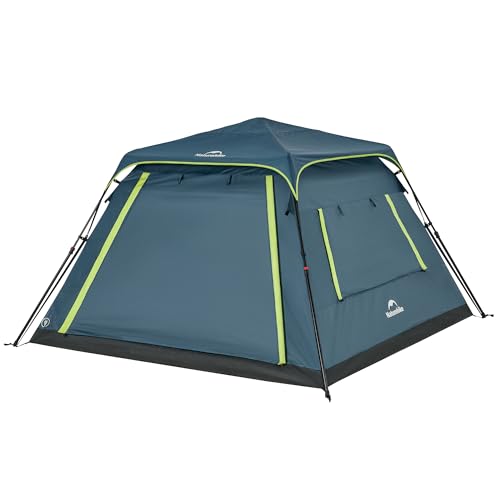
Naturehike Cape Lite Instant Cabin
What Each Pick Brings To The Table
The Naturehike Village drops into the easy-setup lane with pre-attached poles that unfold from a single bundled package, so a tired crew can hit the site and have shelter within a minute. Cabin walls create usable vertical space, which matters when a parent is changing a toddler or two kids need to stand up after hours in the car.
The shell uses 150D Ti Black fabric, a denser weave that blocks intense sunlight (UPF 12500+ rated) and shrugs off light rain with a PU 2000mm+ coating. Full rainfly coverage keeps seams protected during passing storms, and the squared floor plan lets you park cots, a queen mattress, and gear crates side by side.
Where It Excels
- Pre-attached pole system shortens setup, helpful on a first family trip.
- Dense Ti Black fabric cuts harsh midday sun and adds weather resistance.
- Cabin shape gives standing headroom and clean rectangular floors for cots.
- Full rainfly keeps the inner tent dry during overnight showers.
- Available in 4-person and 8-person sizes to match your crew.
Things To Consider
- Larger sizes get heavy in the carry bag, so a two-person lift helps at the trailhead or parking area.
- Cabin tents can catch wind on exposed ridges; extra guy lines are smart in open campsites.
Who It Suits Best
Families new to car camping who want fast setup and a familiar cabin feel without a complicated pole layout.
Consider Something Else When
For families needing a longer tunnel layout with more internal zones, the Naturehike Cape offers a different footprint that spreads sleeping areas out further.
The Cape trades the upright cabin feel for a long tunnel layout that divides the inside into separate rooms, a real plus when parents want privacy or older kids need their own corner. Floor area runs 8.3㎡ in the 4-person version and up to 12.9㎡ for larger families, giving plenty of room for sleeping pads and duffels.
Build specs center on 190T polyester with a waterproof coating rated at PU3000mm, a step up from basic rain shells. Setup mirrors the Village with pre-attached poles that pop the tent into shape fast, so the Cape stays in the same quick-pitch category as its sibling.
What Makes Sense
- Tunnel shape creates internal rooms, useful for separating adults and kids.
- Higher PU3000mm waterproof rating handles heavier rain than entry-level shells.
- Generous floor area fits queen mattresses plus gear storage along the walls.
- Pre-attached pole system keeps assembly to roughly a minute.
Worth Noting
- Tunnel tents rely on taut guy lines for shape, so loose staking can leave the interior sagging overnight.
- Longer footprint needs a flat, rectangular site pad, which is harder to find on smaller campground loops.
- Wind performance depends on how you orient the tunnel relative to prevailing gusts.
Made For
Families of six to eight who want defined rooms and a taller ceiling without giving up the instant-setup convenience.
Look Elsewhere When
For a smaller crew that needs a single-room cabin rather than a multi-zone tunnel, the Naturehike Cape Lite keeps the footprint compact and easier to place on tight sites.
The KOTA is the most flexible shelter on this list because it breaks into three working pieces: the mesh inner tent for warm nights, the outer rain shell, or both layered together for colder trips. That modular approach makes it useful from spring through shoulder-season weather, which is when many families actually get outdoors.
Materials lean toward 75D 210T polyester with a waterproof 3000mm+ coating, giving the KOTA a noticeably heavier hand-feel than lighter shells. Vestibules and a porch area extend usable space outside the sleeping room, useful for muddy boots, a camp chair, or a play spot for kids during rain.
The Upside
- Double-layer design converts between three-season mesh and four-season coverage.
- Vestibules add dry entry space and a place to stash wet gear.
- Sturdier 75D fabric handles rougher use and repeated trips.
- Mesh inner works as a stand-alone stargazing shelter in summer.
- Porch zone doubles as a sunshade when only the rainfly is deployed.
Trade Offs
- Heavier pack weight means a second pair of hands for loading and unloading.
- More components take longer to dry after damp trips; airing it out before storage is a common habit owners describe.
Best Suited To
Families who camp across multiple seasons and want a single shelter that adapts from summer stargazing to cold, rainy shoulder weekends.
A Better Fit Elsewhere
For warm-weather-only trips where lightweight carry matters more than cold-season layering, the Naturehike Cape Lite trims weight and complexity.
The Cape Lite trims the cabin formula down to a 4-6 person footprint, roughly 101.5 by 101.5 inches, with a 62.2-inch peak that lets most adults stand in the center. It targets small families who want the same quick-pitch feel as larger Naturehike shelters without hauling extra weight they will not use.
Setup follows the same instant pattern: pre-attached poles, a single unfold, and the tent pops into shape. Interior space accommodates a queen mattress plus a small gear strip, which works for two parents and one or two kids on weekend trips.
Reasons It Performs
- Compact cabin fits standard paved or tent pads at smaller campgrounds.
- Peak height gives usable standing room without a dome-style crouch.
- Quick-pitch mechanism suits one-person setup on short trips.
- Smaller pack size loads easily into a hatchback or SUV trunk.
Honest Caveats
- Tighter floor plan feels cramped for two adults plus three older kids and their gear.
- Single-room layout offers less privacy than the multi-zone Cape tunnel design.
Perfect Match For
Small families of three or four running short weekend trips who value a small pack-down footprint over maximum interior volume.
Reach For A Different Pick When
For larger crews that need separated sleeping zones and more storage wall length, the Naturehike Cape tunnel tent spreads the same family across a longer floor plan.
Picking A Shelter That Matches Your Crew
Size And Sleeping Layout
Match the tent’s rated capacity to your actual crew plus gear, not just heads. A 4-person cabin comfortably sleeps two adults and small kids, while 6-8 person models give space for cots, luggage, and a central play area. Floor dimensions matter as much as the rating, especially when a queen mattress is going in.
Setup Speed And Pole Design
Instant tents with pre-attached poles shorten the arrival window from an hour to a minute, which helps families with younger kids eager to start the campfire. Look for intuitive folding frames rather than multiple loose poles that need sorting in low light.
Weather Protection
Check the waterproof rating (PU2000mm or higher handles most rain) and whether a full rainfly is included. Tighter fabric weaves (150D and above) resist UV breakdown during long sunny weekends and extend the tent’s working life.
Seasonal Use
Three-season shelters are fine for summer and shoulder trips. Four-season double-layer designs, like the KOTA, handle colder nights and steady rain by adding an outer shell that traps warmth and blocks wind-driven moisture.
Key Considerations Across These Picks
Common Shopping Slip Ups
Choosing by headcount alone is one trap. Two adults, three kids, and a dog need more floor area than the rating suggests, so add buffer space. Another is buying a tall tent for standing room without checking vehicle trunk dimensions; some cabin designs barely fit across an SUV cargo opening when bagged.
Where The Extra Money Goes
Premium tiers tend to bump up fabric denier, waterproof ratings, and modular features like vestibules or convertible layers. You pay for material weight, repeated-trip durability, and weather margin. The upgrade earns its keep on longer trips, rougher conditions, or families camping more than a handful of weekends a year.
Frequently Asked Questions
How big should a family car camping tent be?
Size the tent by adding two extra people to your actual group, so a family of four usually does well in a 6-person shelter for breathing room and gear storage.
Are instant tents strong enough for wind?
Pre-attached pole tents handle light to moderate breezes well, but exposed ridgelines call for extra guy lines and cross-staking to keep the frame taut overnight.
Can one person set up these tents?
Yes. The instant designs use pre-attached poles that unfold from the bag, and a single adult can usually pitch them in about a minute on flat ground.
What does PU3000mm waterproofing mean?
It is a measurement of how much water pressure the fabric coating withstands before leaking, with higher numbers meaning better rain protection during sustained storms.
How do I store a family tent between trips?
Dry the tent completely, shake out debris, and store it loosely in a breathable bag rather than a tight stuff sack to extend the life of the waterproof coating.
Wrap Up
Any of these four shelters will serve a family weekend well, and the right choice comes down to crew size, climate, and how much interior division you want. Pick the cabin that matches your trip style, stake it tight, and the campsite will feel like home before the campfire even catches.