
A good car camp stove turns a parking-lot picnic table into a proper kitchen. The right pick means boiling pasta while watching the sunset, searing fish after a long hike, or just getting coffee going before everyone else wakes up. This roundup covers six solid options spanning solo backpackers, weekend families, and tailgate crews, so you can match the stove to the way you actually travel.
A Fast Comparison Of The Options

Smilco 40″ x 40″ Fiberglass Emergency Fire Blanket

Coleman Cascade 18 1-Burner Camping Stove
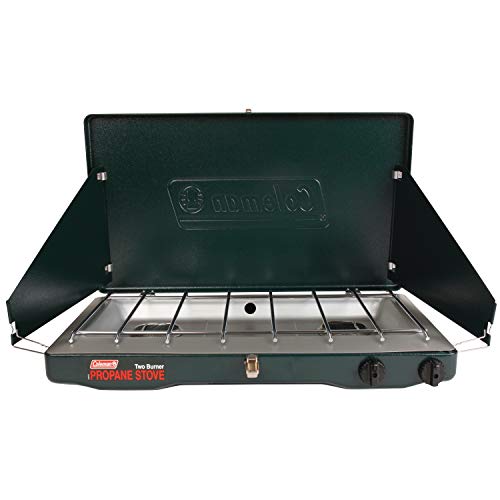
Coleman Classic Propane Camping Stove (2-Burner)

Jetboil Jetpower Fuel Canister (450g)

Jetboil Sumo Camping Stove Cooking System

Coleman Tabletop 2-in-1 Grill & Stove
More Details On Our Top Picks
A fire blanket earns its spot in a car camping kit because grease flare-ups on a camp stove happen fast, and reaching for a bucket of water often makes a kitchen fire worse. This Smilco blanket is a 40-by-40-inch fiberglass square that mounts in a pouch and pulls out via tabs, so you can smother flames without any training. It pairs nicely with any of the stoves on this list since hot oil splatter from a two-burner setup is exactly the kind of mess this product handles.
Beyond the camp stove, it also works on a charcoal grill or a small RV galley, so it pulls double duty on road trips. Stash it next to the propane bottle and you’ll have a one-second response to the most common cooking mishap outdoors.
What Pays Off
- Pull-tab deployment means no fumbling with clips in the heat of the moment.
- Smothers grease, oil, and electrical fires without needing a separate extinguisher.
- Stows flat in a camp bin, taking up roughly the space of a folded jacket.
- Useful for both camp stove flare-ups and home kitchen mishaps, so the purchase covers more than one use case.
Things To Consider
- Fiberglass weave can irritate bare skin, so handling it with the included tabs is the safer move.
- It is a single-use item for a real grease fire, which means replacing it after any incident.
- Won’t help with a propane cylinder leak, so it complements, rather than replaces, other safety habits.
Who It Suits Best
Road-trippers who cook on a Coleman or tailgate-style stove and want a low-effort safety layer for grease flare-ups, RV cooks with small galleys, and anyone setting up a first-time basecamp kit who wants one safety item that covers multiple scenarios.
Where Another Pick Suits Better
For actual primary cooking, look at the Coleman Classic Propane Camping Stove instead, since this blanket handles emergencies rather than meals.
Solo travelers and couples packing light want one burner, not a kitchen. The Coleman Cascade 18 is a single-burner tabletop unit with 8,000 BTUs (British Thermal Units, a heat-output rating) of cooking power, a rotary igniter so you skip the matches, and an aluminized steel cooktop that wipes clean after a fried-egg breakfast. It fits a 12-inch pan, which is plenty for a skillet dinner in the back of a station wagon.
The detached grate flips 180 degrees for slimmer storage, and the regulator stows on top so nothing rattles loose in the trunk. Compared to the two-burner Coleman Classic covered next, this one trades capacity for packability, and most solo road trippers consider that a fair swap.
Where It Helps
- Matchless rotary ignition saves fumbling for a lighter in wind or rain.
- Aluminized steel surface wipes down quickly, which matters after bacon grease.
- Knob rotation has been improved for better simmer control, so eggs stop scorching.
- Accepts a 12-inch pan, larger than most single-burner competitors in this size.
Honest Caveats
- Single burner limits you to one pan at a time, so timing two-pot meals gets tricky.
- Tabletop design means you need a flat surface, which a rocky campsite may not offer.
Made For
Solo road trippers, couples on a weekend loop, and anyone who wants the simplest possible propane setup for coffee and a hot pan.
Not Your Match When
Families cooking for four should reach for the Coleman Classic Propane Camping Stove, since two burners side by side make mealtime much easier.
The Coleman Classic is the two-burner workhorse that has anchored car camping trips for decades, and it remains the easiest first stove to recommend. At 4.1 by 21.9 by 13.7 inches with up to 20,000 total BTUs, it fits both a 12-inch and a 10-inch pan at the same time, which is enough surface for a real breakfast and a coffee pot. Wind-blocking panels shield the burners, and a pressure regulator keeps the flame steady when temperatures drop or the tank runs low.
Runtime runs about an hour on high with a standard 16.4-ounce propane cylinder, so you may burn through a tank across a long weekend of heavy cooking. The stove includes a 3-year limited warranty from the manufacturer, which adds peace of mind for frequent campers. This Classic remains a stronger group-cooking choice than the Cascade 18 covered earlier, with broader pan capacity and far better wind protection.
Notable Upsides
- Two adjustable burners let you run a skillet and a sauce pot simultaneously, cutting meal prep time noticeably.
- Wind-blocking panel system keeps flames steady on breezy ridge sites.
- Pressure regulator smooths output in extreme temperatures, which matters at altitude and in shoulder seasons.
- Wide enough for both 12-inch and 10-inch pans, covering most cookware road-trippers already own.
Worth Noting
- Fuel cylinder sold separately, so factor that into your total kit cost.
- Bigger footprint than tabletop units, which means trunk space planning matters.
Feature Snapshot
Right Fit For
Families and small groups running a basecamp out of a single vehicle, who want the easiest path to two-pot cooking without a learning curve.
Look Elsewhere When
Backpackers and ultralight travelers should look at the Jetboil Sumo system, which trades footprint for efficiency and packs down much smaller.
Fuel isn’t a stove, but no Jetboil system runs without it, and this 450-gram Jetpower canister keeps the lights on for a full weekend. The propane/isobutane blend delivers higher vapor pressure than standard butane, which means stronger output in cold weather when regular canisters sputter out. The threaded valve mates with any Jetboil system, including the Sumo covered later in this list.
You should never refuel a hot or burning device, since the blend is highly flammable and can flash on contact with a hot burner. The 450-gram size is the sweet spot for car camping because it lasts longer than the 100-gram backpacking size yet still fits in a standard plastic camp tote. Compared to the propane cylinders that run the Coleman stoves covered earlier, this canister is purpose-built for pressurized Jetboil systems and won’t fit a standard camp stove.
Where It Excels
- Higher vapor pressure keeps Jetboil stoves running steadily in shoulder-season temperatures.
- 450-gram size balances pack size and runtime, handling a long weekend without a refill.
- Standard Jetboil threading means compatibility across the brand’s product line.
Trade Offs
- Won’t connect to non-Jetboil stoves, so it’s a single-ecosystem purchase.
- Refilling used canisters isn’t straightforward, which means disposal or recycling after use.
Best Suited To
Jetboil owners planning multi-day trips in cool or unpredictable weather who want one canister that lasts through dawn coffees and dinner boils alike.
Swap It Out When
Coleman propane stove users should stick with standard propane cylinders, since the Jetboil canister won’t connect to their regulator.
Car camping with three or four hungry hikers usually ends in shifts at a single burner. The Jetboil Sumo solves that with a 1.8-liter FluxRing cooking cup, which is a finned metal base that captures heat efficiently and spreads it across the pot wall. Combined with Jetboil’s regulator system, the Sumo offers incremental adjustments from a gentle simmer to a full rolling boil, so a freeze-dried dinner at altitude cooks the same as pasta at a roadside stopover.
Group size drives this pick: solo travelers will do better with a smaller Jetboil system, while the Sumo earns its weight for groups of three to five. The included insulating cozy keeps food warm after you cut the flame, and the system pairs naturally with the 450-gram Jetpower canister covered just above. It plays a different role than the Coleman Classic, trading two-burner versatility for a single, high-capacity vessel that boils faster and burns less fuel.
Everyday Advantages
- 1.8-liter capacity handles group-size portions of pasta, soup, or dehydrated meals in one go.
- FluxRing design improves fuel efficiency, so the 450-gram canister covered earlier stretches further.
- Regulator control allows fine-grained heat adjustments, useful for simmering sauces or melting cheese.
Some Limits To Know
- Higher upfront investment than a Coleman two-burner setup, which may deter casual weekend campers.
- Single-vessel design means you can’t run a main and a side simultaneously like on the Coleman Classic.
Quick Facts
Whose Shelf It Belongs On
Group campers heading into shoulder-season trips, mountaineers, and anyone cooking for three or more who values boil speed and fuel efficiency over multi-burner layout.
Where Another Pick Suits Better
Families wanting simultaneous burner control should choose the Coleman Tabletop 2-in-1 Grill & Stove, since the Sumo runs one vessel at a time.
Some weekends call for burgers, others for coffee, and the Coleman Tabletop 2-in-1 covers both without bringing two appliances. It runs a grill and a stove side by side, with two independently adjustable burners delivering 20,000 BTUs total. A push-button starter means no hunting for matches when the wind kicks up, and the included wind guards keep the flame steady on open tailgates.
The chrome-plated grate pops off for cleanup, and the built-in grease tray catches drippings so the inside of your trunk stays clean. Non-skid feet stop the unit from sliding while you flip a spatula. Compared to the Cascade 18 reviewed earlier, this one trades single-burner compactness for true grill-and-stove versatility, which makes it a strong match for tailgates and basecamps where cooking variety matters.
What Stands Out
- Two-in-one design lets you grill burgers and simmer a pot simultaneously, a rare combination at this size.
- Push-button ignition removes one friction point when starting up in cold or damp conditions.
- Built-in grease tray simplifies post-meal cleanup, especially useful for fatty cuts.
- Wind guards stabilize the flame at open tailgates and exposed campsites.
Factors To Consider
- Heavier and bulkier than the single-burner Cascade, so trunk space planning is required.
- Propane cylinder sold separately, adding to the kit cost.
Who Should Grab It
Tailgaters, RV travelers, and basecamp cooks who want grill marks and a hot pot on the same trip without packing two separate units.
Reach For A Different Pick When
Solo backpackers and minimalists should consider the Coleman Cascade 18 instead, since the 2-in-1 design is overkill for one-pan meals.
Picking The Right Setup For Your Trips
BTU Output And Real Cooking Speed
BTU ratings tell you how much heat a burner throws, but the translation to real life matters more. A single 8,000-BTU burner, like the one on the Coleman Cascade 18, boils a liter of water in roughly five minutes on a calm day, which is fine for coffee and dehydrated meals. The Coleman Classic and the Tabletop 2-in-1 both push 20,000 total BTUs across two burners, so pasta water boils faster and a cast-iron skillet holds steady heat for searing.
Wind, altitude, and ambient temperature all knock real output down. The Coleman Classic’s pressure regulator and the Jetboil Sumo’s regulator both address this, which is why cold-weather and high-elevation campers gravitate to those designs. If your trips stay at lower elevations in mild seasons, raw BTU numbers matter more than regulator tech.
Footprint And Storage Reality
Car camping usually means a trunk or a back seat, and stove size maps directly to packing. The Coleman Cascade 18 has a slim single-burner body, while the Classic two-burner expands to 21.9 inches wide, which calls for planning where it rides. The Jetboil Sumo collapses into a single pot-shaped bundle, so it disappears into a tote more easily than any two-burner setup.
Non-skid feet, regulator storage, and grate design all influence how a stove lives in a vehicle. Detachable grates and removable grease trays, like the ones on the Tabletop 2-in-1, simplify post-trip cleanup. Think through how often you’ll actually cook, how much trunk space you can spare, and whether you want to leave the stove assembled between meals or break it down each time.
Fuel Type And Trip Length
Propane cylinders run every Coleman stove in this roundup, and a standard 16.4-ounce tank gives about an hour on high. The Jetboil system uses pressurized isobutane/propane canisters instead, which deliver stronger cold-weather performance but lock you into one brand’s ecosystem. Plan fuel around trip length: a 450-gram Jetpower canister covers a long weekend, while a single propane cylinder handles breakfast and dinner for two across two or three days.
Always store fuel in a ventilated area of the vehicle, and never refill a hot canister. The Jetpower canister includes a clear warning about refueling hot devices, since the blend flashes on contact with a still-warm burner. A small safety habit that prevents a memorable mistake.
Things Worth Knowing Before You Commit
Common Buying Slip Ups
The most common mistake is buying a backpacking stove for car camping, where weight matters far less than cooking capacity. Single-burner Jetboil systems shine on the trail, but at a basecamp a two-burner setup cuts meal prep time dramatically. Another trap is assuming BTU ratings translate directly to cooking speed, when wind protection and pressure regulation matter just as much.
Fuel type mismatches also catch first-time shoppers off guard. A Jetboil canister won’t thread onto a Coleman regulator, so your stove choice dictates your fuel supply. Picking a stove that requires a hard-to-find cylinder leaves you stuck on a Saturday morning. Match the fuel ecosystem to wherever you can reliably source canisters, whether that’s a local outdoor shop or a major retailer.
Where The Extra Money Goes
Higher-tier systems, like the Jetboil Sumo, charge more for efficiency gains, not raw power. The FluxRing design and regulator system stretch every gram of fuel, which pays off across long trips or cold-weather use. Premium pricing also buys tighter simmer control, so the stove can handle real cooking instead of just boiling water.
For family campers, the upgrade path usually means two burners plus a grill option rather than a fancier single burner. The Tabletop 2-in-1 costs more than a basic propane stove but replaces a separate grill, which justifies the spend for tailgaters. Spending up is worth it when you’ll use the extra capability often, but unnecessary if weekend cooking stays simple.
Frequently Asked Questions
What size stove do most car campers actually need?
A two-burner setup fits most families and small groups, while a single burner works for solo travelers. Match capacity to group size rather than buying the biggest available.
Can I use a backpacking stove for car camping?
You can, but you’ll spend more time cooking in shifts. Backpacking stoves shine on weight savings, which don’t matter when your stove rides in a trunk.
How long does a propane cylinder last?
A standard 16.4-ounce propane tank runs roughly one hour on high. A 450-gram Jetpower canister covers a long weekend of moderate cooking.
Is a grill-stove combo worth the extra cost?
It pays off for tailgaters and basecamp cooks who want grilled and simmered food at the same meal. Simpler trips don’t need the extra capability.
Do I really need a fire blanket?
A grease fire can escalate fast, and a fire blanket offers a simple, no-training response. It complements a smoke alarm and stays small in a camp kit.
Final Take
The right stove depends on group size, cooking style, and trip length more than any single spec. Solo travelers and minimalists tend to do best with a compact single-burner, while families and tailgate crews get more out of a two-burner setup. Pair your stove choice with a fuel plan, a fire blanket for safety, and a clear sense of trunk space, and your car camping meals will feel closer to home cooking than trail rations.