
A camping canopy is one of those pieces of gear that quietly runs the whole trip: it shades the picnic table during a long lunch, keeps a sudden drizzle off the camp stove, and gives kids somewhere to crash out of the sun while you set up the tent. The trouble starts when you pull a flimsy frame out of the bag on day one and watch the legs wobble in a breeze. The picks below lean into sturdier frames, roomier footprints, and weather-aware fabrics, so your shelter earns its place at base camp.
The Main Contenders

MFSTUDIO 10×10 Pop Up Canopy Tent

COBIZI 10×15 Heavy Duty Pop Up Canopy
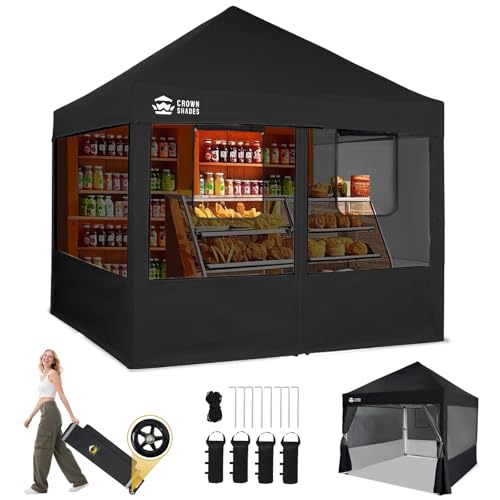
CROWN SHADES 10×10 Pop Up Canopy with Mesh Walls

COBIZI 10×10 Pop Up Canopy with Awning

COBIZI 10×20 Pop Up Canopy with Awning
The Strengths Of Each Pick
The MFSTUDIO 10×10 pop up canopy is built around a one-push center mechanism, so one camper can raise the roof, lock the trusses, and extend the legs without dragging a friend out of the hammock. The frame pairs with a UPF 50+ fabric top (a rating that blocks roughly 98 percent of UV rays) that resists light rain and harsh midday sun, making it a sensible fit for fair-weather family campers and tailgate setups.
Unlike the COBIZI commercial options below, this shelter strips away sidewalls and awnings in favor of simplicity. You trade enclosed coverage for a faster pack-down, which matters on short weekend trips when every minute at the campsite counts.
Strong Points
- One-push center hub lets a single person raise the canopy without help, useful at remote sites.
- UPF 50+ top fabric offers solid UV protection during long afternoons at the picnic table.
- 10×10 footprint fits a standard camp table plus a couple of camp chairs underneath.
- No-pinch height adjusters reduce the chance of a finger injury during teardown.
Worth Noting
- No included sidewalls, so wind-driven rain enters freely from the sides.
- Powder-coated steel frame adds noticeable weight to a vehicle load.
- Storage bag can be tight to repack once the fabric cools and contracts.
Key Specs
Who It Suits Best
Solo travelers, couples, and small families who want a grab-and-go shelter they can pitch without recruiting the whole campground.
A Better Fit Elsewhere
Campers heading into mosquito-heavy lake or river sites should look at the CROWN SHADES 10×10 Pop Up Canopy with Mesh Walls, whose detachable netting handles bugs that the MFSTUDIO leaves wide open.
The COBIZI 10×15 stretches past the MFSTUDIO by adding 50 extra square feet and a full set of sidewalls, which makes it feel more like a temporary room than an open shade structure. The frame uses powder-coated steel tubing with measured wall thicknesses on the legs and crossbars, and the brand rates it for roughly 300 pounds of distributed hanging weight, handy for lanterns, fan mounts, or a hanging organizer.
For weekend base camps with multiple tents clustered nearby, this footprint keeps cook gear, coolers, and seating out of the rain without anyone ducking under a tarp line.
The Good Stuff
- 10×15 footprint covers a full camp kitchen setup, including a table, cooler, and chairs.
- Removable sidewalls block crosswinds and offer privacy when changing after a swim.
- Rated to support around 300 pounds of distributed hanging weight from the frame.
- Steel tubing with a rust-resistant coating holds up through repeated trips.
Trade Offs
- Heavier and bulkier than a basic 10×10, so smaller vehicles feel the load.
- Sidewall zippers commonly need a careful pull rather than a hard yank to avoid catching.
- Two people make setup far less frustrating, since the frame spans wider.
Best Match For
Group campers and small-event hosts running a shared cook area or market-style booth at a busy campground.
Consider Something Else When
If you need an even larger covered footprint for a wedding-style setup or vendor row, the COBIZI 10×20 Pop Up Canopy with Awning offers a noticeably wider shelter.
CROWN SHADES packs an unusual feature set into its 10×10 frame: four detachable mesh walls, including two with mid-zip doors and pass-through windows. The mesh turns the shelter into a screened room at dusk, when mosquitoes and biting flies typically show up just as campers settle in to cook and eat.
Built around an 8-way reinforced frame, this canopy handles light wind better than a basic push-up model. Compared with the open-top MFSTUDIO, the trade is weight and setup time in exchange for a real bug barrier, which most campers will gladly accept on a humid evening.
Real-World Strengths
- Mesh walls create a screened enclosure, useful at lake, river, and woodland sites.
- Pass-through windows keep airflow moving without unzipping the main door.
- 8-way frame bracing improves stability in moderate breezes.
- Detachable walls let you run half-screened, half-open setups on warm afternoons.
Some Limits To Know
- Mesh adds setup time and bag weight relative to a plain canopy top.
- Windows rely on zippers that benefit from gentle handling over the long run.
- Mesh walls offer shade but not full rain protection during heavier storms.
Quick Facts
Who Should Grab It
Family campers and food vendors who regularly deal with mosquitoes, gnats, or no-see-ums and want a screened room instead of an open shelter.
Look Elsewhere When
Backcountry or large-event campers needing maximum coverage should pivot to the COBIZI 10×15 Heavy Duty Pop Up Canopy, which trades mesh for a wider roof and enclosed sidewalls.
The clever bit on this COBIZI is the detachable awning, which adds about 23 square feet of shaded porch to the standard 10×10 canopy footprint. You can angle it over a camp stove or hang it over a kids’ sleeping area, effectively stretching one shelter into two zones without pitching a second structure.
An alloy steel frame anchors the build, and the brand targets UPF 50+ protection on the top fabric. For parents juggling a tent, a kitchen, and a nap zone, this is a useful shape-shifter compared with the simpler MFSTUDIO or CROWN SHADES options above.
Where It Excels
- Detachable awning adds about 23 square feet of extra shaded area on demand.
- Alloy steel frame supports the wider setup without obvious flex in normal winds.
- UPF 50+ top fabric helps on long sunny days with kids in and out of the shade.
- Sidewalls let you close off the main bay for privacy or wind protection.
Less Ideal Details
- Awning poles commonly need re-leveling on soft ground after a night of use.
- The expanded shape catches more wind than a plain 10×10, so staking matters.
- Fabric pieces benefit from a quick dry before bagging to avoid mildew.
Best Suited To
Car campers and small families who want one shelter that pulls double duty as a cook area and a shaded hangout space.
Not Your Match When
Shoppers running a large base camp should consider the COBIZI 10×20 Pop Up Canopy with Awning, which doubles the protected footprint for bigger groups.
Topping out around 232 square feet of total coverage (with the 45-square-foot awning attached), this COBIZI is the largest shelter on the list and the one that starts to behave like an event tent. At roughly 112 pounds, the center support structure makes it heavier than the 10×10 sibling, which is the trade for that wide footprint.
The build carries a waterproof UPF 50+ top, removable sidewalls, and a heavy-duty commercial frame, so it doubles as a vendor booth, a wedding dance floor, or a covered mess hall. Compared with the smaller COBIZI 10×10 with awning above, you gain serious square footage at the cost of a heavier bag and a longer setup.
What Pays Off
- 10×20 footprint fits a full table setup, several chairs, and gear staging areas.
- Detachable 45-square-foot awning extends shaded space for vendor-style layouts.
- Waterproof UPF 50+ top fabric handles sun and unexpected showers in one canopy.
- Removable sidewalls turn the shelter from open-air to enclosed as needed.
Possible Compromises
- Center support frame pushes total weight to roughly 112 pounds, a real load on any trip.
- Two or more people are strongly advisable during setup due to the span.
- Storage bag benefits from a methodical fold rather than a rushed shove.
Spec Overview
Whose Shelf It Belongs On
Large-group base camps, wedding setups, and outdoor market vendors who treat their canopy as a semi-permanent structure rather than quick shade.
Reach For A Different Pick When
Backpackers, couples, or small families should pick the MFSTUDIO 10×10 Pop Up Canopy Tent, which is far easier to carry and pitch on a tight trip.
Picking A Canopy That Actually Works At Camp
Frame And Footprint Come First
The two numbers that matter most are frame strength and covered square footage. A powder-coated steel or alloy steel frame resists rust and flex, while a wider footprint handles a full camp kitchen or a vendor row. Solo travelers usually get by with a 10×10 footprint, but a family running a stove, cooler, and table will feel the squeeze fast.
Fabric, Weather, And UV Protection
Look for canopies with a UPF 50+ top, which blocks about 98 percent of UV rays, along with a waterproof or water-resistant coating for surprise rain. In windy sites, mesh walls or removable sidewalls turn an open shelter into a real enclosed room, which is where the CROWN SHADES model earns its place in this category.
Setup Style And Real-World Handling
One-push center hubs help a single camper pitch the canopy without a second pair of hands, while awning add-ons stretch the shelter into a porch. Whatever the system, give yourself a few minutes at home to practice folding it back into the bag, since repacking in the dark after a long day is rarely fun.
Weight And Storage For The Drive
A 10×10 canopy in a basic steel frame fits most SUVs and trunks without a fight, but the larger 10×20 options weigh over 100 pounds. Measure your cargo area before committing to a big footprint, especially if your vehicle is shared with tents, sleeping pads, and a full kitchen kit.
Key Considerations Across These Picks
Pitfalls Shoppers Hit
A common mistake is choosing a canopy based on square footage alone, ignoring the frame rating. A wide top on a thin frame sags in the first stiff breeze, and the shelter becomes a sail rather than a refuge. Another slip is skipping stake-downs and sandbags, which can matter more than the canopy’s brand.
Where The Extra Money Goes
Higher-tier canopies spend the budget on thicker steel tubing, rust-resistant coatings, and more accurate fabric specs, including verified UPF ratings and waterproof top layers. Detachable awnings and full sidewall kits also add real coverage area, which explains why the COBIZI 10×20 sits at the top of the price range in this category. The upgrade makes sense for anyone hosting events or running a permanent-feeling base camp.
Frequently Asked Questions
What Size Canopy Tent Do Most Campers Need?
A 10×10 canopy fits a small group with a table and chairs, while families or groups running a full kitchen should look at 10×15 or 10×20 footprints for breathing room.
Are Pop-Up Canopy Tents Hard To Set Up Alone?
Most pop-up canopies here use a one-push center hub and no-pinch adjusters, which let a single camper raise the frame without help, though larger 10×20 models are easier with a partner.
Can These Canopy Tents Handle Real Rain?
The canopies in this list use water-resistant or waterproof top fabrics, but open-sided models will let wind-driven rain in from the sides, so sidewalls or a separate tarp help during heavier storms.
Do I Need Sidewalls Or Mesh Walls?
Sidewalls block wind and add privacy, while mesh walls keep mosquitoes out without sacrificing airflow. Campers in bug-heavy areas benefit most from detachable mesh, like the CROWN SHADES option above.
How Do I Store A Canopy Tent Between Trips?
Dry the fabric fully before folding it back into the bag, store the bag in a dry garage or shed, and check steel joints for any surface rust each season to keep the frame ready for the next outing.
Bottom Line
Match the canopy to the trip: the MFSTUDIO 10×10 for solo simplicity, the CROWN SHADES 10×10 for bug-heavy sites, and the COBIZI 10×20 for full base camps and events. A sturdier frame and the right footprint will make your shelter the most-used piece of gear all weekend.