
Nothing ruins a quiet evening at the campsite faster than a cloud of mosquitoes or the steady crawl of ticks through tall grass. You want gear that quietly handles bugs while you focus on the fire, the food, and the company. This roundup mixes trusted spray repellents with hands-off area solutions so you can build a layered defense that fits your trip.
A Fast Comparison Of The Options

OFF! Deep Woods Sportsmen Insect Repellent Aerosol 6 Oz Pack of 4
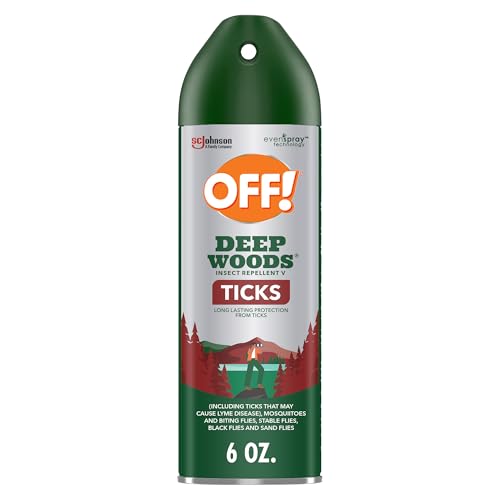
OFF! Deep Woods Tick & Mosquito Repellent Bug Spray 6 oz

Jinyeda Solar Bug Zapper 4500V Mosquito Killer

Jinyeda Solar Bug Zapper with Flame & RGB Lights

Jinyeda Solar Bug Zapper with Water Wave Projector

Virine Mosquito Repeller 2 Pack with 4 Refills
A Breakdown Of The Leading Choices
For deep-woods trips where mosquitoes and biting flies turn serious at dusk, this OFF! Sportsmen formula aims high with 30% DEET, the upper range for consumer skin-applied repellents. The aerosol format makes fast work of covering boots, socks, and pant legs before you hike into tall grass or wet brush. A four-can pack keeps a group supplied across a long weekend without rationing.
Compared with the gentler OFF! Tick formula reviewed next, this one trades broad-spectrum mildness for raw staying power in punishing conditions. It suits campers heading into northern lake country, marshy lowlands, or summer black-fly zones where weaker sprays run out of steam by dinner.
The Practical Payoff
- 30% DEET concentration handles thick mosquito pressure during peak summer evenings.
- Aerosol spray reaches socks, boot tops, and backpack straps quickly without soaking your hands.
- Four-can pack keeps a small group or multi-week trip covered.
- Repels mosquitoes, biting flies, gnats, and sand flies in one step.
Things To Consider
- Strong DEET concentration can irritate sensitive skin and may damage synthetic fabrics like rayon or spandex.
- Aerosol cans are restricted on some airlines and may need ground transport to remote trailheads.
Key Product Details
Who It Suits Best
Backcountry campers and group leaders tackling lake country, marshy terrain, or dense northern woods where mosquito pressure is heavy and a strong, long-lasting skin spray is essential.
Look Elsewhere When
Travelers with sensitive skin or young children should consider the OFF! Deep Woods Tick & Mosquito Repellent Bug Spray 6 oz, which uses a lower 25% DEET concentration for a slightly gentler profile.
When your campsite sits next to tall grass, meadow edges, or wooded game trails, ticks climb up pant legs faster than you notice. This OFF! Tick & Mosquito spray drops DEET to 25%, easing up on skin feel while still targeting the bugs that carry Lyme disease and other tick-borne illnesses. The single 6 oz can fits neatly in a daypack hip belt.
The trade-off versus the Sportsmen version is real: less raw staying power, more comfort on long days. It makes sense for hikers crossing deer-heavy terrain and parents who want a balance between effectiveness and gentleness.
Noteworthy Benefits
- Specifically engineered to repel ticks that may carry Lyme disease.
- 25% DEET offers a middle-ground between strength and skin comfort.
- Compact 6 oz can fits daypack pockets and carry-on luggage.
- Aerosol mist reaches the back of knees, ankles, and waistband easily.
Worth Noting
- Lower DEET percentage means shorter protection windows in extreme mosquito conditions.
- Aerosol propellant may struggle in cold morning starts below 50°F.
Made For
Hunters, anglers, and family campers moving through tall-grass and woodland edges where ticks pose the bigger concern over a short, active day.
Not Your Match When
Campers facing heavy mosquito pressure at sunset should instead grab the OFF! Deep Woods Sportsmen Insect Repellent Aerosol 6 Oz Pack of 4, which packs more DEET for longer evenings outdoors.
Sprays only go so far when you’re hosting dinner for six at the picnic table. The Jinyeda solar zapper trades skin coverage for area coverage, pulling mosquitoes, gnats, and moths out of the air with a 370nm light and finishing them on a 4500V grid. Built-in dusk-to-dawn sensing means it wakes up when the bugs do.
Unlike the Personal sprays from OFF!, this unit hangs out near your campsite rather than going on your skin. For a base-camp setup with a power-source-free zone, the solar panel and manual override add flexibility.
A Favorable Mix
- Auto mode activates at dusk and powers down at dawn, saving battery between trips.
- Protective outer mesh reduces accidental contact with the inner grid for kids nearby.
- Half-acre coverage handles most family-sized campsites comfortably.
- Manual mode allows daytime or indoor use when continuous control is needed.
Trade Offs
- Solar charging depends on direct sun exposure, which shaded forest sites may not offer.
- Zappers only handle flying insects, so ticks and crawling bugs still need a spray like OFF!.
- Emptying the collection tray regularly is part of ownership, especially in peak season.
Feature Snapshot
Right Fit For
Base-campers hosting dinners or evening hangouts at a sun-exposed campsite who want a hands-off area repellent without dealing with sprays every hour.
A Better Fit Elsewhere
Campers at shaded or wooded sites should consider the Jinyeda Solar Bug Zapper with Water Wave Projector, which uses a detachable solar panel to charge from any sunny spot.
Campsite lighting pulls double duty when it sets the mood and clears the air. This Jinyeda model layers a 4200V grid under a flame-effect shell with RGB ambient lighting, so the device reads more like a lantern than a piece of pest gear. The 360° attraction design pulls bugs in from every direction around your seating area.
It steps down from the 4500V Jinyeda unit reviewed above, giving up a small amount of grid punch for stronger atmosphere. Group campers who treat the fire ring like a living room will appreciate the look.
Reasons It Performs
- Flame effect and RGB lighting set a warm campfire tone without real fire risk.
- 360° attraction pulls mosquitoes in from every direction around seating.
- Solar power means no cords snaking across the campsite floor.
- Functions as ambient lighting and bug control in one unit.
Honest Caveats
- 4200V grid is slightly less aggressive than the 4500V sibling model.
- Light show may attract non-biting insects and curious neighbors equally.
- Cleaning the inner chamber around decorative elements takes extra care.
Best Suited To
Group campers, glampers, and tailgaters who want campsite ambiance plus bug control in a single decorative unit that doubles as a conversation piece.
Skip It When
Bug-first shoppers should pick the Jinyeda Solar Bug Zapper 4500V Mosquito Killer, which skips the lighting extras in favor of stronger grid power.
Most solar zappers die young under a forest canopy because the panel sits in shade. This Jinyeda unit solves that with a detachable solar panel and a 9.8 ft extension cord, so you can park the panel in a sunny clearing while the lamp itself hangs under the tarp. The 395nm attractor light and 4500V grid match the strongest model in this roundup.
Where the flame-effect pick above leans decorative, this one leans functional, layering in a water-wave projector for ambiance without the extra RGB complexity. For wooded sites, the detachable panel is the real story.
The Helpful Details
- Detachable solar panel with 9.8 ft extension reaches sun from shaded campsites.
- 4500V grid matches the strongest zapper in this lineup.
- Up to 2,100 sq ft of coverage handles larger group sites and patios.
- Water-wave projector adds gentle ambiance without overpowering the campsite.
Points To Note
- Extension cord adds another piece to keep track of on pack-in trips.
- Wave projector effect is more visible on flat ground or walls than on uneven terrain.
- Cord-based panel placement requires basic setup planning at arrival.
Quick Facts
Who Should Grab It
Wooded or canopy-covered campers who need real solar charging reliability and want a versatile unit that covers large group sites without manual battery swaps.
Swap It Out When
Travelers prioritizing decorative ambiance over coverage should reach for the Jinyeda Solar Bug Zapper with Flame & RGB Lights instead.
Some campers want bug protection without DEET on their skin or a humming zapper nearby. The Virine repeller uses a small fan to diffuse plant-based refills (geraniol, peppermint, and citronella oils), creating a 30 ft mosquito-free zone around the unit. USB-C charging keeps things modern, and the two-pack covers a tent-and-table setup.
The trade-off versus the OFF! sprays is straightforward: gentler ingredients and broader-area performance, but you’ll need to swap refill cartridges over the season. The compact form makes it easy to toss in a daypack or picnic tote.
Positive Points
- Plant-based refills avoid direct skin contact with synthetic chemicals.
- 30 ft protection zone covers a picnic blanket or small tent footprint.
- Up to 3.5 hours per charge, or continuous use when plugged in via USB-C.
- Two-pack lets you run one inside the tent and one at the cooking area.
Practical Considerations
- Adapter is not included, so you’ll need a USB-C wall plug or power bank.
- Refill cartridges are an ongoing purchase once the included four run out.
- Performance varies with wind, which can disperse the diffused oils quickly.
- Coverage is limited compared with electric zappers covering half an acre or more.
At A Glance
Whose Shelf It Belongs On
Sensitive-skin campers, families with young kids, and tent campers who want quiet, scent-driven mosquito control without sprays or electric grids.
Where Another Pick Suits Better
Campers facing aggressive mosquito swarms at dusk will get stronger, more consistent protection from the Jinyeda Solar Bug Zapper with Water Wave Projector.
Picking Bug Protection That Actually Works At Camp
Choosing between sprays, zappers, and diffusers comes down to how your campsite is laid out and how your group moves through it. Most campers benefit from a layered approach: a personal spray for hikes, an area repellent for the dining fly, and a backup solution for sleeping hours.
Match The Formula To The Terrain
DEET concentration matters most where mosquito pressure is heaviest. Open lake country, marshy lowlands, and humid summer evenings push you toward 25 to 30 percent DEET formulas like the OFF! Sportsmen or OFF! Tick sprays. Gentler settings (mowed campgrounds, high-elevation sites, or shoulder-season trips) handle lower concentrations or plant-based diffusers without much sacrifice.
Area Coverage Versus Personal Coverage
Sprays protect your skin and clothing only as long as they stay on you. Zappers like the three Jinyeda models in this roundup protect a defined radius around the device, which is useful for the picnic table or tent pad. Diffusers like the Virine sit between the two, creating a small scent bubble that handles quiet evenings but loses ground in steady wind.
Power Source And Charging Reality
Solar zappers demand honest sun exposure for reliable charging, and shaded forest sites kill that advantage fast. The Jinyeda Water Wave model sidesteps this with a detachable panel and extension cord. USB-C rechargeable units like the Virine need a wall plug or power bank, since the adapter is not included.
Size, Weight, And Pack-In Realities
Aerosol cans are bulkier and have stricter transport rules on airlines. A 6 oz can fits a daypack, but four-can packs make more sense for car camping than backpacking. Zappers and diffusers add bulk but tend to be station-friendly rather than trail-friendly.
Key Considerations Across These Picks
Wrong Turns To Avoid
The biggest slip-up is relying on a single product class. Sprays do nothing for the cook at the stove who forgot to reapply, and zappers don’t help a hiker walking into tall grass at midday. Layer a personal spray with an area device for the strongest setup.
Another common miss is ignoring sun exposure for solar gear. A solar zapper parked under dense canopy charges slowly and may not last the night. Place the panel or the unit where it actually sees afternoon sun, or pick a USB-rechargeable alternative like the Virine.
The Upgrade Payoff
Higher-tier picks in this roundup tend to add flexibility rather than raw power. The OFF! Sportsmen four-pack buys convenience and supply security. The Jinyeda Water Wave zapper buys a detachable panel that solves shaded-site charging. The Virine two-pack buys coverage for two zones at once. Each upgrade pays off when your camping style demands that specific flexibility.
Frequently Asked Questions
Do DEET sprays really work better than natural repellents?
In areas with heavy mosquito or tick pressure, DEET formulas consistently outlast plant-based alternatives and hold up better against sweat and humidity. Plant-based diffusers like the Virine work well in mild conditions but tend to lose ground when bug populations spike.
Are solar bug zappers safe to use around tents?
Most modern zappers use an enclosed outer mesh that keeps fingers and clothing away from the inner grid. Hang or place the unit a few feet from your tent entrance, and avoid draping fabric directly over it. Keep the collection tray emptied regularly during the trip.
Can I bring aerosol bug spray on a plane?
Aerosol insect repellents fall under restricted items for both checked and carry-on luggage on most airlines. For travel, consider a solid-stick or lotion DEET formula instead, or plan to pick up spray at your destination.
How long does a solar bug zapper last on a single charge?
Run time depends on sunlight during the day and how active the auto-dusk sensor is overnight. In full sun, expect a full night of operation. In shaded sites without a detachable panel, runtime drops sharply and you may need a backup plan.
What is the best campsite bug repellent for families with kids?
A combination of a lower-DEET personal spray for older children plus a plant-based diffuser for the tent pad handles most situations. Avoid spraying aerosol repellents directly on small children, and apply to clothing rather than hands or faces whenever possible.