
A wool blanket earns its place in a pack the hard way: it has to keep you warm when the fire dies, dry fast when morning dew hits, and shrug off years of being folded into a trunk. The six options below cover car campers who want heritage craftsmanship, backpackers who count every ounce, and families who need something large enough to share around a picnic table.
The Leading Options At A Glance

Pendleton Yakima Camp Blanket Twin Wool Cotton

Arcturus Military Wool Blanket, Washable

Molithe 100% Wool Blanket 62″ x 86″
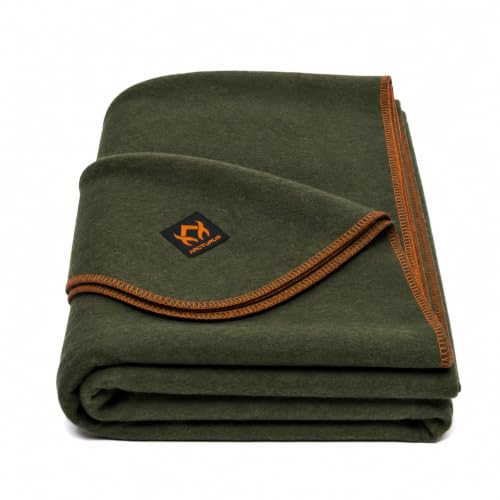
Arcturus Military Wool Blanket Olive Green

Arcturus Military Wool Blanket Large Charcoal

Komorebi Extra Large Picnic Blanket 78″ x 59″
The Picks, Examined More Closely
The Yakima Camp Blanket leans on the kind of heritage weaving that has defined Pendleton for generations. A wool-cotton blend gives it a softer drape than pure-wool rivals, while the twin dimensions (66″ x 84″) cover a single sleeper comfortably or serve as a shared throw across a cabin bunk.
This is the blanket most likely to live in a car trunk for years, pulled out for football games, sudden overnights at a friend’s place, and quiet evenings around a fire pit. Owners commonly describe it as the piece they reach for first when temperatures drop indoors as well, since the dual-fiber construction breathes better than a heavy synthetic.
Bright Spots
- Wool-cotton blend softens the scratchy hand-feel common to cheaper military-style blankets.
- Twin sizing (66″ x 84″) suits both solo sleepers and shared use on a couch or bunk.
- Heritage construction holds up to repeated folding and travel without visible wear.
- Doubles as a decorative indoor throw once the camping season ends.
- Reputation for longevity means many owners pass these blankets down rather than replace them.
Things To Consider
- Premium pricing puts it well above the Arcturus options below.
- Wool-cotton blend still requires careful cleaning; most owners dry-clean or spot-treat.
- Heavier than a synthetic fleece, so backpacking weight matters.
Key Specs
Whose Shelf It Belongs On
Car campers, cabin owners, and anyone who wants a single blanket that crosses between living room and campfire without looking out of place either place.
Look Elsewhere When
Backpackers counting every ounce or shoppers on a tighter budget should consider the Arcturus Military Wool Blanket instead, which delivers much of the warmth at a fraction of the weight on the wallet.
The standard Arcturus Military Wool Blanket is the workhorse option on this list, the one that shows up in car trunks, bug-out bags, and stadium bleachers more often than any other. The weave is dense and heavy, designed for the kind of cold where a thin fleece just stops working.
Unlike the Pendleton Yakima above, this blanket is marketed as washable, which changes the ownership math for families with kids or pets. It also fits neatly into bushcraft kits and emergency car bags, where weight matters less than dependable warmth when conditions turn ugly.
Everyday Wins
- Washable construction removes the dry-clean-only barrier common to wool throws.
- Loom-woven finish stands up to dragging across gravel, truck beds, and pine needles.
- Works equally well as a stadium seat cover, picnic mat, or emergency car blanket.
- Considerably more affordable than heritage-brand alternatives.
Points To Note
- Initial odor is commonly reported and typically requires an airing-out period before first use.
- Heavier bulk makes it less suited to backpacking than car camping.
- Stitching on some units shows wear faster than premium wool-cotton blends.
Made For
Stadium-goers, weekend campers, and preppers who want a dependable wool layer they can actually wash without sending it to a specialist.
A Better Fit Elsewhere
Shoppers who want extra-large coverage to share with a partner should look at the Arcturus Military Wool Blanket in the large 64″ x 88″ charcoal version, which offers more surface area for two.
The Molithe blanket earns its Heavy Duty label through sheer material density. A 600 GSM (grams per square meter, a standard measure of fabric weight and thickness) construction using virgin wool pushes this firmly into expedition territory, where sub-freezing nights demand real thermal mass rather than just loft.
Virgin wool differs from recycled wool in fiber length and resilience, so it tends to pill less and hold its structure through years of hard use. The blanket is also positioned within the military-camping niche, which typically means tighter weaves and heavier hems than a casual throw.
A Few Strong Suits
- 100% virgin wool construction resists pilling and structural breakdown longer than recycled fibers.
- 600 GSM weight delivers serious warmth for cold-weather and shoulder-season camping.
- Thicker yarn and reinforced edge stitching hold up under repeated folding and hauling.
- Generous 62″ x 86″ coverage suits tall sleepers and shared use on cots.
Room For Improvement
- Pure-wool build means careful cleaning: most owners dry-clean or hand-wash.
- Weight makes backpacking impractical; better suited to base-camp setups.
- Stiffer initial feel before the wool relaxes with use.
Feature Snapshot
Who Should Grab It
Cold-weather campers, hunters, and overlanders running heated tents or cabin setups where serious thermal mass matters more than saving ounces.
Swap It Out When
Shoppers who want a softer hand-feel or easier laundering should consider the Arcturus Military Wool Blanket in olive green, which trades some density for a triple-washed, more flexible weave.
The olive-green Arcturus is essentially the same platform as the standard version above, but the triple-wash treatment during production sets it apart. That extra rinse cycle softens the fibers and reduces the loose-wool shedding that often turns first-time wool-blanket owners off.
Olive drab also disappears into campsite surroundings better than bright plaids, so the blanket reads as gear rather than home decor. For folks who want one wool layer to handle stadium seats, overnight guests, and the occasional backyard fire, this version earns the everyday tag.
Everyday Perks
- Triple-washed finish softens the hand-feel compared to standard military wool.
- Olive color hides dirt and campsite grime between washes.
- Hemmed edges with contrast lock stitching resist fraying over time.
- Works across picnics, camping, emergency kits, and stadium bleachers.
Small Caveats
- Still heavier than a synthetic fleece for backpacking trips.
- Color choice limits use as a decorative indoor throw.
Best Suited To
All-purpose outdoor households who want one blanket that moves between campsite, tailgate, and emergency stash without special handling.
Skip It When
Shoppers needing extra coverage for two sleepers should consider the Arcturus Military Wool Blanket in the large 64″ x 88″ charcoal version, which shares the same triple-wash construction with more surface area.
The large charcoal Arcturus takes everything the standard version does well and simply stretches it. At 64″ x 88″ and roughly 4.5 lb, it covers two sleepers on a wide pad or wraps a family of picnic-goers on a chilly evening.
Charcoal also splits the difference between camouflage olive and a more neutral home color, so this blanket blends in at a backyard gathering as easily as at a campsite. Triple-washing keeps the softer hand-feel that made the olive version popular.
Standout Benefits
- Extra-large dimensions cover two sleepers or wrap around a family picnic.
- Charcoal color reads as neutral in both outdoor and indoor settings.
- Heavy 4.5 lb build delivers serious warmth for cold nights.
- Triple-washed fibers stay softer and shed less than untreated wool.
Honest Caveats
- Bulky to pack into smaller car trunks or backpack setups.
- Weight of 4.5 lb is substantial for any distance carried by hand.
Quick Facts
The Right Fit
Families, couples, and anyone who wants enough wool coverage to share a cot or couch without anyone losing the edge to a cold draft.
Consider Something Else When
Solo campers who value pack space over shared coverage should look at the standard Arcturus Military Wool Blanket, which trims the dimensions for easier single-person packing.
The Komorebi is the odd one out in this roundup, and intentionally so. Rather than a traditional wool blanket, it layers a 300 GSM faux-wool top over a cotton underlay and a waterproof PEVA (a polyethylene-based moisture barrier) backing, which keeps damp ground from soaking through during a beach stop or a damp concert lawn.
It folds down with a carry handle, which makes it the most grab-and-go option on this list. The trade-off is clear: you sacrifice real wool’s thermal performance and longevity for ground protection and easier cleaning. That’s a reasonable swap for festival-goers, beach families, and parents who need something that handles spills.
What Pays Off
- Waterproof PEVA backing blocks moisture from wet grass, sand, or damp pavement.
- Faux-wool top still provides insulation without the scratch of real wool.
- Carry handle makes it easy to toss over a shoulder or strap to a stroller.
- Extra-large 78″ x 59″ footprint covers two adults plus gear.
Less Ideal Details
- Faux-wool top doesn’t match the thermal performance or longevity of real wool.
- Bulkier folded profile than a thin wool throw.
Perfect Match For
Beach trips, festivals, picnics, and stadium outings where ground moisture matters more than raw warmth.
Not Your Match When
Campers who actually need the night-time warmth of real wool should step up to the Molithe 100% Wool Blanket, which trades the waterproof backing for genuine thermal mass.
What Matters Most In A Camp Wool Blanket
A camp wool blanket earns its keep through three attributes: warmth-to-weight, durability under rough handling, and how well it sheds water and dirt. Higher wool content generally means better warmth at a given weight, since wool fibers trap insulating air even when slightly damp, a property synthetics struggle to match. Cotton blends breathe better but feel cooler, which is why the Pendleton Yakima above works as both a couch throw and a car-camping layer.
Construction details matter as much as fiber content. Loom-woven (fabric produced on a mechanized loom rather than knitted) blankets with hemmed edges and lock stitching (a reinforced seam pattern that resists unraveling) tend to outlast knits, especially when dragged across gravel truck beds or picnic tables. Triple-washing during production, like the Arcturus options above, softens the fibers and reduces shedding, which matters if the blanket also lives indoors.
Sizing is the easiest attribute to misjudge. A blanket that fully covers a six-foot sleeper from shoulders to toes needs at least 80 inches of length, and sharing with a partner or covering a picnic group requires a wider cut. The Arcturus Large at 64″ x 88″ handles two sleepers; the Komorebi’s 78″ x 59″ orientation works better as a ground mat than a wrap.
Key Considerations Across These Picks
Pitfalls Shoppers Hit
The most common mistake is choosing a blanket based on price alone and ending up with a thin, untreated wool layer that sheds fiber onto everything it touches. Wool quality varies more in this category than the listing photos suggest, so production details like triple-washing and hemmed edges are worth chasing. Another trap is overestimating warmth in damp conditions: wool still performs well when slightly humid, but a cotton-heavy blend can feel clammy once moisture creeps in.
Where The Extra Money Goes
Higher-tier picks like the Pendleton Yakima and Molithe blankets invest in fiber quality, edge finishing, and tighter weave density. Those upgrades translate to longer service life, less shedding, and better drape over a cot or couch. For shoppers who intend to use a wool blanket weekly for years, the premium pricing typically pays back through durability rather than any single night of better sleep.
Frequently Asked Questions
Are wool blankets warmer than fleece for camping?
Wool retains insulating loft even when slightly damp, while fleece loses thermal performance faster once wet. For humid or shoulder-season conditions, a dense wool blanket often outperforms a similarly weighted fleece.
How do you wash a camping wool blanket?
Most wool blankets benefit from cold hand-washing or a gentle machine cycle with a wool-safe detergent, then flat drying. The Arcturus options above are explicitly designed to handle washing more readily than heritage wool-cotton blends.
Do wool blankets work for backpacking?
Wool’s weight-to-warmth ratio is heavier than modern synthetics, so most backpackers prefer down or synthetic insulation for weight savings. Wool shines in car camping, cabin use, and base-camp setups where weight matters less.
How long does a wool camping blanket last?
A well-made wool blanket typically lasts a decade or more with basic care, and heritage brands like Pendleton often outlast that window. Triple-washed military-style blankets sit just behind, trading some longevity for easier care.
What size camping wool blanket do I need?
For solo use, look for at least 80 inches of length to cover a tall sleeper. Couples sharing a cot or wide pad should aim for 64″ x 88″ or larger, like the Arcturus Large covered above.
The Takeaway
The right wool blanket depends on where it will live most. Car campers and cabin owners get the most from heritage picks like the Pendleton Yakima, while weekend adventurers who want something washable and affordable should start with the standard Arcturus. For shared coverage and serious cold-weather use, the larger Arcturus and Molithe options carry the weight, and ground-focused outings call for the waterproof Komorebi instead.