
Plugging a phone into a wall at a backcountry campsite isn’t an option, and that’s the entire reason portable wind energy exists in the first place. These four small turbines are designed for campers, hobbyists, and DIY builders who want to squeeze usable electricity out of moving air. Each one leans into a different niche, so the list covers the full range from teaching demos to off-grid charging experiments.
Your Options, Compared

QINIZX Micro DC Motor Fan Blade Model LED Light Kit
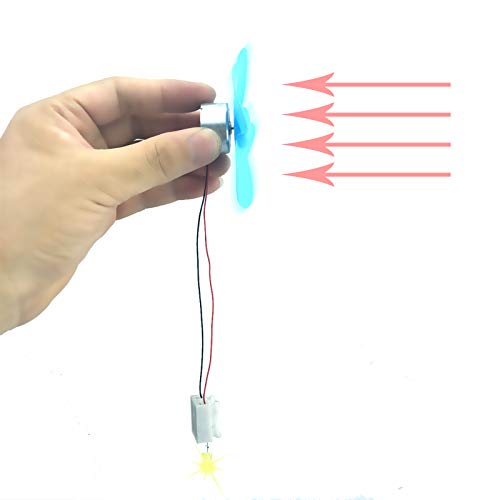
EUDAX DIY DC Micro Motor Wind Turbine Generator Blades Model

Marsrock 58CM Carbon Fiber Turbine Blade (Red)
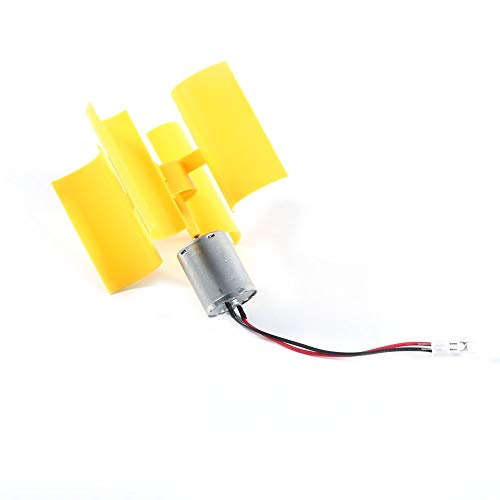
Walfront Vertical Motor Blades DIY Kit (5.5 m/s)
Inside Each Recommended Option
The QINIZX kit stands out as the most visual option in this roundup because it pairs the turbine blades with an LED light load. Power the blades with a fan or hair dryer and the LED lights up, which makes the whole “wind to electricity” concept click in about five seconds.
Where this unit fits is the demo world. It’s small enough to sit on a desk, simple enough to hand to a curious kid, and inexpensive enough that a broken blade won’t ruin the day. Compared with the EUDAX model below, it ships with a visible output device, so beginners can see results without buying extra parts.
Well-Handled Touches
- Built-in LED indicator turns abstract generation into a visible glow
- Lightweight micro motor runs from a household fan, no outdoor setup needed
- Compact footprint fits in a backpack pocket for campground demos
- Low entry cost for first-time tinkerers testing the concept
Things To Consider
- Natural breeze rarely spins the blades fast enough for a noticeable glow
- The kit is more demo than charger, so output won’t top up a phone
- Long-term durability depends on keeping the small motor free of dust
Right Fit For
First-time builders and parents who want a visible, hands-on way to show how spinning blades become electricity indoors or at a calm campsite.
Swap It Out When
Reach for the EUDAX DIY DC Power Micro Motor Wind Turbine Generator Blades Model if you need documented motor specs for a classroom lesson rather than a light-up demo.
The EUDAX motor is the most spec-friendly pick in this list. It ships with published voltage and RPM curves, so a teacher can build a real lesson plan around it instead of guessing how the generator behaves.
For a campsite or science fair, the silver motor body looks tidy on a breadboard, and the 5.5-inch lead gives enough reach to mount it inside a small housing. Unlike the QINIZX LED kit, this is a bare motor, so users choose their own load and learn what each RPM range can actually drive.
Key Advantages
- Documented voltage and RPM data supports real lesson planning
- Compact 24mm motor body drops into tight DIY housings
- Multi-voltage range from 3V up to 12V covers varied experiment setups
Honest Caveats
- No blades, mount, or load ships in the box, so extras are required
- High RPM ratings mean a stray finger on a powered unit isn’t comfortable
Feature Snapshot
Who Should Grab It
STEM educators and hobbyists who want documented motor behavior and don’t mind sourcing blades, mounts, and a load separately.
Not Your Match When
Look at the Marsrock 58CM Carbon Fiber Turbine Blade if you want a finished blade component to bolt onto a generator, since EUDAX ships the motor only.
Where the other picks on this list ship as full kits or motors, Marsrock sells a single blade set built for builders who already have a generator hub. The 58cm length lands in that middle ground where there’s enough sweep to catch real breeze without needing a tower.
The red finish on these blades reads as a small detail, but for a campsite build it’s a real safety plus since moving blades show up clearly against grass and sky. Owners commonly report the reinforced glass-fiber construction handles gusts better than entry-level plastic blades on similar-sized turbines.
A Strong Showing
- Reinforced fiber layup handles gusts on exposed campsites
- Streamlined airfoil profile drops into spinning RPM with light wind
- Vivid red color boosts visibility around people and pets
- 22.83-inch span scales well for hobbyist horizontal-axis builds
Small Caveats
- No motor, hub, or mount ships with the blades
- Mounting hardware must be matched to the hub diameter by the builder
Whose Shelf It Belongs On
DIY builders pairing these blades with a separate generator and tower to upgrade from plastic propellers on a homebrew horizontal turbine.
A Better Fit Elsewhere
Pick the Walfront Vertical Motor Blades DIY Kit if you want an all-in-one vertical-axis setup, since Marsrock only sells the blade component.
The Walfront kit closes the list with a vertical-axis design that doesn’t care which way the wind blows. For camp setups where the breeze shifts every few minutes, that’s a real relief compared with a fixed-blade horizontal turbine.
It’s rated for a 5.5 m/s cut-in, which sits in the calm-breeze range typical of forest clearings and shorelines. The small footprint also means it can sit on a picnic table or camp chair rather than needing a dedicated pole mount, which most beginners find easier to manage.
The Practical Payoff
- 360-degree rotor accepts wind from any direction
- Lower cut-in speed suits sheltered campsite clearings
- Compact form factor fits on a tabletop or camp chair
- Vertical axis keeps blades higher off the ground for safety
Worth Bearing In Mind
- Vertical design produces less output than a similar-sized horizontal setup
- Documentation is light, so setup may take some experimentation
- Best performance comes from pairing it with a steady, low-noise load like an LED
Best Suited To
Campers and educators who set up in breezy but shifting conditions and want a forgiving, omnidirectional learning turbine.
Consider Something Else When
Switch to the Marsrock 58CM Carbon Fiber Turbine Blade if you want a horizontal-axis blade upgrade with a stronger aerodynamic profile for steadier wind.
Choosing the Right Portable Turbine for Your Setup
Start with the goal. A pure teaching demo wants visible output and a low price, while a real off-grid charging experiment needs higher RPM, documented motor curves, or a serious blade profile. Knowing which side of that line you sit on saves a lot of fiddling later.
Next, look at the wind you actually get. A 5.5 m/s cut-in like the Walfront vertical kit works in sheltered clearings, while exposed ridge camps can push a horizontal blade to its limits. If the breeze is unpredictable, an omnidirectional rotor pays for itself the first time the wind shifts.
Finally, check what ships in the box. The QINIZX and Walfront kits arrive ready to demonstrate, the EUDAX motor needs blades and a load, and the Marsrock is blade-only. Building your own mount is part of the fun for some, but others just want to plug a fan in and see a light come on.
Key Considerations Across These Picks
Pitfalls Shoppers Hit
The most common misstep is treating any “turbine” listing as a phone charger. None of the four picks here are built for direct USB output, so plugging a phone in usually means adding a regulator and battery between the blades and the cable. Skipping that step is where most disappointment starts.
Where The Extra Money Goes
Higher-tier components tend to show up in blade material and motor documentation. Carbon-fiber layups handle gusts better than basic plastic, and published voltage curves let you size loads correctly. The upgrade is worth it once you start caring about repeatable output rather than just visible motion.
Frequently Asked Questions
Do camping wind turbines actually charge a phone? These micro turbines can produce low-voltage DC, but charging a phone directly usually requires a regulator and battery between the turbine and the cable.
Can natural wind spin these micro turbines? Light breeze will turn the vertical Walfront rotor and the QINIZX blades, but the EUDAX motor needs faster spin to reach its published RPM ranges.
What does cut-in speed mean? Cut-in speed is the minimum wind speed at which a turbine starts generating usable output. A lower cut-in number means the turbine works in calmer air.
Are these kits safe around kids and pets? Small blades spin slowly enough to be generally safe, but exposed hubs and fast-spinning shafts on the EUDAX motor still warrant adult supervision during demos.
Do I need tools to assemble these turbines? The QINIZX and Walfront kits run without tools, while the EUDAX motor and Marsrock blade typically need basic hardware and a hobby knife or screwdriver to mount.
Final Verdict
Pick the kit that matches your real goal, whether that’s a glowing LED demo, a classroom motor, a blade upgrade, or an omnidirectional campsite experiment. Each of these four turbines solves a different slice of the same problem, so the honest answer is the one that lines up with your wind, your tools, and your patience for tinkering.