
Wet ground and cold drafts can drain a weekend faster than a leaky tent seam. The right waterproof layer keeps body heat in and moisture out, whether you’re posted up at a trailhead or settling in around a campsite. These seven picks cover the main jobs a camper actually needs: warmth, ground cover, emergency readiness, and packable comfort for backpackers.
The Lineup, Simplified

REDCAMP Waterproof Stadium Blanket (Grey/Black)
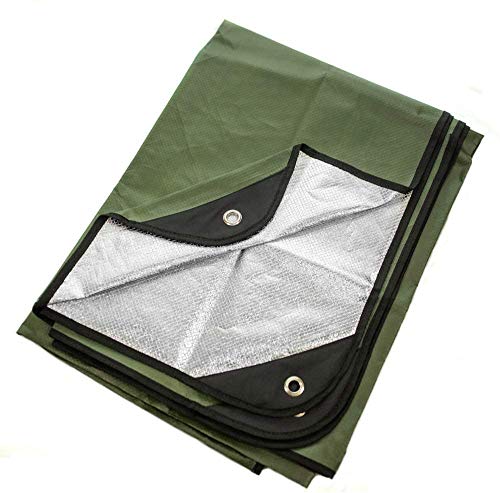
Arcturus Insulated Survival Tarp 60×82 (Olive Green)

Arcturus Insulated Survival Tarp 60×82 (Black)
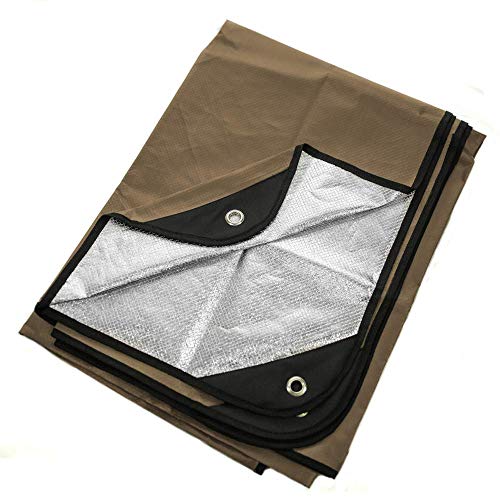
Arcturus Insulated Survival Tarp 60×82 (Coyote Brown)

Little Unicorn Outdoor Family Picnic Blanket 5×7

Smell Sunshine Ultrasonic Picnic Mat (Butterfly Print)

ROSE FEATHER Down Camping Blanket 55×79
Meet The Standout Selections
The REDCAMP Waterproof Stadium Blanket (Grey/Black) sits in a category most people overlook until the first cold snap. The water-resistant backing is built from 210T polyester (a tightly woven synthetic that sheds light rain and morning dew), and the top side adds a layer of soft fleece for genuine warmth against the skin. It’s the kind of blanket you toss in the car trunk and forget about until a soccer game runs into a chilly evening.
For sideline parents, festival crowds, and anyone settling onto damp grass, the dual-sided design solves a specific problem. One face is for warmth, the other handles moisture. Compared to the packable backpacking picks later in this list, it’s heavier and bulkier, but that’s not what it’s built for.
Good Reasons To Consider
- The 210T polyester underside sheds dew and damp ground so the fleece stays dry
- Soft fleece face adds comfort for sitting through long events
- Generous cut fits two adults comfortably on the grass
- Works double duty for picnics, beach trips, and emergency car warmth
- Folds flat and slides into most backpacks or tote bags
Things To Consider
- The fleece top is not water-resistant, so a heavy downpour will soak through
- Bulky compared to backpacking-focused options like the ROSE FEATHER pick
Feature Snapshot
Made For
Sideline families and casual campers who want a warm seat on cold, damp ground without packing ultralight gear.
Look Elsewhere When
Backpackers counting every ounce should reach for the ROSE FEATHER Down Camping Blanket instead.
The Arcturus Insulated Survival Tarp (Olive Green) borrows from emergency mylar blanket design but adds a rugged polypropylene (a tough, water-shedding plastic woven fabric) outer shell. The three-layer build reflects body heat back inward while blocking wind and rain from the outside. At 60 by 82 inches, it covers one person fully or doubles as a lean-to tarp in a pinch.
Reinforced grommets (the metal-ringed holes used for tying cord) at the corners let you guy-line it between trees or stake it over a hammock. Unlike the REDCAMP fleece blanket reviewed above, this isn’t a comfort piece. It’s a survival tool that happens to feel less disposable than the foil sheets most prep kits include.
Points In Its Favor
- Reflects roughly 90% of body heat back toward the user
- Blocks wind and rain with the rugged polypropylene shell
- Reusable for years instead of the single-use foil blankets
- Reinforced corner grommets handle paracord and stakes
- Olive green stays low-key in wooded campsites
Worth Noting
- Not a comfort blanket; the surface feels crinkly against bare skin
- Bulkier than foil blankets when packed
- Olive finish may not suit desert or snow terrain where blending matters less
Quick Facts
Right Fit For
Overlanders, hunters, and emergency preppers building a vehicle kit that needs to handle real weather, not just a tailgate.
Skip It When
You want ground cover for sitting on sand; the Smell Sunshine Ultrasonic Picnic Mat is purpose-built for that.
The Arcturus Insulated Survival Tarp (Black) shares every spec with the olive green version above. Same 60 by 82 inch cut, same three-layer build, same reinforced grommets. The color shift is the whole difference, and for certain users it matters more than any feature spec.
Black absorbs light and keeps a low profile at night, which hunters and tactical campers tend to prefer. It also hides dirt and scuffs after a season of being dragged through brush. Compare it directly to the olive option and the choice comes down to environment and taste, not performance.
Notable Gains
- Black finish stays visually quiet in nighttime setups
- Hides dirt, sap, and abrasion marks from heavy field use
- Identical thermal and weather performance to the olive version
- Tough enough for repeated shelter and ground use
Honest Caveats
- Absorbs more solar heat in direct sun, which can matter in summer desert trips
- No functional edge over the olive version; you’re paying for color
- Reflective surface still feels crinkly as a comfort layer
Built With In Mind
Hunters and campers who want a low-visibility shelter tarp that disappears into a dark treeline.
Consider Something Else When
Desert travel in summer calls for the coyote brown Arcturus tarp, which reflects more sunlight.
The Arcturus Insulated Survival Tarp (Coyote Brown) rounds out the color trio with a tone that splits the difference between stealth and heat management. Coyote brown reflects more sunlight than the black version while staying quieter in mixed terrain than the bright olive option. For arid and brush country, it tends to blend in naturally.
Like its siblings, the build is three layers of reflective mylar (a thin, mirror-like film that bounces radiant heat) inside a polypropylene wrap, with reinforced grommets at every corner. This is the color choice most overlanders and desert campers default to, since it handles sun and shadow without extremes.
The Helpful Details
- Balanced color for desert, brush, and dry forest terrain
- Same 90% body heat retention as the other Arcturus tarps
- Reinforced grommets handle tension from guy lines
- Earth tone reduces glare during daylight setups
Points To Note
- Still feels plasticky against skin; not a comfort blanket
- Coyote tone shows dust more visibly than black
Who Should Grab It
Overlanders and backcountry campers who need one tarp that handles sun, wind, and rain across mixed terrain.
Reach For A Different Pick When
Comfort matters more than survival function; the REDCAMP fleece stadium blanket is built for warmth.
The Little Unicorn Outdoor Family Picnic Blanket (5×7) shifts the conversation from survival to family logistics. The five by seven foot footprint gives a parent room to spread out with two kids, a snack spread, and a few toys without anyone sitting on bare grass. Polyester construction handles water resistance and the kind of cleanup that comes with toddlers and popsicles.
Compared to the Smell Sunshine Ultrasonic mat reviewed below, this one folds down more compactly thanks to the attached zipper pocket that doubles as a stuff sack. It’s not built for backcountry weight counts, but it fits comfortably in a stroller basket or family wagon.
Where It Delivers
- Spacious 5×7 foot cut fits a small family comfortably
- Wipe-clean polyester handles spills, sand, and grass stains
- Built-in zipper pocket stores keys, phones, and snacks
- Folds compactly into the attached pocket for transport
Trade Offs
- Not insulated; cold ground still comes through on chilly days
- Too bulky and heavy for backpackers counting ounces
Best Suited To
Families with young kids heading to the park, beach, or backyard cookouts where space and easy cleanup matter most.
Swap It Out When
You need real thermal insulation; the ROSE FEATHER Down Camping Blanket delivers actual warmth-to-weight performance.
The Smell Sunshine Ultrasonic Picnic Mat (Butterfly Print) uses an ultrasonic-bonded (heat-pressed without stitching, which seals layers together) three-layer construction: a printed fabric top, a foam sponge middle, and a moisture-proof film on the bottom. That last layer is the reason this mat stands out on damp ground or beach sand where water wants to creep upward.
At the large size, four to six people can sit around the mat comfortably, making it a strong option for group beach days. The print leans playful rather than tactical, and the bonded layers tend to resist fraying at the edges better than stitched picnic blankets do.
Noteworthy Benefits
- Three-layer bonded build resists water from wet grass and sand
- Foam middle adds light cushioning on hard ground
- Large footprint fits small groups comfortably
- Ultrasonic bonding reduces edge fraying over time
- Easy to shake out and wipe down after beach use
Minor Gripes
- No insulation value; ground temperature still transfers through
- Bold print may not match every taste
- Larger size takes up more trunk space than the Little Unicorn option
Whose Shelf It Belongs On
Beachgoers and group picnic organizers who want a sand-resistant mat that cleans up in seconds.
A Better Fit Elsewhere
For a smaller family setup, the Little Unicorn Outdoor Family Picnic Blanket folds down more compactly.
The ROSE FEATHER Down Camping Blanket (55×79) leans into the lightest end of the spectrum. Polyester fill mimics down (lofted synthetic fibers that trap warm air much like natural down feathers) in a packable, puffy construction that compresses into a small stuff sack and weighs almost nothing in a pack. At 55 by 79 inches, it covers a hammock sleeper or wraps around shoulders at camp.
The water-resistant outer shell handles light condensation and brief drizzle, though heavy rain will eventually soak through. Compared to the Arcturus tarps above, this blanket trades absolute weather protection for warmth-to-weight efficiency, which is the actual metric backpackers care about.
Standout Benefits
- Compresses small enough for ultralight backpacking kits
- Synthetic down-style fill traps body heat efficiently
- Versatile as a sleep layer, ground cover, or wrap
- Lightweight enough for festivals and travel days
Practical Considerations
- Not fully waterproof in sustained rain; needs a shelter overhead
- Synthetic fill loses loft faster than natural down over years
- Less cushioning on hard ground than foam-based mats
Quick Facts
Who Will Love This
Backpackers, hammock campers, and festival-goers who count ounces and want real warmth in a small package.
Not Your Match When
You need a ground barrier for wet grass; the Smell Sunshine Ultrasonic Picnic Mat handles that better.
What To Weigh Before Choosing Camping Waterproof Blankets
Waterproofing means different things depending on where you camp. A backcountry hiker wants packable weight, while a family at a state park wants a washable surface kids can drag sand across. Match the blanket’s job to the trip, not the other way around.
Material And Construction
Polyester, polypropylene, and synthetic down-style fills each handle moisture differently. Tightly woven 210T polyester sheds light rain and dew but soaks through in a downpour. Polypropylene wraps around reflective layers for true storm blocking. Foam-backed picnic mats resist sand and wet grass but add bulk. Pick the build that matches the worst weather you actually expect, not the worst weather you can imagine.
Size And Packability
The 5×7 family mat fits parents and kids but barely fits in a car trunk. The 55×79 backpacking quilt compresses to a softball but covers one sleeper. Think about how you’ll carry it: trunk, backpack, or tied to external loops. A blanket that’s too big becomes a burden, and a blanket that’s too small leaves cold shoulders exposed.
Use Case And Comfort
Survival tarps like the Arcturus trio prioritize function over feel, which means a crinkly surface against bare skin. Fleece-backed stadium blankets and down-style quilts trade weatherproofing for comfort. Match the blanket to the trip’s purpose: tailgate warmth, beach cleanup, ultralight sleep system, or vehicle emergency kit.
Common Shopping Slip Ups And Upgrade Trade-offs
Pitfalls Shoppers Hit
The most common mistake is treating “waterproof” and “water-resistant” as the same word. Water-resistant surfaces handle dew and brief drizzle; waterproof shells survive sustained rain. Another trap is buying a blanket sized for the trip you want rather than the trip you take. A 5×7 mat sounds spacious until it has to fit in a sedan trunk with two suitcases.
The Case For Spending Up
Higher-tier waterproof blankets tend to use better seam construction, ultrasonic bonding instead of stitching, and reinforced hardware at stress points. For a one-time tailgate use, basic builds make sense. For a season of regular camping or a vehicle emergency kit that needs to work after sitting in a hot trunk for two years, the upgraded materials pay off in longevity and reliable performance. The Arcturus tarps and the ROSE FEATHER quilt sit at the higher end for exactly these reasons.
Frequently Asked Questions
What Is The Difference Between Waterproof And Water-Resistant?
Waterproof means the material blocks water under sustained exposure, while water-resistant only handles light moisture like dew or brief drizzle. The Arcturus tarps and the Smell Sunshine picnic mat lean toward true waterproofing; the REDCAMP fleece blanket and the ROSE FEATHER quilt are water-resistant.
Can I Use A Camping Waterproof Blanket As A Sleeping Bag?
For mild nights, a packable quilt like the ROSE FEATHER Down Camping Blanket works as a sleep layer. For colder temperatures or multi-day trips, a dedicated sleeping bag still provides better thermal retention and hood coverage.
How Do I Clean A Waterproof Blanket?
Most polyester and polypropylene surfaces wipe clean with a damp cloth and mild soap. Avoid machine-drying high-heat materials, since bonded layers can delaminate. For the fleece-backed REDCAMP blanket, spot cleaning extends the life of the water-resistant backing.
Are Waterproof Blankets Safe For The Floor Of A Tent?
Yes, especially the foam-backed picnic mats and the survival tarps, which double as ground barriers. The fleece-backed stadium blanket adds comfort but isn’t built to handle pooled water under a tent floor.
Do I Need A Waterproof Blanket For Summer Camping?
Summer dew and unexpected rain make a water-resistant surface useful even in warm months. For arid summer trips, the comfort and cleanup benefits of a picnic mat often matter more than true waterproofing.
Closing Remarks
The right waterproof blanket comes down to where and how you actually camp. Backpackers need packable warmth, families need washable space, and emergency preppers need storm-rated reliability. Pick the build that matches your trip, and the rest takes care of itself.