
A wet cotton bath towel tucked into a backpack is the fastest way to ruin a good hike. The right camping towel dries you off in seconds, packs down smaller than a water bottle, and barely adds weight to your pack. This roundup covers five solid options across ultralight backpacking, plush basecamp comfort, and a quirky sport-specific choice for court days.
The Main Contenders
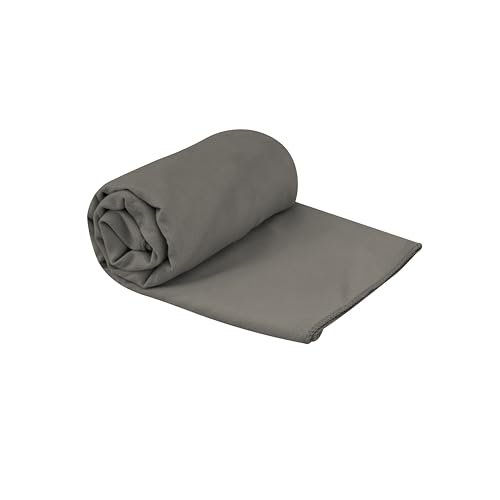
Sea to Summit Drylite Camping Towel

CybGene Embroidered Pickleball Towel

Sea to Summit AirLite Towel, Beluga

Sea to Summit Portable Pocket Towel

Sea to Summit Tek Plush Camping Towel
The Picks, Examined More Closely
The Drylite sits in the middle of Sea to Summit’s lineup and covers most people’s needs without leaning toward either ultralight or plush extremes. Its microfiber (a synthetic fiber woven so densely that tiny loops trap water fast) build has a smooth, suede-like surface that feels nicer against the skin than older looped towels. For campers hopping between trailheads, hostels, and lake swims, that balance tends to land well in real-world use.
Where the Drylite earns its reputation is the simple stuff: it folds down small, hangs from a pack with a built-in press stud, and the surface area of the fibers helps water evaporate quickly. The CybGene pickleball towel later in this list is shorter and sport-specific, while the Drylite stays versatile enough for a shower at the campsite or drying dishes at the cook tent. For most three-season campers, it’s the everyday workhorse.
Useful Strengths
- Quick-drying microfiber construction with a soft suede-like finish against skin
- Compact folded size slips into pack lids, daypack pockets, or duffel side panels
- Built-in press stud loops over a pack strap or clothesline so it stays put in wind
- Pulls double duty for body drying, dish duty, and wiping down wet gear
- Lighter weight than the Tek towel below, which matters on long mileage days
Worth Noting
- Smoother surface can feel slippery on bare feet coming out of a shower tent
- Microfiber tends to pick up body oils and detergent residue, so a regular wash with mild soap helps it stay absorbent over time
Who It Suits Best
Backpackers and weekend campers who want one towel that handles showers, swims, and camp cleanup without adding meaningful pack weight.
Consider Something Else When
The Sea to Summit AirLite Towel is the smarter pick if every gram matters on a thru-hike and you rarely do full-body drying.
The CybGene towel reads less like a backcountry essential and more like a dedicated courtside companion. At 16 by 24 inches, it’s a hand towel sized for wiping down grips, faces, and forearms between points rather than stepping out of a lake. The waffle texture (a grid of recessed squares that lifts grit off surfaces) does real work on dusty courts, dragging chalk, sweat, and loose dirt off paddles and skin.
Where it pulls its weight beyond the court is in the small touches. The aluminum carabiner clips onto a paddle bag, gym duffel, or belt loop, so it’s the rare sport towel that stays attached instead of rolling away mid-rally. For campers mixing a tournament weekend with trail time, it handles the social side of an outdoor trip better than a generic gym rag.
What Pays Off
- Waffle weave clears chalk, dirt, and grass better than flat weaves
- Aluminum carabiner keeps it clipped to a bag so it doesn’t wander off
- Embroidered lettering gives it a gift-ready, personalized feel
- Light enough to throw in a paddle bag without bulk
- Washes cleaner than cotton, which matters with sunscreen and sweat residue
Honest Caveats
- 16-by-24-inch footprint is too small for full-body drying after a swim
- Holds less water than the Sea to Summit options, so it’s a face-and-hands tool, not a bath towel
- Microfiber waffle texture can snag on Velcro if tossed loose in a gear bag
Made For
Pickleball players and gym-goers who want a personalized court towel that handles sweat and chalk without weighing down their bag.
A Better Fit Elsewhere
The Sea to Summit Tek Towel fits better when you also need a plush full-body towel for showers at the campsite.
The AirLite exists for people who count grams the way others count dollars. The Beluga colorway is the Small size, which means it doubles as a neck drape, sweat band, or pot holder before you ever unfold it for body duty. The knitted polyester microfiber construction feels thinner in the hand than the Drylite above, but absorbs more than three times its own weight once wet.
On a long-distance trail, the trade-off is the point. You accept a slimmer hand-feel because the AirLite packs smaller than a deck of cards and barely registers on a bathroom scale. Where the Drylite is balanced, this is purpose-built for thru-hikers (people walking end-to-end on a multi-week trail like the PCT or AT) and ultralight pack advocates who need a drying layer that disappears in a jersey pocket.
Where It Delivers
- Knitted polyester microfiber holds more than three times its weight in water
- Elongated cut pulls double duty as a bandana or neck drape
- Significantly lighter than the Drylite for mileage-counting backpackers
- Small size clips to a pack shoulder strap without bouncing
Soft Spots
- Thinner feel takes getting used to coming from a terrycloth bath towel
- Smaller surface area means slower full-body drying after a swim
- Holds onto body oils, so it benefits from a gentle wash routine between trips
Feature Snapshot
Best Suited To
Thru-hikers and ultralight pack advocates who need the lightest drying layer that still handles a full rinse.
Where A Sibling Pick Shines
The Sea to Summit Tek Towel is the better call when camp comfort and plush feel matter more than shaving ounces.
The Pocket Towel is Sea to Summit’s travel-first entry, and the recycled DRY+ fabric is a quiet differentiator for shoppers who care about sourcing. It tucks into a jacket pocket, rides inside a carry-on, and pulls its weight from hostel showers to gym floors. Compared to the AirLite, it has a slightly plusher hand without giving up the small pack size.
It absorbs three times its weight in water and dries fast thanks to the same high-surface-area fiber logic the brand uses elsewhere. For travelers bouncing between hotels, buses, and trailheads, the build quality and recycled content are the selling points. For pure trail speed, the AirLite still beats it on weight.
Features That Help
- Recycled DRY+ fabric appeals to travelers watching their material footprint
- Silky hand-feel is comfortable against freshly shaved or sunburned skin
- Absorbs three times its weight in water for short showers and gym sessions
- Pocket-sized footprint earns a permanent spot in carry-ons and daypacks
Trade Offs
- Not quite as featherlight as the AirLite for ounce-counting backpackers
- Smooth surface can feel slick underfoot on a wet shower floor
Whose Shelf It Belongs On
Day-trippers, hostel-hoppers, and travelers who want a recycled-fabric towel that lives in a jacket pocket between stops.
Skip It When
The Sea to Summit Drylite Towel fits better when you want one towel that splits time between trail and campsite without leaning too far in either direction.
The Tek Towel is the comfort choice on this list, and Sea to Summit clearly built it for people who refuse to feel like they’re roughing it. The terrycloth-style hand-feel (looped fibers that mimic the soft, fluffy texture of a cotton bath towel) is unusual in microfiber, and most campers notice it the first time they wrap up after a cold swim. It still packs flat, but the fabric has real loft.
For basecamp-heavy trips, car camping, or van life, that trade works. The Tek absorbs quickly, dries fast for a plusher towel, and handles full-body drying after a long day on the water. On a long-distance hike, however, the extra fabric weight will get noticed by mile 15, which is why the AirLite exists as a lighter alternative.
The Helpful Details
- Terrycloth-style microfiber feels closer to a home bath towel than most pack towels
- High-surface-area fibers speed drying despite the plusher construction
- Full-body comfort for basecamp, car camping, and van-life setups
- Works equally well for showers, dish duty, or drying a wet dog at the trailhead
Things To Consider
- Bigger folded size than the Drylite, so it needs a real pack pocket or external attachment
- Thicker fabric takes a beat longer to fully dry in humid coastal air
- Heavier pack weight than the AirLite, which matters on long mileage days
Who Should Grab It
Basecamp and car campers who want the closest thing to a home bath towel without losing quick-dry performance.
Not Your Match When
The Sea to Summit AirLite Towel fits better when every ounce of pack weight counts more than plush comfort.
What To Weigh Before Choosing Camping Towels
Material dictates almost everything else. Microfiber and polyester knit constructions dry faster and pack smaller than cotton, but they vary widely in hand-feel. Suede-like finishes feel smooth against skin and clean up easily; waffle weaves grab grit but feel coarser; terrycloth-style loops feel plush but add bulk and weight. Match the texture to how you’ll use the towel most often.
Size and weight trade off in obvious ways. A small hand towel handles sweat and face drying but won’t wrap you after a swim. A full-body microfiber towel handles showers but takes more pack space. The ultralight picks on this list cut weight by using thinner knits, which feels less luxurious but disappears in a jersey pocket. Thicker options trade grams for comfort at basecamp, where ounces matter less than a soft landing.
Absorbency and drying speed come from fiber surface area. Towels that hold three times their weight in water still need airflow to dry between uses, so hanging them on a pack strap or clothesline matters as much as the spec sheet. For beach days or humid climates, a thinner knit dries faster; for cool, dry camps, a plusher towel can stay damp longer without growing mildew, especially if it gets a proper wash and full air-out between trips.
Things Worth Knowing Before You Commit
Mistakes Worth Dodging
Buying the plushest towel on the market for a long-distance hike is the most common slip-up. The weight adds up by mile 10 and you’ll resent the bulk every time you repack. Match the towel to your trip length and pack discipline, not to how it feels in your hand at home. Another common miss is skipping a wash routine. Microfiber builds up body oils and detergent residue over time, which tanks absorbency. A gentle wash with mild soap every few trips keeps performance steady.
Where The Extra Money Goes
Higher-tier towels like the Tek earn their price through fabric density and finish quality. A denser knit absorbs more, feels softer, and tends to last more seasons before pilling. Cheaper towels save money up front but often lose absorbency faster and fray at the edges within a year of regular use. The upgrade is worth it for campers who run multiple trips per season, less so for occasional users who only need a towel once or twice a year.
Frequently Asked Questions
How do you wash microfiber camping towels? Wash them in warm water with mild detergent and skip fabric softener, which coats the fibers and reduces absorbency over time.
Can camping towels go in the dryer? Low heat is usually fine, but air-drying extends the life of the fibers and prevents the edges from fraying prematurely.
What size camping towel do most people need? A medium body towel around 50 by 100 centimeters handles most showers and swims, while ultralight hikers often go compact to save pack space.
Are camping towels worth it for short trips? Yes, even on one-night trips a quick-dry towel beats hauling a wet cotton towel home in a bag that never quite airs out.
How long do microfiber camping towels typically last? With proper washing and storage, a quality microfiber towel often runs several seasons of regular camping before noticeable wear sets in.
The Takeaway
Match the towel to the trip. Thru-hikers want the AirLite, basecamp comfort seekers want the Tek, and everyday campers land well on the Drylite or the recycled Pocket Towel. The CybGene fills a sport-specific niche that most general towels miss. Choose by how you’ll actually use it, and any of these five will pull more than its weight.