
Car campers chasing real shade, families needing a dry spot to kick off muddy boots, and weekend road-trippers who want a setup that doesn’t eat the entire afternoon all run into the same wall: a sleeping pod alone rarely cuts it at a busy campground. The picks below lean into cabins and tunnel shapes that pair a generous inner tent with a covered outdoor living area, so your group has room to cook, sort gear, and stretch out when the weather turns.
A Quick View Of The Lineup

Naturehike Village Instant Cabin Tent (8 Person)
Naturehike Cape Instant Tunnel Tent (6/8 Person)
Naturehike KOTA Double Layer Family Tent
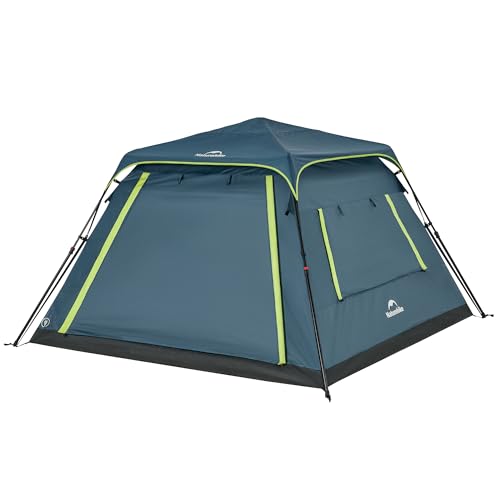
Naturehike Cape Lite Instant Cabin Tent (4-6 Person)
More Details On Our Top Picks
The Village opens with the same pre-attached pole system Naturehike uses across its cabin line, which is what most people actually care about after a long drive: you unfold, lock the arms, and the shell rises in roughly a minute. The Ti Black Technology fabric, a 150D polyester weave, carries a stated UPF 12500+ rating and a PU 2000mm+ waterproof coating, so the full-coverage rainfly is doing real work during summer downpours and bright, high-elevation afternoons.
Because the cabin profile is near-vertical, headroom feels generous for changing clothes and sitting upright at a card table, and the covered porch area out front doubles as a gear locker when you don’t want muddy boots tracking into the sleeping space. For car campers who plan to stay put for two or three nights at a developed site, this is the most balanced shape in the lineup.
A Favorable Mix
- Pre-attached pole structure cuts setup close to a minute, helpful for late arrivals at packed campgrounds.
- Full rainfly paired with UPF 12500+ Ti Black fabric gives daytime shade and serious rain protection in one shell.
- Near-vertical cabin walls create standing room that tunnel-style tents in this category often lack.
- Porch area keeps wet gear, coolers, and dog beds outside the sleeping pod.
Honest Caveats
- The footprint runs wide, so you’ll want a flat, generous pad rather than a tight tent pad at a busy site.
- Storage bag size lands on the bulky side, which can complicate trips where cargo space is already spoken for.
Who It Suits Best
Car campers and small families who camp at established sites with room to spread out and want a fast, freestanding cabin that doesn’t demand a fair-weather forecast.
Where Another Pick Suits Better
Four-season travelers chasing modular versatility may prefer the Naturehike KOTA Double Layer Family Tent, which separates into a mesh inner and a standalone shelter for warmer trips.
The Cape takes the same instant-pitch idea from the Village and stretches it lengthwise into a tunnel, which trades a bit of the cabin’s width for serious standing height and a layout that splits naturally into sleep zones, gear zones, and a front vestibule that handles the messiest part of camp. The 190T polyester shell carries a PU3000mm waterproof rating, a step up from the Village’s PU 2000mm+, so the rainfly is doing more in heavier weather.
You do need two people to unfold it cleanly because the longer span flexes as the poles lock, but for groups, that trade is usually worth it. Unlike the Village’s compact cabin, the tunnel shape lets you walk from one end to the other without ducking, and the front awning area becomes a sheltered cooking or changing spot when rain is coming sideways.
Positive Takeaways
- Higher PU3000mm waterproof rating on the rainfly handles sustained rain better than thinner-coated tents in this tier.
- Tunnel profile delivers genuine standing headroom from end to end, useful when kids are getting dressed or adults are sorting sleeping bags.
- Long layout makes it easy to assign sleep pods and gear space without everyone tripping over each other.
Points To Keep In Mind
- Tunnel tents catch crosswinds harder than the Village’s cabin shape, so staking and guy lines matter more in exposed sites.
- Two-person setup is the realistic expectation, even with the pre-attached poles.
The Right Fit
Groups of four to eight who want walk-around headroom, a covered porch, and a beefier rain rating for shoulder-season trips at exposed sites.
Swap It Out When
Solo travelers or couples working with limited cargo room will find the Naturehike Cape Lite Instant Cabin Tent easier to pitch, pack, and manage on shorter weekends.
The KOTA earns its place by being three shelters in one: a double-layer tent, a freestanding mesh inner that handles warm nights and stargazing on its own, and an outer rainfly that stands alone as a canopy or rain shelter when you only need shade. The shell uses 75D 210T polyester with a PU 3000mm+ waterproof coating, which is the sturdiest fabric spec in this lineup.
For base-campers who drive to the same spot every summer and want one shelter that flexes across seasons, that modularity matters more than a one-minute pitch. The vestibule and porch extend covered living space well beyond the sleeping footprint, which is exactly the problem most cabin tents in this category leave unsolved.
What Pays Off
- Three-in-one design separates the mesh inner for summer nights and uses the rainfly alone as a sun or rain canopy.
- 75D 210T polyester shell with PU 3000mm+ coating is the heaviest fabric spec of the group, suited to rougher weather.
- Vestibule and porch add real covered square footage for cooking, drying wet clothes, or sheltering pets.
- Stargazing-friendly mesh inner is a rare touch in instant cabin tents.
Things To Consider
- Modular setup takes longer than the Village or Cape, so the “instant” framing fits less cleanly here.
- Packed weight and bulk trend higher than the cabin picks, a real factor for smaller vehicles.
Key Specs
Best Suited To
Base-campers and four-season travelers who camp often enough to justify one shelter that flexes between summer mesh nights and shoulder-season rain.
Consider Something Else When
Late-arrival campers who need the fastest possible pitch will get more value from the Naturehike Village Instant Cabin Tent’s pre-attached pole system.
The Cape Lite is the smallest footprint in this shortlist, sized around 101.5 by 101.5 inches with a stated 62.2-inch peak, which is enough headroom for sitting upright but not for full standing. It uses the same instant-pitch pre-attached pole logic as the Village, just in a tighter cabin shape that fits a queen mattress with room to spare.
For couples, small families, or two friends on a quick weekend, that footprint is a real advantage at crowded campgrounds where every square foot matters. Compared with the Cape tunnel’s length, the Lite asks for less staking space and packs down smaller, which is why a lot of first-time car campers gravitate toward it.
Where It Excels
- Compact 101.5 x 101.5-inch cabin fits tight sites where the Village or Cape tunnel wouldn’t spread out.
- Pre-attached pole structure keeps setup close to a minute, even for first-time users.
- 62.2-inch peak offers comfortable sitting room without demanding a long footprint.
Worth Noting
- Smaller sleeping area limits gear storage inside, so vestibule space matters more than the cabin’s footprint suggests.
- Lighter build than the KOTA’s double-layer shell, so high-wind exposure can be a real factor at open sites.
Made For
Couples, small families, and weekend campers who want the simplest possible setup in a footprint that works at tighter sites.
A Better Fit Elsewhere
Groups needing standing headroom and split zones will get more mileage from the Naturehike Cape Instant Tunnel Tent, which trades compactness for walk-around space.
Choosing The Right Camp Shelter For Your Crew
Size, Capacity, And The Honest Math
A 4-person cabin sleeps two adults comfortably with gear, three if everyone packs light, and four if the kids are small or you’re friendly. Rated capacity is best treated as a sleeping-bag count, not a livable footprint. Before choosing, add the gear each camper brings into the tent: backpacks, cots, sleeping pads, and a cooler if it lives inside during storms. Cabin tents with porch or vestibule space solve a lot of that overflow, which is why the picks above lean toward shapes with covered outdoor living areas.
Setup Speed Vs Modular Versatility
Instant tents with pre-attached poles trade modularity for speed, typically pitching in roughly a minute. Double-layer modular designs take longer but flex across seasons by separating the inner mesh from the rainfly. Pick speed for weekend trips with late arrivals and minimal weather worries. Pick modular for base camping, shoulder-season trips, and anyone who wants to stargaze on a calm summer night.
Fabric, Coating, And Weather Reality
Waterproof coatings are rated in millimeters: PU 2000mm handles summer rain, PU 3000mm+ is the safer call for sustained downpours. Higher-denier fabrics (75D, 150D) resist abrasion better at the cost of weight. Sun protection matters too: fabrics with stated UPF ratings cut daytime glare and heat inside the tent, useful at high-elevation or low-shade sites where afternoons get brutal.
Footprint And Site Reality
Cabin shapes need flat, open ground. Tunnel shapes need clear space along their length and handle crosswinds differently than cabins. Before buying, check your usual sites: a tight tent pad at a developed campground favors compact cabins, while open field camping favors tunnel layouts with room to stretch out.
Key Considerations Across These Picks
Common Shopping Slip Ups
The biggest mistake is buying by headcount alone and ignoring gear space. A 4-person tent that fits four sleeping bags often leaves no room for packs, boots, or a dog’s bed. The second slip-up is undervaluing rainfly coverage. A partial fly leaves seams exposed, and partial coverage rarely holds up in real storms. Look for a full-coverage fly with a stated waterproof rating that matches your climate, not just a generic “waterproof” claim.
What The Higher Tier Buys
Moving up in this category typically buys stronger fabric, higher waterproof ratings, and modular construction. A heavier 75D shell with PU 3000mm+ coating costs more but lasts longer and handles rougher weather. Modular double-layer designs add setup complexity but let you use just the mesh inner on summer nights or just the rainfly as a sun canopy. The upgrade pays off when you camp more than two or three weekends a year, in mixed weather, or at sites with limited shelter options.
Frequently Asked Questions
Do Camping Tents With Awnings Need Extra Staking?
Yes. Awnings and porch areas act like sails in wind, so extra stakes and guy lines are essential for stability. Most manufacturers include the hardware, but it pays to add a couple of spare stakes for exposed sites where stakes can shift or loosen overnight.
How Fast Can An Instant Cabin Tent Be Packed Down?
Instant cabins with pre-attached poles typically break down in five to ten minutes once you learn the folding sequence. The first time runs longer because you learn how the fabric collapses flat. Practicing the fold at home before a trip removes most of the frustration.
Can These Tents Handle Real Rain?
The PU 2000mm+ and PU 3000mm+ coatings listed across these picks handle summer rain and most shoulder-season storms without issue. Seam sealing at home adds a margin of safety if you camp in heavy or prolonged rain, and applying manufacturer-recommended seam sealer before first use is a smart move.
Are Cabin Or Tunnel Shapes Better For Families?
Cabin shapes give better standing headroom and a more open feel, which suits families with kids moving around. Tunnel shapes give longer layouts with natural zone separation and usually a higher waterproof rating. Both work; the choice depends on whether you value headroom or layout more.
How Important Is UPF Rating On Tent Fabric?
A stated UPF rating matters most at sunny, high-elevation, or low-shade sites where afternoon heat inside a dark shelter becomes uncomfortable. Lower-rated fabrics still block sun, but a higher UPF rating measurably reduces heat buildup and fabric fade over years of use.
Bottom Line
Pick the Village for a balanced, fast cabin that handles most car-camping trips well. Choose the Cape tunnel when standing headroom and a higher rain rating matter more than footprint. Go with the KOTA for modular versatility across seasons. Grab the Cape Lite when small footprint and quick setup matter most.