
Family camping trips live or die by the tent. A cramped, leaky shelter ruins sleep and turns kids against the outdoors fast, while the right one becomes a weekend home base for years. You need space to stand, weather protection you can trust, and setup that doesn’t eat your whole afternoon. This roundup covers four cabin-style shelters built for car camping with kids, partners, and gear, all from the same Naturehike family and each tuned to a different kind of family outing.
The Main Contenders

Naturehike Village Instant Tent 4-8 Person Camping Tent
Naturehike Cape 4/6/8 Person Camping Tent
Naturehike KOTA 4/6/8 Person Camping Tent
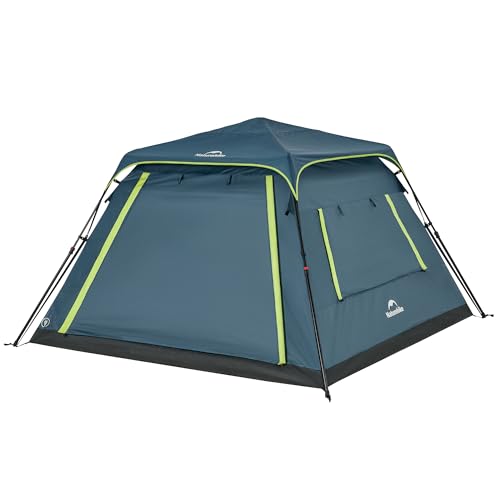
Naturehike Cape Lite 4-6 Person Camping Tent
More Details On Our Top Picks
When the whole crew piles out of the minivan at a state park, you don’t want to spend an hour threading poles. The Village Instant Tent answers that pain point with pre-attached poles and a pop-up cabin frame that practically assembles itself. The Ti Black fabric (a coated 150D polyester built to filter strong UV, rated at UPF 12500+ plus a 2000mm+ waterproof coating) handles a full afternoon of sun or a steady rain without fuss.
Inside, the cabin-style walls give adults actual standing headroom, and the full-coverage rainfly means you can leave rain gear tossed near the door without it getting soaked. Compared to the leaner Cape tents later on this list, the Village reads more like a small cabin than a sleeping pod, which suits families who treat the campsite as a basecamp.
Real-World Strengths
- Pre-attached frame cuts setup to roughly 60 seconds, a real lifesaver when you’re juggling kids and gear
- 150D Ti Black fabric blocks strong UV while still letting the tent breathe in summer heat
- Full rainfly coverage means entry vestibules and interior stay drier through overnight storms
- Cabin-style near-vertical walls let parents stand up to change clothes or wrangle toddlers
- Available in 4-person and 8-person layouts so you can right-size without overspending
Things To Consider
- Larger footprint demands a roomy, flat campsite pad; tight platforms get awkward
- Instant frames are heavier and bulkier than traditional pole tents in the carry bag
Who It Suits Best
Car-camping families of 4 to 6 who want standing headroom, quick setup, and a tent that holds up through summer storms.
Where Another Pick Suits Better
Shoulder-season campers who camp in cold or wet weather benefit more from the Naturehike KOTA’s double-layer design.
The Cape leans hard into the “instant” promise. The tunnel-style frame unfolds in roughly a minute, which is honestly the selling point for anyone who has watched a first-time camper wrestle a dome tent at sunset. 190T polyester with a PU3000mm waterproof coating shrugs off steady rain, and the tall cabin silhouette means even a six-footer can walk around upright.
Where the Village Instant Tent feels more like a basecamp cabin, the Cape reads as a streamlined shelter for shorter trips. You sacrifice the Ti Black sun-blocking fabric, but gain a lighter pack-down size that fits a sedan trunk easier. It’s the kind of tent you toss in the back with the cooler and forget about until you need it.
Positive Points
- 60-second setup removes the learning curve for new campers
- PU3000mm waterproof rating handles heavier rain than many budget family tents
- 190T polyester keeps the packed weight manageable for the size
- Tall ceiling height makes the interior feel less claustrophobic for adults
Worth Noting
- Tunnel shape catches crosswinds from the side, so staking matters in open fields
- 190T fabric is thinner than the Village’s 150D, so watch for snags on rough ground
- Limited vestibule space means wet boots and packs crowd the door area
Key Specs
Right Fit For
New family campers and anyone who values quick pitch-and-go over premium fabric weight.
Consider Something Else When
Families camping at high altitude in spring or fall storms should look at the Naturehike KOTA for its double-layer protection.
The KOTA is the burliest option in this lineup, and it shows in the spec sheet. The double-layer design uses a 75D 210T polyester rainfly rated at 3000mm+ waterproofing, paired with a removable mesh inner tent. That means you can pitch just the rainfly as a sun shelter in summer, then reattach the inner for cool nights, or use the mesh alone under the stars.
The vestibule and porch area give you covered outdoor space to stash muddy boots, a camp chair, or a playpen for a toddler, which the single-layer Cape Lite doesn’t offer. Where the Village Instant Tent leans toward summer car camping, the KOTA stretches into shoulder seasons and unpredictable mountain weather. The trade-off is setup complexity: more layers means more steps.
Good Reasons To Consider
- Double-layer construction adds a real thermal buffer in cool or cold conditions
- Vestibule and porch create dry outdoor storage and a shaded lounging area
- 75D 210T fabric resists abrasion from rocky or brushy sites better than thinner tents
- Inner mesh tent detaches for stargazing on clear summer nights
- Rainfly alone works as a sun canopy or group cooking shelter
Trade Offs
- Longer setup than single-layer instant tents, plan on 10 to 15 minutes
- Heavier packed weight makes it a car-camping-only shelter, not a backpacking choice
Built With In Mind
Families who camp across more than one season, especially in mountain or coastal weather, and want genuine four-season flexibility.
Look Elsewhere When
You mostly camp in dry summer weekends at established campgrounds, where the Naturehike Cape Lite handles the job at a lighter carry weight.
The Cape Lite trims the Cape formula down to its essentials: instant pop-up frame, cabin shape, and enough room for a queen mattress plus a couple of kids. Setup lands in the same 60-second range, and the square footprint (roughly 101.5 by 101.5 inches) makes interior layout predictable. You can stand up inside thanks to a 62.2-inch peak height, which matters more than people expect at 6 a.m. with a coffee mug.
It sits at the lighter end of this list, so storage in a small SUV is painless, but it doesn’t bring the UV-blocking fabric of the Village or the double-layer protection of the KOTA. For weekend trips at a flat, sheltered campground, that’s a fair trade. For unpredictable weather, you’ll feel the limits.
What It Does Well
- Compact square footprint fits tighter campsites and small trunks
- Pop-up setup keeps first-time campers out of instruction-book frustration
- Queen-mattress-friendly floor plan suits parents with young kids
- 62-inch peak height gives enough headroom to dress standing up
Points To Note
- Single-layer design offers less warmth and condensation control than the KOTA
- Smaller interior gets cramped fast with a family of five plus gear
Whose Campsite It Belongs On
Couples or small families of three to four looking for a fast-pitch cabin tent for fair-weather weekends.
Swap It Out When
Your group runs larger than four, in which case the Naturehike Village Instant Tent in 8-person sizing gives you proper breathing room.
What Matters Most When Choosing Camping Tents For Family
Capacity ratings lie a little. A “4-person” tent fits four sleeping bags shoulder-to-shoulder with no space for luggage. For real comfort, size up: a family of four usually needs a 6-person footprint to fit sleeping pads, a pack-n-play, and a dog crate. The Village and KOTA both offer 8-person layouts that solve this problem.
Setup speed shapes the whole weekend. Instant or pop-up frames like those on the Village, Cape, and Cape Lite collapse setup to under two minutes, which matters when you arrive late or the kids are melting down. The KOTA’s double-layer design asks for more patience in exchange for weather versatility.
Weather rating matters more than fabric weight alone. Look at the millimeter waterproof rating (the height of a water column the fabric resists before leaking; higher is better). The Cape and KOTA both hit PU3000mm or higher, which handles prolonged rain. The Village trades a lower rating for UV-blocking fabric suited to sunny climates.
Height and shape change livability. Cabin-style near-vertical walls, found across all four picks, let parents stand up. Dome tents in this size class usually can’t. If your family uses the tent as a daytime hangout, that difference is huge.
Key Considerations Across These Picks
Mistakes Worth Dodging
Buying by stated capacity alone leaves families cramped. Plan on one person of rated capacity staying empty for comfort, and double that if you bring gear inside.
Ignoring site size ruins the easy-setup advantage. All four of these tents need a flat, cleared pad. Pull into the site first, eyeball the slope, and pick your spot before you pop the frame.
Assuming waterproof rating equals stormproof. PU3000mm fabric keeps rain out, but wind-driven rain can still find seams and zippers. A simple seam-seal treatment before your first trip is cheap insurance.
What The Higher Tier Buys
Moving from the Cape Lite to the Village or KOTA buys real material upgrades. The Village’s 150D Ti Black fabric is denser and UV-resistant, while the KOTA adds an entire second layer that buffers temperature swings and condensation. You also gain vestibule and porch space on the KOTA, which becomes dry outdoor living area when weather closes in. For weekend summer camping, the Cape Lite does the job. For shoulder seasons, big groups, or unpredictable climates, the upgrade pays off in actual sleep quality.
Frequently Asked Questions
How big should a family camping tent be?
A good rule of thumb is to size up one capacity level beyond your group size. A family of four usually does well in a 6-person footprint, which leaves room for sleeping pads, luggage, and a play area.
Are instant tents actually easy to set up?
The pre-attached frame design on the Village, Cape, and Cape Lite genuinely does fold out in roughly 60 seconds, though staking and rainfly tensioning still take a few minutes after.
What does waterproof rating mean?
The millimeter number (like PU3000mm) measures the height of a water column the fabric resists before leaking. PU2000mm handles moderate rain, while PU3000mm or higher stands up to prolonged storms.
Can one tent work year-round?
Only well-ventilated double-layer designs like the KOTA stretch into cooler months reliably. Single-layer instant tents run warmer and more humid in summer but struggle with condensation in cold weather.
How do you store a family tent between trips?
Always dry the tent fully before folding, or you invite mildew. Store loosely in a breathable sack rather than the tight carry bag, and you extend the fabric life noticeably.
Bottom Line
The right family tent depends on how and where you camp most. The Naturehike Village Instant Tent delivers the best all-around cabin experience for sunny weekends, the Cape makes first-trips painless, the KOTA stretches into real four-season use, and the Cape Lite keeps small families nimble. Match the shelter to your climate and group size, and the rest of the weekend takes care of itself.