
Car-camping with the family is less about rugged adventure and more about keeping everyone comfortable, dry, and out of each other’s hair after a long day on the trail. A tent that pitches quickly, shrugs off rain, and offers enough standing room to change clothes feels like a small luxury in the woods. The four picks below cover a range of sizes, layouts, and seasonal use cases, so you can match shelter to your crew rather than forcing your crew to match the shelter.
The Picks In Brief

Naturehike Village Instant Cabin Tent
Naturehike Cape 8-Person Tunnel Tent
Naturehike KOTA Double-Layer Family Tent
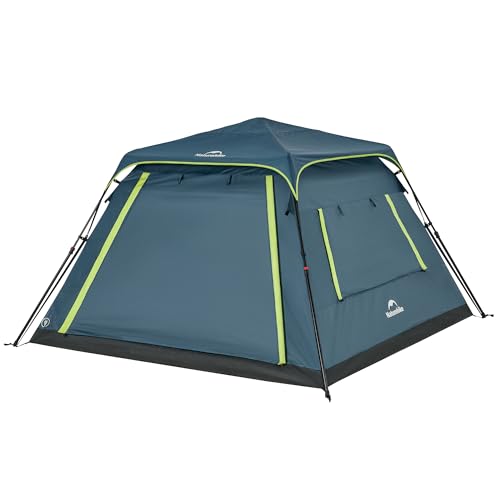
Naturehike Cape Lite Instant Cabin
Taking A Closer Look At The Options
The Naturehike Village leans hard into the cabin-tent format, which means near-vertical walls and a footprint closer to a small room than a wedge. Pre-attached poles and an automatic frame claim a 60-second pitch, so the kids can unload the cooler while you wrestle the tent into shape. The 150D Ti Black Technology fabric carries a UPF 12500+ rating (a measure of how much UV the fabric blocks) and a PU 2000mm+ waterproof coating (where “mm” denotes the hydrostatic head, or how tall a column of water the fabric can withstand before leaking), which sounds reassuring for sunny afternoons and surprise showers alike.
For families new to car camping, this is the lowest-friction entry on the list. The 4-person version suits two adults and a child or a dog; the 8-person gives breathing room for three kids plus gear. Compared to the Cape tunnel layout you’ll meet in a moment, the Village trades elongated floor space for a square cabin that furniture-minds more easily.
The Upside
- Pre-attached, automatic frame removes the usual tent-pitching headache, which matters with impatient little helpers in tow.
- Cabin-style walls let adults stand up to dress, a real perk over sloped dome designs.
- 150D Ti Black fabric (150-denier titanium-treated weave) with UPF 12500+ blocks intense midday sun, useful at open campsites with thin tree cover.
- PU 2000mm+ coating handles steady rain without leaking at seams in most conditions.
Things To Consider
- Cabin tents catch wind more than low-profile dome or tunnel shapes, so pick a sheltered site when possible.
- The full-coverage rainfly adds bulk to the packed size; storage in smaller car trunks can feel tight.
Feature Snapshot
Who It Suits Best
First-time family campers who want a forgiving cabin layout, quick pitch, and reliable rain protection for weekend car-camping trips.
Consider Something Else When
Heads-up: the Naturehike KOTA Double-Layer Family Tent is a smarter match for families camping through shoulder seasons or cold nights, thanks to its modular inner-and-fly system.
The Cape sits in the tunnel-tent family, a low, elongated shape stretched over multiple flexing poles. Available in 4, 6, and 8-person versions, it stretches out across a campsite rather than stacking up vertically. The same pre-attached, 60-second pitch system carries over from the Village, so families trading up in size don’t have to learn a new tent from scratch.
Where the Village is a square cabin, the Cape is more of a long hall. That shape suits families with lots of gear, cots, or a dog crate, since you can spread out lengthwise. The tall peak gives standing room along a center strip, though the sloped sides keep the corners cozy.
Practical Advantages
- Tunnel shape lays gear out side by side, which works well for cots, coolers, and duffel-heavy trips.
- Multiple flexing poles create a notably tall peak for an instant tent in this class.
- Pre-attached frame keeps setup around 60 seconds, matching the Village’s low-friction approach.
- Range of 4, 6, and 8-person sizes makes scaling up or down simple.
Honest Caveats
- Tunnel tents need taut guy lines (the external cords that anchor the tent) to stay rigid; windy sites make pitching more involved than a cabin tent.
- Corner headroom is limited by the sloped walls, so the tallest family member will crouch at the ends.
Made For
Larger families with substantial gear who camp at roomy sites and want a long floor plan over a tall ceiling.
Reach For A Different Pick When
Small families on shorter trips will find the Naturehike Cape Lite Instant Cabin easier to manage, with a tighter footprint and quicker breakdown.
The KOTA is the most modular tent in this roundup, built around two separable layers: an inner mesh tent and an outer rainfly. Used together, they form a four-season shelter; used apart, the mesh inner becomes a summer stargazing bug room, and the fly alone becomes a large canopy or rain shelter. The 75D 210T polyester (a 75-denier, 210-thread polyester weave) with a waterproof 3000mm+ rating handles heavier rain than the other picks.
For families who camp across spring, summer, fall, and even mild winter weekends, that flexibility earns its keep. Vestibules and a porch extend covered space outside the sleeping area, which is genuinely useful for muddy boots and wet dog towels. Compared to the Cape’s single-layer instant design, the KOTA asks for more pitching patience in exchange for weather range.
Key Advantages
- Double-layer construction lets the inner mesh work alone in summer and the fly work alone as a canopy, adapting to trip type.
- 3000mm+ waterproof rating outpaces the other tents here, a meaningful edge in prolonged rain.
- Vestibules and a porch add covered, outside-the-bedroom space for boots and cooking gear.
- Tall, large-frame design gives standing room across a wide floor.
Worth Noting
- Two-layer design takes longer to pitch than the Cape or Village, so first-time setup at dusk can feel slow.
- Larger packed size compared with single-layer cabin tents, which matters for smaller vehicles.
Feature Snapshot
Best Suited To
Year-round family campers and shoulder-season travelers who want a tent that adapts between summer mesh and full rainfly setups.
A Better Fit Elsewhere
For pure summer weekend trips, the Naturehike Village Instant Cabin Tent pitches faster and stores more compactly, with no real need for four-season layering.
The Cape Lite trims the Cape design down to its essentials. The floor measures roughly 101.5 by 101.5 inches, enough for a queen mattress and a little standing room, with a 62.2-inch peak height that lets most adults kneel and dress without ducking. The same pre-attached, automatic frame carries the 60-second pitch claim forward.
This is the right shelter for a couple with one child or a small family of three on two- or three-night trips. Compare it to the Village: the Cape Lite is more compact and lighter to haul from the car, though the Village offers a larger cabin volume and more UV protection for sunny, exposed sites.
Advantages To Know
- Queen-mattress floor plan simplifies sleeping arrangements and feels generous for a 4-6 person label.
- 62.2-inch peak height gives usable kneeling room, a real upgrade over low-profile dome tents.
- Pre-attached frame matches the one-minute pitch convenience of the larger Naturehike tents.
- Smaller footprint suits tight campsites and modest car trunks.
Points To Keep In Mind
- Square cabin catches crosswinds; pick a sheltered pitch on exposed sites.
- 4-6 person capacity fills up quickly once you add cots, gear, and a dog.
Whose Shelf It Belongs On
Small families on short trips who want an easy-pitch cabin with enough room for a queen bed and a couple of packs.
Swap It Out When
For longer trips with three or more kids, the Naturehike Cape 8-Person Tunnel Tent stretches out lengthwise and gives the extra square footage a growing family usually needs.
What To Weigh Before Choosing Camping Tents For Families
Capacity That Realistically Fits A Family
Headcount ratings are optimistic. A 4-person tent usually sleeps two adults comfortably, two adults and a child tightly, and four adults only if they’re friendly. If your family includes teenagers, pets, or a lot of gear, size up one tier. The Cape’s tunnel shape and the Village’s cabin layout both spread space differently, so the same person count can feel very different in practice.
Weather Rating Versus Seasonal Use
Waterproof coatings are measured in millimeters of hydrostatic head, the height of a water column the fabric resists before leaking. A 2000mm+ rating handles steady rain; a 3000mm+ rating shrugs off longer storms. UV-blocking fabric, noted by UPF ratings (like the Village’s UPF 12500+), matters more than people expect on sunny, exposed sites without tree shade.
Setup Speed And Pitching Reality
Pre-attached, automatic frames genuinely cut pitch time, but the catch shows up in wind. Cabin tents need fewer guy lines but catch more breeze; tunnel tents like the Cape flex in heavy gusts without enough cord tension. Practicing a pitch at home once saves real frustration at a dark campsite.
Two-Layer Versus Single-Layer Design
Single-layer instant tents are easier to live with. Double-layer tents like the KOTA add weight, packing bulk, and pitch time, but buy year-round flexibility and stronger rain performance. Families camping mostly in summer can skip that complexity; families camping through spring and fall will appreciate it.
Common Slip Ups And Smart Upgrades
Wrong Turns To Avoid
A frequent mistake is buying by person count alone and ending up with a tent that’s technically big enough on paper but cramped in real life. Another is underrating weather: a tent rated for fair-weather summer use can soak a family during a shoulder-season storm. Match the hydrostatic head and layer design to the climate, not just the season label.
Where The Extra Money Goes
Higher-tier models tend to buy thicker denier fabric (a measure of fiber weight, where higher numbers mean tougher cloth), better waterproof coatings, and modular layering like the KOTA’s inner-and-fly system. They also tend to add vestibules, taller peaks, and longer covered porches. The upgrade pays off when you camp often, in mixed weather, or with a growing family. For occasional fair-weather trips, a simpler single-layer cabin tent like the Village or Cape Lite keeps things lighter on packing and the wallet.
Frequently Asked Questions
How big of a tent do I need for a family of four?
A 6-person tent is usually the right starting point for two adults and two kids, with a 4-person working if the children are small and gear is minimal. Going one size up gives breathing room and space for bags inside the sleeping area.
Are cabin or tunnel tents better for families?
Cabin tents (like the Village and Cape Lite) offer more standing room and easier furniture placement. Tunnel tents (like the Cape) spread out lengthwise, which suits cots and gear-heavy trips. The honest read is that layout preference matters more than which is objectively better.
What does waterproof rating in millimeters actually mean?
It’s the hydrostatic head, or how tall a column of water the fabric can hold before leaking. Ratings above 2000mm handle steady rain; 3000mm+ handles prolonged or heavy rain. Higher numbers generally mean more weather margin.
Can a family tent handle rain and wind together?
Most family tents can, provided you pitch them properly. Tight guy lines, taut rainflies, and a sheltered site help more than any spec sheet. Double-layer tents like the KOTA hold up better in sustained wet weather.
Is an instant tent worth it for family camping?
For most families, yes. The 60-second pitch removes the most frustrating part of camping, and you avoid the learning curve of traditional pole layouts. The trade-off is slightly less weather tuning than a manually pitched tent.
Final Verdict
For most families starting out, the Naturehike Village Instant Cabin Tent delivers the easiest pitch and most livable cabin layout. Campers who need weather flexibility should step up to the Naturehike KOTA Double-Layer Family Tent, while smaller crews can save space with the Naturehike Cape Lite Instant Cabin. The right pick comes down to your family size, your usual trip length, and how often you camp in rain.