
Picking the right shelter shapes the whole trip. A cramped tent turns a peaceful weekend into a fight for floor space, while a well-matched four-person cabin gives everyone room to sit up, stash gear, and sleep through a rainstorm without panic. Car campers, weekend families, and first-time setup crews all want the same thing: a tent that goes up fast, stays dry, and doesn’t punish you for bringing one too many duffel bags. This roundup looks at four popular Naturehike options built for groups of four, each with a different personality, so you can match your shelter to the way you actually camp.
The Shortlist At A Glance

Naturehike Village Instant Tent 4 Person Cabin with Full Rainfly
Naturehike Cape 4/6/8 Person Tunnel Tent Easy Setup
Naturehike KOTA 4/6/8 Person Double Layer Tent with Vestibules
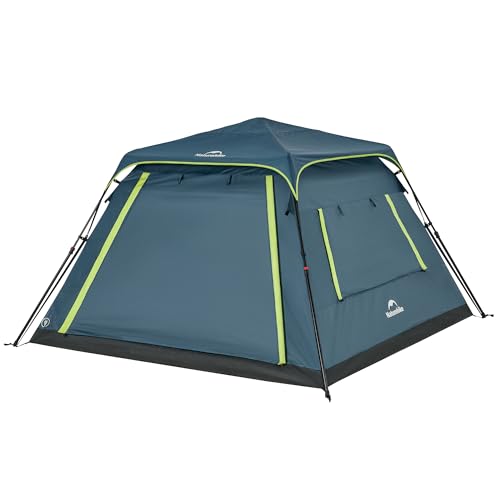
Naturehike Cape Lite 4-6 Person Instant Cabin Tent
The Strengths Of Each Pick
The Village Instant Tent leans hard into the “arrive late, sleep soon” crowd. Pre-attached poles fold out from the center hub, and the full-coverage rainfly rides on top of a 150D Ti Black Technology fabric (that’s a denser denier rating, meaning thicker yarn and better abrasion resistance than standard 75D tents) rated for UPF 12500+ sun protection and a PU 2000mm+ waterproof coating. The PU rating is a measure of how much water pressure the fabric can take before leaking, with 2000mm considered solid for sustained rain. The cabin-style walls stand vertical instead of sloping, so four sleepers get usable shoulder room rather than a rolling slope of nylon.
For a family rolling into a campground after dark, the tent’s instant-pitch design matters more than its weight. Compare that to the Naturehike KOTA reviewed below, which trades instant setup for a heavier double-layer build, and you start to see the trade-off the Village makes. You give up some weather modularity in exchange for a tent that practically sets itself.
Practical Pluses
- Pre-attached pole system lets two adults pitch the tent in roughly a minute, no instruction manual required.
- Full rainfly coverage keeps seams and zippers dry during sustained rainstorms, a real benefit on multi-day trips.
- 150D Ti Black fabric is denser than the standard 75D used on budget tents, so it resists abrasion from rocky ground better.
- UPF 12500+ rating blocks harsh midday sun, useful at exposed desert or lakeside sites with little shade.
- Vertical cabin walls give the interior a roomier feel than sloped-wall dome tents of the same footprint.
Things To Consider
- Instant-pitch tents carry more bulk in the carry bag than traditional pole tents, so trunk space matters.
- The single-layer construction with attached rainfly doesn’t ventilate as well as a double-layer mesh design in humid conditions.
Feature Snapshot
Made For
First-time family campers who want a forgiving cabin that goes up fast at the end of a long drive.
Consider Something Else When
You camp in heavy four-season weather, where the Naturehike KOTA’s double-layer design handles snow and wind better.
The Naturehike Cape takes the cabin concept and stretches it lengthwise into a tunnel, trading the square footprint of the Village Instant Tent for a layout that lets most adults stand upright near the center. A 190T polyester shell (a mid-weight fabric that balances durability and pack weight) carries a waterproof coating with a PU3000mm rating, so the Cape actually edges out the Village in rain resistance on paper. The instant-pitch frame still relies on pre-attached poles, so the 60-second pitch claim holds for car campers who don’t want to wrestle a manual.
Where the Cape pulls ahead of the Village is interior volume. The tunnel shape gives you a long, narrow room rather than a near-square one, which works well when gear gets piled at one end and sleepers line up at the other. For tall campers who hate crawling into a low dome, the extra ceiling height near the middle ridge is a genuine quality-of-life win.
Why It Works Well
- Tunnel shape delivers near-stand-up ceiling height at the center, a relief for tall sleepers.
- PU3000mm waterproof rating outpaces the Village’s 2000mm rating for sustained downpours.
- Pre-attached poles keep setup around the 60-second mark once you learn the unfold pattern.
- Long interior lets one end serve as a gear locker while the other stays a clean sleeping zone.
Worth Noting
- Tunnel tents need more staking length and a taut pitch to stay rigid in wind, unlike the freestanding Village cabin.
- The narrower footprint can feel cramped when four adults share the same sleeping pad row.
- Owners commonly report that the long shape takes up more campsite space than a square cabin, which matters at packed campgrounds.
Right Fit For
Groups who want walk-in headroom and don’t mind a longer footprint in exchange for that standing space.
Look Elsewhere When
You camp on small or rocky tent pads where the Naturehike Cape Lite’s square cabin shape fits more easily.
The KOTA is the most ambitious tent on this list and the only one built as a true double-layer system. A 75D 210T polyester shell (where 210T refers to thread count, a higher number indicating denser weave and better durability) with a waterproof coating rated at 3000mm+ wraps around a separate mesh inner tent, and both layers can be used independently. In warm months you can sleep under just the mesh inner and stargaze through the roof, while in shoulder seasons the outer fly alone doubles as a covered canopy or rain shelter for cooking.
Compared to the Village and Cape instant tents, the KOTA trades setup speed for weather versatility. The vestibules and porch extend covered storage outside the sleeping area, so muddy boots and wet packs stay out of the bedroom. For campers who deal with variable spring or fall conditions, that layered thinking makes the KOTA feel like three shelters in one.
What Makes Sense
- Double-layer design lets you pitch just the mesh inner in summer, just the rainfly as a canopy, or both together for cold nights.
- Vestibules and porch area keep dirty gear out of the sleeping cabin, a practical win on rainy trips.
- 3000mm+ waterproof coating matches the Cape and beats the Village for sustained wet weather.
- Inner mesh roof offers genuine stargazing potential on clear nights, something the solid-roof Village can’t match.
Trade Offs
- Two-layer setup takes longer than the Village’s instant-pitch frame and rewards campers who practice ahead of time.
- Heavier packed weight makes the KOTA a car camping tent, not a backpacking option.
- More seams and zippers mean more places to check before a storm, a small maintenance burden owners commonly mention.
Built With In Mind
Campers facing shifting weather who want one shelter that flexes between summer mesh and full rainfly mode.
Swap It Out When
You mostly camp in fair summer weather and would rather skip setup time, where the Naturehike Village Instant Tent shines.
The Cape Lite shrinks the cabin formula down to its most useful size. The floor measures roughly 101.5 by 101.5 inches, a square footprint that fits a queen-size mattress with room to spare, and the peak reaches about 62.2 inches so most adults can sit upright without hunching. The instant-pitch frame borrows the same pre-attached pole logic as the larger Cape, just compressed into a footprint that two people can set up in a tight campsite corner.
Against the larger Cape and the Village, the Cape Lite trades group capacity for everyday practicality. Couples and small families get the cabin shape they want without hauling the extra fabric and poles required for an eight-person build. You give up the lounge-room feel of a true 4-person cabin, but for weekend trips with two adults and a kid or a dog, the fit is hard to beat.
Standout Benefits
- 101.5-inch square floor fits a queen mattress comfortably, with leftover space for gear along the edges.
- Instant cabin design goes up in roughly a minute, matching the convenience of the larger Village.
- Compact footprint suits smaller campsites where the larger Cape tunnel would feel oversized.
- 62.2-inch peak height gives sitting room without forcing you to crawl in and out.
Points To Keep In Mind
- A 4-6 person rating leaves little spare room once you add cots, packs, and a dog bed to the queen mattress.
- Source details are lighter on the Lite than on the larger Cape, so buyers hunting deep specs may want to look at the bigger sibling.
Who It Suits Best
Couples and small families who want an easy cabin that fits a queen mattress and slips into tighter campsites.
A Better Fit Elsewhere
You regularly sleep four adults plus gear, where the Naturehike Cape tunnel layout spreads the load more comfortably.
What Matters Most Before Choosing Camping Tents For 4 Person
Capacity claims are a starting point, not a rule. A tent rated for four usually sleeps four slim adults on pads with no room for duffel bags, so anyone bringing coolers, dogs, or cots should think of the rating as a minimum and lean toward six-person floor plans. Cabin walls give more usable space than dome walls of the same footprint, which matters when you want to sit up, change clothes, or store packs inside the bedroom.
Weather protection deserves a close look at the numbers. PU ratings (a measure of how much water pressure a fabric withstands before leaking) above 2000mm handle steady rain, while double-layer designs add ventilation that single-layer cabins can’t match. Pre-attached pole frames cut setup from fifteen minutes to under two, a meaningful trade if you arrive at camp late or with kids ready to melt down.
Finally, footprint and staking matter more than capacity charts suggest. A square cabin fits tight pads, a tunnel tent needs clear running room, and a heavier double-layer shell is fine for car camping but punishing on a backpacking trip. Match the shelter shape to the site you’ll actually use.
Where These Picks Diverge
Wrong Turns To Avoid
Buying on nameplate capacity alone is the most common slip. A 4-person tent that fits four sleeping bags rarely fits four adults, their luggage, and the family dog, so plan for real-world occupancy rather than the marketing number. Skipping a rainfly check at home is the second mistake, since a dry tent on arrival can leak through untaped seams in the first storm.
When Paying More Pays Off
Higher-tier shells in this category buy denser fabrics, taller ceilings, and modular layer systems that cheaper cabins can’t match. The KOTA’s double-layer mesh and rainfly combination handles real shoulder-season weather where a single-layer cabin would struggle, and the Cape tunnel’s walk-in ceiling is the kind of comfort upgrade you feel every night of a trip. For weekend fair-weather camping, the entry cabins deliver plenty, but for storm-prone sites or four-season use, the layered builds justify their higher position.
Frequently Asked Questions
How big is a 4 person tent floor in real use?
Most 4-person tents offer roughly 60 to 70 square feet of floor area, which fits four sleeping pads snugly and leaves limited room for gear inside the sleeping cabin.
Are instant tents reliable in rain?
Pre-attached pole tents handle rain fine when paired with a full rainfly and properly taped seams, though double-layer designs ventilate better in humid conditions than single-layer cabins.
Can a 4 person tent fit a queen mattress?
Square cabin tents around 100 by 100 inches fit a queen mattress with room to spare, while tunnel or dome shapes usually need more length to accommodate the same mattress.
What does PU3000mm mean for a tent?
PU3000mm means the fabric coating withstands a 3000mm column of water pressure before leaking, a rating suited to heavy and sustained rainfall.
Should a 4 person tent have a vestibule?
A vestibule (a covered exterior storage area outside the main sleeping cabin) keeps muddy boots and wet packs out of the bedroom, which becomes more valuable on longer trips with variable weather.
Closing Remarks
Four people, one tent, one weekend. Match the cabin shape to your campsite, the weather rating to your climate, and the setup style to your patience, and the rest tends to fall into place. Any of these four Naturehike shelters will get a family through a rainy campground without drama, so let the way you actually camp guide the choice.