
A reliable camping stove with a stand changes how you cook outside. Instead of crouching over a tiny burner, you get a stable platform at table height, better pot clearance, and the kind of confidence that lets you stir a pot of chili without chasing it across the dirt.
The shortlist below covers full-size two-burner classics, single-burner tabletop units, an ultralight backpacking system, and a few specialty tools. You will find options for car camping, tailgates, base camp cooking, and trail meals. Each pick earns its place for a different reason, so match the stove to how you actually cook outside.
How The Shortlist Stacks Up

Coleman Cascade 18 1-Burner Camping Stove
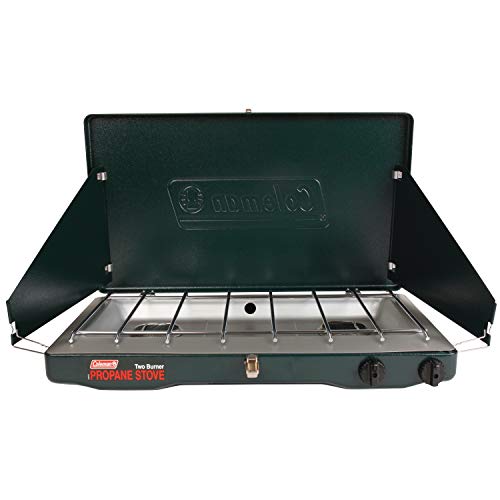
Coleman Classic Propane 2-Burner Camping Stove

Jetboil Pot Support for Camping Stoves
Fire-Maple Fixed Star 1 Backpacking Stove System

Coleman Tabletop 2-in-1 Grill & Stove

Jetboil Flash 1.0L Portable Fast Boil Stove
A Breakdown Of The Leading Choices
The Cascade 18 is a single-burner table-top stove that earns its spot on weeknight campouts and quick tailgate breakfasts. The 12-inch pan clearance and 8,000 BTU output handle a full skillet of eggs without crowding, and the rotary ignition (no matches needed) gets you cooking in seconds on a cold morning.
For campers who want one-burner simplicity and a small footprint, it hits the sweet spot. Unlike the larger two-burner units later in this list, the Cascade 18 stores down flat, weighs less, and slips into a car trunk without a dedicated spot.
Bright Spots
- Matchless rotary ignition lights the burner without fumbling for a striker in the dark.
- Aluminized steel cooktop wipes clean after a greasy breakfast, saving real time on multi-day trips.
- Fits a 12-inch pan, which covers most family-size skillets used for campsite dinners.
- Detachable grate flips over for a slimmer pack-down, a small touch that matters in a crowded car.
- Improved knob rotation offers precise low-simmer control for sauces and freeze-dried meals.
Things To Consider
- A single burner means sequential cooking, so dinner for three takes planning rather than parallel pots.
- Wind can steal heat on exposed sites, though the pot-support frame helps shield the flame.
- Wipe-downs should happen once the steel fully cools to avoid warping over time.
Who It Suits Best
Solo car campers and couples who want a fuss-free single burner with table-top stability.
Consider Something Else When
You cook for a hungry group of four or more; the Coleman Classic 2-Burner handles side-by-side pots far better.
The Coleman Classic is the two-burner workhorse that has anchored car-camp kitchens since the early 2000s. With up to 20,000 total BTUs across two adjustable burners, you can boil pasta water on one side while simmering sauce on the other, a setup that turns base-camp cooking into real cooking.
Wind-blocking panels shield the flame from gusts, and the pressure regulator keeps output steady when a canister starts to cool. Compared to the Cascade 18 above, this unit trades portability for capacity, and most family campers will consider that trade worth it.
Benefits That Matter
- Two independent burners let you run a 12-inch and a 10-inch pan at the same time.
- Pressure-control technology holds flame strength steady through temperature swings.
- Wind-blocking panels protect the flame, a real advantage on exposed ridgelines.
- Runs roughly one hour on high from a standard 16.4 oz propane cylinder.
- Spacious cooking surface turns Saturday morning pancakes into a group affair.
Worth Noting
- Fuel cylinder sold separately, so factor that into your first-trip budget.
- It is bulky in a sedan trunk; you may find it fits best in a truck or SUV.
- Surface cleaning takes a few extra minutes given the larger grate and drip zones.
Right Fit For
Family campers and group leaders who cook full meals at base camp rather than single-pot dinners.
A Better Fit Elsewhere
You want to shave pack weight for a backcountry trip; the Fire-Maple Fixed Star 1 collapses into its own pot.
This stainless steel accessory opens up a Jetboil burner in ways the integrated cup cannot. It locks onto the burner base via flanges and folds flat for packing, giving you a stable platform for the Jetboil skillet, a 1.5L FluxRing pot, or your favorite backcountry pan.
For Jetboil owners who feel boxed in by the standard boiling-only setup, this is the upgrade that turns a trail stove into a real cook system. Where the Cascade 18 is about table-top convenience and the Coleman Classic is about raw capacity, this support is about expanding what you already own.
Noteworthy Benefits
- Accepts wider pans than the standard Jetboil cup, so frying and sautéing become realistic.
- Stainless steel build handles trail abuse without flexing or bending.
- Folding flanges reduce packed size to roughly the profile of a side dish plate.
- Secure lock to the burner base keeps the support stable during active stirring.
- Compatible across the Jetboil line, making it a versatile add-on for existing kits.
Points To Keep In Mind
- Requires a Jetboil burner; it is not a standalone stove and adds no value without one.
- Heavier than integrated cup setups, though most backpackers accept the trade.
- Surface area tops out at small and medium pans, so large skillets will not balance.
Made For
Existing Jetboil owners who want to cook real meals without abandoning their burner platform.
Swap It Out When
You do not already own a Jetboil system; the Jetboil Flash 1.0L comes ready to boil out of the box.
The Fixed Star 1 packs an entire cook system into roughly the size of a 1-liter pot. The integrated heat exchanger claims up to 30 percent faster boil times versus traditional backpacking stoves, which adds up across a week of trail dinners and saves fuel canisters you would otherwise haul out.
For backpackers counting grams, the all-in-one design is the draw. Unlike the table-top Cascade 18, this unit nests the burner, bowl, and fuel canister inside the cook pot, so your pack stays tidy and your kitchen stays one piece.
The Good Stuff
- Heat-exchange technology shortens boil times, which means less fuel carried over multi-day trips.
- Nesting design keeps stove, bowl, and canister in one compact 1-liter package.
- Total system weight around 18 ounces, light enough for serious mileage.
- Compatible with most isobutane canisters, giving you fuel flexibility on long routes.
- Sturdy pot support handles real cooking, not just boil-and-pour meals.
Trade Offs
- Fuel canister sold separately, and Coleman-brand canisters will not fit the connection.
- Single-burner design means one dish at a time, no parallel cooking on the trail.
- Black finish can show soot after heavy use, requiring occasional scrubbing to stay clean.
Best Suited To
Thru-hikers and weight-conscious backpackers who want a full cook kit without bulky pieces.
Look Elsewhere When
You prefer the Jetboil ecosystem; the Jetboil Flash 1.0L offers a similar integrated approach with auto ignition.
This hybrid unit splits the difference between a burner and a flat-top grill. You get 20,000 BTUs of total power split across two independently controlled burners, with a removable chrome-plated grate that turns the left side into a griddle for burgers, eggs, or pancakes while the right side boils water.
Tailgaters and weekend cookout hosts will appreciate not having to pack two appliances. Compared to the Classic 2-Burner earlier in this list, this model adds grilling versatility but keeps the propane convenience, and wind guards keep the flame steady when the parking lot breeze kicks up.
A Strong Showing
- Two-in-one design runs grill and stove at the same time, ideal for full cookout menus.
- Push-button ignition lights both burners without a striker in your pocket.
- Wind guards shield flames from crosswinds at open lots and beach sites.
- Built-in grease tray simplifies cleanup after drippy burgers or bacon.
- Non-skid feet keep the unit planted on truck tailgates and picnic tables.
Possible Compromises
- Heavier than a single-burner table-top, so it needs a real shelf in your trunk.
- Chrome grate needs regular cleaning to prevent sticking and rust over seasons.
- Grilling surface is modest, so cooking for more than four gets crowded.
Who Will Love This
Tailgaters, RV campers, and weekend hosts who want griddle and burner in one footprint.
Not Your Match When
You mostly boil and simmer on backcountry trips; the Fire-Maple Fixed Star 1 is built for that kind of minimal menu.
The Flash 1.0L is built for one job and does it with impressive speed. A half-turn of the knob triggers the one-step automatic ignition, and the integrated FluxRing pot pushes water to a boil in roughly two minutes. For trail coffee, dehydrated meals, and quick freeze-dried dinners, the system feels almost frictionless.
Backpackers who have used older boil-only stoves will notice the difference immediately. Where the Fire-Maple Fixed Star 1 above offers wider cookware flexibility, this Jetboil focuses on raw speed and ease of lighting, with no matches or lighter required.
Positive Takeaways
- One-step auto ignition removes the need to pack lighters or strikers on cold mornings.
- Boils water in roughly two minutes, a real time-saver before sunrise hikes.
- Integrated cooking cup doubles as a measuring vessel for dehydrated meal prep.
- Compact format fits into most pack lids and external bottle pockets.
- Propane/isobutane burner runs on widely available canister fuel.
Less Ideal Details
- Boil-only design limits real cooking; the pot support add-on opens more options.
- Fuel canister sold separately, an extra line item for first-time owners.
- Small cup capacity means refills for anything beyond solo use.
Perfect Match For
Solo backpackers and fast-packers who want hot drinks and quick meals with minimal fuss.
Reach For A Different Pick When
You want to simmer sauces or sear meat; the Coleman Tabletop 2-in-1 handles real cookout menus far better.
What Matters Most Before Choosing Camping Stoves With Stand
Burner Count and Cooking Capacity
The first decision is how much food you actually cook outside. Solo backpackers and couples can usually manage with a single-burner system, while families and group leaders tend to need two independent burners for parallel pots. The Coleman Classic 2-Burner shows why: 20,000 total BTUs across two adjustable burners let you boil and simmer at the same time.
Stability and Stand Height
A proper stand lifts the stove to table height and keeps the cooktop steady on uneven ground. Aluminum frames tend to stay light for car camping, while steel frames add weight but resist tipping on rocky sites. For backpackers, nested systems like the Fire-Maple Fixed Star 1 trade raw stability for compact packing, which is usually the right call on trail.
Fuel Type and Availability
Most camping stoves run on propane cylinders or isobutane canisters. Propane cylinders deliver higher output for two-burner units, while isobutane canisters perform better at cold temperatures and pack smaller. Confirm the connection type matches your planned fuel source, especially with backpacking stoves that exclude certain canister brands.
Ignition, Wind Protection, and Cleanup
Matchless ignition (rotary or push-button) saves fumbling in the dark, a real plus on early-morning cookouts. Wind-blocking panels or shields keep flames steady on exposed sites, and aluminized or chrome-plated surfaces wipe clean faster after greasy breakfasts. These small features add up across a season of trips.
Key Considerations Across These Picks
Pitfalls Shoppers Hit
A common trap is picking a stove based on BTU output alone without considering real cooking style. High BTUs matter less if you mostly boil water for coffee, and the lowest-output single-burner may serve a solo backpacker better than a heavy two-burner unit. Another mistake is ignoring fuel canister compatibility, especially with backpacking stoves that exclude certain brands. Always confirm the connection type and pack a backup canister for longer trips.
Where The Extra Money Goes
Higher-tier models typically add wind protection, pressure regulation, and integrated ignition systems that survive seasons of use. The Coleman Classic 2-Burner earns its reputation with steady flame output in tough conditions, while integrated systems like the Jetboil Flash 1.0L justify their cost through faster boil times and one-step lighting. The upgrade pays off for frequent campers who cook in variable weather, while casual weekenders often find a simpler single-burner table-top does the job.
Frequently Asked Questions
What size camping stove do I need for a family of four?
Two-burner units around 20,000 total BTUs handle most family menus. Single-burner stoves work, but sequential cooking gets old after a few dinners.
Can I use a backpacking stove for car camping?
You can, but burn times and stability may frustrate you. A table-top unit like the Cascade 18 offers more cooking surface for the same fuel cost.
Are camping stoves with stands stable on uneven ground?
Most use wide-set legs or non-skid feet that hold steady on packed dirt and picnic tables. Avoid loose gravel and soft grass for safety.
Do these stoves come with fuel canisters?
Most do not. Propane cylinders and isobutane canisters are usually sold separately, so budget for fuel alongside the stove itself.
How do I clean a camping stove after cooking?
Let the cooktop cool, then wipe with a damp cloth. For stubborn grease, a mild dish soap and non-abrasive scrubber restore aluminized and chrome surfaces without scratching.
Bottom Line
The right camping stove with a stand depends on how you cook outside, where you go, and how much weight you want to carry. Solo backpackers tend to favor the Fire-Maple Fixed Star 1 or Jetboil Flash 1.0L, while families lean toward the Coleman Classic 2-Burner or the Tabletop 2-in-1. Match the stove to your real menu, and you will spend less time fighting flames and more time enjoying the meal.