
Car camping changes the cooking math. You’re not cutting ounces from your pack, so you can trade a featherweight setup for real heat, stable platforms, and the kind of simmering control that turns canned soup into a proper meal. These seven stoves cover the spread, from two-burner basecamps to a tiny canister rig you might still toss in the trunk, plus a fuel canister to keep the Jetboil systems topped up. Each pick earned its place for a clear reason, and the trade-offs are honest, not papered over.
A Side-By-Side Look

Jetboil Flash Portable Fast Boil Stove with Cooking Cup

MSR PocketRocket 2 Ultralight Camping and Backpacking Stove

Jetboil MightyMo Ultralight and Compact Camping and Backpacking Stove
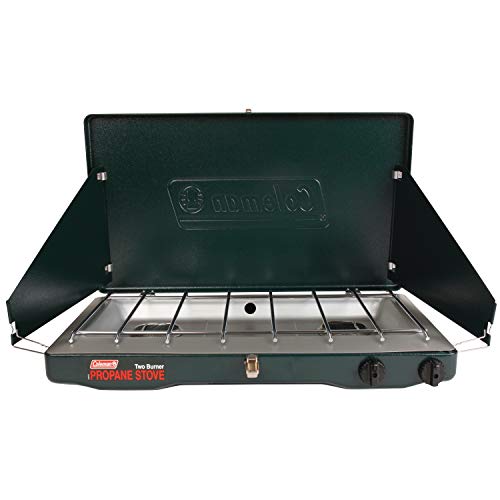
Coleman Classic Propane Camping Stove, 2 Burner

Jetboil Jetpower Fuel for Jetboil Camping and Backpacking Stoves, 450g

Coleman Cascade 18 1-Burner Camping Stove, 8000 BTUs

Jetboil HalfGen Basecamp Camping Cooking System
Mornings at a car camp run on a simple sequence: pack out the truck, unroll the chairs, and get water on the boil before anyone fully wakes up. The Jetboil Flash is built for that moment, marrying a 1.0-liter FluxRing pot with a turn-and-click igniter so the kettle is hot before the camp stove smells like anything. The integrated cozy keeps the contents warm between pours, which matters when you’re halfway through pouring four mugs of coffee and still want a fifth that stays hot.
Compared to the bare-bones PocketRocket covered next, this is a more complete setup. You trade the ultralight, pack-anywhere format for a self-contained system that feels like a small kitchen appliance rather than a piece of backpacking gear. At a typical car camp, where trunk space is unlimited and weight is irrelevant, that trade feels obvious.
Bright Spots
- Rapid boil time that genuinely lives up to the “flash” name, useful for early risers who want hot drinks fast.
- One-step auto ignition removes the lighter-and-patience routine on cold, windy mornings.
- The integrated cozy wraps the pot, holding heat longer between pours and improving fuel economy.
- Thermochromatic indicator on the cup signals when contents are ready without lifting a lid.
- At a car camp, the all-in-one design means fewer loose parts to lose between trips.
Things To Consider
- Designed primarily for boiling water and reheating; searing a steak in the FluxRing is a stretch.
- Requires Jetboil-style threaded fuel canisters, so you’ll want a spare on hand for multi-day trips.
- Hard anodized aluminum can darken with use and benefits from a quick wipe-down after cool-down to prevent residue buildup.
Quick Facts
Made For
Drivers who want near-instant boiling water for coffee, freeze-dried meals, and quick hot drinks without juggling parts.
Swap It Out When
Pick the Jetboil MightyMo instead when sautéing and simmering rank above just boiling water on your trip menu.
Sometimes the appeal of car camping is having the freedom to bring along a stove that lives somewhere between a backpacking tool and a campsite accessory. The MSR PocketRocket 2 weighs roughly 2.6 ounces and folds to a 2x2x3-inch footprint, which means it slips behind a cooler or rides in a door pocket without a fight. It pairs with the cookware you already own, so anyone with a small pot at home is set.
Where the Jetboil Flash ships with an integrated pot, the PocketRocket hands you the burner and lets you build around it. That flexibility is the whole point: bring your favorite mug, your titanium pot, or a battered old saucepan from the kitchen. There’s no built-in igniter, so a match or lighter rounds out the kit, but most owners toss one in their glovebox year-round.
Strong Points
- Tiny folded size and low weight make it the most “stow-it-anywhere” option in this roundup.
- Boils a liter of water in roughly 3.5 minutes under ideal conditions, fast for such a small burner.
- Flame adjusts smoothly from simmer to rolling boil, letting you reheat soup without scorching it.
- No priming, pumping, or preheating required, so the learning curve is almost flat.
Worth Noting
- Wind exposure is the big trade-off; without a built-in windscreen, performance drops sharply in a stiff breeze.
- Smaller pot footprint means larger pans overhang the flame, wasting heat on windy days.
- No piezo igniter means a separate fire-starting tool travels with you.
Right Fit For
Solo travelers and minimalists who want a capable burner that disappears into a pack or trunk without claiming space.
A Better Fit Elsewhere
Reach for the Jetboil Flash when you want a self-contained, faster-boiling system with no separate parts to track.
If the Jetboil Flash is a kettle that boils, the MightyMo is a stove that cooks. Its open platform design lets you drop a skillet or pot on top and actually sauté vegetables, simmer sauces, or brown sausage without fighting the burner. The four-turn regulator dials in increments precise enough to hold a low simmer, which is rarer than it sounds in this category. If you’ve ever watched a flame cycle wildly between “off” and “torch” on a basic stove, you’ll appreciate the difference.
The trade shows up in fuel use. The MightyMo reaches a rolling boil in roughly three minutes while burning about half the fuel of older-generation systems, which is meaningful on a long weekend where canisters get expensive. Compared to the Coleman two-burner covered below, you give up the second burner and the wide griddle, but you gain a system that runs leaner and packs smaller.
Where It Excels
- Four-turn regulator delivers fine-grained flame control for simmering and sautéing, not just boiling.
- Open platform accepts a wider variety of pots and pans than the integrated Flash cup.
- Approximate three-minute boil time keeps meal prep quick after a long day of driving or hiking.
- Half the fuel consumption of legacy systems stretches each canister further on multi-day trips.
Trade Offs
- Threaded Jetboil-style canister connection means you cannot use standard screw-on stove fuel.
- Single burner limits you to one pot at a time, slower than a two-burner setup for group meals.
- Plastic regulator knob can wear over years of heavy field use; treat it gently when packing.
Feature Snapshot
Whose Shelf It Belongs On
Cooks who want to do more than boil water, especially campers planning one-pot dinners with real ingredients.
Consider Something Else When
Choose the Coleman Classic two-burner stove when feeding four or more people simultaneously matters more than fuel efficiency.
This is the stove that lives at most state park and family campground picnic tables. Two adjustable burners push up to 20,000 total BTUs, enough to handle a 12-inch and a 10-inch pan at the same time, which means real breakfasts for real groups. Wind-blocking side panels swing up to shield the flames, and a built-in pressure regulator smooths performance when a fresh propane cylinder is fighting against a half-empty one.
Compared to every Jetboil and MSR in this roundup, the Coleman Classic is a different animal. It does not fold to the size of a soda can, and it does not sip fuel from a small canister. What it offers instead is the closest thing to a home kitchen you can set up at a campsite, with two independent burners and the durability to handle decades of repeated road trips.
Everyday Advantages
- Two burners handle pancakes and coffee simultaneously, cutting meal prep time for groups.
- Up to 20,000 total BTUs deliver enough heat to sear meat and bring large pots to a boil quickly.
- Pressure regulator maintains consistent flame output even as the propane tank empties.
- Accommodates both a 12-inch and 10-inch pan side by side for full breakfast spreads.
- Latches and rugged steel construction survive trunk hauling without complaint.
Room For Improvement
- Larger footprint demands a stable picnic table or level ground; uneven tent pads are a non-starter.
- Steel construction adds noticeable weight compared to single-burner canister stoves.
- Propane cylinder is sold separately, so factor that add-on into your starter kit.
Best Suited To
Families and groups cooking full breakfasts, dinners, and anything that requires two pans running at once.
Where Another Pick Suits Better
Pick the Jetboil HalfGen when you want basecamp-level cooking power without hauling a full-size Coleman.
Fuel is the unsexy half of any canister-stove system. Without it, the Jetboil Flash, MightyMo, and HalfGen are decorative metal. The Jetboil Jetpower 450-gram canister threads directly into all three of those Jetboil systems on this list, so adding it to your cart alongside the stove makes the kit functional from the moment you arrive. The propane/isobutane blend runs reliably across a wide temperature range, including cold mornings that leave cheaper mixes sluggish.
Owners commonly report that a single 450-gram canister powers multiple weekend trips depending on usage, particularly when water is being boiled rather than long-simmered meals. Safety note worth repeating: never attempt to refill or attach a canister to a hot or burning device, as the residual heat creates a serious flame risk.
Why It Works Well
- Higher vapor pressure blend performs better in cold weather than basic propane mixes.
- Standard Jetboil-threaded connection fits the Flash, MightyMo, and HalfGen covered here.
- 450-gram size strikes a middle ground between bulky 450+ gram canisters and tiny 100-gram backpacking fuel.
- Recognized canisters make fuel planning easier at trailheads and camp stores.
Less Ideal Details
- Single-use canister; once empty, you cannot refill it in the field without specialized gear.
- Recycling options vary by region, so disposal planning matters at the end of the trip.
- Only compatible with stoves designed for threaded isobutane canisters, not universal screw-on fuel.
Perfect Match For
Anyone buying a Jetboil stove from this list who needs a reliable, compatible fuel supply from day one.
Not Your Match When
Skip this if you’re running the MSR PocketRocket, which accepts standard isobutane canisters from multiple brands.
The Cascade 18 sits in a useful middle ground: more cooking surface than a backpacking stove, less bulk than the full Classic two-burner. Eight thousand BTUs through a single burner is plenty for a 12-inch pan, and the rotary ignition means no fumbling for a lighter when the pan is hot and waiting. The detached grate flips 180 degrees, so the stove flattens down for storage in a trunk without wasting space.
Where the Coleman Classic serves a family, the Cascade 18 suits a couple or a single cook handling one big skillet. The aluminized steel cooktop wipes clean faster than painted surfaces, a quiet but appreciated feature after a long evening cooking greasy camp food. Compared to the MSR PocketRocket, you trade portability for a sturdier platform that handles a real frying pan without wobble.
The Practical Payoff
- Single burner keeps the package compact while still accommodating a 12-inch pan.
- Rotary matchless ignition starts the flame without an external lighter.
- Aluminized steel top wipes down quickly after messy meals, which matters on multi-day trips.
- Folding grate and regulator stow neatly inside the body for tidy transport.
Softer Spots
- Single burner limits simultaneous cooking, slower than a two-burner setup for groups.
- Wind resistance is weaker than the Classic’s full side panels, so windy sites reduce performance.
- Requires a propane cylinder sold separately, adding a step before the first meal.
Feature Card
Who Should Grab It
Couples and solo campers who want one solid burner with simple setup, especially for tailgates and quick weekend trips.
Look Elsewhere When
Choose the Coleman Classic two-burner instead when feeding more than two people at a time is the goal.
The HalfGen is what happens when Jetboil scales up a backpacking system into something basecamp-worthy. The 10,000 BTU heating system brings water to a boil in just over three minutes, enough power to handle a 5-liter pot or melt snow for drinking water. The proprietary regulator offers incremental heat adjustments, so the same stove that boils fast can also hold a low, steady simmer for pasta water or soup.
One detail sets it apart from the rest of the Jetboil lineup: it links to other Jet Link-compatible stoves to create a multi-burner cooking range. Two HalfGens stacked together start to rival a small outdoor kitchen. For a serious car camper who wants Jetboil fuel economy with family-scale cooking capacity, this is the apex of the line. It also accepts standard Jetboil threaded fuel canisters, including the 450-gram Jetpower covered above.
The Case For It
- Higher BTU output than smaller Jetboil systems handles larger pots and group meals.
- Fast boil time (just over three minutes) makes snow-melting and water prep quick at elevation.
- Incremental regulator allows precise flame control, not just on-off cycling.
- Jet Link compatibility lets two units combine into a wider cooking surface.
Points To Keep In Mind
- Heavier and bulkier than ultralight canister stoves, so it stays in the car rather than the pack.
- Higher BTU output burns through fuel faster during sustained high-heat cooking.
- Best value comes when paired with a second Jetboil or Jet Link-compatible stove, raising the total cost.
Built With In Mind
Basecamp cooks running multi-day trips who want Jetboil’s fuel efficiency plus enough capacity for group meals.
Reach For A Different Pick When
Pick the Coleman Classic two-burner when independent burner control and simultaneous cooking matter more than fuel efficiency.
Choosing The Right Camping Stove For Your Trips
Fuel Format And Burner Style
The biggest fork in the road is canister versus bulk propane. Canister stoves like the Jetboil Flash, MSR PocketRocket, and Jetboil MightyMo run on pressurized isobutane canisters, which store neatly in a trunk, light instantly, and shut off cleanly. Two-burner propane stoves like the Coleman Classic and Cascade 18 run on refillable propane cylinders, which trade compactness for lower fuel cost per BTU and the ability to feed a group. Car camping removes most of the weight penalty, so the choice usually comes down to how much cooking surface area and simultaneous meal prep you want.
Heat Output And Real Cooking Tasks
BTU ratings only tell part of the story. A high-output burner (10,000+ BTUs, like the HalfGen) is great for melting snow or boiling a 5-liter pot, but it’s overkill for coffee. A low-output canister stove may struggle to sear a thick steak but sips fuel during long boils. Look at the regulator design, not just the BTU number, since a stove with incremental flame control (MightyMo, HalfGen) handles a wider range of recipes than one that cycles between off and full blast.
Cookware Compatibility
Integrated systems like the Jetboil Flash ship with their own pot, so cookware choice is solved. Open-platform stoves (PocketRocket, MightyMo, HalfGen) accept any pot that fits, which gives you freedom to use favorite pans from home. Two-burner camp stoves are built around the assumption that you bring a 10- and 12-inch pan. Mismatched cookware wastes fuel and slows meal prep, so think about what pots you’ll actually pack before buying the stove.
Wind, Weather, And Trip Length
Wind cuts stove output dramatically, sometimes by half on exposed sites. Built-in wind shields (Coleman Classic) and integrated pot systems (Jetboil Flash) handle gusts better than bare burners (MSR PocketRocket). Cold-weather trips favor fuel blends with higher vapor pressure, like the Jetboil Jetpower mix. For trips longer than a weekend, packing spare fuel matters more than expected, since running out mid-trip means cold meals and instant coffee for everyone.
Key Considerations Across These Picks
Pitfalls Shoppers Hit
Underestimating cookware fit is a common mistake. A two-burner stove is wasted if your largest pan only covers one burner, and a small canister stove performs poorly with a wide skillet hanging off the flame. Before buying, measure your biggest pan and compare it to the stove’s listed dimensions. Another frequent slip is forgetting that canister stoves need their own fuel source, sometimes sold separately, so factor that into your setup cost. Also worth noting: stove output ratings assume ideal lab conditions, so real-world performance on a windy ridge will be lower than the spec sheet suggests.
The Upgrade Payoff
Stepping up from a basic single-burner canister stove to something like the Jetboil MightyMo or HalfGen typically buys two things: better flame regulation and higher sustained output. For casual coffee-and-soup cooks, the basic level is fine. The upgrade earns its keep when you start simmering sauces, browning meat, or cooking for three or more people, where flame control and pot capacity begin to matter more than raw boil speed. Higher-tier models also tend to use fuel more efficiently per boil, which pays back over years of regular trips.