
Cooking at camp should feel simple: light a flame, boil water, eat well. The right portable stove turns a freezing morning into hot coffee in minutes, and the wrong one makes you fight wind and cold with a flimsy burner. Whether you’re car camping with the family or shaving grams off a thru-hike kit, these picks cover the spread.
An Overview Of The Picks

Jetboil Flash Portable Fast Boil Camping Stove with Cooking Cup

MSR PocketRocket 2 Ultralight Camping Stove

Jetboil MightyMo Ultralight Camping Stove
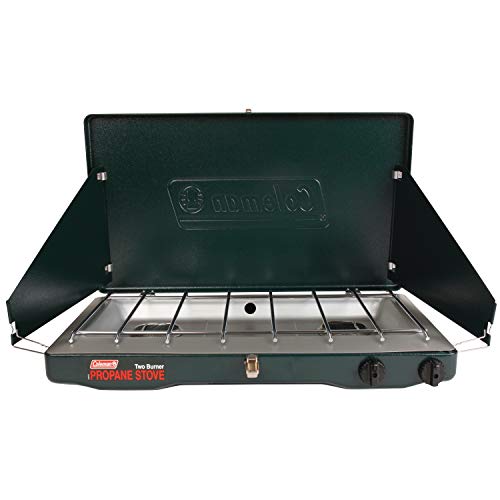
Coleman Classic Propane 2-Burner Camping Stove

Jetboil Jetpower Fuel 450g Canister

Jetboil HalfGen Basecamp Cooking System
Fire-Maple Fixed Star 1 Backpacking Stove System (Black)
Why These Options Stand Out
The Flash is a compact, integrated system designed for backpackers who want hot water fast and gear that disappears into a pack. The 1-liter FluxRing cooking cup (a pot with a finned base that captures heat from the flame) holds enough water for a freeze-dried dinner and a hot drink, and it nests over the burner to shrink the footprint. A built-in piezoelectric igniter (a mechanism that creates a spark when twisted) and a thermochromatic heat indicator (a strip that changes color as the cup warms) take the guesswork out of lighting and timing.
Compared to the ultralight MSR PocketRocket 2 reviewed next, the Flash trades weight for an all-in-one setup: you get the cup, the insulating cozy, and the burner in one tidy package. For solo backpackers and weekend campers who don’t want to fiddle with separate cookware, this is a sensible middle-ground choice.
The Practical Payoff
- Integrated 1-liter pot and insulating cozy simplify mealtime at camp
- Piezo igniter lights the burner without a lighter, helpful in cold or windy weather
- Thermochromatic indicator signals when water hits a rolling boil, no guessing
- Folding handle and nested design keep the pack footprint small
Things To Consider
- Heavier than a bare-bones canister stove, so thru-hikers with strict weight budgets may pass
- Fuel canisters are sold separately and must be carried or sourced at the trailhead
Who It Suits Best
Solo backpackers, weekend campers, and anyone who wants a no-fuss boiling system for freeze-dried meals and morning coffee.
Look Elsewhere When
If every ounce matters on a long-distance trek, the MSR PocketRocket 2 is a more packable choice with a smaller weight penalty.
The PocketRocket 2 is a stripped-down, screw-on canister stove that weighs 2.6 ounces and folds to roughly 2 by 2 by 3 inches. It attaches directly to a fuel canister, no pumping or priming required, and boils a liter of water in about 3.5 minutes. The flame adjusts from a soft simmer for rehydrating soup to a full rolling boil for pasta water.
Against the Jetboil Flash reviewed above, this stove has no built-in pot, so you bring your own mug or cookware. That trade is the point: backpackers focused on weight and pack space get a burner that tucks into a side pocket, while trail cooks happy to carry a pot pick up the MightyMo.
Everyday Wins
- Sub-3-ounce packed weight makes it easy to justify on long-distance routes
- Folding pot supports nest the burner inside a small cook pot for tidy packing
- Wide flame spread handles small and medium pots without hot spots
Trade Offs
- No built-in igniter, so a lighter or matches stays in your kit
- Open flame is more wind-sensitive than the Jetboil Flash’s enclosed system
- Fuel canisters sold separately, and the threaded valve fits standard isobutane canisters
Right Fit For
Thru-hikers, fastpackers, and ultralight backpackers who count every gram and already own a compatible pot.
Consider Something Else When
Campers who want an all-in-one package with a built-in cup and igniter will find the Jetboil Flash more convenient, especially for quick morning coffee.
The MightyMo is Jetboil’s answer to backpackers who want more than a boiling system: a four-turn regulator that lets you step the flame up or down in small increments, so you can actually sauté greens, simmer sauce, or melt cheese. It reaches a rolling boil in about three minutes while using roughly half the fuel of a traditional open-burner setup, according to manufacturer figures.
Where the Flash is built for one job (boil water fast), the MightyMo leans into real cooking. The open-platform design accepts a wider range of pots, so you can pair it with your favorite backcountry cookware instead of the bundled cup.
Practical Pluses
- Incremental flame control supports real cooking, not just boiling water
- Improved fuel efficiency means fewer canister swaps on longer trips
- Compact form factor still nests into a small cookware set
Points To Note
- No bundled pot, so you supply your own cookware
- More expensive than the PocketRocket 2 reviewed above
Feature Snapshot
Built With In Mind
Trail cooks who want to do more than boil water, on weekend backpacking trips or longer routes where fuel savings add up.
Skip It When
Soloists who only rehydrate meals may find the PocketRocket 2 a simpler, lighter alternative at a friendlier cost.
The Coleman Classic is a tabletop two-burner propane stove sized for car camping, picnics, and tailgate setups. With up to 20,000 total BTUs of cooking power, two adjustable burners, and wind-blocking side panels, it handles breakfast for the family or a full pasta dinner. The pressure regulator keeps the flame steady even as the propane cylinder cools or dips.
This is a different category entirely from the backpacking stoves above. Where the Jetboil Flash is built for a single mug of coffee on a ridge, the Coleman Classic sits on a picnic table and feeds four hungry campers at once. If you’re driving to camp rather than hiking in, that extra weight is well spent.
A Favorable Mix
- Two burners let you simmer and sear at the same time
- Fits a 12-inch and a 10-inch pan simultaneously, enough for most family meals
- Pressure regulator maintains performance across weather and fuel levels
- Wind-blocking panels protect the flame in breezy campsites
Where It May Fall Short
- A propane cylinder is sold separately and adds bulk to the gear pile
- Too large and heavy for backpacking or pack-in camping
Feature Snapshot
Whose Shelf It Belongs On
Family campers, car campers, and tailgaters who cook real meals at the picnic table, not on a ridge.
Reach For A Different Pick When
Backpackers will be far better served by the Jetboil MightyMo or the PocketRocket 2, both of which are designed to live in a pack.
No stove runs on empty, and the Jetpower 450g canister is the fuel your Jetboil system was designed around. This blend of propane and isobutane delivers higher vapor pressure (the internal force that pushes liquid fuel into a vapor the burner can ignite) than pure isobutane, which helps the flame stay lit in cold weather and at altitude. The 450-gram size is the larger option, suited to multi-day trips and group cooking.
The fuel itself is straightforward, but it deserves attention because it shapes trip planning. Run a 450g canister for a weekend and you may bring home half a tank; run a 100g on a weeklong trek and you’ll burn through it fast.
Where It Helps
- Higher vapor pressure keeps output steadier in cold conditions
- Larger 450g size supports multi-day trips with less swapping
- Threaded valve matches Jetboil burners without an adapter
Honest Caveats
- Never refill a hot or burning canister, manufacturer guidance warns of flare-up risk
- Heavier and bulkier than 100g canisters, so day hikers may prefer smaller sizes
Made For
Jetboil system owners who run the Flash, MightyMo, or HalfGen on multi-day trips where cold weather or altitude is in play.
Where Another Pick Suits Better
Solo day hikers can save weight with a smaller 100g Jetpower canister or another brand of isobutane fuel.
The HalfGen is Jetboil’s basecamp-grade burner, designed for cooking rather than just boiling. The system cranks out 10,000 BTUs, brings water to a rolling boil in just over three minutes, and uses the same incremental regulator technology as the MightyMo. It also links to other Jet link-compatible stoves, so you can build out a small outdoor kitchen by chaining units together.
Compared to the Coleman two-burner reviewed above, the HalfGen offers similar cooking capability in a smaller, more efficient package, but it works with smaller pots and Jetboil-style fuel rather than propane cylinders.
Good Reasons To Consider
- 10,000 BTU output handles real cooking, not just boiling
- Incremental flame control supports sautéing and simmering
- Modular design lets you link multiple units for group cooking
- Efficient boil time means shorter fuel burn per pot of water
Points To Keep In Mind
- Fuel canisters sold separately, like other Jetboil models
- Less total cooking surface than a Coleman two-burner setup
Feature Snapshot
Best Suited To
Car campers and basecampers who want efficient, modular cooking without the bulk of a propane two-burner.
A Better Fit Elsewhere
Families feeding a crowd at once will appreciate the dual-burner layout of the Coleman Classic over the HalfGen’s single-burner setup.
The Fixed Star 1 is an integrated stove-and-pot system with a heat exchanger on the pot base, the same broad-fin design that Jetboil uses to capture wasted heat. That translates into shorter boil times and noticeably better fuel economy, so a 100g canister goes further per trip. All components, including stove, bowl, and a fuel canister, nest inside the 1-liter cook pot for a tidy pack profile.
It runs on standard threaded isobutane canisters, though it’s not compatible with Coleman-style fuel. The catch is what you give up: there’s no built-in igniter on this model, and the flame control is simpler than the MightyMo’s regulator.
A Few Highlights
- Heat exchanger design cuts boil times and stretches fuel life
- All-in-one nested system fits in a backpack without loose parts
- Lightweight 18-ounce total weight for an integrated setup
- Compatible with most standard threaded canisters
Practical Considerations
- No built-in igniter, so bring a lighter or matches
- Not compatible with Coleman fuel canisters, plan ahead
- Fuel canister sold separately, despite nesting room for one inside the pot
Feature Snapshot
Who Should Grab It
Budget-minded backpackers who want a Jetboil-style heat exchanger without paying the brand premium, and who don’t mind packing a separate lighter.
Swap It Out When
If built-in ignition matters most, the Jetboil Flash includes a piezo igniter at a similar weight class.
What Matters Most Before Choosing Camping Stove Portables
Boil Speed vs. Fuel Weight. Fast-boiling stoves (Flash, MightyMo, HalfGen) save time but don’t always save fuel. If you carry a 100g canister and rehydrate every meal, a heat exchanger system pays for itself in fewer canisters per trip.
Weight and Pack Size. Ultralight hikers should default to a bare-bones burner like the PocketRocket 2 and bring their own pot. Casual campers and weekend trippers get more value from an integrated system.
Cooking Style. Stoves designed only to boil water leave you stuck with freeze-dried meals. Models with incremental regulators, like the MightyMo and HalfGen, support sautéing, simmering, and one-pot dinners.
Group Size and Setup. A single-burner system works for one or two people, but feeding a family at the picnic table calls for a two-burner like the Coleman Classic, or chain multiple Jet link-compatible units.
Key Considerations Across These Picks
Where Shoppers Go Wrong
One common slip is matching a backpacking stove to car camping. A lightweight canister stove burns through fuel slowly, but a propane two-burner gives you the surface area to cook for four at once. Buying the wrong category for your trips is the most common wasted-money mistake in this space.
Another trap is forgetting the fuel canister. Stoves and fuel are sold separately on every model here, and a brand-new stove without a canister is just dead weight. Check your canister thread and brand compatibility before you head out: the Fixed Star 1, for instance, doesn’t accept Coleman canisters.
Where The Extra Money Goes
Higher-tier models like the Jetboil MightyMo and HalfGen cost more because of precision regulators and modular platforms, not just branding. If you sauté and simmer, those controls matter. If you only boil water, a basic system like the Fire-Maple Fixed Star 1 delivers the same heat-exchanger benefits at a friendlier cost.
For group cooking, the upgrade from a single-burner to a Jet link chain or a Coleman two-burner buys you parallel cooking, not just bigger output. That’s the real payoff when feeding more than one hungry camper.
Frequently Asked Questions
How long does a fuel canister last on a backpacking trip? A 100g canister typically covers 10 to 12 boils for a single person on a weekend trip, but cold weather, altitude, and longer rolling boils all burn fuel faster.
Can I use a backpacking stove in winter? Yes, but use a fuel blend with higher vapor pressure, like the Jetpower canister above, and expect shorter runtime per fill in freezing conditions.
Do these stoves work with any pot? Integrated systems use their own bundled pot. Open-platform burners like the PocketRocket 2 and MightyMo accept most small to medium pots with a flat base.
Is a two-burner stove worth the extra weight? For car camping and family meals, the cooking flexibility easily justifies the size. For backpacking, single-burner systems remain the standard.
How do I store a canister stove safely? Let the burner cool fully before packing, store canisters upright in a cool dry place, and never store fuel near a heat source or in a sealed hot car.
Closing Thoughts
A reliable camp stove turns rough mornings and tired evenings into something closer to comfort, and the right pick depends entirely on how you camp. Match the stove to your trip type, double-check fuel compatibility, and you’ll spend less time fighting the flame and more time enjoying the meal.