
A bad night’s sleep wrecks a good trip faster than almost anything else in the backcountry, and the pad underneath you usually decides which way the night goes. Cold ground, hip-on-rock pressure, or a slow leak can quietly undo a careful packing job. The four pads below come from the same Sea to Summit Camp Plus SI family, so the build quality, valves, and foam strategy line up across the lineup, with the real differences showing up in shape, thickness, and R-value. That makes the shortlist more useful than it sounds: once you know how you camp, the right size basically picks itself.
A Side-By-Side Look

Sea to Summit Camp Plus SI Sleeping Mat, Tapered Regular

Sea to Summit Camp Plus SI Sleeping Mat, Tapered/Large
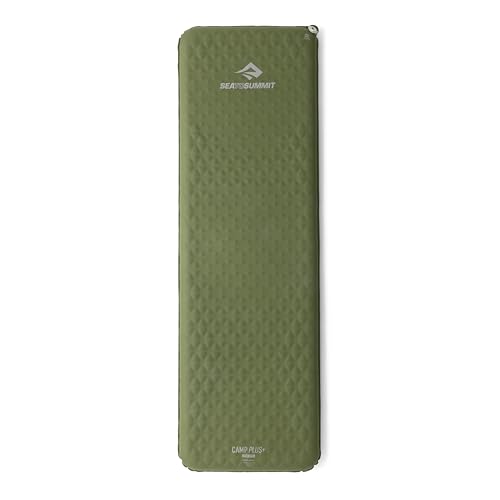
Sea to Summit Camp Plus SI Sleeping Mat, Rectangular/Large

Sea to Summit Camp Plus SI Sleeping Mat, Rectangular/Regular
Meet The Standout Selections
The Tapered Regular sits at the warm, comfort-leaning end of the Camp Plus SI family without tipping into backpacking-bulky territory. Its 2.6-inch foam stack and 4.3 R-value make it a sensible call for shoulder-season car camping, late-fall basecamp setups, and the kind of trip where the forecast says “near freezing” rather than “actually freezing.”
The self-inflating foam does the heavy lifting on setup: crack the reversible valve, the pad pulls in most of its own air, and you top it off with a few breaths. Versus the rectangular Regular further down the list, this tapered shape sheds a little weight and packed size, while keeping the 30-denier face fabric that holds up against pine needles and grit. For weekend trips where pack space matters but a hard ultralight pad isn’t on the table, it’s a fair middle path.
Everyday Perks
- 4.3 R-value handles chilly ground down to roughly shoulder-season freezing nights, so most campers won’t need a separate insulation layer underneath.
- Self-inflating foam saves setup time at the tent, especially after a long drive when the last thing you want is thirty breaths of manual inflation.
- 2.6 inches of loft keeps hips and shoulders off rocky or rooty ground, which matters for side sleepers more than the spec sheet suggests.
- Reversible design supports one-way inflation, one-way deflation, and fine-tuning without fighting a flapping valve.
Trade-Offs To Consider
- Heavier and bulkier than the 1.5-inch Rectangular Regular, so it’s not the first pick for true pack-and-hike trips.
- Self-inflating foam takes longer to dry if it gets soaked, and owners commonly store it loosely rolled with the valve open to prevent mildew.
Who Should Grab It
Car campers and basecampers who sleep cold, run three-season trips into shoulder season, and value comfort over a stripped-down pack.
A Better Fit Elsewhere
Backpackers chasing a lighter load should look at the Sea to Summit Camp Plus SI Sleeping Mat, Rectangular/Regular instead.
This Large tapered version keeps the same 4.3 R-value and 2.6-inch foam as the first pick, just stretched out for taller bodies. For sleepers over six feet, the difference is more than cosmetic: feet no longer hang off the edge, and the pad stops feeling like a hammock for your calves.
The trade-off is exactly what you’d guess, a bigger packed footprint and more mass to haul. For two-up car camping, family basecamps, and any trip where the tent stays put for several nights, the extra square inches pay back in real comfort. Compared to the Rectangular Large, this tapered cut trims a little weight without giving up that critical lengthwise room, which is a fair compromise when you’re tall but not wide.
The Case For It
- Extended length suits tall sleepers who constantly find their feet dangling on standard-length pads.
- Same 4.3 R-value as the Tapered Regular, so cold-night performance doesn’t drop just because the pad got longer.
- Tapered shape saves a little weight and bulk over the Rectangular Large, which adds up on multi-day trips where every liter of pack space counts.
- Reversible valve streamlines pack-down, so you’re not fighting air pressure while wrestling a long pad back into its stuff sack.
Points To Keep In Mind
- Longer pad means a longer fold and roll, which can feel awkward in a small tent vestibul.
- The added size also means a bigger dry footprint if it ever needs to air out fully after a wet night.
Feature Snapshot
Made For
Tall side sleepers and basecampers who want cold-night warmth without dragging a full rectangular pad into the tent.
Look Elsewhere When
Sleepers who sprawl or share a pad with a partner should look at the Sea to Summit Camp Plus SI Sleeping Mat, Rectangular/Large instead.
Where the tapered cuts trim grams, the Rectangular Large opens up. The full rectangular footprint gives restless sleepers, kids, and side-sleepers-with-elbows somewhere to land when they roll, and the flat surface doubles as a dry sitting area inside the tent for changing layers.
It carries the same 2.6-inch foam and 4.3 R-value as the tapered versions, so you’re not trading warmth for surface area. The honest read: this is the comfort-first pick of the family. Weight and packed volume climb noticeably, so it leans car-camping and family-tent rather than trail-hiking. For campers who shift a lot at night or share a tent with a partner, that trade usually feels worth it.
Strong Points
- Full rectangular shape gives restless sleepers and kids room to roll without falling off the pad.
- 2.6-inch loft under a wider surface keeps elbows and shoulders supported, which matters for side sleepers more than any number on the spec sheet.
- Matches the 4.3 R-value of the tapered pads, so warmth doesn’t drop just because the footprint grew.
- Doubles as a clean, dry surface for changing clothes inside the tent on damp mornings.
Honest Caveats
- Biggest packed size in this lineup, which can crowd smaller packs and tight kayak hatches.
- Wider pad can bridge across small dips in the ground if the surface isn’t prepped well, slightly reducing real-world support.
- Heavier than the tapered pads, so it really wants a car or canoe behind it, not a long ridge walk.
Best Suited To
Car campers, family-tent setups, and side sleepers who move around enough that a tapered pad feels too confining.
Swap It Out When
Tall solo campers looking to save weight should consider the Sea to Summit Camp Plus SI Sleeping Mat, Tapered/Large instead.
The Rectangular Regular is the lightweight entry in this shortlist, the one designed to ride in a pack rather than ride in a trunk. It uses the same reversible multi-function valve as the rest of the family, but drops to a 1.5-inch foam stack to keep weight down for scouts, hikers, and three-season backpackers.
The 4.2 R-value still handles cool nights well, just not the deep shoulder-season cold the thicker pads shrug off. Compared to the 2.6-inch options above, you give up some hip-and-shoulder support, but you get a pad that rolls small enough to live in a 60-liter pack. For most backpackers in summer and early fall, that balance is the right one to strike.
A Strong Showing
- Lighter, more packable than the 2.6-inch pads, so it actually fits inside a backpacking kit without forcing trade-offs elsewhere.
- Reversible multi-function valve speeds inflation and pack-down, which matters more when you’re doing it tired at the end of a long day.
- Self-inflating foam fills in fast, so backpackers aren’t stuck huffing into a pad after dark.
- Rectangular shape gives restless sleepers room without inflating pack size the way a larger rectangular pad would.
Things To Weigh
- 1.5-inch loft lets hips and shoulders feel rocky ground more than the thicker pads in this lineup do.
- 4.2 R-value is rated for three-season use, so freezing shoulder-season nights may push the limits of comfort.
- Smaller surface than the Rectangular Large, which taller sleepers may find tight through the shoulders.
Whose Shelf It Belongs On
Backpackers, scouts, and summer-through-fall campers who want self-inflating comfort without paying for it in pack weight.
Reach For A Different Pick When
Cold-weather campers chasing thicker insulation should look at the Sea to Summit Camp Plus SI Sleeping Mat, Tapered Regular instead.
Picking The Right Pad For The Way You Camp
R-value tells you how well a pad blocks heat loss into the ground, and the rule of thumb is straightforward: higher means warmer. Anything around R-3 or above handles summer to early fall on most ground, while R-4 and up starts to earn its keep when nights dip close to freezing. The 4.2 to 4.3 spread across this lineup puts every pad in genuine three-season territory, with the thicker options stretching into shoulder-season cold without extra insulation underneath.
Thickness matters more than newcomers expect. A 1.5-inch pad keeps you off the ground, but a 2.6-inch pad actually cushions hips and shoulders when you sleep on your side. Side sleepers in particular notice the jump between these two thicknesses within the same family, since the foam stack is doing the job a softer pad would otherwise need air to do.
Shape decides how the pad packs and how it sleeps. Tapered pads trim grams and roll smaller by narrowing at the feet, which works for most solo campers. Rectangular pads cost more space in the pack but reward restless sleepers, kids, and anyone who treats their pad as a sit-and-change surface inside the tent. Match the shape to your sleep style, not just to your pack.
Sizing is the simplest piece of the puzzle: a pad shorter than your height pushes your feet onto cold ground and steals warmth. Tall sleepers generally want a Large variant, while average-height campers fit fine in a Regular. Width matters too, since narrow pads leave shoulders hanging in the air for side sleepers.
Key Considerations Across These Picks
Pitfalls Shoppers Hit
The most common slip is buying by packed size alone and ending up with a pad too thin for their sleep style. Self-inflating foam has real limits on how small it can roll, so chasing the most compact option can quietly cost you comfort. Another trap is ignoring R-value for summer trips, then getting caught on a cold front with a pad rated for warm weather only.
The Upgrade Payoff
Moving from a 1.5-inch pad to a 2.6-inch pad in this family mostly buys loft and a small bump in R-value, and the comfort gain shows up on rocky or rooty ground where thinner foam bottoms out. Stepping from a tapered cut to a rectangular cut costs pack space but gives restless sleepers room to move. Neither upgrade is automatic, and the right call depends on how and where you camp.
Frequently Asked Questions
What does R-value mean on a camping sleeping pad? R-value measures how well a pad resists heat flow into cold ground, and higher numbers mean more insulation. A pad rated around R-4 handles three-season use down toward freezing, which is where most of the picks above land.
Are self-inflating sleeping pads comfortable for side sleepers? Yes, especially the 2.6-inch options in this family, since the foam stack cushions shoulders and hips directly. Side sleepers typically want at least two inches of loft to keep pressure points off the ground through the night.
How do you clean and store a self-inflating foam pad? Wipe the surface with a damp cloth and mild soap, then dry the pad fully with the valve open before rolling it loosely for storage. Tight compression for long periods can degrade foam loft over time, so loose storage is the widely recommended approach.
Can you use these pads in winter? The 4.3 R-value options handle shoulder-season cold and lighter winter use on snow, but true winter camping usually wants a higher R-value or an added closed-cell foam layer underneath. The 1.5-inch Rectangular Regular leans toward three-season use rather than deep cold.
Do tapered sleeping pads really save weight? Yes, by trimming material at the foot end, tapered pads usually roll smaller and weigh less than a comparable rectangular pad. The trade is a narrower sleeping surface, which matters more for restless sleepers and kids than for still sleepers.
Bottom Line
Across this Sea to Summit family, the right pick comes down to how you camp rather than which pad is “best” in the abstract. Backpackers and scouts land naturally on the Rectangular Regular for its lighter pack weight. Cold-night car campers and basecampers usually want the thicker Tapered Regular. Taller sleepers step up to the Tapered Large, and anyone who shifts around at night usually finds the Rectangular Large worth the extra bulk. Once you match the pad to the trip, the rest of the night tends to take care of itself.