
A good night’s sleep in the great outdoors usually comes down to what’s under you, not the view above. Whether you’re hosting guests in a tent, fitting out a roof-top rig, or padding a car-camping setup, the right queen-size sleeping surface changes the whole trip. This list covers seven Camping Queen Mattresses that span self-inflating foam pads, roll-up memory foam options, and elevated airbeds with built-in pumps, each matched to a clear use case.
A Quick View Of The Lineup

Intex Dura-Beam Essential Rest Airbed Queen
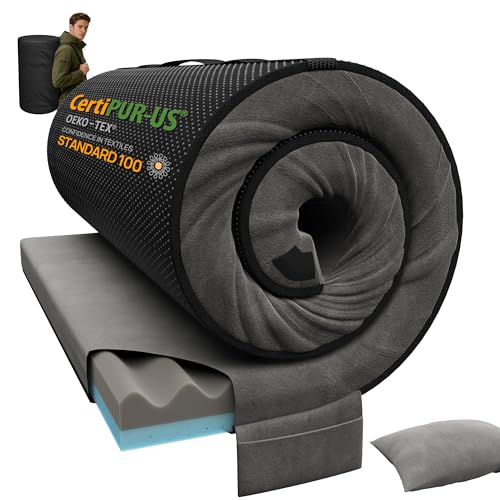
Releep 3 Inch Dual-Sided Memory Foam Camping Mattress

Lost Horizon Self-Inflating Foam Mattress for Model Y

Lost Horizon Self-Inflating Foam Mattress, Single

Lost Horizon Option3 Self-Inflating Foam Mattress, Twin

Lost Horizon Option3 Self-Inflating Foam Mattress, Full

Intex Pillow Dura-Beam Raised Airbed with Internal Pump
Why These Options Stand Out
For campers who want a near-bedroom experience without hauling foam, the Dura-Beam Essential Rest leans on an internal electric pump and an 18-inch rise that mimics traditional mattress height. The Fibre-tech interior (thousands of polyester fibers woven into the beam structure) keeps the surface from sagging in the middle, and the velvety top sheet feels softer against skin than standard PVC. In a base-cabin tent or a glamping setup, you can roll it out, hit the pump switch, and have a usable sleep surface in minutes.
It’s also one of the easier options for first-timers, since there is no fiddling with valves or rolling technique. The trade-off is air: cold nights and repeated movement can drop firmness, so most owners top off before bed.
Real Benefits
- Built-in electric pump inflates and deflates without manual effort, saving setup time at camp
- Fibre-tech beam construction resists the mid-mat sag that plagues cheaper airbeds
- Velvety sleep surface grips sheets better than slick vinyl and feels softer on bare skin
- 18-inch height makes getting in and out easier, especially for older campers or anyone with stiff joints
Things To Consider
- Requires access to a power outlet for the internal pump, which limits remote trailhead use
- Air pressure can drop overnight in cold weather, so a top-off before sleep is common practice
Right Fit For
Glampers and base-camp hosts running a fan or generator who want the easiest setup possible.
Skip It When
Off-grid campers without power should look at the Releep memory foam mattress instead, since foam needs no inflation.
If you’ve ever woken up feeling every root and rock beneath a thin pad, the Releep is a different animal. Its dual-layer build pairs a gel-infused memory foam top (foam that molds to your body while pulling heat away) with a denser support base, and the whole thing rolls into a carry bag once deflated. For back sleepers, side sleepers, and anyone with a cranky lower back, the foam cradles pressure points in a way air simply cannot.
Unlike the Intex airbed above, this pad needs no pump, no power, and no real setup beyond unrolling. The waterproof outer shell is the bigger story on wet ground, because moisture wicking up through a tent floor is the usual foam-pad killer.
Standout Benefits
- Gel-infused memory foam top layer disperses body heat and cushions shoulders and hips
- Waterproof cover protects the foam core from tent-floor condensation and light rain splash
- Rolls into a compact carry bag for stashing in a trunk or back-of-SUV cargo area
- No pump, no power, no noise, which makes it ideal for quiet wilderness mornings
Points To Note
- 3 inches of foam is plenty for most campers, though side sleepers over 200 pounds may still feel ground texture through the pad
- Foam sleeps warmer than an air mattress, so summer desert trips can get stuffy under the cover
Best Suited To
Campers prioritizing sleep quality over pack size, plus guest-bed duty in a small apartment.
Look Elsewhere When
Anyone running a tight four-person tent should consider the Lost Horizon twin option, which has a wider sleep footprint for shared setups.
Not every Camping Queen Mattress needs to fit inside a tent. The Lost Horizon Model Y pad is cut to the cargo area of Tesla’s compact SUV, with 4.5 inches of foam fill and a 440-pound weight rating. A self-inflating pad uses an open-cell foam core that pulls air in through a valve, then you top it off with a few breaths for your desired firmness.
Where the Releep above offers flexibility, this one offers a tailored fit. The pad fills the rear footwell without sliding around, which matters when you’re trying to sleep through a long road-trip night.
Notable Gains
- Custom-cut shape matches the 2-row Model Y cargo area with no awkward gaps or sliding
- 4.5-inch foam profile rivals home-mattress thickness for a real flat-sleep surface
- Self-inflating valve cuts setup to about a minute, with manual top-off for firmness control
- 440-pound capacity handles two adults or a family dog sprawled across the back
Honest Caveats
- The custom fit rules out use in any vehicle other than the listed Tesla configuration
- At 9 pounds of foam, this is a stationary car-camping pad, not a hike-in option
Who Should Grab It
Tesla Model Y owners running road trips, dispersed camping, or overnight charging stops.
Consider Something Else When
Anyone without a Model Y should consider the Lost Horizon Full Option3 pad for a more universal footprint.
The single Lost Horizon keeps the same self-inflating DNA as the Model Y version but drops to 3 inches of foam and 5.5 pounds of fill. For one person in a one-person tent, that profile is the sweet spot between comfort and packability. You unroll it, crack the valve, and the foam core pulls in air while the mat expands to full size.
Compared to the Releep’s 3-inch memory foam, this pad is firmer and a touch cooler to sleep on, which can matter on warm summer nights. The trade-off is the weight capacity, capped at 220 pounds.
The Case For It
- Single-occupant size fits backpacking tents and small bivy setups without wasted material
- Self-inflating foam means no mouth-inflating lung-burn at altitude
- Lighter 5.5-pound fill makes it easier to split gear between car and camp
Worth Noting
- 220-pound weight limit leaves no margin for two adults sharing the pad
- 3-inch thickness feels thinner than the 4.5-inch Lost Horizon twins if you prefer plush comfort
Made For
Solo travelers and backpackers who want self-inflating convenience in a smaller footprint.
Where Another Pick Suits Better
Couples or heavier sleepers should choose the Lost Horizon Option3 Full for the extra capacity and depth.
Stepping up to the twin Option3 brings a real jump in comfort: 4.5 inches of foam fill weighing 8.5 pounds, with a 300-pound capacity that handles a parent and a small child side-by-side. The extra inch over the single pad matters more than it sounds, because thicker foam distributes weight across more surface area and reduces the hip-and-shoulder pressure that ruins a campsite morning.
Where the Intex airbed gives you adjustable firmness, this foam pad gives you consistent support that doesn’t change between 11 p.m. and 5 a.m. That’s the quiet luxury of foam over air.
What Stands Out
- 4.5-inch foam profile matches home-mattress thickness for campsite comfort
- 300-pound capacity supports an adult and a kid sharing a tent
- Self-inflating valve simplifies setup, with a manual top-off for personal firmness preference
Trade Offs
- Twin footprint fills a small tent floor, so a 2-person tent can feel cramped with gear
- Bulkier roll than the single pad, which matters if trunk space is already tight
Who Will Love This
Family campers running a larger tent or a rooftop tent with room for a twin pad.
Not Your Match When
Solo travelers should stick with the Lost Horizon Single for easier transport and lower weight.
The Full Option3 is the heavyweight of the lineup, with 12 pounds of foam fill, a 4.5-inch profile, and a 440-pound capacity that comfortably supports two adults. It’s the closest you get to a residential mattress that still rolls into a car trunk, and it fills a large family tent without leaving a cold strip of ground in the middle.
Compared to the twin Option3, the extra width means each sleeper has their own zone, no more elbow battles at 3 a.m. The catch is bulk and weight, which makes sense for car camping but rules out hike-in sites.
Reasons It Performs
- Full-size footprint gives couples their own sleep zones without center-line sag
- 440-pound capacity handles two adults plus a dog sprawled across the foot
- Thick 12-pound foam fill absorbs ground texture better than thinner pads
Some Limits To Know
- 12 pounds of foam is too heavy for backpacking but reasonable for car camping
- Full-size pad requires a larger tent footprint, so a 4-person tent is the practical minimum
Perfect Match For
Couples and families running a base camp where comfort beats pack weight every time.
Reach For A Different Pick When
Solo backpackers or tight-budget campers should look at the Releep memory foam pad instead.
The Pillow Dura-Beam takes the Essential Rest formula and adds a built-in raised pillow section, which is the small detail that separates “air mattress in a tent” from “actual bed that happens to inflate.” Indented sides keep fitted sheets from sliding off, and the 16.5-inch height gets you off cold ground without the bulk of a full cot setup. Approximate inflation time sits around 3.25 minutes from the internal pump.
Versus the Essential Rest reviewed earlier, this one leans into tent-cabin hybrid setups and guest-cot duty more than minimalist backcountry use. The integrated pillow is the differentiator.
Features That Help
- Integrated raised pillow section eliminates a packed pillow in the tent
- Indented side rails hold standard fitted sheets in place through the night
- Built-in pump with hand-carry storage bag keeps the whole package self-contained
- 16.5-inch rise suits taller campers who want sit-up comfort in a tent
Factors To Consider
- 600-pound capacity is generous, but heavy users report faster air loss over multi-day trips
- Built-in pump requires a power source, so remote use still calls for a portable battery or generator
Built With In Mind
Tent-cabin hybrids, large family tents, and guest cots where a true pillow makes the difference.
A Better Fit Elsewhere
Off-grid campers without power should choose the Lost Horizon Full foam pad for pump-free comfort.
What Matters Most Before Choosing Camping Queen Mattresses
Sleep surface, insulation, and pack size each matter more than brand name. Foam pads insulate better and sleep quieter, while airbeds adjust firmness but lose heat faster to the ground. For most campers, a 3-inch foam pad is the minimum comfort line, and 4.5 inches is the upgrade worth chasing for couples.
Inflation Style And Setup Time
Self-inflating pads cut setup to roughly a minute once unrolled, which is the biggest quality-of-life upgrade over hand-inflated foam. Internal electric pumps inflate airbeds in three to four minutes but require a power outlet, a generator, or a portable power station. For trips where power is uncertain, foam wins on simplicity.
Thickness, Weight Capacity, And Warmth
Thickness translates directly to comfort on rough ground: 3 inches handles packed dirt, 4.5 inches handles rocky sites. Weight capacity matters more than people expect; a pad rated for 220 pounds won’t sag under a 200-pound sleeper, but two adults on a 300-pound-rated twin pad will. Foam also insulates from cold ground, where air mattresses often need a separate insulating layer beneath them.
Size And Storage Footprint
A queen pad needs a tent with at least a 7-by-7 foot floor for two sleepers, and a full-size foam pad rolls into a cylinder roughly the size of a large duffel. Factor in trunk space before choosing, since the difference between a single and a full pad is roughly five pounds and a foot of roll length. Car campers have more flexibility than backpackers, so match the size to your vehicle, not your wish list.
Key Considerations Across These Picks
Where Shoppers Go Wrong
The biggest mistake is buying a queen pad for a tent built for two, leaving no room for gear. Another common slip is picking a self-inflating foam pad without checking the weight capacity, since foam that bottoms out under a heavy sleeper ruins the whole trip. Airbed buyers often skip the insulated ground sheet, which costs them a cold night on conductive ground.
What The Higher Tier Buys
Spending more in this category typically buys thicker foam, higher weight ratings, and dual-layer construction. The jump from the Lost Horizon Single to the Option3 Full is a 4.5-inch profile and a 440-pound capacity, which together cover two adults on rocky ground without bottoming out. For solo travelers, the Releep memory foam is the upgrade worth chasing, since gel-infused foam disperses heat and pressure better than standard closed-cell foam.
Frequently Asked Questions
What thickness is best for a camping queen mattress?
Three inches is the comfort minimum for most campers, while 4.5 inches gives noticeably better pressure relief on rocky ground. Side sleepers benefit from thicker foam because shoulders and hips sink deeper.
Do self-inflating pads work in cold weather?
Self-inflating foam pads insulate well because the foam core traps air and resists ground-conducted cold. Air mattresses lose heat faster through the air column, so an insulated underlay is recommended for sub-50-degree nights.
Can a queen camping pad fit in a two-person tent?
Most two-person tents have 7-by-5 or 7-by-7 foot floors, so a queen pad fits lengthwise but leaves little gear space. A full-size pad typically needs a four-person tent for comfortable two-sleeper setups with gear.
How long do these pads typically last?
Foam camping pads last three to five seasons with moderate use, while airbeds can last longer if stored properly and protected from sharp ground. UV exposure and punctures are the most common failure modes for both styles.
Are waterproof covers necessary?
A waterproof outer shell protects foam from tent-floor condensation and light rain splash. Without it, foam cores absorb moisture over time, which shortens lifespan and adds weight on pack-out.
Wrap Up
Pick a pad based on where you sleep and how you get there. Backpackers and solo travelers get the most from the Releep memory foam or the Lost Horizon Single, while car-campers and couples get better nights from the Lost Horizon Full Option3. For power-access basecamps, the Intex Dura-Beam airbeds deliver adjustable firmness with the easiest setup. Match the pad to your ground, your tent, and your power situation, and the rest of the trip gets a lot quieter.