
A weekend at the lake, a tailgate before the big game, a quick dinner on the RV pad: a propane grill turns those stops into proper meals. You don’t have to fuss with charcoal or drag a heavy setup to enjoy grilled chicken at the trailhead. The right portable propane setup lights fast, heats even, and packs down small enough for a trunk or a camper cabinet.
The Lineup, Simplified

Hisencn Single Burner Camp Stove with Grill Pan
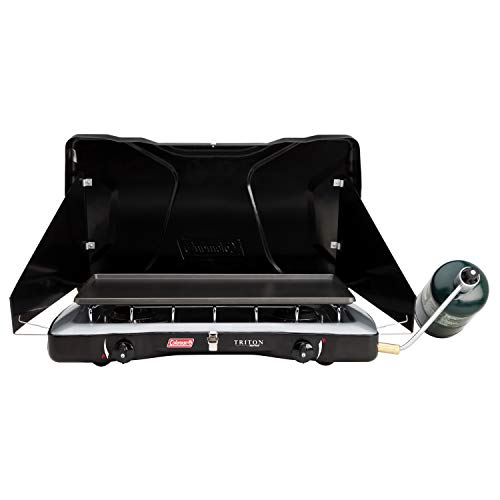
Coleman Triton Propane Stove, 2 Burner

Coleman Cascade 18 1-Burner Camping Stove

Coleman Tabletop 2-in-1 Grill & Stove

Blackstone 22″ Tabletop Griddle

ADREAK 3-Burner High Pressure Propane Stove
More On The Choices That Made The List
The Hisencn kit leans into the “everything in one box” promise that RV travelers and tailgaters tend to love. A single burner anchors the setup, and the included grill pan, griddle plate, and cutting board slot right into the workflow. You can sear a steak, then slide a griddle plate over the flame to toast buns without hunting for a separate pan.
Compared to the Coleman Triton covered later, this unit takes up less counter real estate and travels as a self-contained set. It’s a sensible pick for a small trailer galley or a picnic table where you want to unpack once and start cooking. The trade-off is single-burner capacity: cooking a full meal for six at once is a stretch.
The Case For It
- Modular accessories cover grilling, griddling, and prep without extras in the trunk
- Compact footprint suits RV cabinets, pickup beds, and small picnic tables
- Lightweight enough to carry a short distance from a vehicle to a site
- Single-burner design simplifies fuel use on shorter weekend trips
Points To Keep In Mind
- One burner limits multi-dish meals; rotating pans becomes the routine
- Smaller cooking surface means longer cook times for groups
- Accessories add cleanup steps compared to a single dedicated grate
Whose Campsite It Belongs On
RV owners, couples tailgating, and anyone wanting a compact, all-in-one cook kit for short trips will get the most out of it.
Look Elsewhere When
Feed a crowd of more than four and you’ll find the Coleman Triton Propane Stove, 2 Burner handles the multi-pan workflow far more comfortably.
The Triton has been a camp-staple for years, and the current model sticks to the formula that earned that reputation. Two independently controlled burners push up to 22,000 BTUs total, which covers a pot of coffee and a skillet of bacon at the same time. Adjustable wind-blocking panels fold up around the burners, keeping flame steady in breezy conditions that would chase other stoves sideways.
For a family of four running breakfast and dinner at the campsite, the Triton removes the kind of bottleneck the single-burner Hisencn above can create. It’s heavier and bulkier, but it sits flat on a picnic table and feels planted. Pressure regulators and sturdy grates are the kind of detail you notice after a few seasons of use.
The Practical Payoff
- Two burners let you boil water and cook a main dish simultaneously
- Wind-blocking panels preserve flame in gusty campsites and beach setups
- Heavy-duty construction holds up well to repeated seasonal use
- Generous cooking area accommodates a 10-inch and 12-inch pan side by side
Trade Offs
- Bulkier and heavier than single-burner alternatives, so pack space matters
- Designed for flat surfaces; less suited for uneven ground or tight RV storage
- Aluminized steel cooktop, while durable, needs prompt cleanup to prevent buildup
Feature Snapshot
Made For
Family campers and car campers who want a reliable two-pan cooking station for full breakfasts and dinners.
Consider Something Else When
You want flat-top griddle space for pancakes and smash burgers: the Blackstone 22″ Tabletop Griddle covers that need better.
The Cascade 18 takes the single-burner formula and tightens it up for hikers, paddle campers, and anyone packing light. The 8,000 BTU burner accepts up to a 12-inch pan, which covers most camp cookware. Matchless rotary ignition eliminates the lighter hunt at sunrise, a small luxury that tends to matter when the coffee is waiting.
It also folds flat for storage, and the detached grate flips 180 degrees to reduce the packed footprint. For a solo or duo trip where one pan at a time is the routine, this saves space and weight over the Triton covered earlier. For weekend groups, you’d outgrow it fast.
The Value In It
- Matchless rotary ignition skips the lighter and gets cooking started quicker
- Fits a 12-inch pan, so standard camp cookware works without modification
- Folding grate and slim body cut down packed size in a car trunk or kayak hatch
- Aluminized steel cooktop wipes down quickly after a greasy meal
Honest Caveats
- Single burner limits simultaneous dishes, so timing matters more
- Lower BTU rating than the Triton means longer preheats for searing
- Wind exposure affects flame stability more than on shielded two-burner units
Right Fit For
Solo travelers, paddle campers, and minimalists who want a lightweight single-pan cooktop for short trips.
Swap It Out When
You’re cooking for more than two and want griddle plus burner flexibility: the Coleman Tabletop 2-in-1 Grill & Stove handles both jobs.
This hybrid splits the difference between a grill and a stove, which is exactly what tailgaters and RV cooks have asked for. One side runs a chrome-plated grate for searing burgers and dogs; the other side handles a burner for pots, pans, or coffee. Running both at once means burgers come off while beans warm up, with no juggling.
The push-button ignition fires each burner without matches, and wind guards keep flame direction predictable on breezy afternoons. With 20,000 BTUs split across two independently adjusted burners, output lands close to the Triton covered earlier, with a grilling surface added. A removable grease tray and chrome-plated grate make post-meal cleanup more straightforward than scraping a flat-top griddle.
Everyday Advantages
- Grill and stove run at the same time, so a full meal happens in one pass
- Push-button ignition removes the need to pack matches
- Wind guards protect flame in open parking lots and breezy sites
- Grease tray and chrome grate simplify cleanup after drippy foods
Where It May Fall Short
- Half the cooking area is grilling surface, so flat-top pancakes aren’t the strong suit
- Bulkier than a pure single-burner option for tight trunk storage
- Two surfaces mean two cleanup zones rather than one
Feature Rundown
Who It Suits Best
Tailgaters and RV cooks who want to grill burgers while a pot simmers alongside, in one compact tabletop package.
Not Your Match When
You live for flat-top pancakes and smash burgers: the Blackstone 22″ Tabletop Griddle delivers the dedicated griddle surface that this hybrid can’t.
Once you cook a full breakfast on a Blackstone, regular camping stoves start to feel limiting. The 22-inch flat-top spans 352 square inches across two H-style burners, enough for pancakes, eggs, hash browns, and bacon at the same time. Output of 24,000 BTUs splits across independent zones, so a low-heat side keeps onions soft while the other side sears steak.
The rear grease trap funnels drippings into a catch tray, which keeps a tailgate or picnic table cleaner than a standard grate. Compared to the Coleman Tabletop 2-in-1 covered earlier, you trade the pot-side burner for pure griddle real estate. You may find that limiting if you regularly boil water, but for breakfast cooks and smash burger sessions, the trade pays off.
Strengths Worth Knowing
- Large 352 sq. inch surface feeds a family without rotation
- Two H-style burners create distinct heat zones for simultaneous cooking
- Rear grease trap keeps tailgate and picnic tables cleaner
- Tabletop format still fits a car trunk with the propane tank disconnected
Practical Considerations
- No dedicated pot burner, so pasta water and soups need a separate stove
- Cold-rolled steel griddle requires seasoning and prompt post-cook protection
- Heavier than burner-only options at this capacity
Best Suited To
Big-batch breakfast cooks and tailgaters who want a flat-top surface for pancakes, smash burgers, and searing.
A Better Fit Elsewhere
You want one box for grill marks and a boiling pot: the Coleman Tabletop 2-in-1 Grill & Stove covers both jobs without swapping surfaces.
This is the heavy hitter of the lineup. Three high-pressure burners output 225,000 BTUs combined, which is overkill for a backpacking tent but exactly right for a crawfish boil or a backyard fish fry. Detachable legs break it down to a manageable size for transport, and the 0–20 PSI regulator hooks to a standard propane tank.
Where the Triton covered earlier runs a quiet family breakfast, this unit runs a party. It’s the pick for tailgates where you’re feeding a dozen, or for outdoor kitchens that need commercial-grade heat. The honest read is that it’s more stove than most casual campers need, but for big cookouts the extra power is what keeps the line moving.
What It Does Well
- 225,000 BTU output handles boiling, frying, and searing simultaneously
- Detachable legs simplify transport and storage between events
- Three independent burners allow parallel cooking at different heat levels
- Adjustable 0–20 PSI regulator adds versatility for high-pressure propane setups
Some Limits To Know
- High output and large footprint make it overkill for small camping trips
- Setup takes longer than tabletop stoves with built-in legs
- Bulk and weight require a vehicle for transport
Technical Highlights
Who Should Grab It
Big-group cookout hosts, tailgate crews, and outdoor kitchen cooks who need commercial-style heat and capacity.
Reach For A Different Pick When
Weekend family camping is the main use case: the Coleman Triton Propane Stove, 2 Burner delivers enough heat without the extra weight.
What Matters Most Before Choosing Camping Propane Grills
BTU Output and Cooking Surface
BTU, short for British Thermal Unit, measures how much heat a burner produces per hour. Higher numbers mean faster preheats and stronger sear marks, yet raw output matters less than how that heat lands across the cooking surface. A 22,000 BTU two-burner stove with even heat distribution will outperform a high-BTU burner with a hot spot in the middle. Match the surface area and burner layout to the meal you actually cook, whether that’s a single morning skillet or a full dinner spread.
Portability Versus Cooking Capacity
Compact single-burner units like the Coleman Cascade 18 fit in a kayak hatch or a daypack, while a three-burner high-pressure stove lives in a truck bed. Bigger setups feed more people in less time, but they add setup time and weight. Car campers can usually afford a heavier rig; backpackers cannot. Choose the trade-off that matches how you actually travel, not just how often you cook.
Wind Protection and Ignition
Wind kills flame stability and wastes fuel. Built-in wind guards, shielded burner recesses, or fold-out panels make a meaningful difference on exposed sites and open tailgates. Matchless ignition, whether rotary or push-button, removes the lighter from the packing list and speeds up startup. For most campers, those two details matter more than peak BTU numbers once the wind picks up.
Smart Buying Advice Worth Keeping In Mind
Where Shoppers Go Wrong
A common slip is chasing the highest BTU number without thinking about how the heat is distributed across the cooking surface. A poorly distributed 24,000 BTU griddle will struggle to cook evenly, while a well-designed 8,000 BTU burner can simmer reliably. Another trap is underestimating packed size: a stove that barely fits in the trunk gets left at home. Measure your storage space, including the propane tank, before you commit.
When Paying More Pays Off
Stepping up to a hybrid grill-and-stove or a larger griddle plate adds real capability for cooks who run a full menu. Better construction in the frame, hinges, and grates also tends to extend service life, since stoves that get hauled in and out of a car take more abuse than a backyard grill. For casual weekend use, an entry-level burner covers the basics; for tailgates and family cookouts, the upgrade typically pays back in time saved and meals simplified.