
A good propane burner turns a campsite into a kitchen. Whether you need boiling water for freeze-dried dinners at basecamp, a quick morning coffee before a trailhead push, or a two-burner setup for family meals in a state park, the right stove shapes the whole trip. This guide covers compact canister stoves for backpackers, hybrid systems for car campers, and heavy-duty cast-iron burners for tailgates and outdoor kitchens.
A Fast Comparison Of The Options

Jetboil Flash Portable Fast Boil Stove

Jetboil MightyMo Ultralight Camping Stove
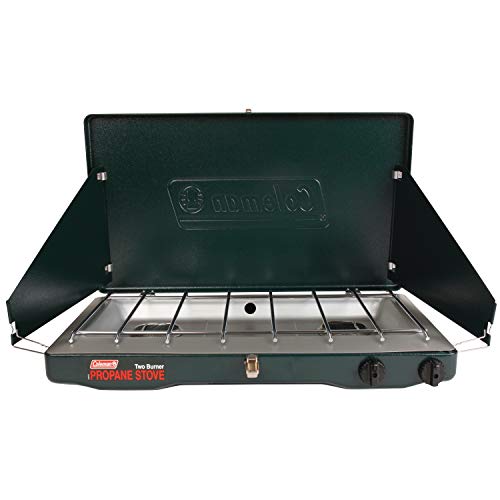
Coleman Classic Propane 2-Burner Stove

Jetboil HalfGen Basecamp Cooking System

Bonnlo 2 Burner Outdoor Propane Cooker
Fire-Maple Fixed Star 1 Stove System

Jetboil Flash 1.0L Fast Boil Stove (Mountainscape)
More Details On Our Top Picks
The Flash is the kind of stove solo backpackers end up trusting after one season. The 1.0L FluxRing cooking cup doubles as your pot, so you skip packing a separate vessel, and the insulating cozy holds heat long enough to rehydrate a pouch while you filter water for the next boil. Turn-and-click auto ignition means no fumbling with lighters at altitude or in a cold morning drizzle.
For thru-hikers counting ounces or weekend campers who just want fast coffee, this lands in a sweet spot. It weighs next to nothing, fits a side mesh pocket, and the thermochromatic heat indicator on the cup gives a clear visual cue when to drop in your meal packet.
Where It Excels
- Auto ignition eliminates the need to pack a separate lighter
- Integrated 1L cup means one less pot in your pack
- Heat indicator lets you judge water temperature at a glance
- Fuel efficiency keeps canister weight low over multi-day trips
Things To Consider
- Cup size limits you to boil-only meals and single servings
- Not suited for simmering sauces or pan-frying in the backcountry
Feature Snapshot
Made For
Solo backpackers and thru-hikers who need hot water fast and want to keep pack weight low.
Look Elsewhere When
Campers who want to simmer sauces or fry in the backcountry will find the Fire-Maple Fixed Star 1 a more capable cooking platform.
Where the Flash is a closed system, the MightyMo opens up. The four-turn regulator gives you incremental flame control, so you can move from a hard boil down to a low simmer and actually cook a real meal instead of just rehydrating one. The open platform also accepts any pot or pan you already own.
Boil time lands around three minutes, and the fuel consumption stays well below traditional backpacking stoves. Campers who care about cooking, not just boiling, will feel the difference on the second night out.
What Makes Sense
- Four-turn regulator offers true simmer-to-boil control
- Open platform fits any compatible pot or skillet
- Reported half-fuel use compared to older canister stoves
Honest Caveats
- Heavier than integrated-cup systems like the Flash
- Needs a separate pot, which adds gear to your pack
- More complex flame dial means a slight learning curve for first-timers
Who It Suits Best
Backcountry cooks who want real meals, not just boiled water, on multi-day trips.
Where Another Pick Suits Better
The Jetboil Flash is a simpler choice for hikers whose meals are mostly dehydrated pouches and instant coffee.
This is the stove you remember from every family campground. Two independent burners give you enough surface area to run a skillet and a kettle at the same time, and the wind-blocking side panels keep the flame steady when the breeze picks up at dusk. The 20,000 BTU total output moves cooking along without a long wait.
Pressure-control technology keeps performance stable even when the propane cylinder gets low. Compared to the Jetboil systems above, this is a car-camping setup through and through, but for families cooking real dinners, that trade-off is exactly the point.
Benefits That Matter
- Two adjustable burners support full meal prep at once
- Fits a 12-inch and 10-inch pan simultaneously
- Wind-blocking panels shield flames in exposed campsites
- Pressure regulator keeps output steady as fuel drops
Points To Keep In Mind
- Propane cylinder sold separately
- Too bulky for backpack carry, even for short distances
- Runtime tops out around one hour on high with a standard 16.4 oz tank
Quick Facts
Right Fit For
Car campers and families who cook full breakfasts and dinners at the campsite.
Skip It When
Solo backpackers will want something like the Jetboil Flash instead, since this stove requires a car to transport.
The HalfGen sits in a category of its own. The 10,000 BTU output and proprietary regulator let you melt snow for drinking water in winter conditions or crank out boiling water for an entire group’s coffee in one pass. Where most Jetboil systems are built around solo travel, this one is built around a basecamp table.
The clever bit is the Jet Link compatibility. You can daisy-chain compatible stoves into a full outdoor kitchen range if you’re feeding a large crew on a long expedition. In short, you get high-output heat without giving up the simmer control the brand is known for.
A Strong Showing
- 10,000 BTU output handles melting snow and large-volume boiling
- Incremental regulator gives real flame control, not just on-off
- Links with other Jet Link stoves for an outdoor range setup
Less Ideal Details
- Heavier than minimalist canister stoves, so it stays at the truck
- Best value only when you actually need the linkable feature
Built With In Mind
Group leaders and winter campers who need high output and steady simmer control at basecamp.
Reach For A Different Pick When
Soloists will find the Jetboil MightyMo a lighter, simpler fit for trail meals.
The Bonnlo is built like a piece of patio equipment, because that’s exactly what it is. The cast iron heads put out serious BTU, so a wok or a heavy stockpot gets hot fast, and the detachable legs let you set it on a tailgate or on the ground depending on the cook setup. Compared to the Coleman Classic above, this is the rougher, more powerful sibling.
Adjustment matters here too. The burner brackets accept various pot sizes, and you can dial the firepower down for simmering or up for a sear. For anyone running an outdoor kitchen or staging a big tailgate, it earns its weight in the truck bed.
Key Advantages
- Cast iron construction handles high heat and rough transport
- High BTU output suits woks, cast iron pans, and big pots
- Detachable legs let you choose tailgate-height or ground-level cooking
Possible Compromises
- Bulkier and heavier than folding camp stoves
- No wind protection, so gusty conditions cut efficiency
- Cast iron needs drying and oiling to avoid rust on long trips
Feature Card
Whose Shelf It Belongs On
Tailgaters, hunters, and outdoor cooks running a patio kitchen or a heavy-duty campsite setup.
A Better Fit Elsewhere
Lightweight campers will be happier with the Coleman Classic 2-Burner, which is easier to move around.
At 18 ounces with stove, bowl, and pot all nested together, the Fixed Star 1 is the kind of kit you toss in a pack and forget about until dinner. The heat exchanger reduces boil times noticeably compared to traditional backpacking stoves, and wind has less effect because the flame wraps around the pot base.
One real point to flag: the kit does not include a fuel canister, and it’s not compatible with certain threaded canisters. Worth a quick check before you commit. Past that, this is a strong alternative to the Jetboil systems for backpackers watching the budget.
Where It Helps
- Heat exchanger tech shortens boil times and cuts fuel use
- All-in-one nesting kit keeps pack footprint tiny
- Lightweight build suits long-distance backpackers
Worth Noting
- Fuel canister sold separately
- Not compatible with all canister brands on the market
Best Suited To
Backpackers who want a Jetboil-style integrated system at a friendlier weight class.
Not Your Match When
Cooks who need true simmer control should look at the Jetboil MightyMo’s open platform instead.
Think of this Mountainscape edition as the Flash with a refreshed ignition system and a fresh paint job. The half-turn counterclockwise auto ignition feels closer to a home range, so anyone new to canister stoves will adapt fast. Boil times around two minutes for coffee or soup mean less waiting and more time on the trail.
Functionally it sits right alongside the standard Flash earlier in this list, with the same integrated 1L cup and insulating cozy. The differences are mostly in the ignition feel and the visual finish.
Why It Works Well
- One-step auto ignition mimics a household stove knob
- Fast boil time for coffee, tea, and dehydrated meals
- Integrated pot keeps gear count low
Practical Considerations
- Limited to boil-only cooking, like the original Flash
Perfect Match For
New backpackers and casual campers who want fast hot drinks without learning a complicated flame dial.
Swap It Out When
Backcountry cooks should choose the Jetboil MightyMo for its open platform and simmer range.
How To Pick The Right Camping Propane Burner
Match The Stove To Your Style Of Camping
Backpackers should focus on weight, pack size, and fuel efficiency, since every ounce in your pack costs energy over a long day. Car campers care more about output, burner count, and how easy the stove is to set up at a picnic table. The Jetboil integrated systems serve backpackers well, while the Coleman 2-Burner and Bonnlo heavy-duty options are clearly built for car-based trips.
Understand Fuel And BTU Trade-Offs
Higher BTU ratings mean faster boiling and stronger searing, but they also drain fuel canisters faster. A 10,000 BTU stove like the HalfGen is a strong match for melting snow and feeding groups. A lower-output system like the Flash uses fuel more sparingly over multi-day trips. The honest read is that you rarely need maximum BTU for trail meals, but you absolutely do for wok cooking or large stock pots.
Think About Simmer Control And Cooking Style
If your meals are mostly freeze-dried pouches, integrated boil systems are a perfect match. Real cooking, like simmering sauces or pan-frying vegetables, calls for an open platform with a regulator, like the MightyMo. The Cautions sections above spell out which systems stay limited to boiling water.
Check Compatibility With Your Cookware And Fuel
Most canister stoves accept standard threaded isobutane canisters, but exceptions exist, and the Fire-Maple kit in this list is a notable one. Likewise, propane cylinder stoves like the Coleman and Bonnlo use a different fuel type than backpacking canisters. Match the stove to the fuel you can actually source where you camp.
Smart Choices Across These Picks
Pitfalls Shoppers Hit
A common slip-up is choosing a backpacking stove for car camping, or the other way around. The integrated Jetboil cups are clever on the trail but limiting at a picnic table. Wind exposure catches people out too, since most canister stoves perform poorly without a windshield. Plan for real wind, not calm-day wind, before you commit.
Where The Extra Money Goes
Spending more on a premium integrated system usually gets you better fuel efficiency, faster boil times, and a more reliable ignition. Basecamp-tier stoves like the HalfGen earn their cost with higher output and linkable setups. The upgrade pays off most for frequent travelers and group cooks who use the stove enough to justify the price difference.
Frequently Asked Questions
What’s The Difference Between Propane And Isobutane Fuel?
Propane comes in larger cylinders suited for car camping stoves, while isobutane mixes are sold in small threaded canisters for backpacking stoves. Isobutane performs better in cold weather and at altitude, which matters on winter or alpine trips.
Can You Use A Backpacking Stove In Winter?
Yes, but cold temperatures reduce fuel pressure and slow boil times. Premium integrated systems with pressure regulators handle winter better than basic canister stoves. For serious winter use, look for a stove rated for low temperatures or pair it with a fuel canister warmer.
How Long Does A Canister Last On A Backpacking Stove?
A standard 100g to 230g canister typically covers several days of use for one or two people, depending on boil frequency. Boil-only systems like the Flash stretch fuel further than simmer-heavy use of an open-platform stove.
Do All Camping Propane Burners Need Matches Or Lighters?
No. Many modern systems, including the Jetboil Flash variants, have built-in auto igniters. Stoves without igniters still light reliably with a standard lighter or match, so it is rarely a deal-breaker.
How Do You Maintain A Camping Propane Burner?
Keep the burner ports clear of debris and let the stove cool fully before packing it away. For cast iron models like the Bonnlo, dry the heads thoroughly and apply a thin oil coat before storage. Canister stoves need very little maintenance beyond keeping the connection clean and the seals intact.
Closing Remarks
A camping propane burner is one of the most personal pieces of gear you can own, because it shapes how every meal on the trail feels. Match the format to your trips, weigh the trade-offs honestly, and you’ll spend less time fiddling with flame and more time enjoying the fire.