
A long weekend on the trail can hinge on something small: how fast you boil water, how clean the cleanup feels at the end of day two, whether your pack feels heavy by noon. The right cookware quietly shapes all of it. This shortlist focuses on titanium solo pots and compact multi-piece mess kits that cover the realistic range, from thru-hikers counting grams to weekend car campers feeding two.
How The Shortlist Stacks Up

TOAKS Titanium 750ml Pot with Bail Handle

TOAKS LIGHT Titanium 550ml Pot

TOAKS LIGHT Titanium 650ml Pot
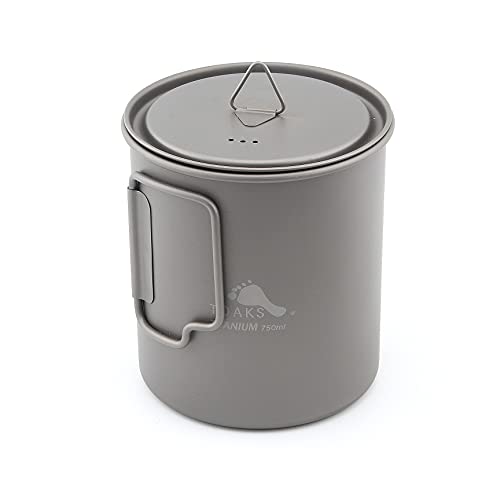
TOAKS Titanium 750ml Pot
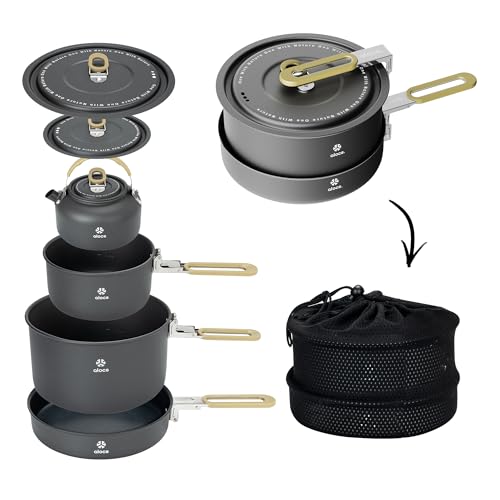
ALOCS Non-Stick Mess Kit with Foldable Handle
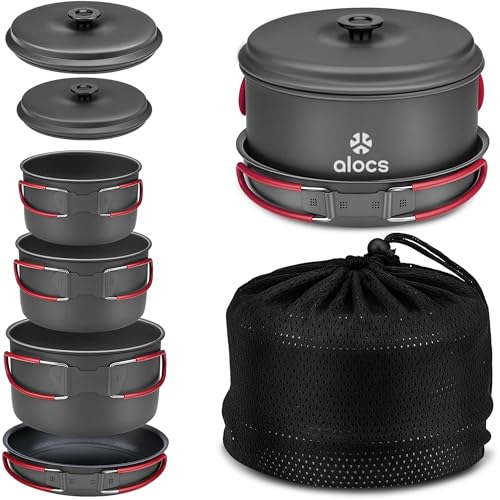
ALOCS Compact Camping Pots and Pans Set
Why These Options Stand Out
Among the solo titanium options on this list, the TOAKS 750ml stands apart because of its bail handle, a small wire loop that lets you hang the pot over a campfire rather than only setting it on a flat stove. For backpackers who occasionally skip a canister stove and cook over flame at lower elevations, that flexibility matters.
Capacity lands around 750ml, enough for a dehydrated meal plus a hot drink, and the side handles fold flat so the pot slips cleanly into a pack pocket. Compared with the TOAKS LIGHT 550ml below, you trade a few grams for the bail feature and a slightly larger interior, which most solo hikers find worthwhile.
The Good Stuff
- Pure titanium body, no coatings to chip or flake
- Detachable bail handle for hanging over open flame
- Folding side handles keep the profile slim in your pack
- Large enough for a real dinner plus a mug of tea
Things To Consider
- Uncoated titanium can scorch thin foods if the flame runs hot
- Bail handle adds a touch of bulk versus fixed-handle pots
Who It Suits Best
Solo backpackers who split time between canister stoves and campfire cooking, and want one pot that does both jobs.
Look Elsewhere When
The TOAKS LIGHT Titanium 650ml Pot suits thru-hikers who never plan to hang a pot and want every gram back.
The TOAKS LIGHT 550ml is the smallest and lightest pot in this lineup, and that is the entire point of it. Built from thin titanium with a lockable-grip lid and a mesh storage sack, it is aimed at hikers who measure their pack in ounces and treat water boiling as the only kitchen task.
Capacity is roughly 19 ounces, which covers a single serving of freeze-dried food or two mugs of hot liquid. The walls are intentionally thin to save weight, so you give up some durability against hard bumps on rocky trails. Owners commonly treat it as a boil-and-pour vessel rather than a frying surface.
A Few Highlights
- Among the lightest titanium pots available
- Lockable lid grip keeps things secure while pouring
- Gradation marks in ml and oz printed inside
- Mesh sack handles storage and drying after washing
Worth Noting
- Thin walls can dent if dropped onto bare rock
- Small capacity rules out real cooking for two
Built With In Mind
Thru-hikers and gram-counters running tight sections who only need to boil water for dehydrated meals.
Skip It When
The TOAKS Titanium 750ml Pot (Item 4) suits riders who want one pot that also nests a fuel canister inside.
The 650ml sits in the comfortable middle of the LIGHT series, bridging the gap between the tiny 550ml and the larger 750ml options above and below it. Same thin-wall titanium construction, same lid design, just slightly more room for a hungry hiker who also wants a hot drink at the end of dinner.
It weighs a touch more than the 550ml version and meaningfully less than the larger 750ml pots, so the trade-off is mostly about portion size. In our view, this is the most flexible solo size for backpackers who vary between quick boil-up meals and slightly heartier dinners.
The Case For It
- Mid-size volume without a major weight penalty
- Uncoated titanium stays neutral on flavor
- Compatible with standard small canister stoves
Trade Offs
- Still too small for true two-person cooking
- No bail handle, so campfire hanging is awkward
Key Product Details
Right Fit For
Solo hikers who want one pot that handles both freeze-dried meals and slightly more ambitious backcountry dinners.
A Better Fit Elsewhere
The TOAKS Titanium 750ml Pot with Bail Handle (Item 1) suits you better when campfire cooking is part of the plan.
This 750ml version differs from the bail-handle model at the top of the list in two clear ways: no hanging bail, and a shape tuned for nesting. It accepts a TOAKS 450ml cup, a 110g propane fuel canister, or a 32oz Nalgene bottle inside, so your cook kit and fuel ride as one tidy bundle.
Bikepackers and fastpackers tend to gravitate here because pack space is at a premium, and consolidating the pot, stove, and fuel saves the hassle of loose parts. Pure uncoated titanium keeps weight down to roughly three ounces for the pot body alone.
Where It Helps
- Nests a small fuel canister and cup inside
- Large capacity handles solo dinners plus hydration
- Light enough for multi-day routes
- Titanium resists corrosion from acidic foods
Honest Caveats
- No bail handle for campfire cooking
- Uncoated surface needs stirring to prevent scorching
Feature Snapshot
Whose Shelf It Belongs On
Bikepackers and minimalist travelers who want their pot, stove, and fuel to ride as one compact bundle.
Swap It Out When
The ALOCS Compact Camping Pots and Pans Set (Item 6) is a smarter fit when cooking for two is more important than weight savings.
Shifting gears from solo titanium to multi-piece kits, the ALOCS mess kit brings a 1.7L pot, 3L pot, 0.8L kettle, and an 8-inch frying pan into a single nested bundle. Total weight is around 3.3 pounds, which is heavy for a backpack but reasonable when the car does the hauling.
The foldable handles are heat-resistant, so you can move pots off a campfire without a glove, and the non-stick coating on the pan is a real convenience for eggs and pancakes. Compared with the TOAKS pots above, you trade ultralight simplicity for genuine cooking variety.
Why It Works Well
- Four pieces cover real meals, not just boil-ups
- Non-stick pan simplifies cleanup at the campsite
- Folding handles stay cool and pack down flat
Points To Keep In Mind
- Heavier than solo titanium, not ideal for backpacking
- Non-stick coating needs gentle utensils to last
- Bulkier pack footprint even when nested
Best Suited To
Car campers and family campers who want real cooking capability rather than a single boil pot.
Another Choice May Suit
The ALOCS Compact Camping Pots and Pans Set (Item 6) fits you better when you want a slightly smaller three-pot setup without the kettle.
Rounding out the list, this ALOCS kit takes a slightly different approach: hard-anodized aluminum pots paired with food-grade silicone components and a non-stick pan. The result is tougher than a coated steel set, distributes heat more evenly than titanium, and includes three pots sized for two-to-three person cooking.
Volume figures come in around 2.3Qt, 1.3Qt, and 1.1Qt, which together cover pasta dinners, soups, and a side dish without juggling pots. Owners commonly report that anodized aluminum cleans up faster than expected, though it still asks for a wipe-down before storage to prevent corrosion at the seams.
Noteworthy Benefits
- Hard-anodized aluminum spreads heat evenly
- Three pot sizes handle full meals for two or three
- Non-stick pan included for fry-up tasks
- Scratch-resistant finish holds up over many trips
Some Limits To Know
- Heavier than titanium and not pack-friendly
- Anodized surface still benefits from hand washing
Perfect Match For
Two-to-three person base campers who cook real meals and prioritize even heating over weight savings.
Reach For A Different Pick When
The TOAKS Titanium 750ml Pot with Bail Handle (Item 1) is the smarter call for solo backpackers who care about trail weight more than menu variety.
What Matters Most Before Choosing Camping Pots Pans
Match The Cookware To Your Travel Style
Backpackers and thru-hikers live in a different world than weekend car campers, and the cookware should reflect that. For trips where your pack is your kitchen, single titanium pots under four ounces leave room for food and shelter. For car camping with two or more people, multi-piece kits around three pounds pay off in real meals rather than just hot water. Pick the wrong tier and you will either resent the weight or wish you had a second pot.
Capacity, Weight, And Materials
Capacity scales with party size more than ambition. A solo hiker rarely needs more than 750ml for a freeze-dried dinner plus a drink. Two-to-three person base camps do better with combined pot volume over five quarts. Titanium wins on weight and corrosion resistance but conducts heat unevenly, so thin foods scorch if the flame runs hot. Hard-anodized aluminum spreads heat more evenly and shrugs off rough handling, but it adds meaningful ounces to any pack.
Real-World Use Scenarios
Think through how you actually cook. Boil-and-pour meals, the norm on long trails, suit any small titanium pot with a lid that locks. Campfire cooking needs a bail handle or a way to grip a hot rim safely. Group meals at a base camp benefit from a non-stick frying surface, because eggs and pancakes on bare titanium are a sticky mess. Match the kit to the cooking you will do, not the cooking you imagine doing.
Practical Ownership Notes
Titanium pots are nearly indestructible, but uncoated surfaces need a quick wipe to prevent flavor carryover between meals. Non-stick coatings demand softer utensils and hand washing to keep them slick. Folding handles save pack space, though the pivots can loosen after heavy use, so a periodic tightening is wise. Storing kits fully dry prevents musty smells and extends the life of any fabric storage sack.
Key Considerations Across These Picks
Common Shopping Slip Ups
The most frequent mistake is buying by capacity alone and forgetting weight. A 3L pot is useless on a backpack and barely enough at a car camp. Another trap is assuming all titanium behaves the same; thinner-walled ultralight pots dent more easily than heavier-walled versions. Finally, shoppers often ignore nesting, only to discover their fuel canister does not actually fit inside the pot they bought.
What The Higher Tier Buys
Spending up in this category usually buys better materials and smarter integration rather than raw volume. Premium titanium uses thinner walls without sacrificing strength, premium kits nest fuel and accessories cleanly, and anodized aluminum in the upper tier resists scratches far longer than entry-level coatings. The upgrade pays off most for frequent travelers who use the gear trip after trip.
Frequently Asked Questions
Is titanium better than aluminum for camping cookware?
Titanium is lighter and resists corrosion, making it the typical pick for backpackers. Aluminum spreads heat more evenly, which helps with frying and simmering, so it tends to serve car campers and group cooks better.
How big should a solo camping pot be?
For freeze-dried meals and a hot drink, 550ml to 750ml covers most solo hikers. Going larger means carrying unused capacity and weight, going smaller means refilling mid-cook.
Can you cook over a campfire with a titanium pot?
Yes, but uncoated titanium can scorch thin foods and the rim gets hot. A bail handle or a sturdy grip makes campfire cooking much safer and more practical.
How do you clean non-stick camping cookware in the field?
Wipe with a soft cloth, rinse with hot water, and avoid abrasive scrubbers. A small drop of biodegradable soap works for stubborn residue, but plain water and a cloth handle most cleanup.
Do nesting pots save real pack space?
For backpackers, yes. A pot that swallows a 110g fuel canister and a small cup cuts loose parts and tightens your pack layout, which matters more on day three than it sounds.
The Takeaway
The right cookware depends entirely on how you travel. Ultralight solo hikers get the most out of the TOAKS titanium options, while weekend car campers and small groups will find the ALOCS multi-piece kits far more useful. Start with your trip style, match the materials and capacity to that, and the rest of the decision usually sorts itself out.