
A good camping power setup decides whether your weekend feels like an escape or a logistics puzzle. Phone, camera, headlamp, maybe a CPAP machine or a small cooler: every device needs juice, and campground outlets are rarely where you need them. The seven picks below cover gas-powered, battery, and solar setups, each built for a different kind of camper, so you can match the right station to the way you actually travel.
An Overview Of The Picks

Honda EU2200i Companion 2200W Inverter Generator

EF ECOFLOW Delta 3 Portable Power Station 1024Wh

MARBERO 200W Portable Power Station 148Wh
MARBERO Portable Power Station 88Wh 120W Surge
MARBERO Portable Power Station 155Wh 100W

MARBERO 155Wh Solar Generator with 30W Panel

EF ECOFLOW River 3 Plus Extra Battery EB600
Why These Options Stand Out
Unlike the battery stations below, the EU2200i Companion burns gasoline, which means you can run heavy appliances that would flatline a lithium pack. The built-in 30A outlet is designed for RV hookups, and pairing it with a second matching unit unlocks more output for larger setups. If you tow a camper or run a microwave, coffee maker, and lights at the same time, this is the realistic tool for that job.
You also trade noise and weight for that power. It’s quieter than open-frame gas generators, but still audible at a packed campground. Long-distance travelers with car access get the most out of it; tent campers chasing silence should look at the battery options reviewed later.
Useful Touches
- Built-in 30A outlet makes plugging into an RV shore-power cord straightforward, no adapter needed.
- Parallel-ready design lets you link a second unit to roughly double output when one alone won’t cut it.
- Inverter technology (cleaner sine wave output) protects sensitive electronics like laptops and cameras.
- Fuel-based runtime scales with tank refills, so you can keep going through multi-day trips without waiting on a recharge cycle.
Things To Consider
- Gasoline generators are restricted or banned in some national parks and urban campgrounds, so check local rules first.
- At roughly 47 pounds dry, it’s a two-person carry from the trunk to the tent pad.
- Regular maintenance (oil changes, spark plug checks, fuel stabilizer) is part of owning it.
Made For
RV owners, car campers, and anyone running microwaves, small AC units, or hair dryers who has vehicle access and proper ventilation.
Consider Something Else When
Backpackers and tent campers wanting silent battery power will do better with the MARBERO 200W Portable Power Station 148Wh further down the list.
Step up from the compact packs and you land here: a kiloWatt-hour class battery with serious output. The 1024Wh capacity (think: enough stored energy to charge a phone dozens of times or power a small fridge overnight) pairs with 1800W of continuous output to run tools, kitchen gear, and most household-style appliances. It charges quickly from a wall outlet and accepts solar input for off-grid living.
Where the Honda above solves the heavy-load problem with gasoline, this one solves it with battery chemistry, and you pay for that flexibility. It’s the right answer for campers who also want a home backup battery during power outages.
A Favorable Mix
- Expandable battery ecosystem (add extra packs later) protects your investment as your power needs grow.
- Fast AC recharge gets the unit back to a usable level in under an hour, so short stops still top off the tank.
- Multiple output ports (AC, USB, DC) let you run a fridge and charge phones at the same time without juggling.
- Silent operation makes it welcome at quiet campgrounds and inside tents or vans.
Worth Noting
- Larger and heavier than the smaller MARBERO packs below; plan on a dedicated spot in your vehicle.
- Battery capacity degrades slowly over years, so five-season campers may eventually need replacement cells.
- Full solar recharge requires a substantial panel setup; the 30W panels in this list will only trickle-charge a unit this large.
Feature Snapshot
Best Suited To
Van lifers, base-camp families, and homeowners wanting one unit to cover camping weekends and emergency backup.
Look Elsewhere When
Backpackers counting ounces will find the MARBERO 88Wh a much friendlier carry, though they give up almost all of this output.
The sweet spot for casual campers sits right around 148Wh: enough to top off a laptop a few times, run a small fan, and recharge every phone and camera in the tent. The M822 design keeps the footprint small enough to slide into a daypack or duffel, and the AC outlet plus QC3.0 USB ports (a fast-charging USB standard) cover the gear most people actually bring.
You give up the heavy-lift capability of the EcoFlow Delta 3 above, but you also give up half the weight. That math works for short trips, music festivals, and emergency kits where capacity matters less than portability.
What Helps Most
- Compact size fits inside a backpack or carry-on, making it viable for travel days beyond the car.
- Built-in LED flashlight is genuinely useful for tent entry at night, not just a marketing extra.
- AC outlet accepts real three-prong plugs, so you skip the scramble for proprietary laptop adapters.
Minor Gripes
- The 200W output cap rules out most kitchen appliances; a camping kettle will trip the protection circuit.
- 148Wh drains fast under continuous AC loads, so it’s better for charging than for sustained runtime.
- No solar panel included in this configuration; you’ll need to buy one separately for true off-grid charging.
Right Fit For
Festival-goers, weekend car campers, and photographers who mostly charge small electronics and want a grab-and-go brick.
A Better Fit Elsewhere
Anyone running CPAP machines overnight should consider the larger MARBERO 155Wh Portable Power Station 100W for safer runtime margins.
Sometimes a power bank is enough. At 88Wh, this unit barely qualifies as a “station,” but it covers phones, headlamps, and small cameras on day hikes or in emergency kits where every ounce counts. The 120W surge rating (short bursts above the running wattage for motor-driven devices) gives it just enough headroom to start small fans or handheld electronics.
Real talk: this is a step down in capacity from the 148Wh model above, so treat it as a top-off brick rather than a primary power source. It earns its space in a glove box or a bug-out bag, not in a base camp.
A Few Highlights
- Sub-five-pound weight means it disappears in a backpack, leaving room for water and layers.
- Pass-through charging (refilling the battery while powering devices at the same time) makes it usable as a charging strip.
- Compatible with MARBERO’s dedicated 30W or 60W solar panel for clean off-grid refills.
Points To Note
- Capacity won’t cover a full night of CPAP use, so medical users should size up.
- Only one AC outlet, so running multiple plug-in devices requires a strip.
- Plastic shell feels light (which it is) but may not survive hard drops on rocky terrain.
Quick Facts
Who It Suits Best
Day hikers, van lifers who already carry a larger station, and preppers assembling a small emergency kit.
Skip It When
You want one device that handles everything from laptops to small kitchen gear; the EcoFlow Delta 3 Portable Power Station 1024Wh covers that range.
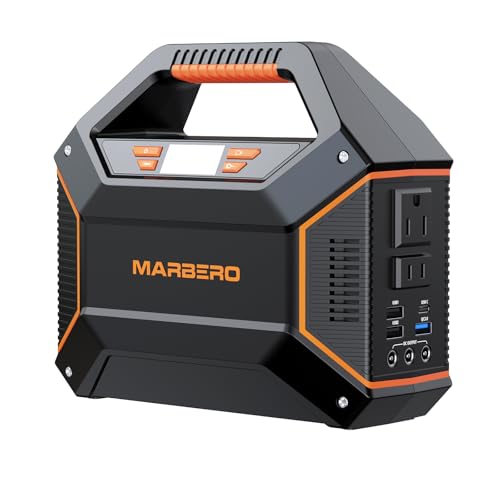
Right in the middle of the lineup sits a unit that splits the difference between the compact 148Wh and the larger 88Wh sibling reviewed earlier. At 155Wh, it adds usable runtime without crossing the weight threshold that scares off casual campers. You get enough stored energy for an evening of lights, phone charging, and a laptop top-up, all in a still-portable brick.
The 100W continuous rating limits it to light loads, so realistic expectations matter: small fans, cameras, and laptops yes; microwaves and kettles no. For car campers and emergency kits, that profile hits the sweet spot.
Advantages To Know
- 155Wh capacity translates to roughly two and a half hours for a 65W laptop, useful for working-from-tent days.
- Multiple output types mean phones, lights, and laptops all charge without adapter juggling.
- Predictable runtime math (rated watt-hours divided by device wattage) makes trip planning straightforward.
Room For Improvement
- 100W cap means anything with a heating element is off-limits; think of it as a charger, not an appliance runner.
- No solar panel in the box, which adds a separate purchase for off-grid use.
- Plastic enclosure handles careful travel but may scuff under rough packing.
Feature Rundown
Perfect Match For
Car campers, weekend cabin-goers, and remote workers wanting a mid-size brick that charges laptops without adding bulk.
Reach For A Different Pick When
You need the convenience of a solar panel included; the MARBERO 155Wh Solar Generator Kit below arrives as a complete bundle.
Pick up the 155Wh station and you still need a panel; pick up this kit and you’re done. The included 30W panel and 6.5ft integrated cable mean the box contains everything for true off-grid charging, no second order required. For campers who stay put for two or three nights at a time, that bundle simplicity matters.
Solar reality check: a 30W panel under real sun produces a fraction of its rated output, so expect slow refills rather than rapid ones. It’s perfect for topping off between days; it won’t replace wall charging.
The Value In It
- All-in-one packaging removes the guesswork of matching a compatible panel to the battery.
- 6.5ft cable lets you park the panel in direct sun while the station stays shaded in the tent or car.
- Same 155Wh core as the standalone unit above, so you’re not paying for less, only for the included accessories.
Honest Caveats
- 30W panel is sized for maintenance charging; cloudy days may barely move the percentage needle.
- Panel adds bulk and weight that pure car campers may not need.
- Glass-and-aluminum panel needs careful handling to avoid cracks in transit.
Whose Shelf It Belongs On
Campers who camp for multiple nights at one site and want a single purchase that covers battery and charging in one box.
Swap It Out When
You already own panels and just need a battery; the standalone MARBERO Portable Power Station 155Wh 100W saves you the panel spend.
An extra battery doesn’t help anyone unless it stacks with something you already own. The EB600 adds 572Wh to a River 3 Plus base unit (an EcoFlow mid-size station) for a combined 858Wh, and the pogo-pin connection (a snap-on contact instead of cables) clicks the two together in seconds. It also runs solo, so you can leave the heavier main unit at camp and carry just the battery to a job site or a picnic table.
If you don’t already own a compatible EcoFlow main unit, this is a brick on its own: useful, but not a complete system. Consider it the right upgrade path for existing EcoFlow owners, not a starter purchase.
Notable Upsides
- Pogo-pin stack design removes cable mess between the battery and the main station.
- Standalone usability means one battery can travel to the trailhead while the base stays plugged in at camp.
- Adds meaningful runtime for a car fridge (roughly 10 hours reported) or a travel kettle (about an hour).
Points To Keep In Mind
- Only works with compatible EcoFlow River 3 Plus units, limiting its audience.
- Charging speed is governed by the main unit, so adding it doesn’t speed up your overall refill time.
- Price-per-watt-hour is higher than standalone starter batteries because you’re paying for the engineering of the stack connection.
Who Should Grab It
Current EcoFlow River 3 Plus owners who have outgrown their base capacity and want a clean stacking upgrade.
Where A Sibling Pick Shines
First-time shoppers should start with the EF ECOFLOW Delta 3 Portable Power Station 1024Wh instead and build capacity from a single base unit.
Choosing Power Stations That Fit How You Camp
Capacity and output matter, but the right answer depends on how you actually travel. Backpackers and bike-packers should prioritize weight and size, treating watt-hours as the budget rather than chasing the biggest number. Car campers and RV travelers can afford to size up, especially if the station pulls double duty as a home backup during outages. Output wattage (the running power the unit can deliver) decides what you can actually plug in: under 100W covers phones and lights, 300W to 1000W adds laptops and small fans, and above that you’re running real appliances. Charge method matters too. Wall charging is fastest but useless off-grid, while solar panels add freedom but depend on weather and panel size.
Battery chemistry is the long-term consideration. Lithium-ion (the standard rechargeable battery used in most modern electronics) holds more energy per pound than older chemistries but slowly loses capacity over years, especially if stored fully charged in heat. Storing the unit at around 50–80% charge in a cool place extends its useful life. Finally, count your ports before you buy: AC outlets, USB-A, USB-C, and a 12V car-style socket each serve different gear, and running out of the right port mid-trip is a frustrating surprise.
Key Considerations Across These Picks
Where Shoppers Go Wrong
The biggest trap is buying watt-hours without checking output wattage. A 1000Wh battery that only delivers 100W can’t run a 600W rice cooker, so the stored energy is wasted on that appliance. Match both numbers to your gear list. Another common mistake is underestimating solar refill time: a 30W panel under typical midday sun produces closer to 20W on average, so a “full charge in four hours” spec usually means eight to ten in the field. Finally, don’t skip the weight check; a 50-pound unit changes how you pack the car and whether you’ll actually carry it to the tent.
The Case For Spending Up
Premium stations earn their higher prices with faster charging, longer battery life cycles, and cleaner inverter output (smoother electrical current that protects sensitive electronics like laptops and cameras). For campers who use a station weekly, the durability difference pays off within a few seasons. For occasional weekend use, a mid-range unit like the MARBERO 155Wh is plenty. Spend up when you need speed, longevity, or sensitive-electronics safety; save when you only need a backup a few times a year.
Frequently Asked Questions
How Long Will A Camping Portable Power Station Run My Devices?
Runtime depends on the station’s watt-hour capacity and your device’s draw. A 148Wh station powers a 60W laptop for about 2.4 hours, while a 1024Wh unit can run a 50W camping fridge for roughly 20 hours. Most product pages list a simple formula: divide capacity by your device’s wattage to estimate hours of use.
Can I Take A Camping Portable Power Station On A Plane?
Airlines restrict lithium battery packs based on watt-hour ratings, with most carriers allowing batteries under 100Wh in carry-on only. Stations between 100Wh and 160Wh often require airline approval, and anything above 160Wh is generally not permitted on passenger flights. Check your specific airline’s policy before traveling.
Do Solar Panels Come Included With Power Stations?
Some kits include a matching panel, while most standalone stations sell the battery alone. The MARBERO 155Wh Solar Generator kit reviewed above ships with a 30W panel, but the bare 155Wh model does not. Buying the panel separately lets you choose a higher-output option if you want faster charging.
Are Portable Power Stations Safe To Use Inside A Tent?
Battery stations produce no fumes and run silently, so they’re generally safer indoors than gas generators. Keep ventilation in mind, avoid placing the unit on a sleeping bag where it could overheat, and keep it dry in rainy weather. Built-in battery management systems (the electronics that monitor temperature and current) protect against most common issues.
What’s The Difference Between A Power Station And A Generator?
A generator burns fuel to make electricity on demand, while a power station stores electricity in a battery for later use. Generators deliver higher sustained output for heavy appliances but produce noise and exhaust. Power stations run silent and clean, with output limits that suit electronics and small appliances more than heavy-duty tools.
Wrap Up
The right camping portable power station is the one that matches your gear list and your style of camping. Backpackers will appreciate the MARBERO 88Wh for its featherweight design; car campers will do well with the EcoFlow Delta 3 for its reach; RV owners with the Honda EU2200i for its heavy-lift output. Pick the tier that fits your trips, keep an eye on both capacity and output numbers, and you’ll spend more time enjoying the trip and less time hunting for an outlet.