
A thin pad on rocky ground turns a tent into a torture chamber by 3 a.m., and a heavy one eats into your pack weight before the trail even starts. The right camping pad balances warmth, cushioning, and packability for the way you actually travel, whether that’s a car-camped weekend or a thru-hike.
How The Shortlist Stacks Up
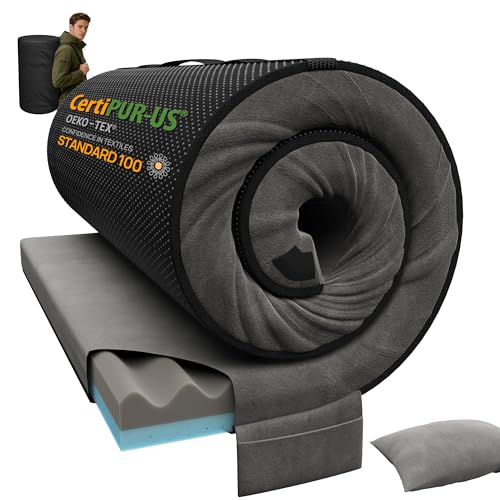
Releep 3 Inch Dual-Sided Memory Foam Camping Mattress

Therm-a-Rest Z Lite Original Sleeping Pad

MalloMe Sleeping Bags for Adults Cold Weather

Therm-a-Rest Z Seat Cushion Insulated Sitting Pad

MalloMe Sleeping Pad with Built-in Foot Pump

OGERY Ultralight Inflating Camping Pad 6-Inch
Inside Each Recommended Option
The Releep 3-inch mat reads more like a guest-room mattress than a piece of camp gear, which is the point. The two-layer foam pairs gel memory foam on top with denser support foam below, so your shoulders and hips sink in while your spine stays roughly level. At three inches of loft, it sits higher off the ground than the Therm-a-Rest Z Lite that comes next, and you don’t have to inflate anything when you roll into camp tired.
It rolls into the included carry bag, and a portable pillow ships in the box so you’re not stuffing a jacket under your head. The waterproof shell shrugs off a damp tent floor and wipes clean after a muddy weekend. For weekend car camping, guest bedding, or a backseat crash pad on a long road trip, this one trades pack size for sleep quality.
Strong Points
- Plush gel memory foam top feels closer to a home mattress than a thin foam pad.
- No inflation step: unroll it and you’re done, which matters when kids are melting down.
- Waterproof cover handles condensation, wet grass, and the occasional spilled coffee.
- Portable pillow and carry bag included, so there’s one less thing to remember on the packing list.
- Three inches of loft insulates your hips and shoulders from cold ground in early spring.
Things To Consider
- Bulky when rolled up, so backpackers covering real mileage will want the lighter options below.
- Foam can hold a faint off-gassing smell out of the package, so air it out before the first trip.
Made For
Car campers, SUV-based families, and anyone using a tent as a spare guest room who wants real cushioning without an air pump.
Look Elsewhere When
You carry everything on your back for days at a time, where the Therm-a-Rest Z Lite Original will save your shoulders and pack volume.
The Therm-a-Rest Z Lite is the foam pad that built the brand’s reputation, and the accordion-style fold has barely changed in decades for a reason. Closed-cell foam means it can’t pop or leak, so a sharp rock or a careless campsite elbow won’t end your night. It folds down small enough to strap to the outside of a pack, and the dimpled surface traps a layer of warm air under you when the mercury drops.
Compare that to the Releep’s plush roll-up, and the trade-off is obvious: the Z Lite is thinner and firmer. For most backpackers, that’s still a fair swap for the weight savings and the fact that you can unroll it on wet ground without a second thought. Mountaineers and thru-hikers have relied on this exact pad for generations.
Where It Delivers
- Closed-cell foam resists moisture, so it doubles as a sit pad and dries in minutes.
- Accordion fold is fast to deploy and stores flat against a backpack’s back panel.
- Trusted by climbers and long-distance hikers, which suggests serious field durability.
- Dimple pattern adds measurable warmth on cold-soil nights in shoulder season.
Worth Noting
- Sleeps firmer than any inflatable or memory foam option, so side sleepers may feel pressure points.
- Bulkier than an equivalent inflatable when strapped to a small pack, depending on your frame.
Key Specs
Who It Suits Best
Backpackers, climbers, and anyone prioritizing a light, bombproof pad over plush cushioning.
Consider Something Else When
You sleep primarily on your side and want real loft, where the OGERY Ultralight Inflating Camping Pad 6-Inch gives you a much thicker air mattress.
The MalloMe sleeping bag is technically a bag rather than a pad, but for campers building a sleep system on a budget, it pairs naturally with any of the pads on this list. The double-layer polyester shell is rated water-resistant rather than fully waterproof, which is the honest read for a budget-friendly bag: handle it with care in heavy rain.
It comes in adult and kid sizing, which makes coordinating family trips far easier when everyone’s gear finally matches. Where the Releep pad leans plush, this bag leans warm and forgiving, and it stuffs down small enough for a duffel. For first-time campers outfitting a whole family or a scout troop on a real budget, the value story is the headline.
Real-World Strengths
- Available in adult and kids sizes, simplifying family packing and color coordination.
- Water-resistant shell shrugs off tent condensation and damp ground.
- Lightweight enough for short hikes to a backcountry campsite.
- Budget-friendly price point leaves room in the kit for a pad and stove.
Trade Offs
- Water-resistant is not the same as waterproof, so a dedicated rain fly still matters in storms.
- Fill weight is moderate, which limits its usefulness in deep-winter conditions.
Right Fit For
Families introducing kids to camping, summer camp sessions, and casual car camping where warmth matters more than ultralight pack size.
Skip It When
You’re heading into serious alpine weather, where a proper down bag rated for the overnight low is the safer pick.
The Z Seat isn’t a sleeping pad, but for anyone who actually stops to eat lunch on a summit or watch a sunrise, it’s the piece of gear you forget to pack until you really need it. Closed-cell foam in the same accordion style as the Z Lite, just sized for sitting and weighing roughly two ounces. It straps to the outside of a pack or rides in a jacket pocket without complaint.
Think of it as a companion to the Z Lite rather than a competitor: one goes under you at night, the other goes under you at every break during the day. The foam construction is the same indestructible, water-resistant material, so it’ll outlast trendier inflatable seat pads.
Well-Handled Touches
- Closed-cell foam can’t pop or absorb water, so it survives scrapes and rain.
- Folding design packs flat against hip belts and pack straps.
- Light enough that adding it costs almost nothing in pack weight.
- Insulated, so cold ground doesn’t sap body heat during long rest breaks.
Points To Keep In Mind
- Seat-sized only, so it won’t replace a sleeping pad for overnight warmth or cushioning.
- Foam thickness is modest, which is fine on packed dirt but thin on sharp rock.
Whose Shelf It Belongs On
Day hikers, peak-baggers, and backpackers who want a real seat at every break without adding noticeable weight.
A Better Fit Elsewhere
You’re shopping for full-length overnight sleep, where the Releep 3 Inch Dual-Sided Memory Foam Camping Mattress is the right call for car campers.
The MalloMe inflatable swaps the usual lung-powered inflation for a built-in foot pump, which sounds small until you’ve tried blowing up a pad at altitude with a headlamp. The chevron-shaped air cells spread body weight and add a little give under your hips, so you don’t bottom out on every pebble. The pad packs down smaller than the Releep foam mattress, but you’ll want to treat the surface carefully to avoid leaks.
Deflation is a quick-release valve, so teardown is just as fast as setup. Compared to the Therm-a-Rest Z Lite earlier on this list, you trade absolute indestructibility for cushioning. For casual campers who want air-pad comfort without hand-pump accessories, the foot pump is the selling point.
Notable Upsides
- Built-in foot pump means no lung-bursting inflation and no extra pump to pack.
- Chevron air cells cradle hips and shoulders better than a flat tube design.
- Compact when deflated, easier to fit in a trunk or small pack than a foam roll-up.
- Quick-release valve speeds camp breakdown on moving days.
Small Caveats
- Air construction can puncture on rough ground, so a patch kit is worth packing.
- Foot pump adds a minute or two to setup compared to unrolling a foam pad.
Feature Snapshot
Best Suited To
Casual campers who want real air-pad comfort without hand pumping, plus travelers needing a guest-friendly sleep surface.
Reach For A Different Pick When
You’re heading into harsh, rocky terrain where a puncture would ruin the trip, in which case the Therm-a-Rest Z Lite Original is the safer bet.
At six inches of loft, the OGERY pad sits higher off the ground than anything else on this list, and that extra thickness is the entire reason to consider it. Side sleepers know the feeling of a hip bone pressing into thin foam, and the internal tubular air belt keeps weight distributed evenly across the surface. The build is air-based rather than foam, so the pad compacts much smaller than the Releep mattress once deflated.
Compared to the MalloMe foot-pump pad, you get more height and a steadier sleep surface but lose the hands-free inflation. For campers who want the comfort of a real air mattress and don’t mind a few breaths of inflation, this is the cushioned pick of the bunch.
Everyday Perks
- Six-inch loft is meaningfully thicker than standard pads, lifting side sleepers off hard ground.
- Tubular air belt supports even weight distribution across shoulders and hips.
- Deflated size fits neatly into a backpack or trunk for travel.
- Air construction adjusts firmness with a few added breaths.
Areas To Watch
- Higher loft means more air to move on inflation, so budget a couple of minutes at camp.
- Like any inflatable, it benefits from a groundsheet to prevent punctures on rough sites.
Quick Facts
Perfect Match For
Side sleepers, restless campers, and anyone whose hips or shoulders demand a thicker sleeping surface than a basic foam pad provides.
Swap It Out When
Your campsite is consistently smooth and you want the no-fuss simplicity of a roll-out foam pad like the Releep 3 Inch Dual-Sided Memory Foam Camping Mattress.
Factors That Actually Matter When Choosing Camping Pads
Sleeping pad R-value tells you how well the pad blocks cold from the ground, with higher numbers meaning more insulation for cold nights. Warm-season campers can get away with an R-value around 2 to 3, while shoulder-season and winter trips usually want 4 or higher. The Z Lite’s dimples and the OGERY’s air-belt construction both contribute to warmth, but the foam-based pads tend to insulate more predictably than air-filled designs, which can lose insulation if the air moves inside the chambers.
Thickness changes the feel of the pad far more than people expect. Anything under two inches feels like a yoga mat on gravel, while pads in the three-to-six-inch range start to feel like a real mattress. Side sleepers and restless types usually benefit from thicker pads because their hips and shoulders take the brunt of the pressure.
Weight and packed size dictate whether the pad belongs in a backpack or a car trunk. The Releep foam mattress rolls up bulky but carries no inflation risk, while the MalloMe and OGERY inflatables pack small and light once deflated. Closed-cell foam options like the Z Lite fold flat and add almost nothing to a pack’s footprint.
Durability varies more than the spec sheets suggest. Closed-cell foam can take a beating and shrug off water, which is why backpackers keep coming back to it. Air pads offer better comfort but reward campers who use a groundsheet and pack a patch kit.
Key Considerations Across These Picks
Wrong Turns To Avoid
Buying a pad based on thickness alone is a common misstep, because warmth, packed size, and durability swing the decision just as hard. Matching pad width to your shoulder width matters more than most shoppers expect, especially for broad-shouldered sleepers who wake up with a hip on the ground. Skipping a patch kit or repair tape is another frequent miss with inflatable options, since a small puncture shouldn’t end a trip.
Where The Extra Money Goes
Stepping up from a basic foam pad to a six-inch inflatable buys genuine loft and pressure relief, and the price difference reflects the engineering inside the air chambers and valves. Premium memory foam constructions like the Releep cost more because layered foam and a waterproof cover add materials and manufacturing steps. For most casual campers, a mid-tier pad covers the realistic needs of three seasons without overspending on winter-rated specs.
Frequently Asked Questions
What R-value do I need for summer camping?
An R-value between 2 and 4 covers most warm-weather nights comfortably. The MalloMe and Releep options handle typical summer conditions well without overbuilding for cold weather.
Can I use a memory foam pad on the ground without a tent?
A waterproof-bottomed foam mat like the Releep can handle ground contact, though a simple tarp underneath extends its lifespan by keeping mud and sap off the cover.
How do I store a self-inflating pad long-term?
Store air pads unrolled or loosely folded in a dry place, since compressed foam loses rebound over time. The foam-based Releep and Therm-a-Rest Z Lite can be stored rolled without issues.
Are inflatable pads noisy on rough ground?
Modern air pads with internal baffles tend to be quieter than older single-chamber designs, but the soft crinkle is something light sleepers may notice on the OGERY and MalloMe inflatables.
How thick should a side-sleeper’s pad be?
Three inches is the practical minimum, and four to six inches removes most pressure-point complaints. The OGERY 6-inch pad is the obvious call for committed side sleepers.
Closing Remarks
The best camping pad matches the trip you actually take, whether that’s tossing a foam roll into the car for a weekend at the state park or packing an ultralight inflatable for a multi-day trek. Match the pad to your sleep style and your climate first, then worry about weight. A well-rested camper makes every other decision on the trail easier.