
Loading up for a weekend in the woods or planning a longer route, your pack sets the tone for the entire trip. A good camping pack stays comfortable under load, keeps your gear dry when weather rolls in, and hauls enough for nights away without turning every mile into a grind. The picks below cover two backpacks for carrying gear, plus one compact cook kit that completes a backcountry kitchen, so you can match the right piece to your style of camping.
Your Options, Compared

Osprey Rook 50L Men’s Backpacking Backpack

Osprey Aether Plus 70L Men’s Backpacking Backpack

MalloMe Camping Cookware Mess Kit
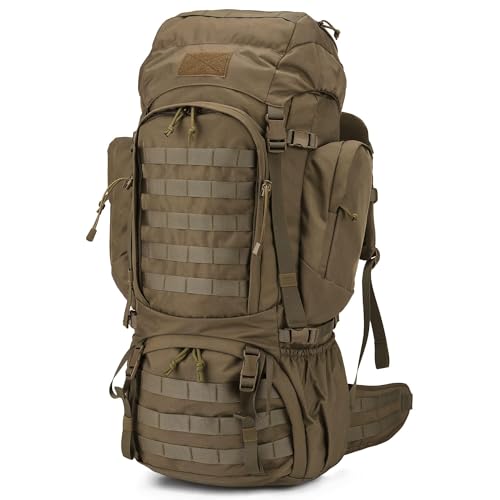
Mardingtop 60L Military Internal Frame Backpack
Meet The Standout Selections
The Osprey Rook 50L sits in that comfortable middle ground where the brand’s suspension system, meaning the internal frame and harness setup that transfers weight to your hips, is approachable enough for a first trip but still capable of carrying real weight across a multi-day route. It’s a 50-liter main pack, which translates to enough room for a shelter, sleeping bag, pad, layers, and food for a two-to-three-day stretch without forcing you to Tetris every strap.
For backpackers still dialing in their kit, the Rook offers a straightforward layout that doesn’t bury essentials under six zippered compartments. The integrated rain cover handles pop-up storms without a separate purchase, and the adjustable torso lets the pack grow with you as your fitness or load changes.
Notable Gains
- The adjustable torso length (the vertical harness adjustment that customizes fit to your back height) dials in without tools, so the same pack can suit different trips and even different friends.
- An integrated raincover stows inside the pack when not needed, meaning one less thing to forget on a wet morning.
- At 50 liters, capacity lands in the sweet spot for weekend trips, handling a standard three-season setup without leaving room for weight creep.
- Front shove-it pocket (a stretch panel behind the main compartment) swallows a wet rain shell or layers you strip mid-climb, keeping them reachable without unpacking.
- For first-time backpackers, the straightforward feature set avoids the overwhelm of pro-level customization.
Things To Consider
- At 50 liters, longer expeditions (five-plus days) will push the limits and force creative packing or a larger pack.
- The streamlined feature set means fewer modular attachment points than tactical or expedition packs; strapping odd-sized gear outside takes more creativity.
- Owners commonly find the shoulder strap padding compresses under sustained heavy loads, so distributing weight through the hipbelt matters on longer days.
Who It Suits Best
This is the right fit for first-time backpackers tackling weekend trips or two-to-three-day routes who want Osprey build quality without the learning curve of a fully loaded expedition harness.
Consider Something Else When
Trip planning pushes beyond four days or you’re hauling heavy group gear, where the Osprey Aether Plus 70L Men’s Backpacking Backpack handles the bigger load more comfortably.
The Aether Plus 70L steps up from the Rook’s weekend-ready capacity into full-on expedition territory. That extra 20 liters means real estate for bear canisters, multi-day food resupply, rope, or the kind of cold-weather layering that fills a pack fast. Compared to the Rook 50L, this is a different animal: built to manage 40+ pound loads across a week on the trail.
Where this pack earns its keep is the custom-fit harness system (the adjustable hipbelt and shoulder straps that conform to your body shape), which spreads heavy weight across the hips and shoulders in ways that smaller packs can’t. The removable top lid converts to a small daypack, so side trips to a ridge or a camp water source don’t require hauling the full load.
Where It Delivers
- The Custom Fit-on-the-Fly hipbelt and shoulder straps adjust on the trail, meaning you can dial in compression mid-day as loads shift or soreness sets in.
- Stow-on-the-Go trekking pole attachment (a strap system that lets you secure poles without removing the pack) means quick deployment when terrain steepens.
- Removable top lid converts to a DayLid daypack for side excursions, saving you from carrying a secondary pack.
- At 70 liters, capacity supports week-plus trips or technical objectives where you’ll carry extra layers and safety gear.
- An included raincover handles wet weather without an extra purchase weighing down your kit list.
Points To Note
- The size and suspension complexity add real weight to the pack itself, which can feel punishing on short trips where a smaller pack would suffice.
- All that adjustability takes longer to dial in before the first trip, so a shakedown hike matters more here than with simpler packs.
Key Attributes
Made For
Backpackers tackling a full week on the trail, hauling heavy gear, or managing technical objectives where capacity, fit customization, and load transfer matter more than stripped-down simplicity.
A Better Fit Elsewhere
Short trips under three days where the pack’s weight and capacity become overkill, making the Osprey Rook 50L Men’s Backpacking Backpack the lighter, simpler choice.
Backcountry cooking usually starts with a pile of mismatched pots, a coffee mug that doubles as a soup bowl, and forks borrowed from the car. The MalloMe Cookware Mess Kit solves that problem in one package, bundling pots, plates, cups, and cutlery into a nesting set (pieces that stack inside each other for compact transport) that disappears into a drawstring sack. It’s the camp kitchen most people end up assembling over a few trips, just available from day one.
The kit works with portable stoves, meaning the kind of small butane or canister stoves backpackers carry for boiling water and reheating meals. For weekend backpackers, car campers, or anyone splitting trips between base camp and day hikes, the set covers the full range of cookware without forcing multiple purchases.
What Works In Its Favor
- Everything nests inside the largest pot, meaning one compact package instead of loose items rattling around your pack.
- Two complete place settings with cups, plates, and cutlery handle a pair of campers without needing extras.
- The included kettle and frying pan expand the meal range beyond freeze-dried dinners and instant oatmeal.
- A drawstring carry bag keeps the kit contained and easy to grab from your pack.
Honest Caveats
- Cookware at this size won’t replace dedicated gear for large group cooking, so bigger parties still need supplemental pots.
- Cleaning in the backcountry requires the included sponge and cloth, and the kit’s compact size means longer drying time before repacking.
The Right Fit
This is the right match for solo backpackers or pairs who want a complete camp kitchen from the first trip without sourcing pieces piecemeal.
Skip It When
You’re cooking for groups of four or more, where the Mardingtop 60L Military Internal Frame Backpack’s cargo space combined with supplemental pots handles larger-volume meal prep.
The Mardingtop 60L takes a different angle than the two Osprey packs above. Where Osprey optimizes for hiking comfort, this pack optimizes for modular cargo carrying, with MOLLE webbing (the PALS-compatible strap grid standard on military-style packs that accepts pouches and accessories) wrapping the exterior for strapping on sleeping bags, pads, tents, or hunting gear. It’s a workhorse designed for hunters, trekkers, and anyone who treats their pack like a base camp on their back.
At 60 liters with an internal frame, the pack splits the difference between the Rook 50L’s weekend scope and the Aether Plus 70L’s expedition reach. The included rain cover handles weather, and the patch area for nametape and flags signals the tactical-leaning design.
Where It Helps
- MOLLE webbing across the pack lets you attach modular pouches, sleeping bags, or tents externally, expanding capacity beyond the 60-liter main compartment.
- Internal frame transfers weight to the hips for multi-mile hauls without the shoulder-only carry that soft packs produce.
- Hiking pole attachment points secure poles or ice axes without blocking access to main compartments.
- Included rain cover stashes inside and deploys fast when weather rolls in.
- The tactical design and 60-liter volume suit hunting, trekking, and expedition-style trips where external gear matters.
A Few Limitations
- The tactical aesthetic and heavier-duty materials make this pack heavier than ultralight alternatives, which matters on distance-heavy routes.
- Modular webbing adds bulk, so the pack doesn’t compress down the way streamlined backpacking packs do for tight packing.
- Owners commonly find the harness system less refined than dedicated hiking packs under sustained heavy loads, so weight distribution needs attention.
Quick Technical Notes
Whose Shelf It Belongs On
This belongs with hunters, tactical-trip planners, and modular gear enthusiasts who need external attachment options and don’t mind extra weight for the carrying capacity.
Look Elsewhere When
You’re a long-distance hiker counting grams, where the Osprey Aether Plus 70L Men’s Backpacking Backpack delivers better load transfer and a more refined suspension system.
Getting The Right Fit For Your Trip
Capacity matters most when choosing camping packs, and the right size depends on trip length rather than personal volume. A 50-liter pack handles most weekend trips with room to spare, while 60 to 70 liters covers week-long expeditions or winter conditions where bulkier gear adds up fast. The honest read is that overshooting capacity leads to overpacking, and undershooting forces creative compression that rarely holds up on trail.
Fit matters more than features. A pack with excellent suspension (the harness, hipbelt, and frame system that controls how weight sits on your body) but the wrong torso length will punish you on every mile, while a simpler pack that matches your back height feels invisible. Look for adjustable torso systems, try loaded walks before committing, and remember that hipbelts do most of the heavy lifting once loads pass 25 pounds.
Intended use shapes the feature set. Backpackers chasing miles want streamlined suspension and minimal weight. Hunters, photographers, and expedition-style campers need modular attachment points for strapping bulky gear externally. Weather protection, including integrated or included rain covers, matters in any region where afternoon storms are routine, and fabric durability affects long-term ownership more than any marketing claim.
Build quality shows in the seams, zippers, and hipbelt construction rather than the spec sheet. Reinforced stitching at stress points and YKK-grade zippers (the industry-standard hardware found on most quality packs) tend to outlast budget alternatives by years. For most backpackers, a mid-tier pack from a known brand hits the sweet spot between weight, features, and long-term durability.
Key Considerations Across These Picks
Where Shoppers Go Wrong
Many shoppers pick capacity based on “more is better” without considering trip length. A 70-liter pack on a two-day trip means wasted space and weight. The honest answer is to match pack size to your longest planned trip, not your imagined expedition. Ignoring torso fit is the other common trap, where a great pack on paper becomes a torture device at mile five because the harness doesn’t match your back length.
When Paying More Pays Off
Premium-tier packs earn their cost through suspension systems, hipbelt construction, and fabric durability that budget alternatives struggle to match. The Osprey Aether Plus 70L Men’s Backpacking Backpack, for instance, delivers load transfer and adjustability that cheaper packs can’t replicate. The upgrade makes sense for backpackers logging real miles or carrying heavy loads, where comfort compounds over every step. Casual weekend campers rarely need that level of refinement, and a mid-tier pack handles their trips fine.
Frequently Asked Questions
How do I know what size camping pack I need?
Base the size on your longest planned trip: 40 to 50 liters for overnight and weekend routes, 60 to 70 liters for week-long or winter trips. Add ten liters if you carry bulky gear like a full camp chair or hunting equipment.
What’s the difference between internal frame and external frame packs?
Internal frame packs (like all four picks above) hug your back, keep weight centered, and handle rough terrain better. External frame packs ventilate your back more and carry heavier loads over flat ground but feel clunky on technical trails. For most modern camping, internal frame is the standard.
Do I really need a rain cover?
Rain covers aren’t mandatory, but they protect gear during extended downpours and cost little weight. Pack liners or trash bags inside the pack add backup protection and work whether or not you have a cover.
How much should a camping pack weigh empty?
Lightweight backpacking packs weigh 2 to 3 pounds empty, mid-tier packs sit around 3 to 4 pounds, and expedition or tactical packs push 5 pounds or more. Aim for the lightest pack that still carries your load comfortably, since every empty pound adds up across miles.
Can I use a camping pack for air travel?
Yes, but check airline size limits for carry-on versus checked bags. Most 50 to 70 liter packs exceed carry-on dimensions and travel better as checked luggage, often inside a duffel for added protection.
The Takeaway
The best camping pack is the one that matches your trip length, fits your torso, and stays comfortable under your actual load. Start with the trip you’re planning, not the trip you dream about, and let that drive capacity. The Osprey Rook covers most beginners, the Aether Plus handles expedition weight, and the Mardingtop serves modular gear haulers. Whatever you choose, fit the pack to your body and your trip, and the miles take care of themselves.