
A folding pocket knife covers the obvious tasks at a campsite, but most trips eventually call for pliers, scissors, a screwdriver, or a saw. Camping multitools bridge that gap, packing a dozen or more implements into a single pocketable frame so you can cut cord, tighten a loose stove fitting, or slice an apple without digging through a gear bag. The lineup below mixes classic Swiss Army-style folders with heavier pliers-based tools, so you can match the build to the kind of trip you actually take: weekend car camping, long-distance hiking, or a mix of both.
A Closer Look At The Lineup

Victorinox Huntsman Swiss Army, 15 Functions Pocket Knife
Victorinox Swiss Army Electrician Pocket Knife (Silver Alox Ribbed)

Victorinox Huntsman Swiss Army Knife, Medium, 15 Functions, Black
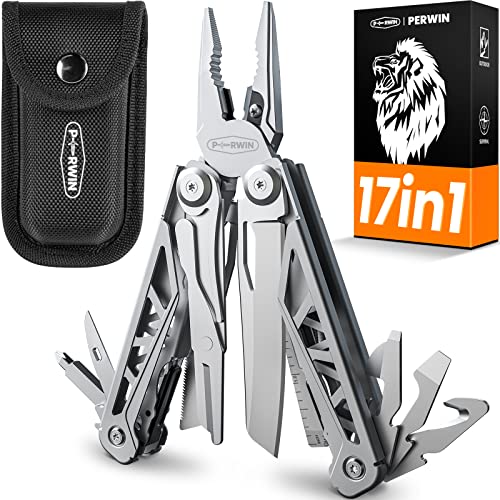
PERWIN 17-in-1 Stainless Steel Multi Tool Pliers with Nylon Sheath

PERWIN 22-in-1 Stainless Steel Multi-Tool Pliers with Safety Locking

PERWIN 20-in-1 Stainless Steel Multi Tools Pliers with Nylon Sheath
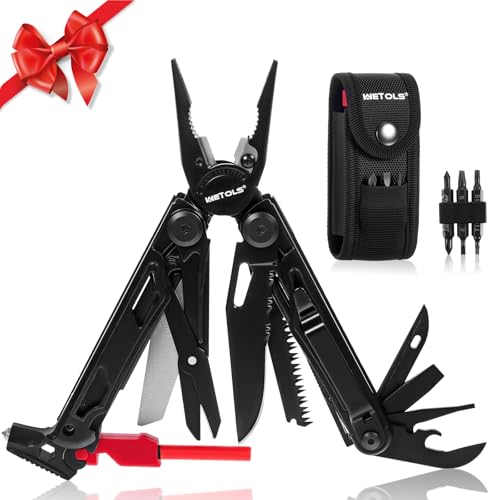
WETOLS Multitool with Pocket Knife, Stainless Steel Needle Nose Pliers
More Details On Our Top Picks
The Huntsman is the Swiss Army knife most people picture when they imagine camping multitools. Its translucent silver scales slide open to reveal a large blade, a small blade, a wood saw, scissors, a corkscrew, a bottle opener with screwdriver tip, and the usual toothpick-and-tweezers pair. At a closed length small enough to ride in a front pants pocket, it covers breakfast prep, fire prep, and tent tweaks without anyone needing to dig through a duffel.
What separates the Huntsman from a bare-bones pocket knife is the wood saw and scissors, both genuinely useful at camp. You can notch kindling, open vacuum-sealed coffee bags, or trim a hangtag without breaking out a second tool. The scales are a stamped stainless finish that hides minor scuffs well, and the springs are the kind that owners commonly report lasting decades with an occasional drop of oil.
Features That Help
- 15 functions cover most campsite cutting and opening tasks, from slicing cheese to notching kindling with the wood saw.
- Scissors and a corkscrew handle everyday food and drink duties without needing a second tool on the table.
- Compact closed footprint fits in a front pocket, so it stays accessible during day hikes from basecamp.
- Stainless scales resist corrosion in humid or coastal camping environments where cheaper finishes pit quickly.
- Toothpick and tweezers tucked into the handle add small but useful personal-care functions for longer trips.
Points To Note
- No pliers means you cannot crimp a tent stake, bend a fish hook back, or grip a stubborn knot without another tool.
- The dishwasher will damage the springs and finish, so cleaning is hand-wash and oil only, which can feel fussy after muddy trips.
- Tools sit close together inside the frame, and wet debris between them can make individual implements harder to deploy.
Quick Facts
Right Fit For
Casual car campers and weekend trail hikers who want one lightweight tool for food prep, fire prep, and small gear fixes.
A Better Fit Elsewhere
Backpackers who regularly repair stoves and tents should reach for the PERWIN 20-in-1 Multi Tool Pliers instead, since that frame adds real pliers and wire cutters.
Where the Huntsman uses lightweight plastic scales, this Electrician model wears anodized aluminum (an aluminum alloy treated with an electrochemical bath for a hard, scratch-resistant surface) ribs along its silver Alox (Victorinox’s name for its anodized aluminum scale series) handle. The result feels denser in the hand and visibly tougher on a workbench. Inside, it carries a large blade, a reamer, an electrician’s blade with wire scraper, a bottle opener with large screwdriver tip, and a wire stripper notch.
At a closed length around 3.5 inches, it slips into a pocket the same way the Huntsman does, but the ribbed aluminum gives you more grip when your hands are cold or damp. The wire-focused functions translate well to campsite duty: you can strip insulation off a faulty solar panel lead, scrape a battery terminal, or ream a worn grommet. Owners commonly describe the Alox scales as developing character marks rather than failing, which suits tools that live in a truck or a workshop drawer.
Notable Gains
- Alox ribbed scales shrug off drops and pocket abrasion better than plastic-handled Swiss Army knives.
- Wire scraper and wire stripper functions add practical electrical fixes for solar setups and trailer hookups.
- Reamer punches clean holes in leather, tarp material, and webbing for field repairs.
- Anodized finish holds up to sweat, salt air, and frequent handling without flaking.
Trade Offs
- No scissors or wood saw, so it cannot duplicate the Huntsman’s kitchen and fire-prep versatility.
- Aluminum scales feel heavier in a shirt pocket during long hikes compared to plastic-handled alternatives.
- Specialized wire functions can sit unused on trips where you are not fixing electronics.
Made For
Campers who drive to remote sites with solar gear, trailers, or off-grid wiring who want a tool that takes daily abuse without complaint.
Reach For A Different Pick When
Travelers who want saws and scissors should grab the Victorinox Huntsman Swiss Army Knife in Medium, Black, since that model pairs similar durability with a broader function list.
This Huntsman carries the same 15 functions as the silver Huntsman above, but swaps the translucent scales for solid black ones. The toolset is identical: large blade, small blade, tin opener, a combination 3 mm and 6 mm screwdriver, a bottle opener with a crimper and reamer, scissors, a wood saw, a multipurpose hook, corkscrew, toothpick, tweezers, and a key ring.
The matte black finish reads as more understated, and it hides the small scratches that come from riding in a pack alongside trekking poles and a water bottle. The midsize Huntsman fits more comfortably in a hand than the smaller Classic SD, making it the size most campers settle on. For backpackers counting grams, it shares the same well-known Swiss tolerances that have made this line a familiar companion on trails for decades.
Points In Its Favor
- Black scales hide trail scuffs and pocket wear that show up immediately on silver or translucent models.
- Multipurpose hook handles parcel twine, shoelace repair loops, and package seams without dulling the main blade.
- Corkscrew serves as a backup anchor puller for small tent stakes in soft soil.
- Tweezers and toothpick handle splinters and ticks during longer trips where first-aid kit space is tight.
Things To Consider
- Pliers are still absent, so it cannot replace the pliers-based picks later in this lineup for gear repair.
- Solid scales show dust and lint more than textured grips when handled with dirty hands.
- Same 15-function toolset as the silver Huntsman, so choosing between the two is purely an aesthetic call.
Feature Snapshot
Best Suited To
Backpackers and everyday-carry fans who want Huntsman versatility in a low-glare finish that disappears against dark gear.
Swap It Out When
Campers who lean on pliers for tarp rigging and stake repairs should choose the PERWIN 17-in-1 Multi Tool Pliers with Self-Locking, since pliers-based frames grip hardware the Huntsman cannot.
The first pliers-based tool on the list, the PERWIN 17-in-1 opens to needle-nose and regular pliers with a 440A stainless steel wire cutter, a knife, a saw, scissors, a Phillips screwdriver, flat screwdrivers in 3, 5, and 6 mm, a YG12 (a tungsten carbide cutting grade, named for its YG12 designation) wire cutter, a ruler, file, bottle and can openers, a rope cutter, a wire stripper, and a threading needle. The body is stainless steel, and the included nylon sheath lets you belt-mount it without scratching a pack.
This is the kind of multitool you hand to a friend who needs to fix a stuck camp chair, a loose trekking pole clamp, or a battery box with a stripped screw. The self-locking handles keep the tools from folding mid-use, which matters when you are applying real force on a stubborn bolt. For most casual campers, the 17-function count hits the sweet spot between usefulness and pocket weight.
Practical Pluses
- Needle-nose pliers grip tent stake clips, fish hooks, and cotter pins in ways a Swiss Army knife cannot.
- Self-locking handles prevent accidental collapse, adding safety during forceful repairs.
- Included nylon sheath keeps the tool clipped to a belt or pack strap for hands-free carry.
- Threading needle and rope cutter handle tarp and guy-line adjustments without a separate sewing kit.
Honest Caveats
- Heavier and bulkier than a folding Swiss Army knife, so it tends to live in a pack rather than a front pocket.
- Individual implements are smaller than dedicated single-purpose versions, so heavy sawing work will wear the blade faster.
- More moving parts means more places for trail grit to lodge, so post-trip cleaning takes a few extra minutes.
Key Specs
Who It Suits Best
Campers who drive to a site with chairs, lanterns, and awnings to assemble, and who value pliers as much as a blade.
Where Another Pick Suits Better
Long-distance backpackers watching every gram should pick the Victorinox Huntsman Swiss Army Knife, Medium, Black instead, since its folding profile sits flatter in a hip belt.
The 22-in-1 version of the PERWIN pliers adds a diamond-coated file, a separate steel file, a hexagon wrench set in 7, 8, 10, and 14 mm, and a pocket clip for shirt or pack attachment. It still opens to needle-nose and regular pliers with 440A stainless cutting edges, and the safety-locking mechanism keeps each implement from folding under load. For basecamps where a hex wrench is the difference between a working camp chair and a donation pile, that extra coverage earns its space.
The diamond-coated file is the standout upgrade over the 17-in-1, since it sharpens axes and hatchet blades in the field without needing a separate stone. Owners commonly report the safety lock being the make-or-break feature on heavy days, because regular multitools can nip a thumb when a tool folds unexpectedly. Depending on the trip, the extra hex wrench sizes also cover bike and fishing reel adjustments that smaller tools skip.
Why It Works Well
- Hex wrenches in four sizes cover bike repairs, reel adjustments, and many camp-chair fittings.
- Diamond-coated file sharpens hatchet and knife edges on longer trips.
- Pocket clip keeps the tool accessible on a pack strap or belt loop.
- Safety locking on each tool prevents collapse during real repair work.
Points To Keep In Mind
- Hex wrench sizes are metric only, so older SAE fasteners (the imperial sizing standard still used on some legacy gear) need an adapter.
- The higher function count adds weight and a thicker closed profile, so it rides best on a belt rather than in a pants pocket.
- The diamond-coated file adds cost, so budget-focused campers may not justify the upgrade.
Built With In Mind
Group basecamps and family campers who split tool duty among several people and want one frame that handles hex, cutting, and pliers tasks.
Not Your Match When
Solo backpackers will find the WETOLS Multitool with Pocket Knife a heavier but more feature-complete alternative, while ultralight trippers should stick with the Victorinox Huntsman Swiss Army, 15 Functions Pocket Knife.
PERWIN’s 20-in-1 sits between the 17- and 22-function siblings, swapping in a serrated blade, double-side files, a 5Cr wire cutter (a chromium steel grade known for toughness), and an awl for leather and canvas work. It still opens to needle-nose and regular pliers, keeps the 440A stainless steel knife, and ships with a nylon sheath and safe-locking handles.
The serrated blade is the real differentiator for campers, since it cuts rope, nylon webbing, and seatbelt-style straps cleanly without a slicing motion. The awl punches starter holes in heavy tarps and works as a fishing line threader in a pinch. If you maintain a basecamp tarp or repair gear on every trip, the 20-function mix tends to cover more daily repairs than either neighbor.
What It Does Well
- Serrated blade handles rope and webbing cuts where a plain edge would skate.
- Awl punches clean starter holes in tarps, leather, and heavy canvas for field repairs.
- 5Cr wire cutter resists chipping on harder fence and bike-cable wires.
- Balanced 20-function count avoids the bulk of larger multitools while covering more than basic models.
Small Caveats
- No dedicated hex wrench sizes, so bike and reel work still calls for a separate tool.
- Serrated blade is harder to sharpen without a dedicated sharpener in your kit.
Spec Overview
Whose Shelf It Belongs On
Campers and overlanders who maintain tarps, chairs, and trailers on the road and want a single tool that handles webbing and wire.
Look Elsewhere When
Campers chasing maximum function count should consider the PERWIN 22-in-1 Stainless Steel Multi-Tool Pliers with Safety Locking, which adds hex wrenches and a diamond file.
The WETOLS multitool is the most feature-dense option on the list at 27 functions, and it is the only one that adds a hammer and a window breaker. You also get needle-nose pliers, regular pliers, soft and hard wire cutters, a wire stripper, a metal and wood file, a belt clip, a double-tooth saw, a sharp blade, a fire starter, a whistle, a serrated blade, a bottle and can opener, multiple screwdriver bits, an awl, a saw, and a ruler.
The hammer head is the reason this lands on survival and group-basecamp lists: it lets you drive tent stakes, knock out stubborn lag bolts on a picnic table, or break a car window in a roadside emergency. The fire starter rod tucks into the handle, which removes one more piece of gear from the kit. Depending on your kit, the higher function count shows up in real use rather than just on paper, especially when you are hosting a group with mixed gear repair needs.
What Makes Sense
- Hammer head drives tent stakes and field hardware without a separate mallet.
- Window breaker and whistle add roadside-safety functions unique in this lineup.
- Fire starter rod removes a small but easy-to-forget item from a survival kit.
- 27 functions consolidate pliers, cutting, fastener, and emergency tools in one frame.
Factors To Consider
- The hammer head adds length and weight that does not disappear in a pack pocket.
- Higher function density means more crevices for trail grit to lodge after wet trips.
Who Should Grab It
Group basecamps, overlanders, and anyone building a vehicle-borne survival kit who values a hammer and emergency functions alongside pliers.
Skip It When
Backpackers will be happier with the lighter Victorinox Huntsman Swiss Army Knife, Medium, Black, which carries the campsite essentials without the hammer-driven bulk.
How To Match A Multitool To Your Style Of Camping
Function count matters less than the handful of tools you actually reach for. Most campers lean hard on a blade, pliers or scissors, a screwdriver, and a can or bottle opener. Anything beyond that is insurance for the trip where the unexpected happens, and overpacking insurance makes a multitool heavy and slow to deploy. Match the tool to the trip: Swiss Army-style folders for weight-sensitive hikes, pliers-based frames for car and basecamp repairs.
Material choices matter too. Stainless scales resist corrosion on coastal and humid trips, while aluminum Alox scales feel tougher but add grams. The cutting steel grade, commonly 440A on the pliers-based picks, holds an edge well enough for camp tasks but will not match a dedicated blade steel. For cleaning, hand-washing and a drop of oil between moving parts is the rule across all these picks.
Safety locks on pliers-based tools are worth the extra cost for anyone applying real force on a stuck bolt or wire. The locks keep the tool from folding mid-cut, which protects fingers during heavy work. Locks also tend to slow the tool down for casual users, so a folding Swiss Army knife still wins for fast kitchen tasks. Think of these two formats as complementary rather than competing: a folder in the pocket, a pliers tool in the pack or on the belt.
What Sets The Higher Function Counts Apart
Picking up from the lineup, the trade-off behind function count is real. A 27-function multitool like the WETOLS covers a hammer and a fire starter that the 17-in-1 simply omits. Those extra tools require a larger frame, more pivot points, and thicker construction, which all add weight and bulk.
The upgrade is worth paying for when you actually use those specialty tools. Group basecamps, overlanders, and vehicle-borne emergency kits tend to justify the WETOLS hammer and fire starter. Solo backpackers and weekenders rarely need that coverage, and the simpler Huntsman or Electrician models handle the usual campsite jobs without the extra grams.
Frequently Asked Questions
What is the main difference between a Swiss Army knife and a pliers-based multitool? A Swiss Army knife folds flat and focuses on blades, scissors, and small openers, while a pliers-based multitool centers on needle-nose pliers with knives and drivers stored in the handles.
Do I really need pliers on a camping trip? You need pliers often enough that many campers carry them, since tent stake clips, fish hooks, and cotter pins are awkward to grip any other way at camp.
How many functions are enough for a camping multitool? Most campers settle between 12 and 20 functions, which covers cutting, opening, and basic repairs without adding the weight of tools they rarely touch.
How do I clean and maintain a camping multitool? Rinse with warm water, dry thoroughly, and add a drop of light oil to the pivots and springs; avoid dishwashers, which damage both Swiss Army and pliers-based multitools.
Are more expensive multitools worth the cost? Pricier models typically add safety locks, tougher cutting steels, and corrosion-resistant scales that hold up to frequent use, so they pay off for regular campers and travelers.
Bottom Line
Camping multitools are about matching format to trip. Swiss Army knives win on weight and simplicity for hiking and food prep, while pliers-based frames earn their slot at basecamps and overlanding setups where real repairs happen. Pick the format that fits the way you actually camp, and you will reach for the tool on every trip.